Garden & Outdoor · 5 min read · 4 June 2026
Deck Maintenance Checklist: A UK Seasonal Schedule (Printable)
Most UK decks are replaced years before they need to be, usually because the owner treated the wrong problem. Diagnose first, then work the seasonal list.
By the Nims Casa editorial team — written from professional cleaning experience and checked against our editorial standards.
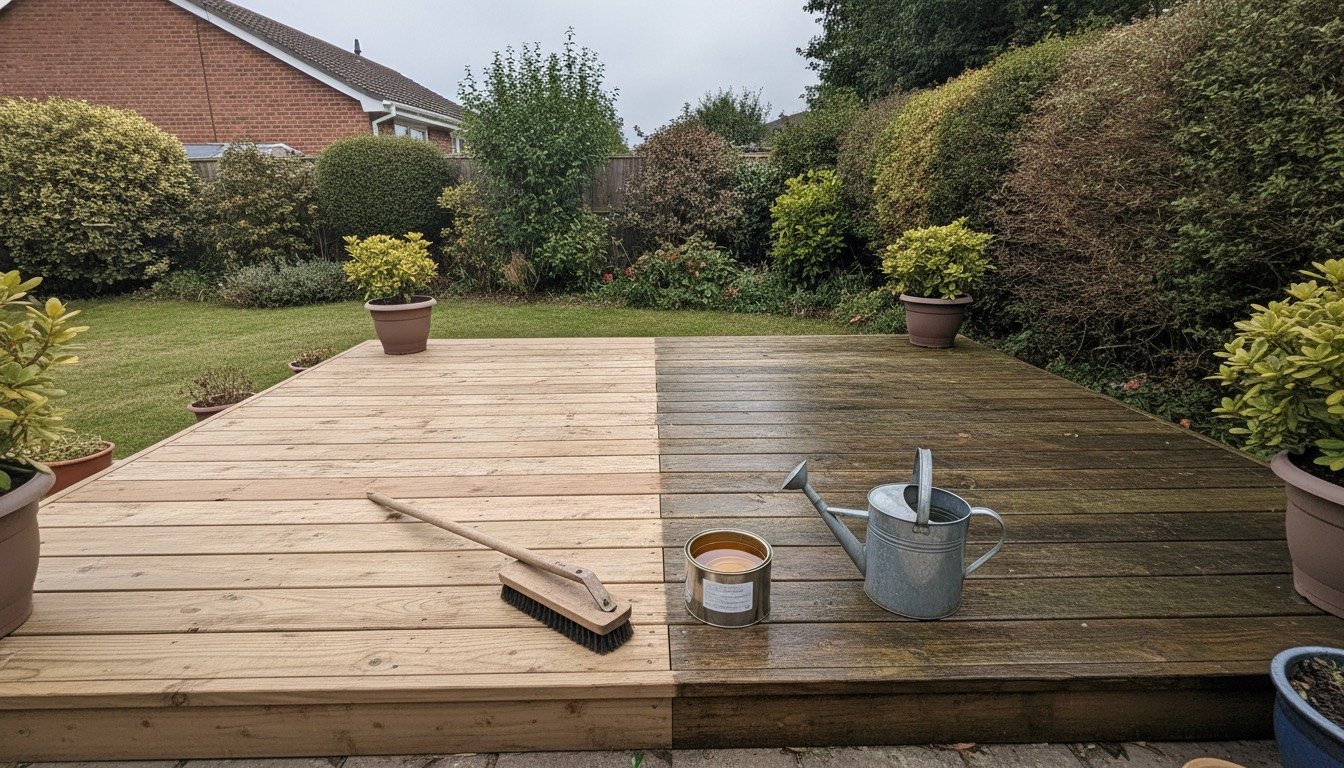
Decks in Britain do not fail from sunshine. They fail from water that never quite dries, from algae that turns boards into an ice rink by October, and from fixings that were the wrong metal to begin with. A softwood deck looked after properly gives you fifteen to twenty years; plenty get ripped out at eight because someone spent three weekends oiling a surface that was rotting from underneath.
So this is not a list to work through blindly. Start with the diagnostic, decide which problem you actually have, then pick up a brush.
Step one: work out what is actually wrong
Kneel down with a torch and a small screwdriver. The deck usually tells you what it needs inside two minutes. The fix for algae is nothing like the fix for UV greying, and neither touches rot.
- •Green or black slimy film, worst on the north side and under furniture: algae and lichen. Surface only. Needs a biocidal wash, not sanding and not oil over the top.
- •Silvery-grey fluffy fibres, colour transferring onto your hand: UV has broken down the lignin. Needs a brightener or oxalic restorer, then a re-coat once dry.
- •Water no longer beads and soaks in as a dark patch: the coating has expired. Clean and re-oil, no restorer needed.
- •Black streaks radiating from screw heads that will not scrub off: tannin reacting with mild-steel or zinc fixings. The stain is cosmetic; the corroding screws are not.
- •Screwdriver sinks into a board or joist more than 4-5 mm under light pressure: wet rot. Stop cleaning — that is structural work.
- •Springy or drumming underfoot mid-span: joists sagging, over-spanned or decaying at the bearing ends. Lift a board and look first.
- •Boards cupped into shallow gutters holding water: almost always blocked ventilation below. Clearing the void fixes more than any product will.
The annual structural check (45 minutes, February or March)
Do this before spending a penny on coatings. If the deck adjoins the house, check the boards sit at least 150 mm below the damp proof course — decking that bridges the DPC drives damp into the wall, and that repair costs far more than the deck did.
- •Probe the joist ends where they meet the house or a post. Rot starts there, not mid-span.
- •Rock each post by hand. Any movement needs a new base fixing before summer.
- •Rust-orange screw heads are not stainless; replace as you go with A2 or A4, £22-30 per box of 250.
- •Clear leaves and soil from the void so air can move — blocked ventilation is the leading cause of premature rot in UK gardens.
- •Above 600 mm high, pull hard on the balustrade. It should not flex, and guarding on a raised domestic platform is normally expected at 1100 mm.
- •Note soft, split or cupped boards for swapping — covered in repairing deck boards.
Spring: the one weekend that matters (late March to May)
Wait for two or three dry days forecast and temperatures above 10°C — in practice late April into early June, a fortnight earlier in the South West than in Yorkshire. Ignore the four-hour drying claim on the tin.
- •Clear the deck and rake the gaps with a paint scraper or old bread knife. 30 minutes.
- •Apply biocidal cleaner, dwell 10-15 minutes, agitate with a stiff brush. 5 litres covers roughly 40 m² at £15-25. Never let it dry on the surface.
- •Rinse with a hose, or a pressure washer on a fan tip held 300 mm back at low pressure — get this wrong and you fur the boards permanently. See cleaning decking without furring the boards.
- •Leave it 48 hours. Timber above roughly 18 per cent moisture will not take oil and the coat lifts by August.
- •Use restorer or brightener only if the diagnostic put you in the grey-and-fluffy camp. £18-25 for 2.5 litres.
- •Oil or stain: two thin coats, three boards at a time along their full length so you never stop mid-board. £35-55 for 5 litres, about 25 m² per coat. Detail in how to stain a deck.
- •Typical 20 m² deck: 6-8 hours across a weekend, £60-110 in materials.
Summer and autumn: the light-touch months
After spring, the year is about prevention. Ten minutes a month saves a full restoration two years out.
- •Monthly, June to August: sweep, and shift furniture and planters 300 mm so nothing sits in one spot all summer.
- •Mid-summer: pot feet under every planter. Standing water under a pot rots a board in one season — the most common failure we see.
- •August: splash a watering can across the boards. Soaking straight in means booking a light maintenance coat for early September, when timber is driest.
- •September to October: clear leaves weekly. Wet leaf mulch left over winter produces next spring's black staining.
- •October: algaecide wash on shaded and north-facing sections. £12-30 for 5 litres, 20 minutes, and it cuts the winter slip risk sharply.
- •November to February: cover furniture, keep one path swept, and grit rather than salt if the deck is your route to the back gate.
Supplies and what a year really costs
Most of the kit lasts several seasons. A 20 m² softwood deck costs £70-130 a year to keep properly yourself; a contractor to clean and re-oil it runs £12-25 per square metre, so £250-450.
- •Stiff-bristled deck brush on a pole: £12-18, good for three seasons.
- •Biocidal deck cleaner, 5 L: £15-25 annually.
- •Decking oil or stain, 5 L: £35-55, one tin a year on 20 m².
- •Wood restorer or brightener: £18-25, roughly every third year.
- •Stainless screws and two spare boards: £30-50. A 2.4 m pressure-treated board is £8-12.
- •Moisture meter: £20-25, and it ends the guesswork about whether timber is ready to coat.
If you only have one Saturday
Ranked by what costs most to put right later, not by what looks worst. Structure beats surface: a grey but sound deck is still there in ten years, whereas a beautifully oiled deck on a rotten ledger is an accident waiting to happen.
- •1. The 45-minute structural check and clearing the void underneath. Non-negotiable.
- •2. Lift everything sitting flat on the boards — planters, doormats, that bag of compost.
- •3. Biocidal wash on the shaded sections only, purely for slip safety.
- •4. Re-oil the two metres nearest the back door, where the coating wears fastest.
- •5. Everything else waits twelve months.
When to stop and call someone
Call a joiner or landscaper if a joist probes soft, a post base moves, the ledger fixing into the house wall is corroded, or anything feels loose on a deck more than 1.5 m up. Localised joist and board repairs run £250-600. Once more than a third of the frame is affected, the honest answer is rebuild rather than repair — weigh it against what a new deck costs in the UK.
If you are on your third full restoration and resenting it, compare materials rather than trying harder; we ran the hours and lifetime spend in composite versus wood decking over ten years. Composite still wants washing twice a year and still goes slippery in shade, but it ends the annual coating cycle. For the rest of the garden, start at the Garden & Outdoor guides.
Found this useful?
There's plenty more — hundreds of guides and honestly-tested product reviews for every corner of your home.
Browse All Guides