Garden & Outdoor · 6 min read · 17 April 2026
How Much Does It Cost to Build a Shed in the UK? 2026 Price Guide
A shed can be £480 or £8,000, and the timber thickness printed in the spec matters more than the size on the label. Here is how UK shed prices are actually built up in 2026.
By the Nims Casa editorial team — written from professional cleaning experience and checked against our editorial standards.
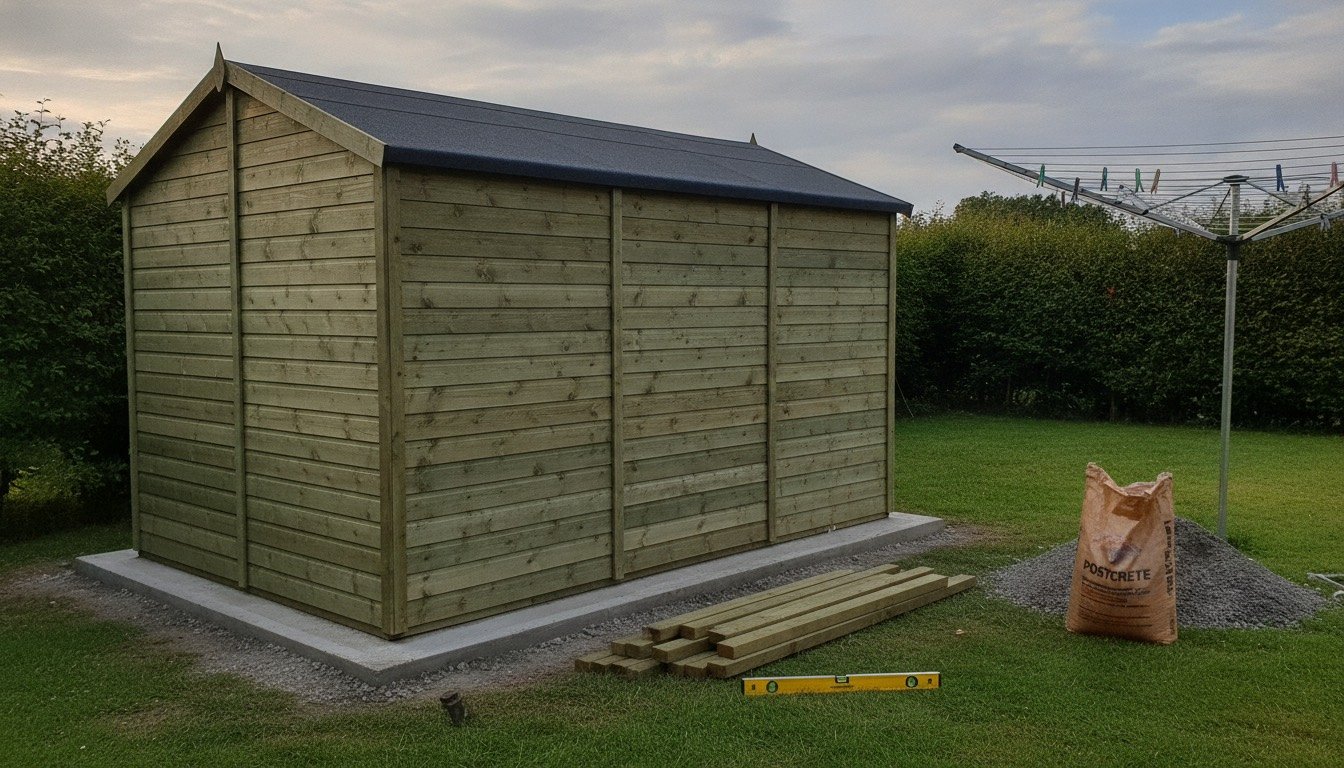
Two quotes for "an 8x6 shed, supplied and fitted" can land at £650 and £2,100 without either firm being dishonest. The gap sits in three lines most quotes never spell out: cladding thickness, whether the base is a real sub-base and slab or four pavers pushed into the lawn, and who takes the old shed away.
Below is how a garden buildings firm builds a price up — per square metre of base, per kit, per day of labour — so you can read a quote instead of guessing at it.
What building a shed costs in the UK in 2026
All-in figures including base, delivery, assembly and VAT at spring 2026 prices. The band you land in is decided by construction quality far more than by footprint.
- •Budget flatpack, 8mm overlap cladding, 6x4 to 8x6, DIY assembly on a self-laid base: £400 to £750
- •Mid-range 12mm shiplap tongue-and-groove, 8x6 to 10x8, based and fitted: £1,600 to £3,000
- •Heavy-duty 19mm shiplap workshop, 44mm framing, 10x8 to 12x10, fitted: £3,200 to £6,500
- •Bespoke shed built on site by a joiner, 3m x 4m, insulated and lined with power: £6,500 to £11,000
- •Metal or plastic store, 6x4 to 8x6, on a self-laid base: £380 to £1,100
- •Insulated garden office with proper glazing: £12,000 upward — you are now pricing a garden room or annexe, not a shed
Unit costs before anyone lifts a spade
Retail prices including VAT; a trade account buys 15 to 25 per cent below these. An 8x6 covers roughly 4.5m² and a 10x8 roughly 7.4m² — the number that drives every base cost.
- •100mm concrete slab on 100mm MOT Type 1, DIY materials: £55 to £80 per m². Supplied and laid: £110 to £165 per m²
- •Paving slabs bedded on sharp sand: £35 to £55 per m² in materials, a realistic weekend job
- •Plastic grid base with 20mm gravel infill: £22 to £35 per m², the fastest honest option on level ground
- •Ground screws with a treated bearer frame: £35 to £65 per screw installed, six to nine for a 10x8
- •CLS framing timber, 47 x 75mm x 2.4m: £4.50 to £7.00 a length
- •12mm shiplap cladding: £2.40 to £3.60 per metre run; 8mm overlap is a third of that and half the life
- •Mineral shed felt £24 to £38 a roll; felt shingles £11 to £15 per m²; EPDM rubber £14 to £20 per m²
- •Shed stain: £18 to £30 for 5 litres, and a 10x8 drinks 10 to 15 litres over two coats
Labour versus materials: where the money goes
For a kit dropped onto a base someone else prepared, labour is only 20 to 30 per cent of the bill: two fitters have a standard 8x6 up in three to five hours for £150 to £300. Add base preparation and you are buying a full day, £350 to £650 including the concrete or grid system.
Bespoke reverses the ratio. A joiner building 3m x 4m on site is five to seven days for two people, so labour becomes 45 to 60 per cent of the total. Carpenter day rates in 2026 run £180 to £280 across most of the UK and £280 to £400 inside the M25; a labourer is £120 to £170 a day.
Power is the line that shocks people. A new circuit to an outbuilding is notifiable under Part P in England and Wales, so it needs a registered electrician or a building control notice. Expect £450 to £900 for a 15 to 25 metre SWA run, a small consumer unit, four sockets and a light — what an electrician charges breaks those hours down.
What moves the price
- •Cladding thickness. 8mm overlap versus 12mm shiplap roughly doubles the kit price and is the single biggest quality variable
- •The base. Ground falling more than about 75mm across the footprint turns a £300 base into a £900 one
- •Access. Everything through the house or down a 900mm side passage adds half a day of labour
- •Old shed removal. Dismantle and dispose is £150 to £350, or £200 to £320 for a four-yard skip
- •Region. South East labour runs 25 to 40 per cent above the North East, Wales and Northern Ireland
- •VAT. A sole trader under the £90,000 threshold is not registered — a genuine 20 per cent gap on labour
- •Insulation and lining for year-round use: £480 to £900 in materials for a 10x8. Read insulating a shed before you buy PIR
Three worked examples
Real jobs, priced the way a quote should be itemised.
- •Budget, Midlands, homeowner does everything: 8x6 overlap kit £340, slab base on sharp sand £150, stain £40, fixings and a decent hasp £35. Total £565 plus two weekends
- •Mid-range, West Yorkshire, supplied and fitted: 10x8 shiplap kit £1,280, 100mm concrete base on Type 1 £780, assembly £290, shingle upgrade £140, old shed skipped £260. Total £2,750
- •Bespoke, Surrey, joiner-built 4m x 3m workshop: ground screws and deck frame £980, materials £2,450, five days for two joiners £2,900, Part P power £790, PIR and ply lining £640. Total £7,760
Planning, regs and the costs nobody quotes for
In England most sheds fall under permitted development: single storey, eaves no higher than 2.5m, overall height under 4m for a dual-pitch roof or 3m otherwise, and no more than 2.5m if it sits within 2m of a boundary. Conservation areas, listed buildings and the devolved nations vary, so the permitted development rules for outbuildings are worth ten minutes before you order anything tall.
Building regulations generally do not apply under 15m² with no sleeping accommodation, and 15m² to 30m² stays exempt if it is a metre from any boundary or substantially non-combustible. A lawful development certificate, useful at resale, is £120 to £180.
Most shed failures we see are rot at the bearers, caused by a base sitting level with the surrounding soil. Getting the shed foundation 50mm proud and free-draining is not an upgrade — it is the difference between eight years and twenty-five.
Sanity-checking a quote, and how we costed this
A fair quote states cladding thickness in millimetres, framing size, the base build-up including sub-base depth, and who removes the old building. A suspect one says "quality timber shed on concrete base" and gives a single figure. Ask for the split; anyone who works this way already has it.
- •Labour above 40 per cent of a kit-shed job usually means base work is buried in the labour line
- •Deposits above 30 per cent are unusual for a shed. Materials-only deposits of 20 to 30 per cent are normal
- •"Concrete base" with no thickness or sub-base stated is how a £780 base quietly becomes a £320 one
- •Get three written quotes on the same specification, not the same size — comparing written estimates only works when the spec is identical
Methodology
Material prices were sampled from national UK builders' merchants and garden building retailers in spring 2026 and include VAT. Labour figures come from quotes across the East Midlands, Yorkshire, South Wales and the South East, rounded to bands rather than averaged. We update these ranges annually: timber and OSB have moved double digits in single years, so treat anything older than a year as indicative.
Found this useful?
There's plenty more — hundreds of guides and honestly-tested product reviews for every corner of your home.
Browse All Guides