Roofing & Exterior · 6 min read · 25 June 2026
Disaster-Proof Home Improvements: What Works in UK Homes and What It Costs
Most British homeowners spend resilience money on the wrong risk. Here is what actually reduces damage in UK housing stock, what it costs in 2026, and how to spot an opportunistic quote.
By the Nims Casa editorial team — written from professional cleaning experience and checked against our editorial standards.
Most of the money British homeowners spend on protecting their homes goes to the wrong risk. People picture a once-in-a-century flood, while the claim that actually lands three winters later is a 15mm compression joint under the bath that let go at 2am and ran for six hours. Escape of water is the biggest domestic claim category in the UK by volume, ahead of fire and storm, and it is the cheapest thing on this list to design out.
What follows is what genuinely reduces damage here, what it costs in 2026 with labour and materials split out, and how to tell a fair quote from an opportunistic one.
What Counts as a Disaster-Proof Home Improvement
It is a permanent physical change that keeps water, wind or fire out, limits how far damage travels once something has failed, or makes recovery cheaper. The trade splits these into resistance and resilience. Resistance is a flood door and a covered airbrick. Resilience is accepting that 300mm of water will get in eventually and making sure it meets tiled floors, closed-cell insulation and sockets at 600mm rather than chipboard and skirting-level plug points.
Ignore the American framing: hurricane straps and tornado rooms are not our risk profile. Ours is wind-driven rain on a poorly fixed roof, surface water with nowhere to go, and a handful of moorland-fringe properties where grass fire is real. Before spending, check the Environment Agency long-term flood risk service and realistic storm damage repair costs for your type of building.
How the Three Layers Work
This work is layered, and money spent out of order is wasted. There is no point fitting a £2,800 flood door to a house with loose ridge tiles and gutters last cleared in 2021. Work outwards to inwards.
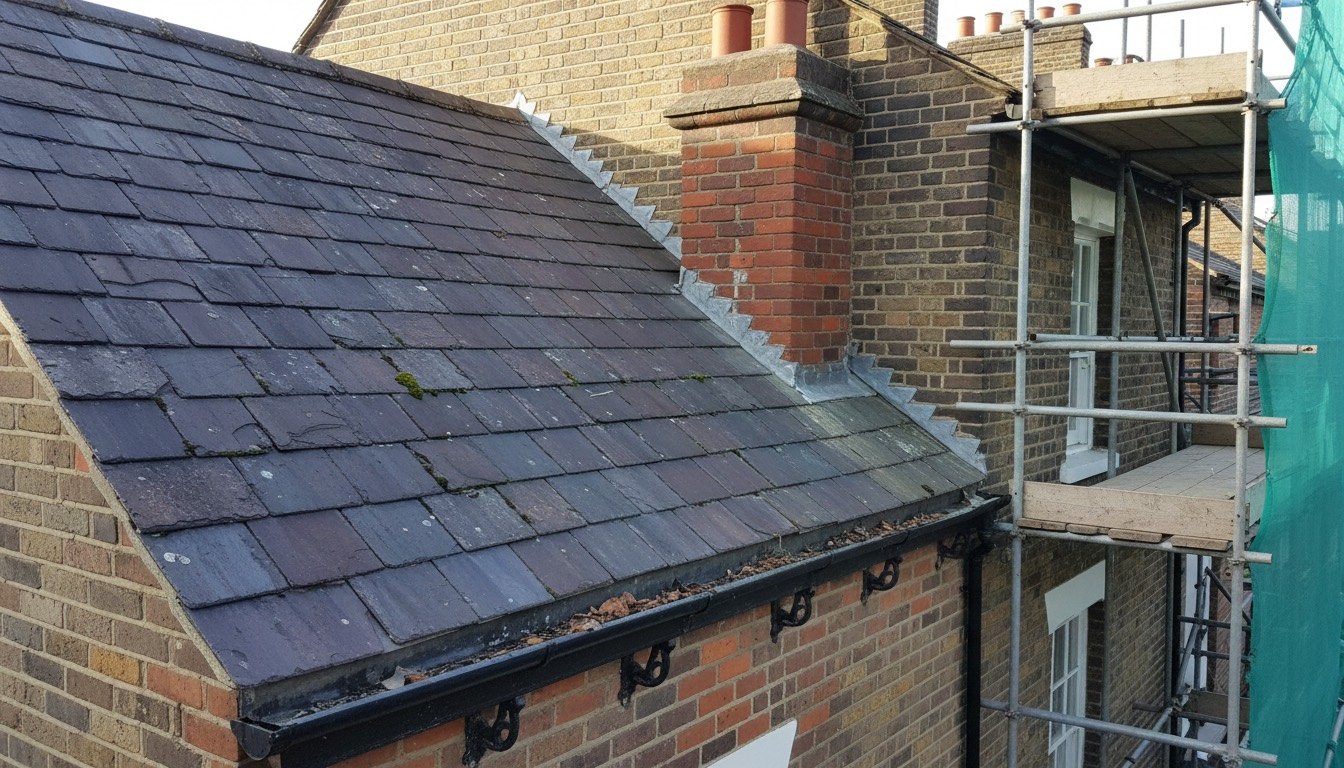
- •The envelope: roof coverings mechanically fixed to BS 5534, sound verge and ridge, intact chimney flaunching, gutters and gullies flowing, sound pointing on exposed elevations. This layer absorbs 90% of British weather and is the one most often neglected. Routine gutter cleaning and maintenance is the cheapest damp prevention there is.
- •Isolation: a stopcock you can actually turn, a leak-detection shutoff on the rising main, non-return valves on drainage where sewer surcharge is known, FD30 doors to integral garages and loft conversions, and interlinked smoke and heat alarms.
- •Recoverable finishes: tile or resin floors instead of laminate on chipboard downstairs, rigid insulation in the lower wall, raised sockets, and breathable plaster below 1m so a wetted wall can dry.
Which Risk Actually Applies to Your House
Four risks cover almost every UK claim. Only one applies to everybody.
- •Escape of water: every property, every year. Worst in unheated lofts, homes left empty over Christmas, and push-fit runs under floorboards. Lagging pipework before winter plus a smart shutoff is the best value work in this guide.
- •Wind and storm: exposed sites, coastal strips, ridge-top plots, and any roof laid before the 2014 revision of BS 5534 tightened fixings.
- •Flooding: roughly one in six English properties sits in some category of flood risk. Surface water is the fastest-growing type and the one homeowners dismiss because there is no river nearby.
- •Fire: everybody, but sharply higher in open-plan conversions with no protected escape route, integral garages, thatch, and any home still on a rewireable fuse box.
Real UK Costs, With the Labour Split Shown
These are 2026 ranges for two- and three-bedroom housing outside central London; add 20-30% inside the M25. Watch the split move: small water measures are nearly all materials, anything at height nearly all labour and access.
- •Loft and pipe lagging, whole house: £30-£70, all materials, DIY in an afternoon.
- •Leak-detection shutoff on the rising main: device £180-£450, plumber £120-£250 to fit. Roughly 65% materials. Some insurers supply a monitoring device free.
- •Interlinked mains smoke and heat alarms, three-bed: £400-£750 fitted, of which £120-£220 is hardware, so around 70% labour. Legally required in every Scottish home since February 2022, and in rented homes in England and Wales.
- •FD30 fire door with intumescent seals, supplied and fitted: £350-£650 each, about half materials.
- •Gutter clearance on a semi: £60-£150, essentially all labour. Full uPVC replacement: £45-£75 per metre installed.
- •Re-bedding and mechanically fixing a ridge line: £450-£950 plus scaffold. Dry verge to one gable: £500-£900.
- •Scaffolding, one elevation for a week: £600-£1,200. Full wrap on a semi: £1,400-£2,600.
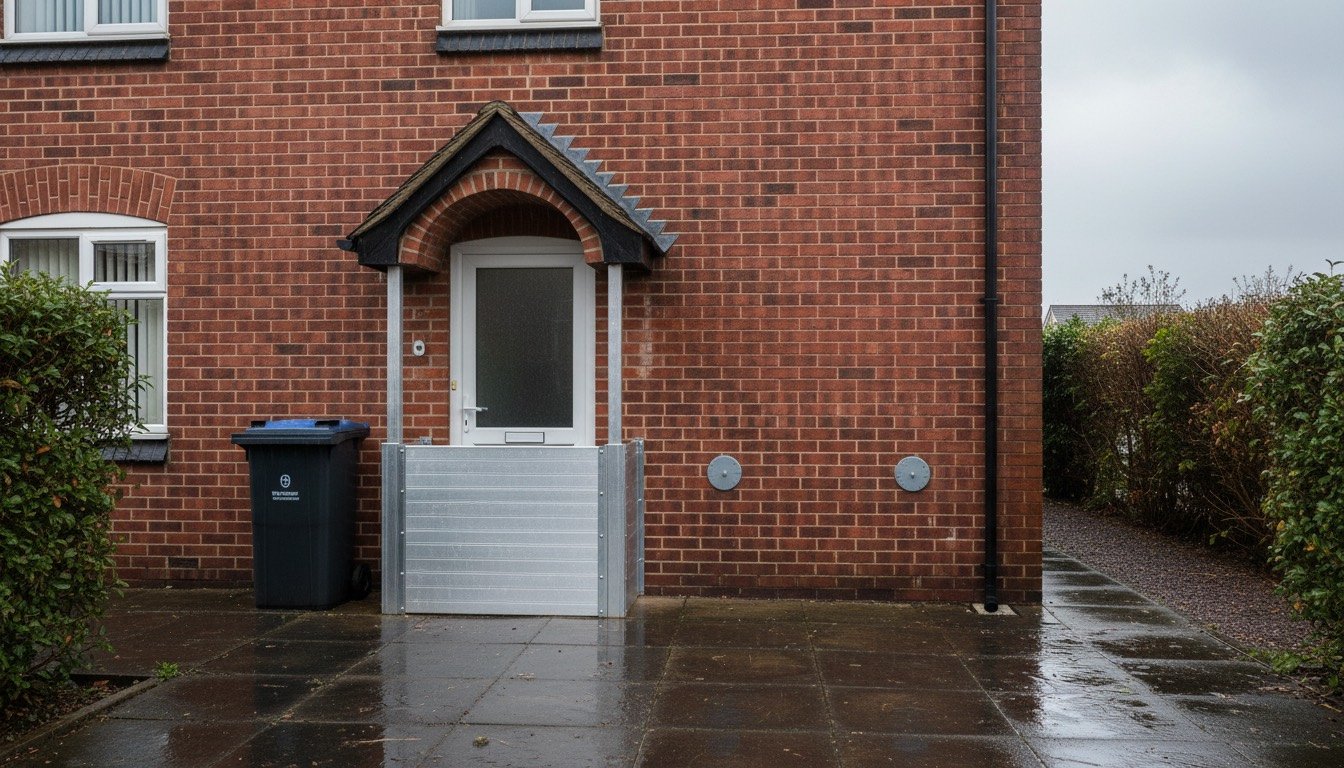
- •PAS 1188 flood door, supplied and fitted: £1,800-£3,500 each, around 75% materials.
- •Demountable barrier for a standard opening: £250-£600; airbrick covers £15-£40 each. Compare with flood barriers versus sandbags first.
- •Non-return valve on the foul drain: £400-£900 fitted, and it may need water company agreement.
- •Full flood resilience package with survey: £6,000-£12,000; council grants up to £5,000 are often available after a flood.
What Makes a Quote Reasonable, or Suspect
A fair quote is itemised, not a single number. It names the product standard, separates access from the work, states whether VAT is included, and says who carries the guarantee. Sanity-check against day rates: roofer £250-£380, electrician £280-£420 or £65-£95 an hour, plumber similar, labourer £130-£190. If a two-day ridge job is priced at £3,000 with no scaffold line, someone is either planning to work off a ladder illegally or padding the total.
Suspect quotes follow a pattern that sharpens in the week after a named storm: cold-callers who were conveniently working next door, verbal prices only, deposits above 25-30%, cash-only discounts, and talk of a full re-roof without a single photograph. If a large claim is in play, get an independent report before authorising anything, and read up on filing a home insurance claim first.
DIY Versus Professional, and the Legal Lines
Plenty here is a homeowner job: lagging, airbrick covers, gutter clearance from a footed ladder at single-storey height, demountable barriers, alarm upgrades and moving stored valuables above 1m in a cellar. That removes a large share of realistic risk for under £200.
The legal lines are specific. New circuits and fixed electrical work in kitchens and bathrooms are notifiable under Part P of the Building Regulations and need a registered electrician or building control sign-off. Gas work requires a Gas Safe engineer, without exception. Listed buildings need consent even for a flood door, and conservation areas restrict front-elevation changes. Underpinning after subsidence brings in the Party Wall etc. Act 1996 where you share a boundary. Anything above single-storey height falls under the Work at Height Regulations. If the envelope itself is failing, deal with that before spending internally, and read the signs you need a new roof.
Questions We Get Asked
Will this cut my premium? Rarely as a direct discount, but it changes insurability and excess. Flood Re covers most homes built before 2009 and, since 2022, allows up to £10,000 of resilient reinstatement on top of a flood claim under Build Back Better.
What if I can only spend £250? Leak alarms under the bath and behind the washing machine, lagging on every exposed pipe, and a gutter clear. That addresses the two commonest claims in the country.
Is a £500-£1,000 survey worth it? Yes, before four-figure flood spending. A CIRIA C790 survey identifies the real entry routes, usually drainage and airbricks rather than the doors people instinctively armour.
Found this useful?
There's plenty more — hundreds of guides and honestly-tested product reviews for every corner of your home.
Browse All Guides