DIY & Maintenance · 6 min read · 20 May 2026
Drywall vs Plaster Walls in the UK: Plasterboard, Lath and What Each Really Costs
Knock on the wall. A drum-like note, a solid thud and a dusty rattle mean three different materials, three repair bills and three sets of rules about what you can hang on them.
By the Nims Casa editorial team — written from professional cleaning experience and checked against our editorial standards.
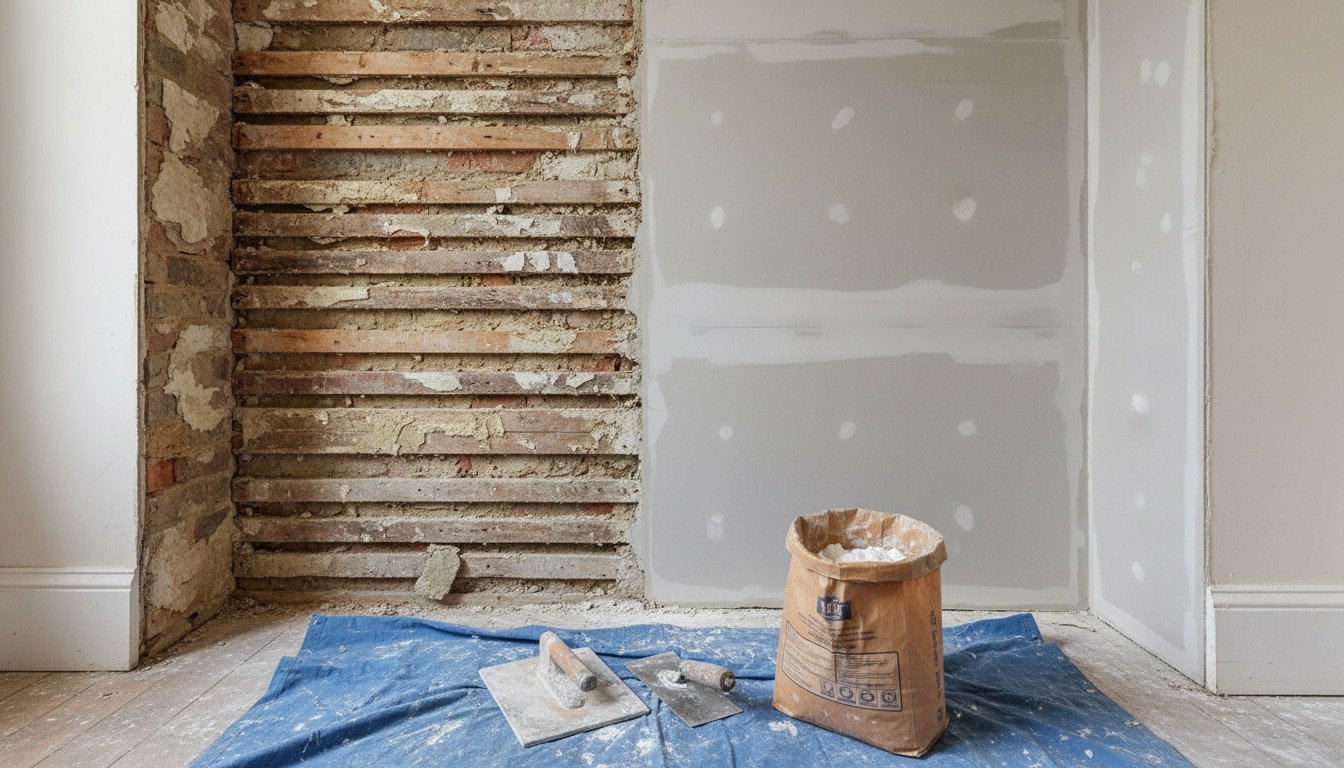
Knock on the wall behind your sofa. A hollow, drum-like note means plasterboard, the material Americans call drywall, screwed to timber studs or stuck to brickwork on dabs of adhesive. A dull thud means wet plaster on masonry. A springy sound and grey dust at the skirting means lath and plaster, and a house built before about 1930.
Which one you have decides what you can hang, how a crack behaves, and what a plasterer charges to put it right. There is a section at the end for tenants, who cannot legally drill anything.
What "drywall" means in a UK house
Drywall is the American word for plasterboard: a gypsum core wrapped in paper, sold here in 9.5mm and 12.5mm sheets for £11 to £16 a board. What differs is the finish. American boards are taped and jointed, so only the seams get filled, while here the whole surface takes a 2 to 3mm skim of multi-finish plaster. That is why a British plasterboard wall still has a real plaster face, and still cracks like one.
- •Plasterboard on studs: timber or metal at 400 or 600mm centres. Standard for partitions since the 1960s.
- •Dot-and-dab: board stuck to brick on walnut-sized dabs, leaving a 10 to 25mm void. Near-universal since the late 1970s.
- •Wet plaster on masonry: a bonding or browning undercoat trowelled onto brick, then skimmed. Dead solid, no void. Most pre-1970s external walls.
- •Lath and plaster: 25mm timber laths with 6mm gaps and three coats of lime plaster. Pre-1930s ceilings. Drill it and you get grey dust and horsehair.
Plasterboard vs plaster: the side-by-side
- •Speed: board and skim takes a mist coat in five to seven days. Two-coat wet plaster needs three to six weeks to dry first.
- •Hardness: solid plaster wins outright. A door handle punches clean through 12.5mm board.
- •Sound: a stud wall with one 12.5mm board each side gives about 30 to 35dB; plastered brick gives 45 to 50dB.
- •Fixings: masonry takes a plug and screw anywhere. Plasterboard needs a stud or a proper hollow-wall fixing.
- •Insulation and fire: dot-and-dab takes 62.5mm insulated laminate in a day, and boarded walls give the 30 minutes of resistance required beside an integral garage.
Performance: dents, damp and what you can hang
The commonest call-out here is a shelf on the floor with two plasterboard plugs still attached. On solid plaster, a 7mm hole, a brown nylon plug and a 50mm screw carry a loaded bookcase. On plasterboard, find the stud and screw into timber: the only fixing worth trusting above roughly 15kg. Without a stud, a spring toggle or Gripit-style fixing in 12.5mm board is rated to tens of kilos on the packet: halve that figure, and never hang a television on board alone.
Damp differs too. On board, a leak shows as a tea-coloured stain that softens the paper; on wet plaster you get a blown patch that looks perfect but sounds hollow when tapped. On pre-1919 solid brick, gypsum and dot-and-dab trap moisture behind an impermeable face, and the cold void is where condensation and mould take hold. Lime is the right repair there.
Installation and what each costs in 2026
Plasterer day rates run £180 to £280 across most of the UK, £250 to £350 inside the M25. Most of this work is priced per square metre.
- •Skim over sound plaster: £13 to £20 per m², or £180 to £300 for a 12 to 14m² ceiling.
- •Dot-and-dab plasterboard plus skim: £40 to £60 per m² supplied and fitted.
- •New stud partition, boarded and skimmed both sides: £45 to £70 per m², plus £120 to £250 for a lining and door.
- •Hack off and re-plaster masonry: £55 to £85 per m², plus £150 to £300 for waste.
- •Overboarding a lath-and-plaster ceiling: £45 to £65 per m², two days for one room.
- •DIY materials: 25kg of multi-finish £12 to £15, bonding coat £10 to £13.
Ten-year cost: which is cheaper to live with
Boarding is realistic DIY; skimming is not, because the working time on multi-finish is about 90 minutes and beginners lose it at the trowelling-up stage. Board it yourself, pay for half a day of skimming, and you still save 30 to 40 per cent. Patching a hole in plasterboard is a first-timer job. Over a decade, this is what we get called back to.
- •Stud wall in a family hallway: two door-handle punctures and a shelf pull-out. About £25 of materials as DIY, £160 to £280 for two handyman visits.
- •Dot-and-dab room: nothing until a radiator or washing machine leaks, then £120 to £200 for a square metre.
- •Wet-plastered masonry: nothing for years, then one blown patch beside a chimney breast at £350 to £600 for that wall.
- •Lath and plaster ceiling: the expensive one. Overboarding 14m² runs £630 to £910 before decorating, and it is a question of when, not if.
The renter-safe version: no holes, no deductions
None of that helps if the wall is not yours. Treat every hole, adhesive scar and coin of pulled-off paint as a deduction, because deposit adjudicators do.
- •Identify the wall first: hollow plasterboard is less forgiving of adhesive hooks, because the skim is thin and the paper beneath tears.
- •Command-type strips hold 2 to 7kg a pair, but only on emulsion cured four weeks or more. Fresh matt emulsion is the classic deposit-loser: test one behind a door, and remove by pulling the tab straight down.
- •Use the picture rail: most Victorian and Edwardian homes still have one at about 2m, and brass S-hooks on cord carry a heavy mirror without touching the plaster.
- •Go freestanding: leaning mirrors, tension rods in reveals, ladder shelves, plug-in lights clipped to the skirting.
- •If you drill, get written permission, then make good: fine surface filler, 180-grit and a tester pot costs about £8 against a £40 to £80 deduction.
- •Photograph every wall at check-in with the date visible. Our rental-friendly decor guide covers floors and lighting too.
Who each suits, and the verdict
Plasterboard and skim wins for anything internal, non-structural and dry: faster, cheaper, easier to insulate and far easier to repair. Wet plaster on masonry wins on external walls where solidity, sound and fixings matter, with lime on solid walls in anything pre-1919.
The exception is a sound lath-and-plaster ceiling with original cornice, where overboarding buries the detail permanently: repair old plaster instead. Hairline cracking at the wall-to-ceiling junction that opens each winter is seasonal movement: flexible caulk holds where filler fails. If a crack keeps coming back mid-board, the fixings or scrim tape are at fault. Get quotes priced per square metre rather than as a lump sum, and use our DIY and maintenance hub for the repair guides.
- •Can I dot-and-dab over old plaster? Only where it is sound and dry — board over anything blown and you pay twice to hide the problem.
- •Does plasterboard make a room colder? Not by itself, but air moves behind a dot-and-dab void; sealing the perimeter dab line cuts draughts.
- •Is textured Artex a problem? If the house predates 2000, treat it as potentially asbestos-containing and never sand it.
- •Which adds value at resale? Neither. Cracked, patched or sagging is what costs you at survey.
Found this useful?
There's plenty more — hundreds of guides and honestly-tested product reviews for every corner of your home.
Browse All Guides