Electrical · 6 min read · 24 June 2026
Why Does My Circuit Breaker Keep Tripping? MCBs, RCDs and What to Do
A breaker that trips once in five years is doing its job. One that trips every wash cycle is telling you something specific, and the pattern narrows it down faster than any tool you can buy.
By the Nims Casa editorial team — written from professional cleaning experience and checked against our editorial standards.
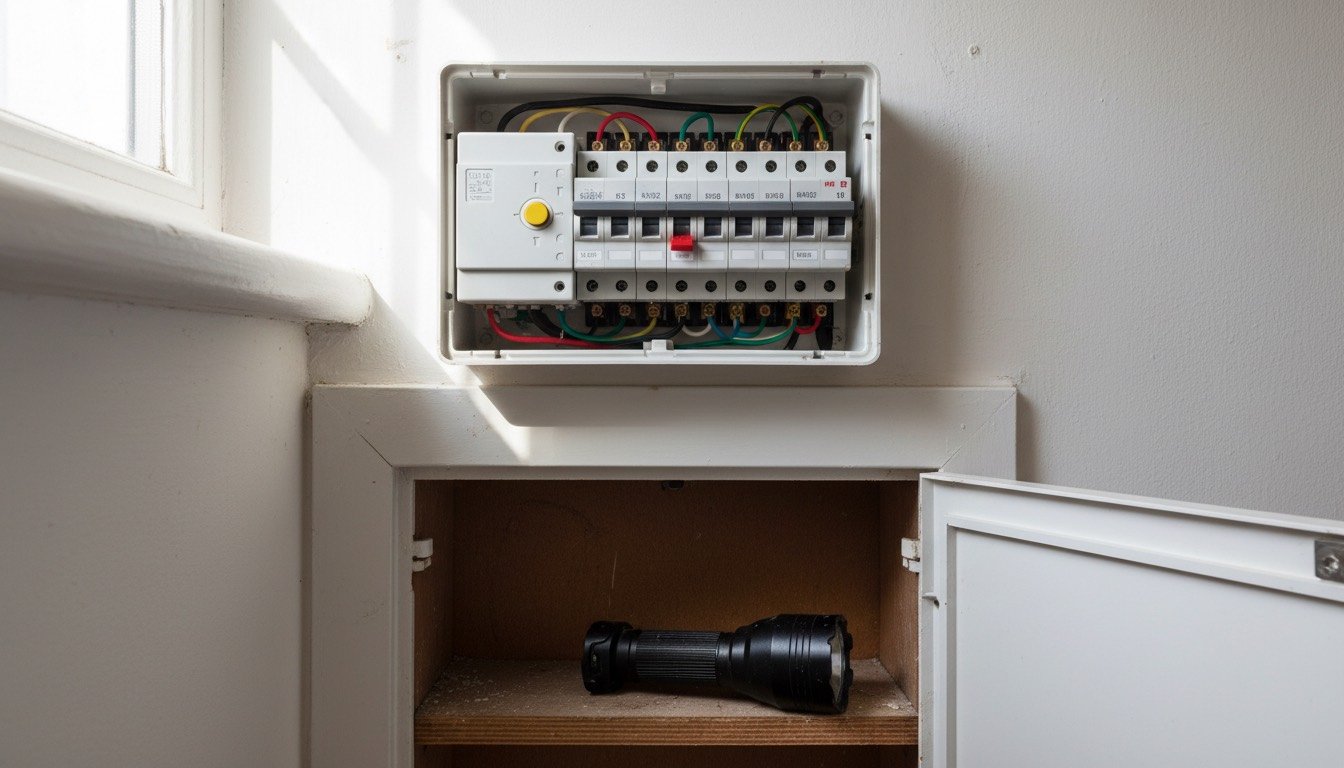
A tripping consumer unit fails in patterns. Every trip records three clues: which device moved, what was running, and whether it went instantly or twenty minutes in. Get those straight and you have halved the causes before picking up a torch.
What follows is the order we work in on a call-out. Some of it you can safely do yourself. Some is notifiable work under the Building Regulations and is not yours to touch, owner or tenant.
Two-Minute Diagnosis: Which Device Actually Moved
Look before you reset anything, and photograph the board while it is still tripped. That picture beats any phone description.
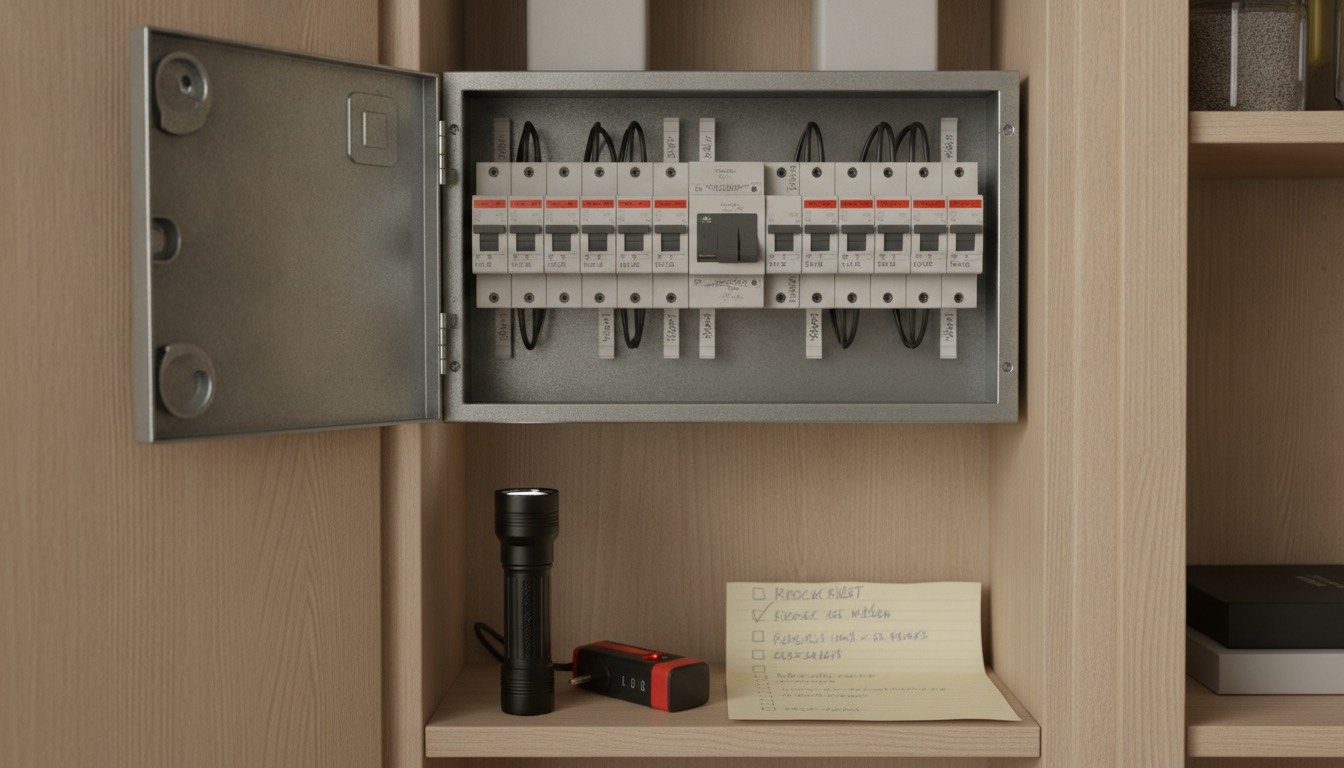
- •One small switch down, marked 6A, 16A, 32A or 40A: an MCB. Too much current on one circuit, so overload or short circuit.
- •A wider switch with a TEST button marked 30mA, half the house dead: an RCD. Current is escaping to earth. A leak, not a load.
- •A single module with both an amp rating and a test button: an RCBO, the best news here, because it names one circuit and one fault type.
- •The big switch, usually red: the main switch. Something took out the whole board, or someone knocked it.
- •Nothing tripped and no power at all: a supply problem, not your wiring. Ring 105, the free UK power cut line, first.
Symptom to Cause: Reading the Pattern
Note what was running each time. Three trips is a dataset; match yours against the list below.
- •Trips the instant you push it up, with everything unplugged: a real fault in the fixed wiring or an accessory. Stop and call someone.
- •Trips only when one appliance runs, usually a washing machine, dryer, dishwasher or electric shower: a failing element or motor.
- •Trips ten to twenty minutes into heavy use, MCB warm to the touch: overload. Worth ten minutes to work out the real load on the circuit.
- •RCD trips at 6am on a damp morning, or when immersion and shower coincide: cumulative earth leakage. Every appliance leaks a milliamp or two, and together they cross 30mA.
- •RCD trips after rain, or when garden sockets are in use: water ingress in an outdoor accessory, garage supply or badly sealed cable gland.
- •Trips at the moment a light is switched on: a lamp or LED driver failing at switch-on, the same inrush behind LED lights that flicker.
The Causes, in the Order We Find Them
Ranked by frequency across UK housing stock, from 1930s semis to new-builds on RCBO boards.
- •Faulty appliance, roughly half of all cases. Washing machine and dishwasher elements first, then immersion heaters: the element cracks, water reaches the coil, current escapes to earth.
- •Overload, about a fifth. Two 2kW heaters, a kettle and an air fryer on one 32A ring is 30A before the fridge starts.
- •Accumulated leakage on an older split-load board: no single fault, just fifteen appliances leaking into one 30mA RCD. Worse in winter with the dryer and dehumidifier out.
- •Moisture: outside sockets, shed and garage supplies, a leaking shower tray above a downstairs light, a slipped tile over a loft cable.
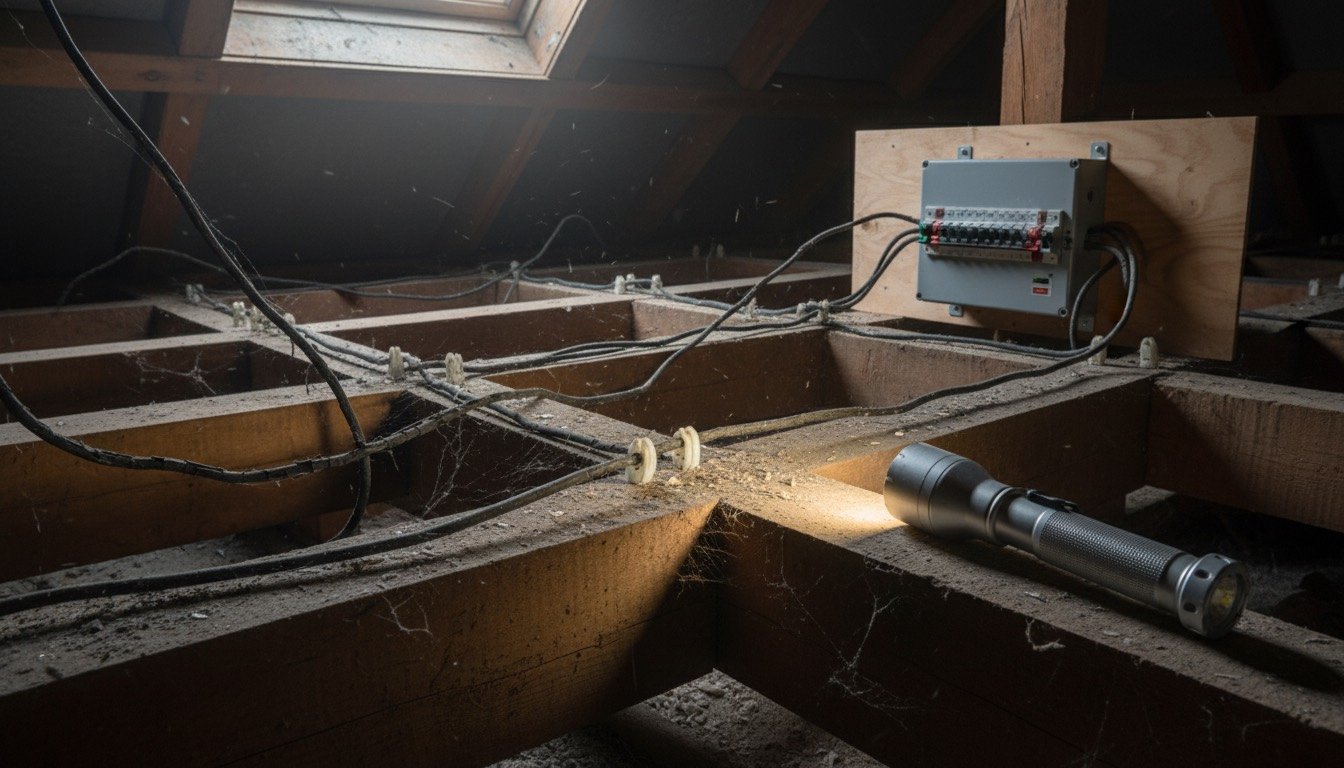
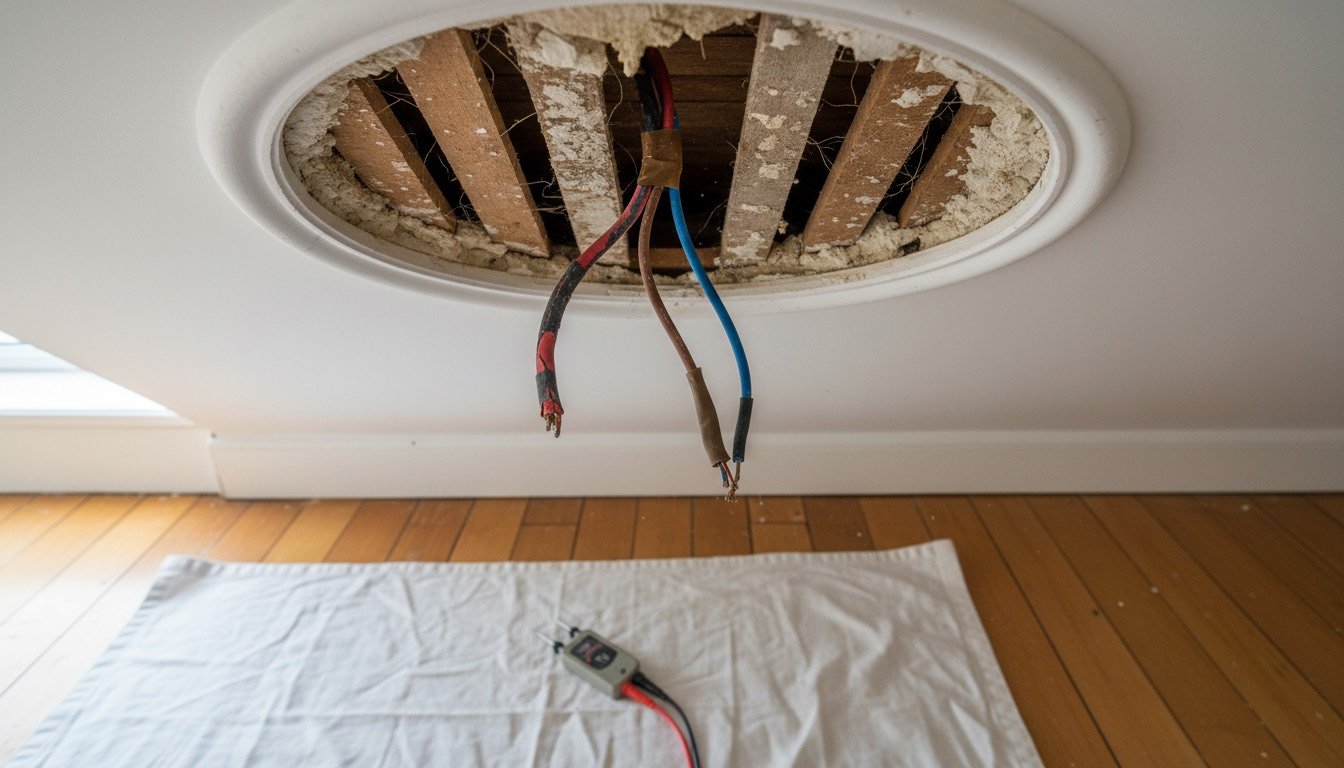
- •Physical cable damage: a screw through a cable behind plasterboard, a nail into a batten, rodents in a loft. Rare, but this is the one that never resets.
- •The device itself, after 20 to 30 years. A last-resort diagnosis, not a first guess.
Fixes, From Lowest Risk to Highest
Work down and stop where the next step is beyond you. Nothing before step six needs a screwdriver. If one socket has died rather than a whole circuit, follow the order for troubleshooting a dead socket instead.
- •Unplug everything on the circuit, including what you forget: boiler, extractor, outside light, garage freezer. Reset. If it holds, it is an appliance fault.
- •Reintroduce one item at a time, five minutes apart. A £15 plug-in energy monitor speeds this up by showing what each appliance draws.
- •Run the suspect appliance on a different circuit. Trips there too, the appliance is at fault; holds, the circuit is.
- •Check the plug fuse: a 3A in a 2kW heater will nuisance-blow, a 13A in a table lamp protects nothing. Fuses cost pennies.
- •Press the RCD test button quarterly. It should trip instantly. If it does not, that device is protecting nobody and needs replacing.
- •Stop. Past this point means opening the consumer unit or testing live circuits, where the risk changes character entirely.
The Renter's Version: Reversible, Deposit-Safe Steps
If you rent, the fixed installation is your landlord's responsibility under the Landlord and Tenant Act 1985. In England, the Electrical Safety Standards in the Private Rented Sector Regulations 2020 require a satisfactory EICR every five years, with a copy given to you; Scotland and Wales have equivalent rules. Ask for it, because the date tells you a great deal.
Everything below leaves no trace and needs no tools, the same logic behind sensible rental-friendly changes elsewhere: diagnose, document, reverse.
- •Do the unplug-and-reintroduce test above. It often ends with 'the dryer is the problem', which is a conversation, not a repair.
- •Label the board with removable tags or a phone photo, never permanent marker: pen on a landlord's board is a genuine deduction risk.
- •Buy a plug-in socket tester (£10 to £25) and an energy monitor. Both push into a socket and come home with you.
- •Redistribute rather than rewire: move the dehumidifier to another circuit, run the dryer when the oven is off.
- •Never daisy-chain extension leads or run a 3kW appliance through a 6A cable reel. That turns a nuisance trip into a scorched socket you get charged for.
- •Report every trip in writing with dates and what was running. A dated email trail gets an electrician booked and protects you if damage follows.
Where DIY Stops, and What the Job Costs
In England and Wales the legal line is Part P of the Building Regulations; Scotland and Northern Ireland have equivalent standards. Replacing a consumer unit or adding a circuit is notifiable, and in Wales so is work in kitchens, bathrooms and outdoors. It needs an electrician registered with NICEIC, NAPIT or STROMA, or building control sign-off. Uncertificated work surfaces during a house sale or insurance claim, which is why it sits high on the list of electrical repairs that should never be DIY.
Stop and call someone now if you smell hot plastic, see browning around a socket, hear buzzing from the board, feel a tingle off a tap or appliance casing, or a breaker will not stay up with everything unplugged. Reset twice; never a third time.
- •Fault-finding visit: £120 to £250, more for intermittent faults needing the board split and tested circuit by circuit.
- •Replacing a single MCB or RCBO: £90 to £160 including the part.
- •Full EICR on a three-bed house: £150 to £300, worth it if the board is 20-plus years old or lacks RCD protection.
- •Consumer unit replacement to current BS 7671 standards: £450 to £850, plus remedials if testing finds problems.
- •Out-of-hours call-out: £100 to £180 for the first hour; our guide to what an electrician costs breaks rates down further.
- •Always take the certificate: minor works or installation paperwork proves the job was done properly.
Found this useful?
There's plenty more — hundreds of guides and honestly-tested product reviews for every corner of your home.
Browse All Guides