Electrical · 6 min read · 4 July 2026
How Many Lumens Do I Need? Room-by-Room Lighting Levels for UK Homes
Lumens are the only honest measure of a bulb's output, but they only become useful once you turn them into lux on the surface you actually use. Here are the numbers, and the real costs.
By the Nims Casa editorial team — written from professional cleaning experience and checked against our editorial standards.
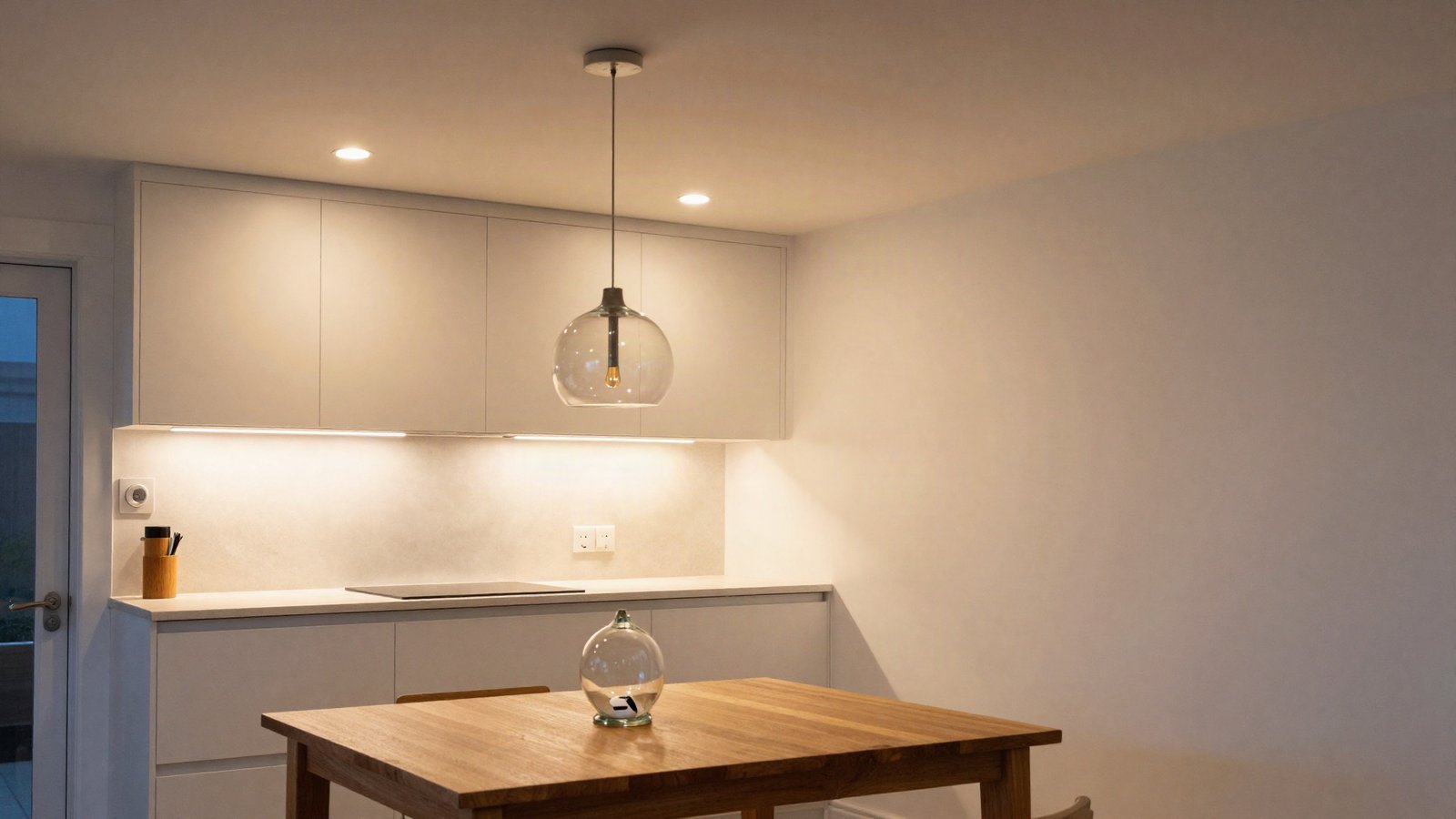
Put a 2,000-lumen fitting in a 3m x 3m box room and you have a headache waiting to happen. Put the same output in an 18m2 through-lounge and you will be squinting at the crossword by seven. Output on the box means nothing alone; what matters is how much light lands on the worktop, the desk or the stair treads.
We size domestic lighting the way commercial electricians size an office, just with softer targets: measure the floor area, pick an illuminance for the task, then add back the light lost to shades and dark walls. Below are the figures we work to on UK jobs, plus what the kit and labour genuinely cost - a scheme that looks cheap in a basket rarely stays cheap.
What a lumen measures, and why watts stopped meaning anything
A lumen is total light output; a watt is electricity consumed. They tracked each other for a century because incandescent bulbs were all equally inefficient, so people learned to shop in watts. Since mains-voltage halogens were phased out across the UK in September 2021 that shorthand is dead: a modern LED gives 90-140 lumens per watt, the old 60W pearl bulb about 13. Conversions for matching something existing:
- •40W incandescent equals roughly 470 lumens - side and bedside lamps
- •60W incandescent equals roughly 800 lumens - the standard living room pendant
- •100W incandescent equals roughly 1,500 lumens - a bright single-fitting room
- •50W halogen GU10 equals roughly 350-400 lumens - most downlights being replaced today
The lux targets we actually design to
Lux is lumens spread over a square metre. Multiply floor area in m2 by the target lux, then add 25-40% for light lost to shades, dark paintwork and fittings aimed at the ceiling. A bare pendant in a white room loses little; a drum shade in a dark green room can eat a third. Skipping that step is why so many rooms feel gloomy despite the right bulbs going in. Aim for these levels:
- •Living room, general ambience: 100-150 lux (task lamps do the reading)
- •Kitchen, general: 250-300 lux; worktops and hob: 400-500 lux locally
- •Bathroom, general: 150-200 lux; mirror area: 300-400 lux
- •Home office: 300-500 lux, measured on the desk, not the floor
- •Bedroom: 100-150 lux general, 200-300 lux at a dressing table
- •Hall, landing and stairs: 100-150 lux, even coverage on every tread
- •Garage, utility and workshop: 300-400 lux, higher over a bench
Three worked examples
Same method each time: area, lux, loss factor. Note how quickly one central fitting stops being enough - the argument for layering lighting in a room rather than one enormous bulb.
- •Lounge, 4.0m x 4.5m (18m2): 18 x 130 lux = 2,340 lumens, plus 30% for a fabric shade and mid-grey walls = about 3,000 lumens. That is a 1,500-lumen pendant and two 800-lumen floor lamps, not one blinding ceiling fitting.
- •Kitchen, 3.5m x 3.0m (10.5m2): 10.5 x 280 lux = 2,940 lumens, plus 25% loss = roughly 3,700 lumens, or six 600-lumen downlights. Worktops still need 400-600 lumens per metre of strip under the wall units, because you shadow anything from behind.
- •Bathroom, 2.2m x 1.8m (4m2): 4 x 180 lux = 720 lumens, call it 900 with losses. Two IP65 500-lumen downlights plus a 300-400 lumen mirror light. Zone 1 needs IP45 minimum; Zone 2 needs IP44.
Colour temperature, CRI and dimming: where good lumen maths comes unstuck
Two bulbs of identical output can look nothing alike. Stick to 2700K in living rooms and bedrooms, 3000K in kitchens and bathrooms, 4000K only in garages, lofts and utility rooms. Mixing 2700K and 4000K on one ceiling is the fastest way to make a decent scheme look cheap - see daylight versus soft white bulbs.
Colour rendering matters too. CRI 80 is the floor; pay the extra pound or two for CRI 90+ wherever you judge colour - kitchens, mirrors, wardrobes. If you plan to dim, buy dimmable bulbs and a trailing-edge dimmer rated for LED. Most dimmers need a minimum load of around 10W, so three 5W downlights on one plate will buzz or refuse to start, the fault behind more callouts than any other - see why LED lights flicker.
What it costs in the UK, and how to check a quote
Bulbs are cheap and labour is not: expect materials to be 20-35% of a retrofit job and the electrician's time the rest. UK rates run £45-80 per hour outside London and £60-110 inside the M25, day rates £250-400 and £350-500, with a one-hour minimum. Our breakdown of what an electrician costs covers regional variation. Typical 2026 figures:
- •LED GLS bulbs (806 lumens, B22 or E27): £2-4 each in multipacks from Screwfix, Toolstation or B&Q
- •Dimmable CRI90 GU10: £6-12 each; smart bulbs £6-10 (Tapo, WiZ) up to £17-20 (Philips Hue)
- •Fire-rated IP65 integrated LED downlight, switchable colour temperature: £15-30 per unit
- •Swapping a pendant for a new fitting on an existing rose: £60-100 labour per fitting
- •Six downlights retro-fitted into a plasterboard ceiling with loft access: £350-600 all in
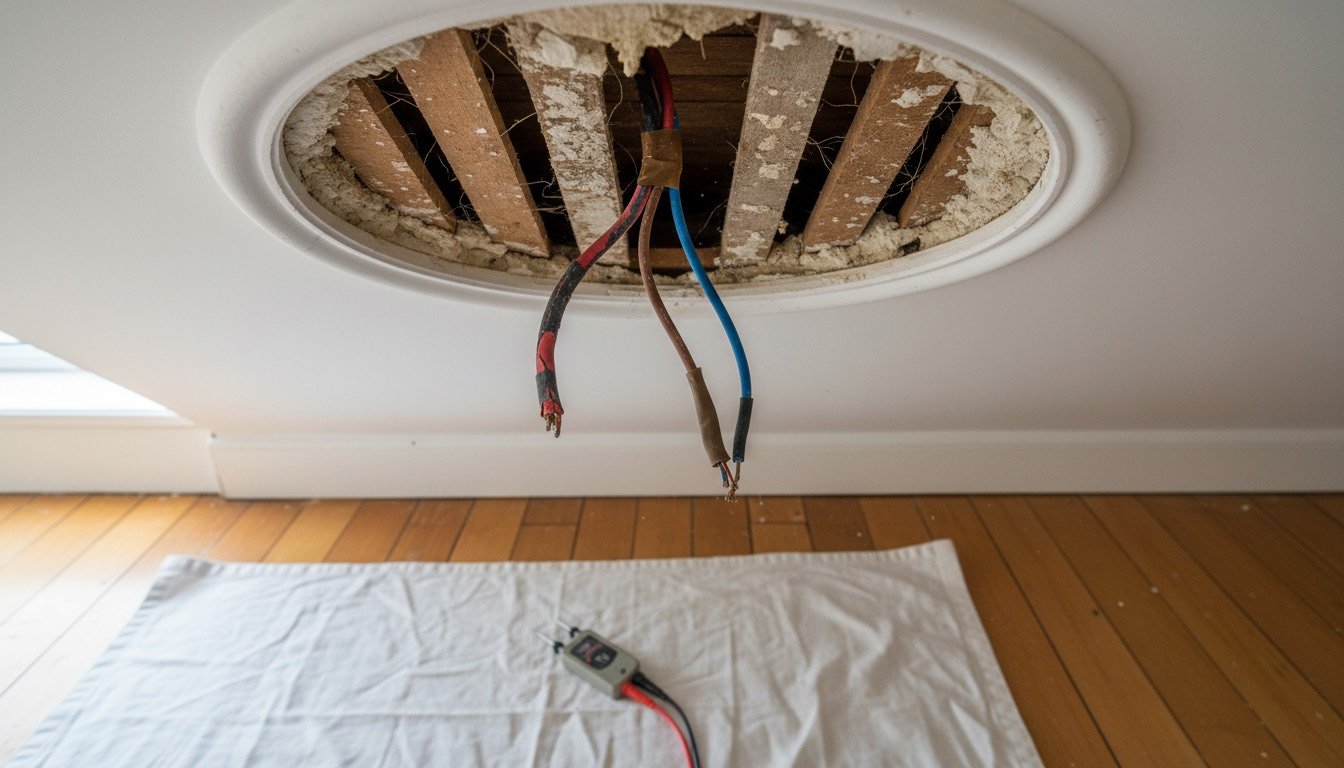
- •The same six with a habitable room above and no access: £500-900, plus £150-350 to make good
- •New lighting circuit from the consumer unit: £250-450. Minor Works certificate and Part P notification: £70-150
- •Sanity check: a sound quote names the fitting and its lumen output and splits materials from labour. Treat as suspect anything over £120 per downlight with clear loft access, any quote silent on a scheme number (NICEIC, NAPIT, ELECSA), and 'free' fittings - usually no-name 400-lumen units flickering inside eighteen months.
- •Check exclusions: plastering and decorating are almost never included. Then judge on running cost - ten 50W halogens at four hours a day cost about £205 a year at 28p per kWh against roughly £20 for ten 5W LEDs, the arithmetic behind recessed lighting costs.
DIY, Part P and where the law draws the line
Changing bulbs, plugging in lamps and fitting plug-in under-cabinet strips are jobs for anyone. In England, swapping a fitting like-for-like on an existing ceiling rose is non-notifiable, though it must still comply with BS 7671. New circuits, consumer unit work and anything within the zones of a bathroom or shower room are notifiable under Part P and must be certified. Wales did not adopt the 2013 relaxation, so kitchens and outdoor work remain notifiable there; Scotland and Northern Ireland have their own equivalents. Confirm with local building control before you start - the rules genuinely differ across the four nations.
Our own boundary is simple: if the ceiling is coming down, the circuit is changing, or the room has a bath or shower, call a registered electrician. Our round-up of common home lighting mistakes is worth ten minutes before you order anything.
Quick answers
The questions we field most often, answered without hedging.
- •How many lumens for a whole room? Floor area in m2 times the lux target above, plus 25-40%. A 12m2 bedroom lands around 1,800-2,000 lumens.
- •Is one bright bulb the same as three dim ones? No. The same total spread across three points gives softer shadows and a better-looking room.
- •Do ceiling fan light kits give enough? Rarely. Most produce 800-1,400 lumens - fine for a bedroom, thin for a lounge.
- •Will more lumens fix a dark room? Only so far. Dark walls and badly aimed fittings waste light faster than extra output replaces it.
Found this useful?
There's plenty more — hundreds of guides and honestly-tested product reviews for every corner of your home.
Browse All Guides