Kitchens & Bathrooms · 6 min read · 14 April 2026
How Much Does a Bathroom Remodel Cost? UK Prices for 2026
Three fitters can quote the same 3.5 m² bathroom at £4,800, £8,200 and £13,000 and all be honest. Here is what sits behind those numbers in 2026 — and why period homes land at the top end.
By the Nims Casa editorial team — written from professional cleaning experience and checked against our editorial standards.
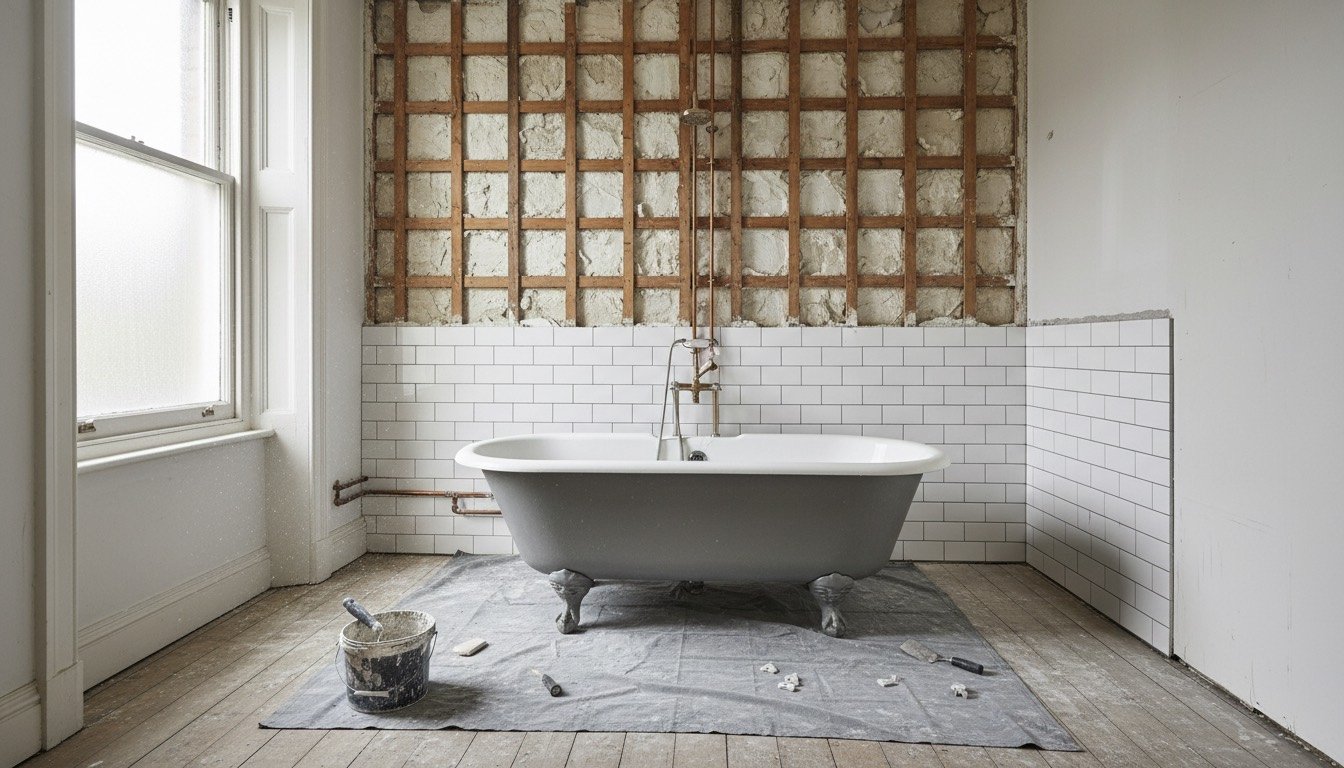
Bathrooms are the most expensive room per square metre in a British house, and the reason is unglamorous: everything in there is wet, buried, or notifiable. A 3.5 m² room holds hot and cold supply, a soil connection, a ventilation route, an electrical circuit with zone restrictions and 15 m² of surface that must stay watertight for twenty years. Get one wrong and you pay twice.
The figures below are spring 2026, drawn from quotes for complete refits. Because so many UK bathrooms sit in houses built before 1940, we have costed the period case separately rather than pretending a Victorian terrace prices like a new build.
What a Full Bathroom Refit Costs in 2026
Assume a 3-4 m² family bathroom with the suite staying roughly where it is. Nationally a complete refit runs £4,500 to £14,000, with most landing between £7,000 and £9,500.
- •Budget, £4,500-£6,500 — trade-counter suite, bath and screen, half-height tiling, LVT floor, existing pipe and waste positions kept. 6-8 days.
- •Mid-range, £7,000-£11,000 — branded suite, thermostatic shower, full-height porcelain to the wet wall, concealed cistern, underfloor heating mat, new extractor. 10-14 days.
- •High-end, £12,000-£25,000+ — wet room or recessed tray, wall-hung sanitaryware, large-format tile, feature lighting, sometimes a rebuilt floor. 3-5 weeks.
- •Cloakroom or en suite under 2 m² — £2,800-£5,500; you still pay a plumber, an electrician and a tiler however small the room is.
- •Cosmetic refresh only (retile, new taps, reseal, redecorate) — £1,400-£2,600.
Unit Costs: The Numbers Behind the Total
Every honest quote is built from these. To test a headline figure, price the parts yourself.
- •Bathroom fitter: £220-£320 a day; £380-£450 in central London.
- •Plumber £45-£65 an hour or £280-£420 a day — see our plumber day rates by job.
- •Part P electrician: £320-£700 for fan, lighting, shaver socket and certificate.
- •Wall tiling £35-£55 per m² (£60-£95 large-format or mosaic); floor tiling with decoupling membrane £45-£70 per m².
- •Suite (bath, basin, WC): £420-£950 budget, £1,000-£2,400 mid-range.
- •Enclosure, tray and thermostatic valve £380-£1,300 — more in our shower installation cost guide.
- •Wet room former, tanking kit and linear drain: £750-£1,600 in materials alone.
- •Extractor to Part F (15 l/s) £160-£280; 4 m² underfloor heating mat and thermostat £280-£450.
- •Plaster patching and skim £350-£600; 6-yard skip £280-£420.
Labour vs Materials: Where the Money Goes
On a mid-range refit the split is roughly 55-60% labour, 40-45% materials. That surprises people who have spent an evening choosing taps. The tap is £180; the two days of first fix behind the wall is £560.
An expensive suite pushes materials towards 55%. An awkward layout, a period property or a wet room pushes labour past 65%, because you are buying days rather than objects. It is also why supplying your own sanitaryware rarely moves the total — you trim the smaller half of the bill and own every delivery problem.
VAT matters. A sole trader under the £90,000 threshold charges none; a VAT-registered firm adds 20%, which is £1,500 on a £9,000 job for identical work.
What Moves the Price — and Why Old Houses Cost More
Moving the WC is the most expensive decision available to you: the soil connection dictates everything else. Shifting a bath or basin is cheap by comparison. After that the levers are tile size, whether you tank the room, and what you find behind the old panelling.
In pre-1940s housing, budget 25-40% above the equivalent new-build job. The reasons are consistent enough that experienced fitters price them in before seeing the room.
- •Lath and lime plaster: nothing structural fixes to lath, so the wet wall comes back to studs and gets overboarded, £280-£550. Gypsum skim over old lime debonds within two winters — see repairing old plaster walls.
- •Solid brick walls: no cavity for pipework, so it is chasing into brick (£180-£350) or a false wall that eats 100-125 mm from a room already too small.
- •Cold solid walls grow black mould in fresh grout. Insulated backer board, £28-£45 per m², is not optional north-facing.
- •Victorian drainage: salt-glazed clay and cast iron stacks need adaptors, and old hopper heads were never meant to take shower waste. Reworking a soil connection, £350-£700.
- •Pre-1970s wiring — rubber-sheathed cable, no earth at lighting points, rewireable fuseboards — fails modern bathroom rules. A consumer unit upgrade adds £500-£800, a rewire far more (rewiring costs).
- •Springy suspended floors crack tile and grout. An 18 mm ply overlay plus uncoupling membrane, £30-£50 per m², prevents a retile in year three.
- •Pre-2000 Artex may contain asbestos: sample test £50-£100. Bathroom sashes rot first; overhaul with draught-proofing is £280-£480 a window, and cheaper while the room is stripped.
Three Worked Examples
1930s semi, 3.7 m², like-for-like swap — £5,240. Strip out and skip £450; mid-range suite £850; screen and bar mixer £320; 14 m² tile £310; sundries and ply £180; fitter six days at £280 £1,680; tiler £500; electrician £420; plaster repairs £380; decorating £150.
Victorian terrace, 4.6 m², bath out and walk-in shower in — £10,140. Strip out including lath and plaster £700; stud wall and cistern boxing £480; insulated backer board £340; tray, panel and valve £1,150; WC frame and basin unit £950; porcelain £610; ply and membrane £220; fitter nine days at £290 £2,610; tiler £910; electrician £680; consumer unit upgrade £620; soil pipe adaptation £420; lime plaster repair £450.
Edwardian villa, 5.5 m², full wet room — £17,600. Asbestos sample, strip out and skips £980; joist strengthening and recessed former £1,150; tanking £520; drain and brassware £1,400; sanitaryware and freestanding bath £3,400; large-format tile £1,560; tiling labour £2,030; fitter fifteen days at £300 £4,500; electrician £820; sash overhaul £420; decorating £820.
How to Sanity-Check a Quote
A one-line quote reading 'supply and fit new bathroom — £9,400' protects nobody. Ask for it broken down, then apply these tests.
- •Count the days: divide labour by the local day rate. Under six days for one person on a full refit means something is missing.
- •Labour should be 50-70% of the total. Below 50% in a period house, the making-good has been ignored.
- •The Part P notification and Electrical Installation Certificate should be named in writing, not assumed.
- •No extractor in the quote means a legal requirement is missing.
- •Ask what happens if the floor under the bath is rotten. A daywork rate is realism; 'no extras' means nobody lifted the boards.
- •Three quotes, discard both outliers. Never pay over 25% up front; hold 10% until snagging clears.
Methodology and Regional Variation
Figures come from quotes and invoices gathered across England, Wales and Scotland between October 2025 and March 2026, cross-checked against trade-counter and retailer pricing in April 2026; each range covers the middle 80%. Region is worth about 30% either way — London and the South East 20-35% above, the North East, Wales and much of Scotland 10-20% below. Labour does all that work; materials barely move.
Two things keep a budget honest. Settle the layout before anyone lifts a tool, because mid-job changes are billed at daywork — our bathroom planning guide covers the sequence. In a small room, buy back floor area rather than upgrading fittings (small bathroom ideas). Hold 12-15% contingency in a modern house and 20% in anything pre-war.
Found this useful?
There's plenty more — hundreds of guides and honestly-tested product reviews for every corner of your home.
Browse All Guides