Heating & Cooling · 6 min read · 21 July 2026
How Much Does Furnace Replacement Cost in the UK? 2026 Warm-Air Price Guide
Ask three engineers to price the same warm-air replacement and the quotes can sit £2,000 apart. Here is where that gap actually comes from, in 2026 money.
By the Nims Casa editorial team — written from professional cleaning experience and checked against our editorial standards.
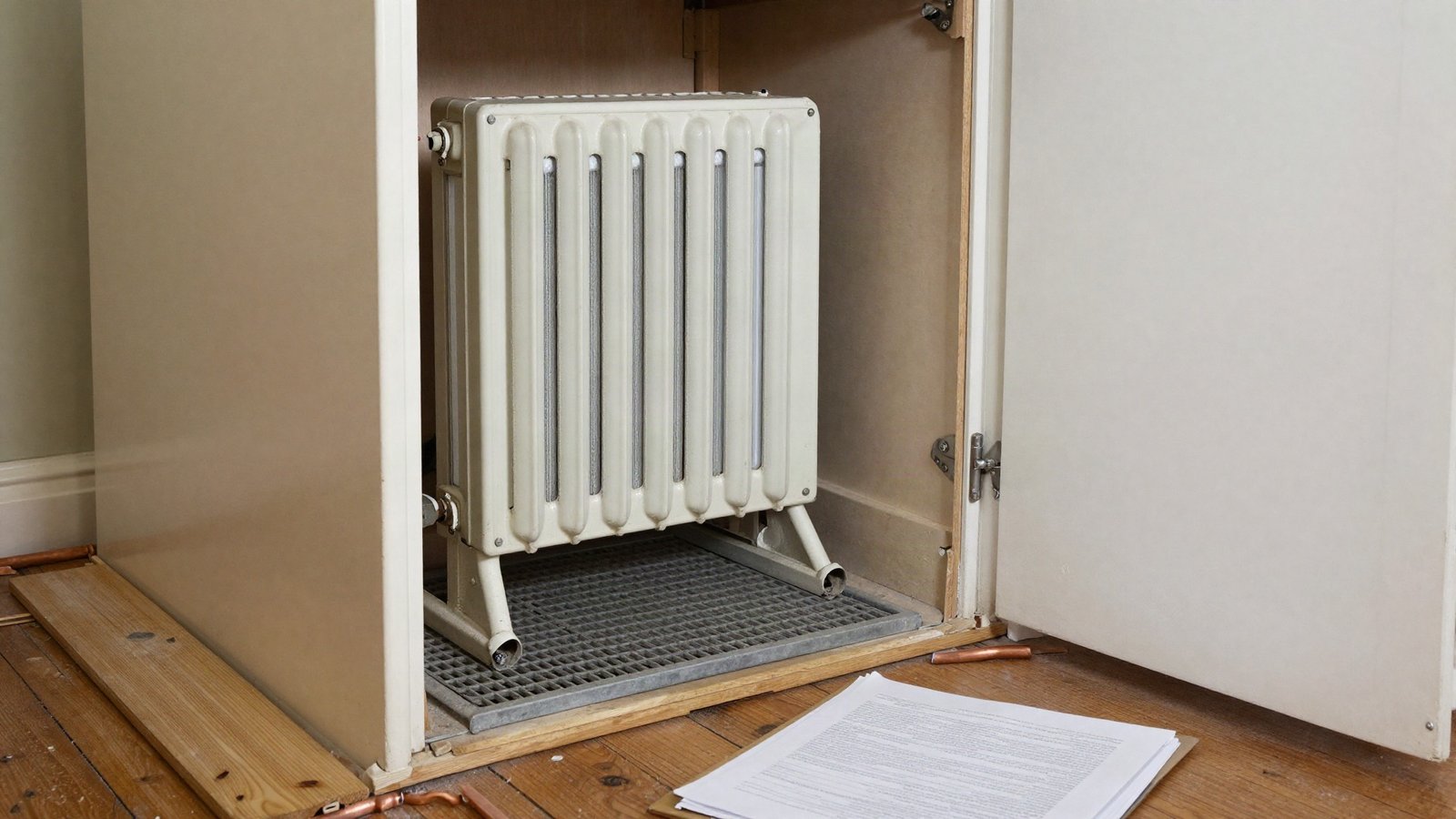
In the UK a domestic "furnace" almost always means a ducted warm-air unit: the Johnson & Starley, Wagner or Lennox boxes fitted into several hundred thousand homes built between roughly 1965 and 1980, pushing heated air through floor grilles instead of into radiators. Rural properties sometimes run oil-fired warm air. Either way, replacement splits into two jobs with very different bills.
You can swap the unit like for like and keep the ductwork, or abandon warm air for a wet system or a heat pump. The first is a two-day job for a specialist; the second is a small building project, and in a pre-1940s house it is the one that generates surprises. If you are weighing that route, our figures for a straight boiler swap sit alongside these.
Typical UK prices in 2026
Installed prices including VAT at 20%, based on three-bedroom houses. Warm-air specialists are thin on the ground, which props prices up: some counties have fewer than a dozen engineers holding the ducted-air appliance category on their Gas Safe card.
- •Like-for-like condensing warm-air unit, existing ducts sound: £3,200-£5,200
- •Same job plus duct sanitising, new grilles and a rebuilt plenum: £4,500-£6,500
- •Oil-fired warm-air replacement, including tank checks: £5,000-£8,000
- •Warm air stripped out, gas system boiler, cylinder and 9-10 radiators: £6,500-£10,500
- •Warm air to air-source heat pump with upsized radiators and cylinder: £11,000-£16,000 before the £7,500 Boiler Upgrade Scheme grant
- •London and the South East: add 15-25%. Northern England, Wales and Northern Ireland: typically 10-15% below the figures above
Unit costs: the line items behind the total
A quote that arrives as a single number is impossible to argue with. Broken down, the components should land near these bands.
- •Condensing warm-air unit, 11-20kW output: £1,900-£3,100
- •Horizontal flue kit and terminal: £150-£400; vertical through a pitched roof £400-£750
- •Plenum and return-air adaptation for a modern unit: £250-£600
- •Duct sanitising and new grilles: £350-£700
- •Gas Safe engineer day rate: £300-£480 plus VAT, rising to £380-£600 in London
- •Asbestos sampling: £45-£90 per sample; licensed removal of duct or plenum insulation £600-£2,500
- •Electrical work: fused spur on an RCBO-protected circuit £120-£220; full consumer unit replacement £480-£800
- •Condensate disposal: internal run to a soil stack £90-£180; insulated 32mm external run to a soakaway £180-£350
- •Making good plaster and floorboards, plus removal of the old unit: £300-£880
Labour versus materials
On a straight unit swap the split runs roughly 55-60% materials, 40-45% labour: two engineers, one and a half to two days. On a conversion it inverts. Radiators are cheap (£45-£140 each for a decent double panel), but the pipework hours are not, and a Victorian hall with an original tiled floor eats half a day on its own.
Independent installers work at £45-£75 an hour outside London. National firms quote tidy fixed prices that bury 20-30% in overhead, and rarely touch warm air at all. On a conversion you are paying a plumber and often an electrician too, so ask who is on site and when.
Why older houses cost more
Plenty of warm-air units were retrofitted into Victorian and Edwardian terraces, and that is where budgets go wrong. Solid nine-inch brick walls lose heat at around 2.0 W/m²K against 0.3 for an insulated cavity, so a room-by-room heat loss calculation is not optional. Size from a rule of thumb and you get an oversized unit that short-cycles, or an undersized one that never satisfies the back bedroom — the usual reason one room stays colder than the rest after a new system goes in.
Air leakage matters more than most quotes admit. A sash-windowed terrace with suspended timber floors can be running two to three air changes an hour before you start. Spend £150-£400 on draught-proofing first and you may drop an output band on the appliance.
- •Lath and lime plaster: chasing pipes and lifting boards cracks ceilings below. Budget £180-£600 for repairs, and insist on lime-based filler rather than gypsum on breathable walls
- •Chimney flues: an unlined Victorian chimney will not take a modern fanned flue. Lining is £700-£1,400, and pulling a back boiler out of a fireplace adds £500-£1,000
- •Victorian drainage: condensate is acidic at around pH 3-4, so salt-glazed clay drains and shared rainwater hoppers are the wrong destination and several water companies object. An internal termination is cheaper and will not freeze in January
- •Pre-1970s wiring: rewireable fuse boards, no RCD protection and missing 10mm² main bonding to gas and water all get picked up at commissioning. Assume £480-£800 if the board changes
- •Microbore pipework: 8mm and 10mm runs from the 1970s silt up. A powerflush and magnetic filter is £350-£600; if it is blocked solid, replacement is the only honest answer
- •Asbestos: units and duct insulation fitted before about 1985 can contain it. Test before anyone opens a plenum
Three worked examples
Real invoices, rounded to the nearest £50, VAT included.
- •1968 semi, Derby, like-for-like: unit £2,350, flue kit £220, plenum adaptation £320, two days' labour £780, asbestos sample £70, disposal £150, making good £120. Total £4,010
- •1912 solid-wall terrace, Bristol, warm air removed for a wet system: system boiler and 180-litre cylinder £2,450, 10 radiators and valves £1,150, pipework and fittings £640, five days' labour for two trades £3,300, chimney liner £950, consumer unit £620, plaster and joinery repairs £480. Total £9,590
- •1935 solid-wall semi, Kent, heat pump conversion: 8kW air-source unit and cylinder £6,800, upsized radiators £1,450, groundworks and electrics £1,900, six days' labour £3,600, MCS design and commissioning £700. Total £14,450, less the £7,500 grant, so £6,950 net
How to sanity-check a quote
Three written quotes is the minimum, and the cheapest is rarely the one to take. You are checking whether the engineer looked at the house or simply counted bedrooms. Our guide to comparing estimates covers the process; these are the heating-specific tells.
- •A room-by-room heat loss calculation is attached, not a bedroom count
- •The Gas Safe number is given, and the card carries the ducted warm-air category — checkable on the register in 30 seconds
- •Labour and materials are itemised separately, with the make and model of the appliance named
- •A system clean to BS 7593, inhibitor dose and a magnetic filter appear as line items on any wet conversion
- •The condensate route and its termination point are described in writing
- •The Building Regulations compliance certificate is promised within 30 days, and warranty registration is the installer's job
- •Asbestos testing is priced or explicitly excluded, so you know who carries the risk
Methodology and what these figures exclude
These ranges come from quotes and merchant list prices collected across England, Wales and Scotland in the first half of 2026, weighted towards independent installers rather than national sales operations. They include VAT at 20% on gas work, and reflect the zero rate that still applies to heat pumps and insulation until spring 2027.
They exclude asbestos removal, structural work and fabric upgrades. If you are pricing a whole-house improvement, read them alongside what insulation costs and current heat pump prices: in a solid-walled house the fabric spend usually buys more comfort per pound than the appliance does. Treat any figure more than a year old as indicative only.
Found this useful?
There's plenty more — hundreds of guides and honestly-tested product reviews for every corner of your home.
Browse All Guides