Roofing & Exterior · 6 min read · 14 June 2026
How to Clean a Deck: The UK Step-by-Step for Timber and Composite
Algae, black spotting and a lance held too close ruin more British decks than the weather does. Here is the method, the kit, the real costs and the UK rules on runoff, hosepipes and outdoor electrics.
By the Nims Casa editorial team — written from professional cleaning experience and checked against our editorial standards.
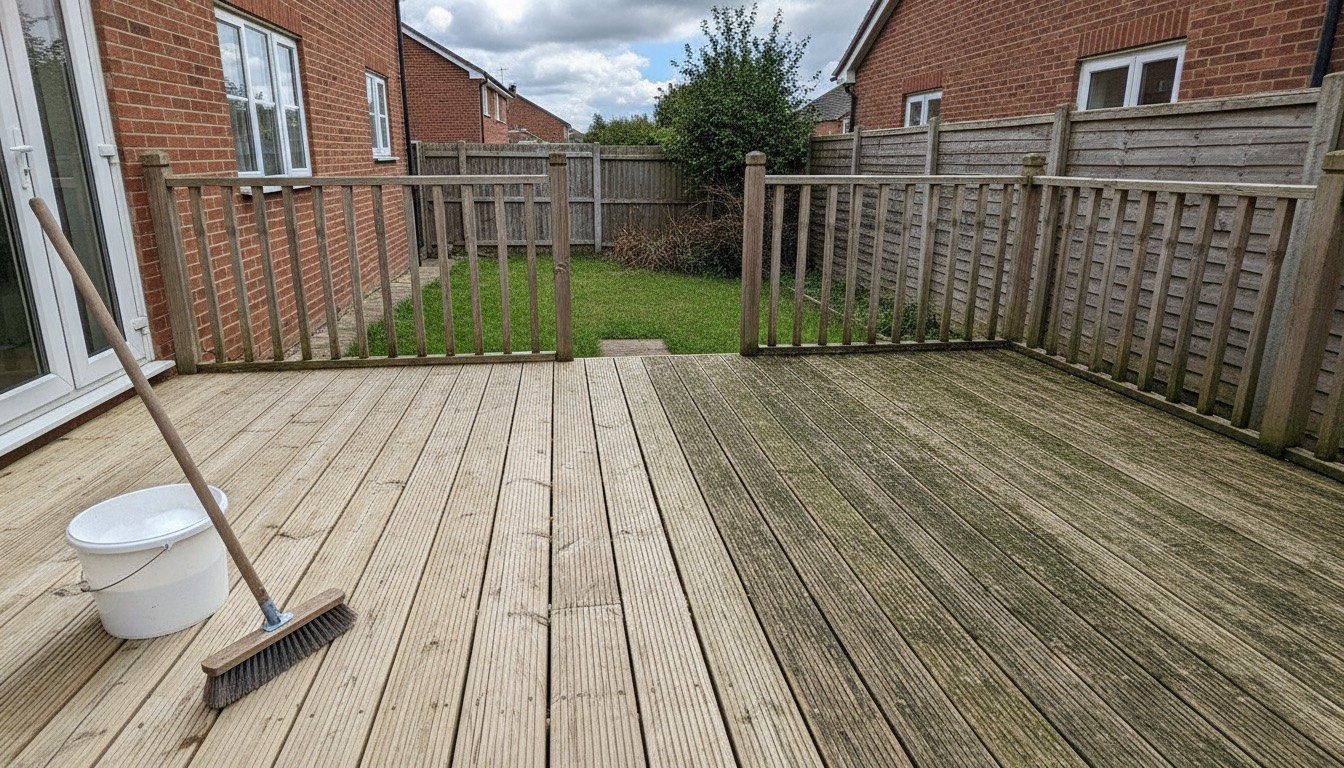
Two damp British winters is all it takes. Algae colonises the shaded half of the boards, holds moisture against the timber, and by March the deck is green and genuinely dangerous underfoot. Then somebody borrows a pressure washer, fits the red pencil nozzle because it looks powerful, and turns sound softwood into a furred surface no stain will ever sit on properly.
Cleaning is the highest-value job in the whole deck maintenance cycle: under £55 in materials, one afternoon, and it decides whether your next coat of deck stain lasts two years or five. It is also one of the few garden jobs where UK rules genuinely bite, on outdoor electrics, on what goes down the drain, and on whether you may use a hose at all that week.
Safety First: Electrics, Runoff and Hosepipe Rules
The real hazard is a mains appliance dragged around a wet surface. Any socket feeding a pressure washer outdoors needs 30 mA RCD protection under BS 7671, and if your consumer unit still runs rewireable fuses, buy a plug-in RCD adaptor for £10 to £15. Installing a new outdoor socket circuit is notifiable work under Part P of the Building Regulations in England and Wales, so it needs a registered electrician or building control sign-off.
Runoff matters too. Deck cleaners and biocides are toxic to aquatic life, and letting polluting matter enter a surface water drain is an offence under the Environmental Permitting Regulations, so plug the gully and divert the wash onto soil. Check your water company as well: under a Temporary Use Ban, hosing decking, paths and patios is prohibited, though a bucket or a water butt stays legal.
- •Goggles and ear defenders: a 120 bar jet fires grit back at your face, and most domestic machines run at 80 to 85 dB.
- •Rubber-soled boots with real grip, because wet algae on smooth decking is close to ice.
- •Nitrile gloves and long sleeves for sodium percarbonate and biocide concentrates.
- •A double check valve on the hose tap, required under the Water Supply (Water Fittings) Regulations 1999.
Tools and Materials You Actually Need
You can do a good job with a brush and a bucket; a machine only speeds up the rinse. If you are buying rather than hiring, a mid-range domestic pressure washer with an adjustable lance beats a high-bar model you will only have to throttle back.
- •Long-handled stiff deck brush, £12 to £20. Never a wire brush: steel fragments rust into the grain and stain permanently.
- •Pressure washer, 100 to 130 bar, with a 25 degree green fan nozzle. Roughly £90 to £250 to buy, £25 to £35 a day to hire.
- •Sodium percarbonate deck cleaner, £15 to £25 for 5 litres, covering 50 to 80 square metres.
- •Leave-on biocide, usually benzalkonium chloride, £18 to £28 for 5 litres at 1:4. This is what stops the green returning.
- •Garden pump sprayer at £10 to £15, a plastic scraper for the board gaps, and sheeting for planting that percarbonate would scorch.
Realistic Time, Cost and Skill Level
A 20 square metre deck, the commonest size on a UK new-build, takes three to five hours of work plus 24 to 48 hours of drying before anything can go on it. Skill level is low. What catches people out is impatience with the lance.
- •DIY materials, 20 square metres: £30 to £55 for cleaner, biocide and a brush.
- •Pressure washer hire: £25 to £35 a day plus a deposit.
- •Professional clean: £5 to £9 per square metre, with a £120 to £180 minimum charge.
- •Clean and re-stain professionally: £14 to £22 per square metre depending on board condition.
How to Clean a Timber Deck: Step by Step
Work in whole board lengths, always along the grain, and never stop halfway down a board.
- •1. Pick the window: 10 to 20 degrees with two or three dry days forecast after. Late April to May and early September are the dependable UK slots; below 8 degrees the boards will not dry.
- •2. Strip the deck, then punch any proud screw heads or lifted nails 2 mm below the surface before the brush catches on them.
- •3. Rake the gaps between boards with a scraper. Packed leaf mulch is the main reason a deck stays wet and rots from the board edges inwards.
- •4. Sweep, then wet the whole deck with plain water. Dry timber drinks cleaner unevenly and leaves tidemarks you will still see next summer.
- •5. Spray the cleaner on in 3 to 4 square metre panels and leave it 10 to 15 minutes. Never let it dry on the surface.
- •6. Scrub each panel hard along the grain. Ten to fifteen firm seconds per board length beats five minutes of gentle wafting.
- •7. Rinse at no more than 120 bar with the 25 degree nozzle held 250 to 300 mm off the board, moving constantly. The 0 degree red nozzle has no place on softwood decking.
- •8. Do handrails, spindles and fascia next and the steps last, so dirty water never runs back over clean timber.
- •9. Let it dry 24 to 48 hours, then apply the leave-on biocide at 1:4. That step buys twelve clear months instead of three.
- •10. Test before staining: a droplet should soak in within 30 seconds. If it beads, the deck is still damp or still carrying old sealer.
Composite Decking Needs a Different Approach
Capped composite is not timber. Most manufacturers void the warranty above a stated pressure, usually 80 bar, and bleach-based cleaners can permanently lighten the cap. Warm water, washing-up liquid and a soft brush handle almost everything. If you are weighing replacement against another decade of scrubbing, our look at composite versus wood over ten years sets out where the money goes.
- •Rinse at 60 to 80 bar with a 40 degree nozzle, following the grain embossing.
- •Shift barbecue grease within days; once it bakes in the sun it leaves a permanent shadow.
- •Uncapped first-generation composite does go mouldy and does need biocide, unlike modern capped boards.
Troubleshooting: Furring, Stripes and Stains That Return
Nearly every complaint after a deck clean traces back to pressure, patience or a skipped biocide.
- •Furry, fibrous boards: you went too close or too hard. Dry it fully, then sand along the grain with 80 grit and finish at 120.
- •Tiger striping: lance overlap marks. The only real fix is redoing the whole deck evenly at lower pressure.
- •Black spots that survive everything: mould deep in the grain, or tannin bleed around steel fixings. An oxalic acid brightener at £12 to £18 shifts most of it.
- •Green back within six weeks: no biocide applied, or the deck sits in permanent shade with no airflow beneath it.
- •Chalky white bloom: leached preservative salts. New tanalised decking needs 6 to 12 months before it will take stain.
- •Water still beading afterwards: old sealer remains, and that needs a solvent stripper rather than more scrubbing.
When to Stop and Call a Professional
Cleaning exposes structural problems rather than causing them. Push a screwdriver into joists, posts and board ends: if it sinks more than 5 mm, that timber is rotten and washing will not help. Surface boards you can replace yourself, but joists, ledger fixings into the house wall and anything raised above 600 mm belong with a joiner.
Regulations bite here too. Decking is permitted development only where no part of the platform sits more than 300 mm above ground level and outbuildings stay under half the garden, with tighter rules in conservation areas. Landlords face a sharper duty: a slippery, algae-covered deck at a let property reads as a falls hazard under the HHSRS and can attract an improvement notice, so put it on a schedule with a printable deck maintenance checklist rather than waiting for a complaint.
- •Any bounce, sway or handrail flex under a firm shove: stop using the deck and have it inspected.
- •Rot at the ledger where the deck meets the house, which is both a collapse risk and a damp bridge into the wall.
- •Decking over a flat roof or balcony, where the waterproof layer beneath matters far more than the boards do.
Found this useful?
There's plenty more — hundreds of guides and honestly-tested product reviews for every corner of your home.
Browse All Guides