Garden & Outdoor · 6 min read · 13 June 2026
How to Clean a Hot Tub: The Full UK Drain-and-Clean Method
The smell when you lift the cover almost never comes from the shell. It comes from biofilm in pipework you cannot see — here is how to get it out.
By the Nims Casa editorial team — written from professional cleaning experience and checked against our editorial standards.
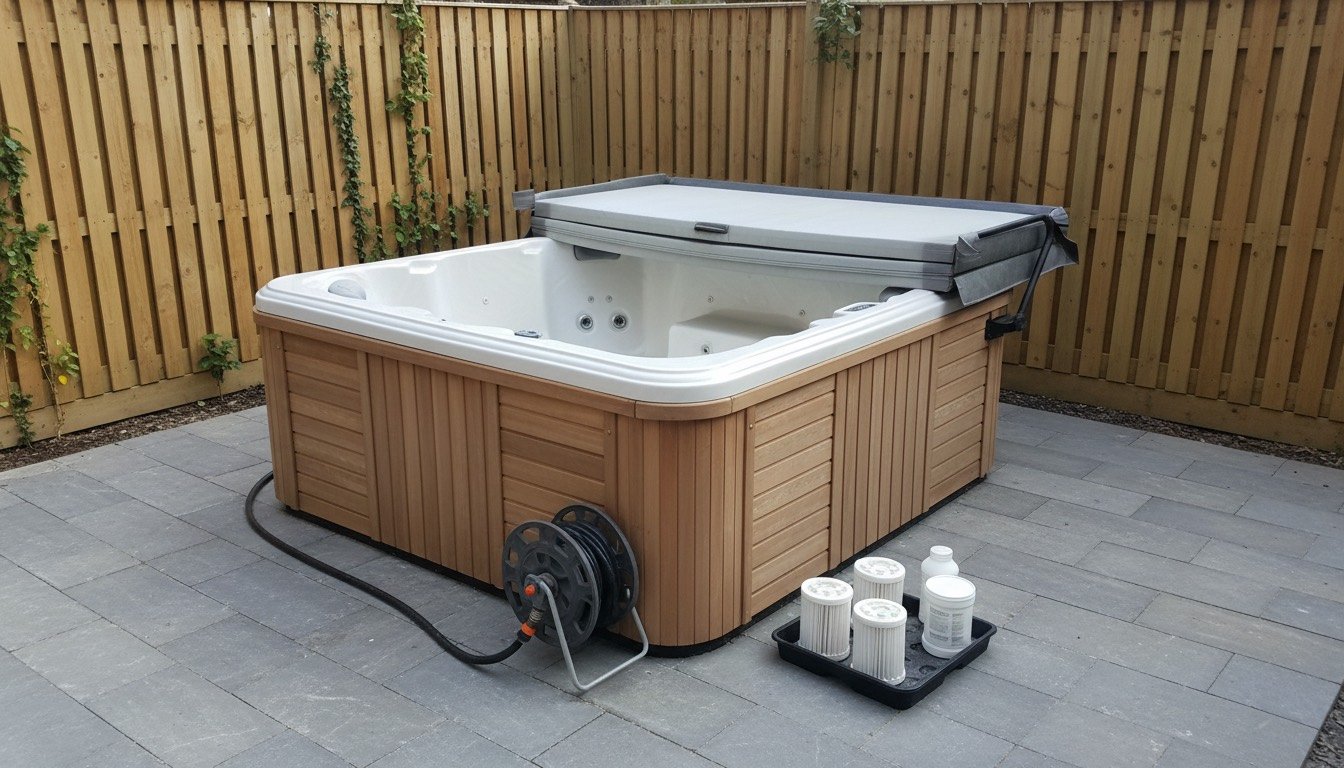
A tub that smells faintly of damp socks when you fold the cover back is not dirty on the surface. It is dirty inside, in metres of flexible pipework you cannot reach. That greasy layer — biofilm built from body oils, sun cream and hair products — is where the smell, the foam and most of the sanitiser demand live.
A proper clean means flushing the pipes, draining, cleaning the shell and filters, refilling and rebalancing: about three hours of hands-on work across a day, and £40 to £70 in water, power and chemicals. Nearly all of it is homeowner work. One group of jobs is not, and this guide marks that line plainly.
Safety first: isolated, not just switched off
The topside control panel is not an isolator. It tells the circuit board to stand down; it does not remove power from the heater or pumps. Kill the supply at the weatherproof rotary isolator on the wall, and on a 13A plug-and-play tub pull the plug from its RCD socket. Never run a tub off an extension lead or cable reel.
- •Stay isolated until the tub is refilled above the highest jet.
- •Thirty seconds of dry running wrecks a pump seal or heater element — a £150 to £300 mistake.
- •Never take the cabinet panels off with the power on — live terminals sit inches above wet ground.
- •Never mix chemicals, including two sharing one scoop. Add chemicals to water, never the reverse.
- •Gloves and eye protection for the flush and shock dose; cover open, stand upwind.
- •If the RCD trips twice, stop. Repeated tripping is an earth fault, not a nuisance.
Tools, materials and the chemical kit
Two things make the real difference: a submersible pump, and a second set of cartridges so one pair dries while the other works. A damp cartridge is a bacterial hotel.
- •Submersible pump (£30 to £60) and a wet-and-dry vacuum for the last 20 litres
- •Microfibre cloths and a non-abrasive sponge — no scouring pads, ever, on acrylic
- •Spa surface cleaner (£6 to £10), or white vinegar diluted 1:4 for the scale line
- •Spa pipe flush or biofilm remover, £10 to £15 — the most useful product you will buy
- •Filter cleaner concentrate (£8 to £12) and spare cartridges at £15 to £35, renewed yearly
- •Test strips (£10 to £15 for 50) or a liquid test kit
- •Chlorine granules or bromine tablets, non-chlorine shock, pH minus, pH plus, alkalinity increaser
- •An inline hose pre-filter, £25 to £40 — pays for itself in hard-water areas
How long it takes, what it costs, how often
Set aside a full day even though you only work part of it. Reheating is the long pole: a 3kW heater lifts 1,500 litres by about 1.5°C an hour, so a refill from 10°C mains to 38°C takes 15 to 20 hours and 48kWh — £12 to £16 at 27p a unit. Metered water adds £4 to £6, chemicals £20 to £35.
Ignore vague advice to do it quarterly. Divide the volume in litres by 13.6, then by the average bathers per day. A 1,500-litre tub used by two people most evenings gives 55 days — eight weeks, not three months. Fake tan and hot summers shorten it. The same arithmetic applies to a pool, covered in our guide to balancing pool water.
The drain-and-clean, step by step
Order matters. The flush comes first, while the water is warm and circulating — that is the only way to shift what is inside the pipework.
- •1. Remove the cartridges, add pipe flush at the label dose, and run every pump and blower for 20 to 30 minutes, cover open. The grey scum that surfaces is what you came for.
- •2. Skim that scum off with a net so it cannot drain back down the pipes, then isolate at the wall.
- •3. Drain. A submersible pump clears 1,500 litres in 15 to 20 minutes; gravity takes 45 to 90. Run the hose to a foul gully, never a surface water drain — that reaches a watercourse and is an offence.
- •4. Vacuum the footwell, filter housing and skimmer pocket dry, then wipe the shell top-down with spa cleaner. Never washing-up liquid — it foams for weeks.
- •5. Dwell 1:4 white vinegar on the waterline mark for five minutes. That band is scale bonded with body oil.
- •6. Back each jet off a quarter turn, clean face and recess, reseat. Wash headrests separately and dry them — sanitiser destroys wet foam.
- •7. Soak cartridges overnight in cleaner solution, rinse fan by fan, dry fully.
- •8. Clean both cover faces, treating underside mould with dilute sanitiser. A waterlogged cover needs replacing at £150 to £400.
- •9. Refill through the filter housing, not over the side. The hose down the standpipe pushes air out of the pump instead of trapping it, preventing airlocks.
- •10. Restore power, watch for leaks, then crack each pump union a quarter turn if the jets sound dry.
- •11. Balance in order: alkalinity to 100-150ppm, pH to 7.2-7.6, sanitiser to 3-5ppm. Retest at 12 hours and again before use.
Troubleshooting: the faults that keep coming back
A problem that returns within a fortnight of a clean is almost always chemistry or a filter you should have replaced. Foam that will not clear means residual detergent or high dissolved solids — defoamer is a plaster, fresh water is the cure. Cloudy water a day after refilling is low sanitiser or a tired cartridge, not the fill water. A strong chlorine smell is the opposite of what people assume: it is chloramines, meaning the sanitiser is spent and the tub needs shocking. Whining pumps with weak jets are an airlock. Gritty deposits and a rough waterline are scale, and the logic in our UK limescale guide applies — treat the water, not just the surface.
Where DIY stops and a professional starts
Everything above is homeowner work. Draining, flushing, shell and jet cleaning, filter care, cover maintenance, refilling and chemical balancing need no qualifications — just care and an isolator you actually use. Replacing a cartridge, headrest or jet face is fair game too.
The line is the cabinet and the electrical supply. In England and Wales a new circuit for a hard-wired tub is notifiable under Part P of the Building Regulations, and the zones around it fall under Section 702 of BS 7671. A registered electrician (NICEIC, NAPIT or ELECSA) must do or certify it: budget £350 to £700 for a dedicated 30mA RCD-protected supply with a rotary isolator within sight of the tub. Our breakdown of what an electrician costs explains those rates, and the list of electrical jobs nobody should DIY is worth reading first.
Call a spa engineer for a repeatedly tripping RCD (usually a heater element failed to earth), heater or flow-switch replacement, pump seal and wet-end leaks, any repair needing pipework cut and rejoined, and persistent skin irritation despite correct chemistry. A technician drain-and-clean runs £120 to £250, a full valet £150 to £300. And a slippery deck injures more people than the water ever will: our decking guide covers reviving it without furring the boards.
Found this useful?
There's plenty more — hundreds of guides and honestly-tested product reviews for every corner of your home.
Browse All Guides