Plumbing · 6 min read · 6 May 2026
How to Clean a P-Trap: Clear a Slow Sink in 20 Minutes
A sink that gurgles and empties slowly usually has a soft grey collar of grease and hair narrowing the U-bend. Twenty minutes and a bucket fixes what a bottle of caustic gel won't.
By the Nims Casa editorial team — written from professional cleaning experience and checked against our editorial standards.
A basin that empties like it is thinking about it — gurgle, pause, gurgle — is nearly always saying the same thing. The bend beneath it has grown a soft grey collar of soap, grease, hair and toothpaste, building inwards over eighteen months to three years until a 40mm bore is nearer 15mm.
This is one of the few plumbing jobs where the worst realistic outcome is a wet cupboard floor. Below is the method we use on domestic call-outs, plus a version tuned for tenants who need every step to be reversible.
Safety first: the things that actually bite
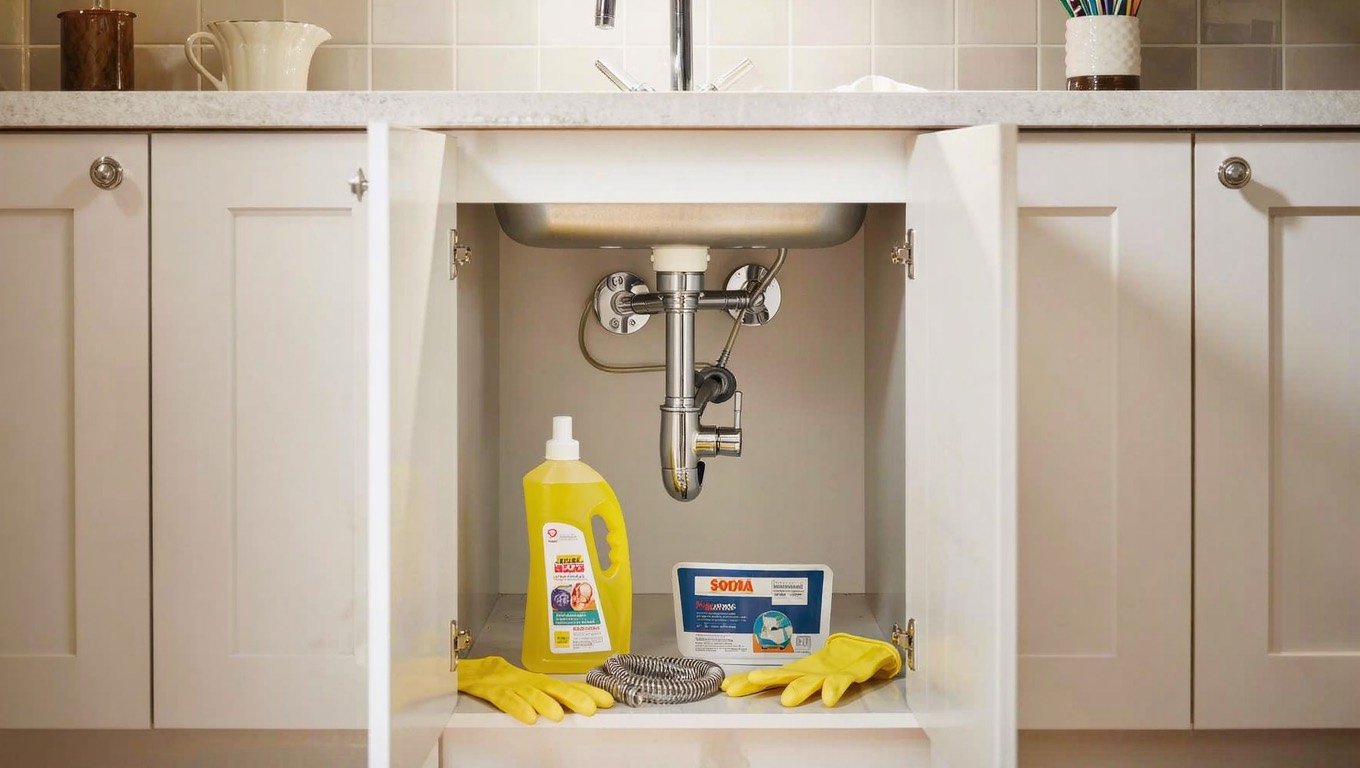
The commonest injury here is a chemical splash. If caustic gel has gone down that sink in the past week, do not open the trap: sodium hydroxide is denser than water, sits in the bend and stays active for days. Flush ten litres of cold water through first — and read whether chemical drain cleaners are safe for pipes before buying another bottle.
- •Wear nitrile gloves. Trap sludge is anaerobic bacteria and a small cut turns septic quickly.
- •Never pour kettle water into a plastic waste. Water at 100°C softens polypropylene and distorts compression seats; hot tap water at around 55°C is fine.
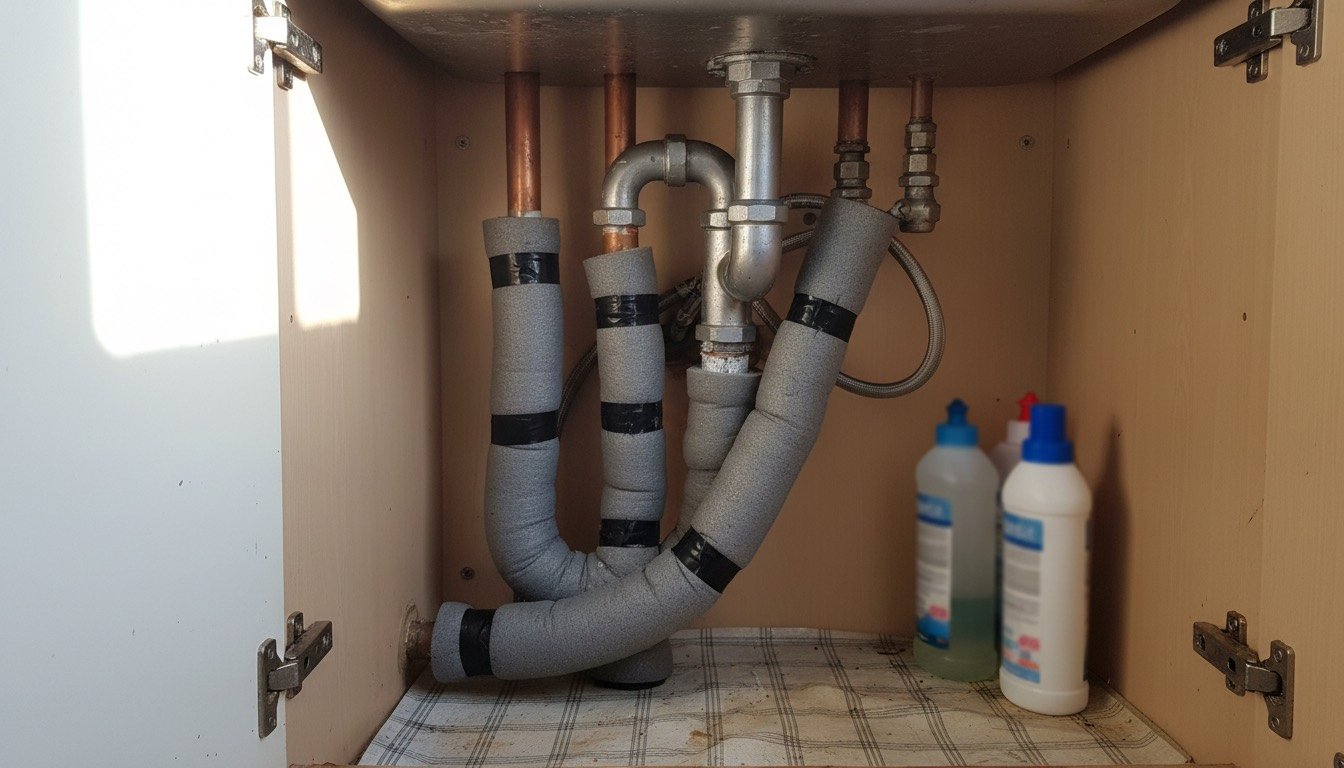
- •Pre-1970s properties may have chrome-plated brass or lead pipework. Seized chrome nuts snap the waste tail off, turning a cleaning job into a plumbing bill.
Tools and materials you actually need
Skill level is genuine beginner. Modern UK traps are designed to be hand-tight, so the biggest mistake is bringing too much force.
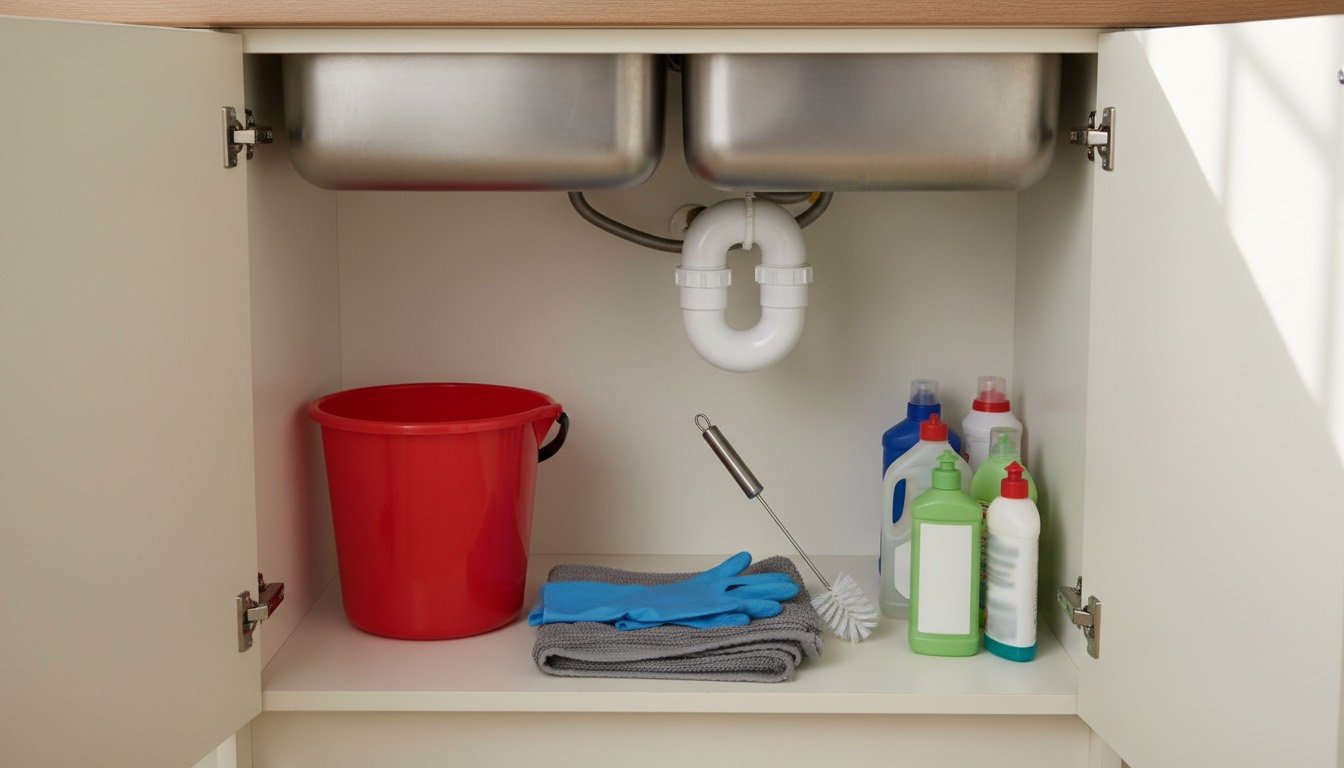
- •A five-litre bucket or washing-up bowl low enough to sit under the trap; a kitchen trap and tail hold close to a litre.
- •Old towel, newspaper and a head torch — under-sink cupboards are dark.
- •A bottle brush or 40mm flue brush, stiff wire, and an old toothbrush for the waste tail.
- •Washing-up liquid and two tablespoons of soda crystals (about £1.50 per kilo).
- •A spare washer pack, £2 to £3 from Screwfix or Toolstation. Perished washers cause most post-clean drips.
- •Optional spare trap: £6 to £10 for a 40mm tubular P-trap, £8 to £14 for a 32mm bottle trap.
How long it takes and what it really costs
A pedestal basin bottle trap is ten to fifteen minutes. A kitchen sink with a dishwasher spigot and washing machine hose on the same trap runs to twenty or thirty, because you are working around hoses that have set into a shape.
Materials cost nothing if trap and washers are sound, £8 to £14 if you replace the lot. A plumber charges roughly £60 to £110 for a first hour outside London and £90 to £160 inside the M25 — see our plumber call-out rates before ringing anyone.
How to clean a P-trap, step by step
Work in order. Steps three and eight are the ones people skip, and they cause most of the callbacks.
- •1. Empty the cupboard, then lay newspaper and an old towel over the unit floor.
- •2. Photograph the trap and note which appliance hose feeds which spigot.
- •3. Put the bucket under the bend before loosening anything. A basin trap holds around 250ml of standing water.
- •4. Loosen the upper compression nut where the trap meets the waste tail, anticlockwise as you look up, then the outlet nut. Both should move under hand pressure alone. On a bottle trap, simply unscrew the lower cup.
- •5. Drain the trap, then retrieve the washers immediately — they are the same colour as the sludge.
- •6. Scrape the bore with the bottle brush, then wash it with hot tap water, washing-up liquid and soda crystals. The grease lifts as a grey emulsion.
- •7. Clean the waste tail above the trap with the toothbrush and wire. The collar builds there too, which is why trap-only cleans slow again by Christmas.
- •8. Refit with washer tapers into the joint — sloped face to the pipe, flat face to the nut. Hand-tight, then an eighth of a turn. Never a spanner.
- •9. Fill the bowl, pull the plug, then hold a dry tissue against every joint for sixty seconds.
- •10. Run the tap twenty seconds to refill the water seal. Regulations require 75mm in most domestic traps, and it keeps soil gases and insects out. Skip it and you get drain smells within a day, plus the summer cloud behind most cases of drain and fruit flies.
The renter-safe version that protects your deposit
Cleaning a trap is maintenance, not an alteration: nothing is drilled, cut or permanently changed, which is why it sits comfortably inside most UK tenancy agreements. Deposit risk comes from the extras people add.
- •Photograph the trap before and after. Two dated phone photos settle any argument at check-out.
- •Keep the original washers — and the old trap, if you replace it — bagged under the sink. Reversibility is the whole point.
- •No sealant, PTFE tape or silicone on compression joints. They do not need it, and a smeared joint reads as 'tampered with' on an inventory report.
- •Do not cut pipework, drill, or swap a bottle trap for a tubular one: changing the fitting type is an alteration.
- •If a nut is seized or the trap is chrome-plated brass, stop and report it in writing. The moment you crack a fitting, the repair becomes yours.
- •Avoid caustic gels: they pit old enamel and perish seals, and that damage gets charged to tenants far more often than a blockage does.
- •If it blocks again within weeks the fault is usually the branch pipe or stack — the landlord's problem. Email the agent with dates, and clear it before any booked end of tenancy clean.
Troubleshooting: still slow, or now leaking
If the bore came out clean and the sink is still sluggish, the restriction was never in the trap — it is downstream, and the options are in our guide to clearing a blocked sink drain.
- •Drip from the top nut: washer fitted taper-backwards, or the nut is cross-threaded. Undo fully and restart it by hand.
- •Weeping from the trap body: a hairline crack from over-tightening. It will not reseal — replace it, £6 to £10.
- •Smell returns within days: the seal dried out. Pour 500ml down unused wastes weekly.
- •Another fitting gurgles when this one drains: a venting or partial stack problem, not a trap fault.
- •Grey water rising when the washing machine empties: the shared branch is blocked.
When to stop and call a professional
The honest boundary is that the trap and waste tail are yours and everything past the wall is not. Once two or more fittings run slow together, or water backs up at the lowest point in the house — a ground-floor shower tray or WC — you have a shared drain problem. On pre-1970s salt-glazed clay that usually means root ingress or a collapsed section, and a CCTV survey at £80 to £180 beats guessing.
Call someone straight away for lead or cast-iron pipework, seized chrome nuts, or a blockage returning within a fortnight of a proper clean. Where it is nuisance rather than emergency, habits pay better than tools — our notes on preventing clogged drains cover the grease and hair behind it.
Found this useful?
There's plenty more — hundreds of guides and honestly-tested product reviews for every corner of your home.
Browse All Guides