Plumbing · 6 min read · 8 May 2026
How to Unclog a Sink Drain: The Order of Attack UK Plumbers Use
Most blocked sinks clear in twenty minutes with a plunger and a bucket. The skill is knowing which ones do, and which ones will cost you a ceiling if you keep going.
By the Nims Casa editorial team — written from professional cleaning experience and checked against our editorial standards.
Nine blockages out of ten sit within 600mm of the plughole, in the trap or the first bend of the waste pipe — a bucket-and-twenty-minutes job for anyone who can turn a plastic nut. The tenth sits further down, and the difference matters: the tools that clear a trap do nothing to a soil stack, and the chemicals people reach for at that point are the ones that put them in A&E.
Below is the sequence a working plumber runs, in order, with the point at which they stop guessing. It suits a kitchen sink on 40mm waste and a basin on 32mm alike.
Safety First: The Bits That Actually Hurt
Low-risk work with a few nasty exceptions, all avoidable. If water has come back up rather than failed to go down, treat it as contaminated: gloves on, everything washed at 60°C after.
- •Caustic soda and sulphuric acid openers generate real heat and spit. Never plunge, rod or open a trap after using one — that liquid will find your forearms. If a chemical has failed, the job belongs to a professional, and you must tell them what went down. The pipe damage side is covered in our guide to whether chemical drain cleaners are safe for pipes.
- •Never mix products. Bleach plus an acid opener releases chlorine gas in a cupboard-sized space.
- •Kettle-hot water is fine down modern polypropylene waste; a rolling boil poured repeatedly onto a solvent-welded joint is not. Let the kettle stand a minute.
- •Check the cupboard before you flood it — washing machine sockets and boiler condensate pipes live down there.
Tools and Materials
The whole kit costs less than one call-out fee.
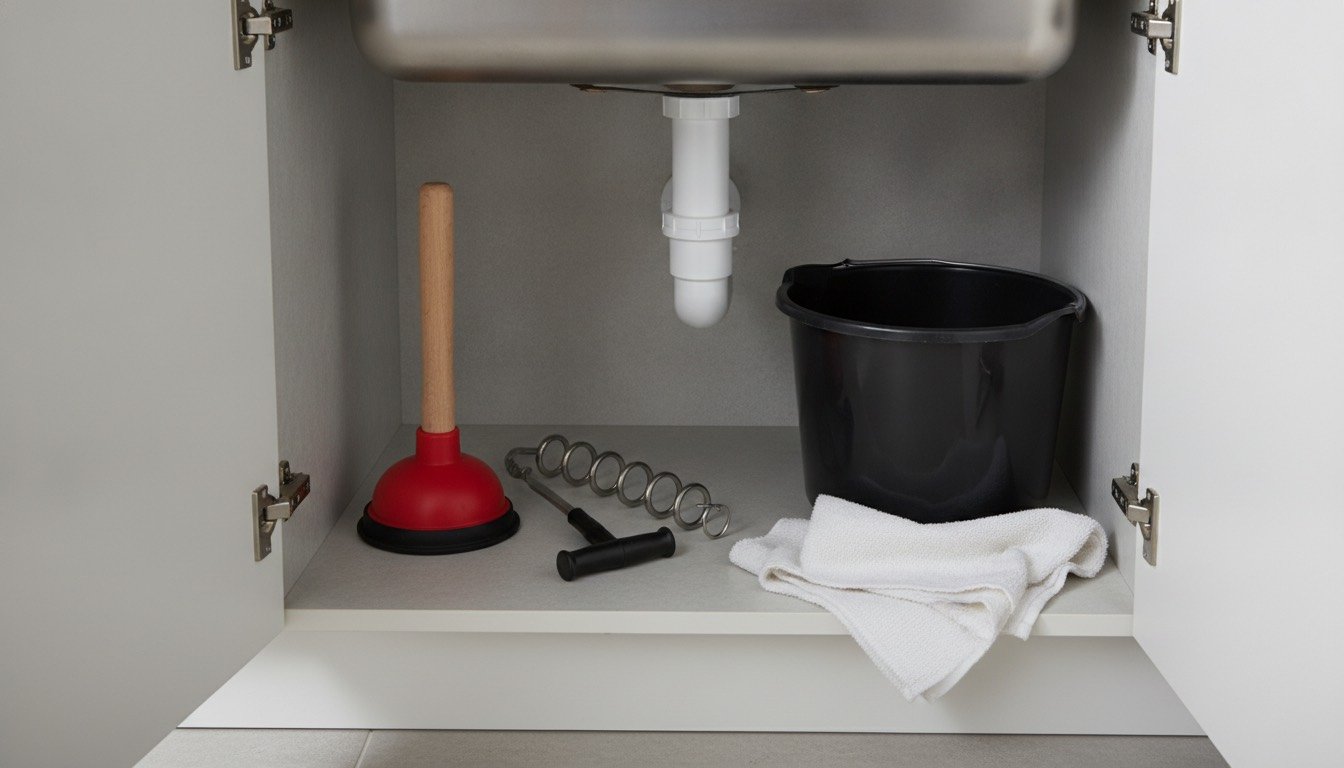
- •Force-cup sink plunger, roughly 100mm cup — £4 to £8. Not a flanged toilet plunger.
- •10-litre bucket, old towels, nitrile gloves.
- •Hand auger (drum snake), 5m of 6mm cable — £12 to £20. Our drain snake buying guide explains the difference between a basin spring and a proper drum.
- •Water pump pliers, for a trap nut done up with a spanner.
- •Spare washers, or a whole replacement trap at £5 to £9 — old washers often refuse to reseal.
- •Drain rod set, 10 x 1m, £22 to £35, only if the blockage is outside.
Realistic Time and Cost
- •Bail, plunge and test: 15-20 minutes, nothing if you own a plunger.
- •Strip, clean and refit the trap: 30-45 minutes, £0-£9.
- •Auger the branch waste to the stack: 45-60 minutes, one-off tool cost.
- •Rod an outside gully or chamber: 1-2 hours, plus a shower.
- •Calling someone: £70-£140 for a plumber's first hour, £90-£190 for a drainage firm with a jetter, £120-£300 for a CCTV survey. Our drain cleaning cost guide has the regional spread.
The Nine Steps, In Order
Do not skip ahead — each step narrows where the blockage sits. Step four clears most kitchen sinks on its own.
- •1. Bail the standing water down to about 50mm with a jug. You want water covering the plunger cup, not a full bowl.
- •2. Add a generous slug of washing-up liquid, then two kettles of very hot water over five minutes. On grease this alone often works.
- •3. Block every other opening: a wet cloth jammed hard into the overflow, and a palm over the second bowl's plughole. Miss this and you push air in a circle.
- •4. Plunge properly. Seat the cup, press once to expel air, then 15 to 20 short vertical strokes without ever breaking the seal — break it only on the final upstroke. It is the pull that shifts debris, not the push.
- •5. Still blocked? Bucket under the trap, then unscrew the two compression nuts by hand; they are meant to be hand-tight. Expect a grey plug of fat and coffee grounds on a kitchen sink, hair and toothpaste on a basin.
- •6. With the trap off, feed the hand auger into the pipe going into the wall. Crank clockwise and stop at resistance rather than forcing through. Withdraw slowly and still turning, or you leave the blockage behind.
- •7. Refit the trap. Each washer taper faces into the nut, hand-tight only, and never PTFE tape on a waste compression joint.
- •8. Test with a full bowl, not a running tap. A trickling tap passes happily through a 70% blockage and will lie to you.
- •9. After five minutes, run dry kitchen paper around every joint. Damp paper means a washer needs reseating now.
Troubleshooting: Reading What the Sink Tells You
- •One sink slow, everything else fine — local. Trap or branch waste, and yours to fix.
- •Clears, then blocks again within three weeks — the pipe is lined with hardened fat and you have bored a hole through it. That needs jetting, not another auger: see drain snake vs hydro jetting.
- •The basin gurgles when the bath drains, or the WC burps when the sink empties — shared stack, so stop augering.
- •Water rising in a ground-floor shower, or standing in the outside gully — the problem is below ground and nothing at the sink will touch it. Check the signs of a blocked main sewer.
- •Smell but decent flow — a dried-out trap seal, not a blockage.
The DIY-or-Pro Boundary: Be Honest About This
The line is less about competence than about what is behind the pipe. Anything you can undo by hand and refit with the same washers is fair game; anything involving cutting, sewage or a shared drain is not.
- •Do it yourself: plunging; stripping, cleaning and refitting a plastic trap; running a 5m hand auger into a branch waste; lifting your own inspection chamber cover to look; rodding from a rodding eye — turning the rods clockwise only, or you unscrew a section and lose it down the drain.
- •Get a professional: lead or cast iron waste, common in pre-1960s stock and brittle enough to crack under a wrench; anything needing a pipe cut or solvent-weld joint on the soil stack; any blockage after a caustic or acid product; a third repeat in a year, which needs a camera not more force.
- •Stop immediately: sewage backing up into a bath, shower or ground-floor WC is a contamination and health issue, not a plumbing inconvenience.
- •Pay nobody if the blockage lies beyond your property boundary or in a drain shared with a neighbour. Since October 2011 those lateral drains and shared sewers in England and Wales belong to your water company, which clears them free. Scottish Water and NI Water work the same way — ring them before any drainage firm.
- •In a flat, the communal stack is the freeholder's or managing agent's problem. Report it and let them instruct the contractor.
Keeping It Clear Afterwards
The single biggest change is where the fat goes: cooled cooking fat into the bin, greasy pans wiped with kitchen paper first. Monthly, half a cup of bicarbonate followed by white vinegar, left 20 minutes and flushed with hot water, keeps a clean pipe clean — it will not rescue a blocked one. A £3 hair strainer saves the basin's annual strip-down, and our guide to preventing clogged drains covers the outside gully.
Found this useful?
There's plenty more — hundreds of guides and honestly-tested product reviews for every corner of your home.
Browse All Guides