Electrical · 6 min read · 8 July 2026
How to Reset a GFCI Outlet in a UK Home (It's an RCD Socket)
Ask for a GFCI outlet at a UK trade counter and you will get a blank look. The device exists here as an RCD, and resetting it is easy. Working out why it tripped is the part that matters.
By the Nims Casa editorial team — written from professional cleaning experience and checked against our editorial standards.
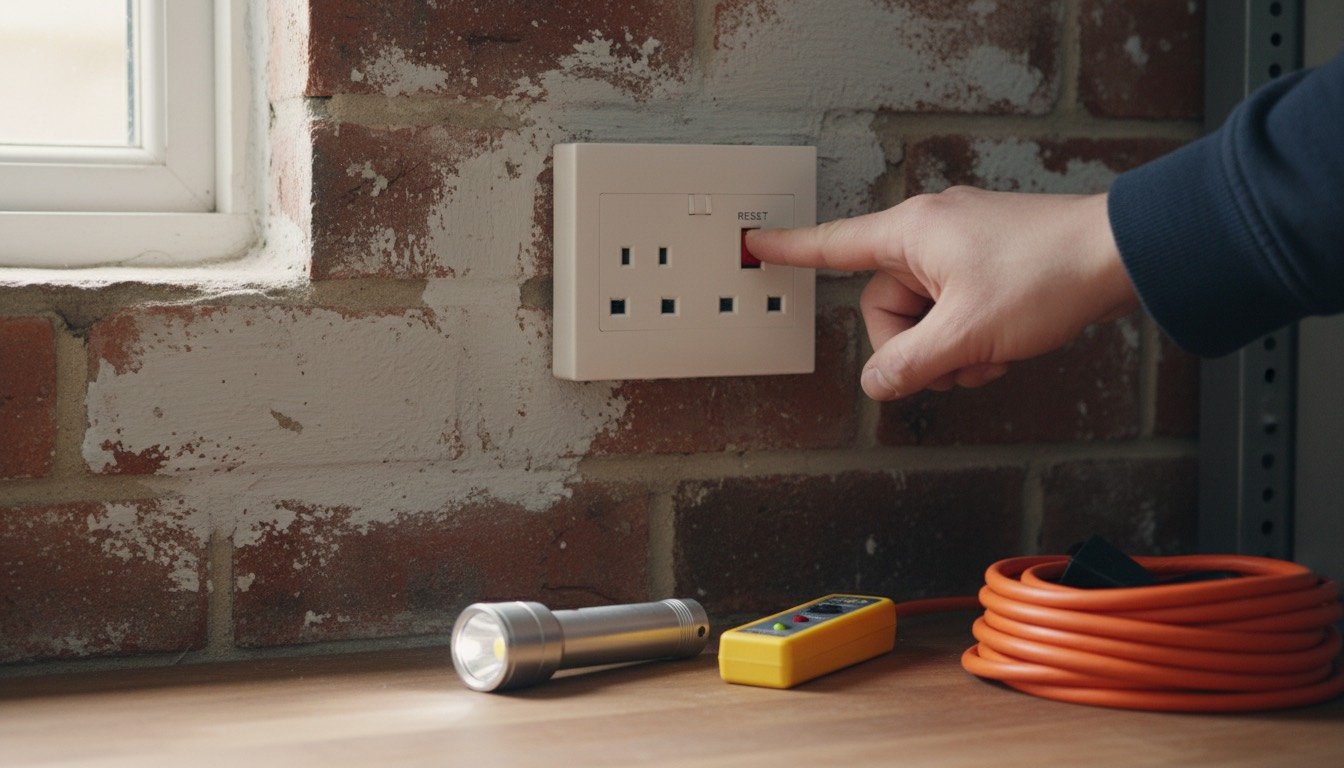
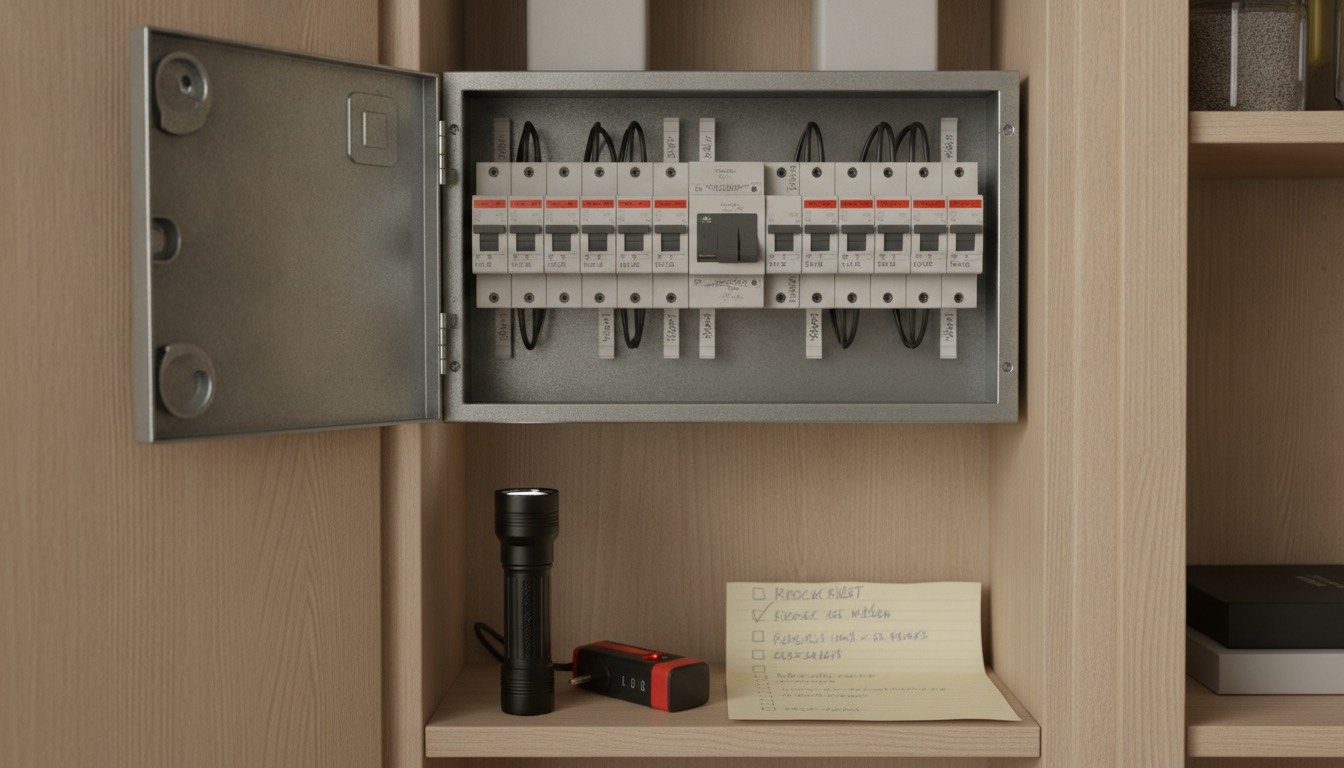
Ask a British electrician for a GFCI outlet and you will get a puzzled look. What the Americans call a GFCI, BS 7671 calls an RCD, and in a UK home it appears in three forms: an RCD socket with its own Test and Reset buttons, usually in a garage or outbuilding; one or two large RCDs in the consumer unit; or an RCBO protecting a single circuit. Pressing any of them back in takes ten seconds.
An RCD is not a fuse. It compares the current leaving on the line conductor with the current returning on the neutral, and when about 30 milliamps goes missing through damp insulation, a breaking-down element or a person, it disconnects in under 40 milliseconds. That is the difference between a nasty shock and a fatal one. Reset it, certainly, but do not get into the habit.
Safety first: the rules that do not bend
UK sockets sit at 230 volts on circuits protected at 32 amps: easily enough energy at a faceplate to kill. A device that has already operated is telling you something on that circuit is wrong.
- •Never tape, wedge or hold in a tripped RCD, RCBO or MCB. If it will not stay in, there is a reason.
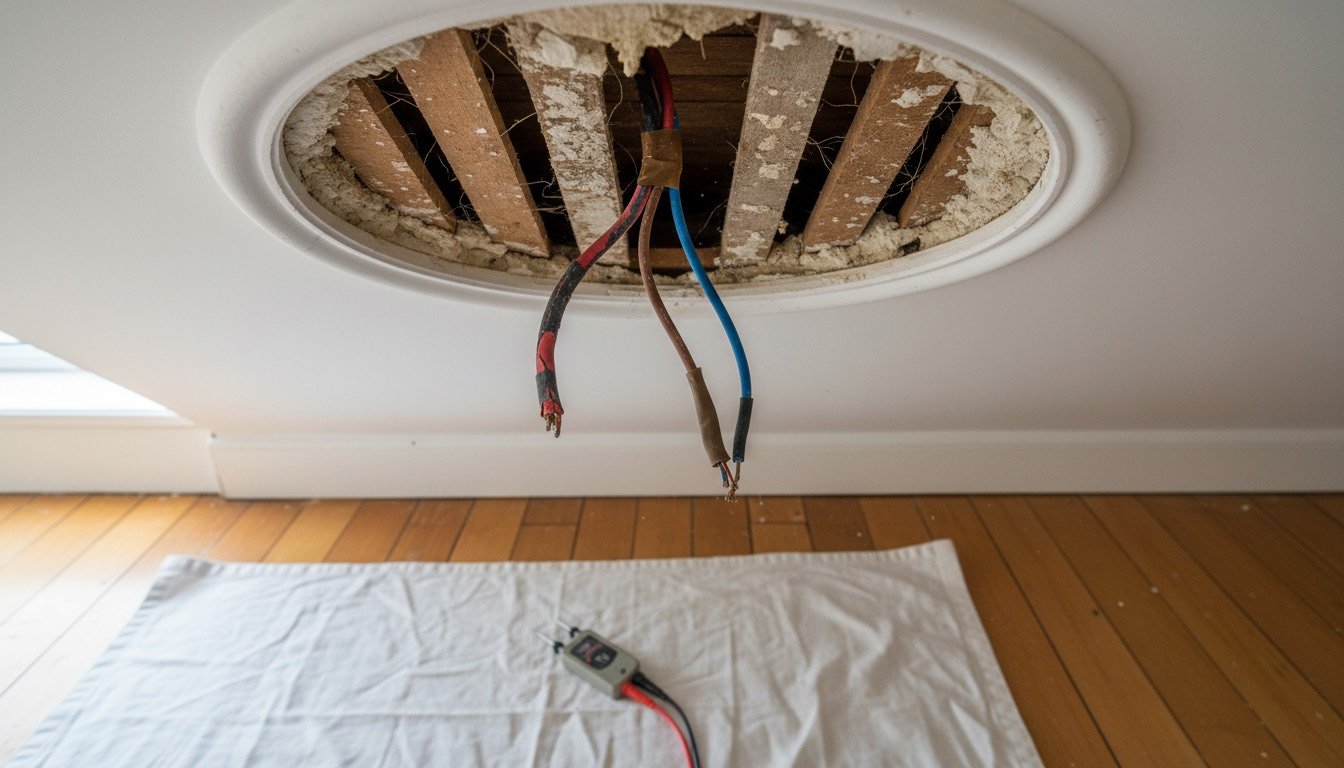
- •Do not remove a faceplate or consumer unit cover unless the circuit is isolated and proved dead with a two-pole voltage indicator. A neon screwdriver is not a test instrument.
- •Stop if you smell hot plastic, see browning around a socket, hear buzzing from the board or find a warm faceplate.
- •Assume the labelling is wrong. In UK housing stock it usually is, especially after an extension or refit.
Work out which device tripped before you touch anything
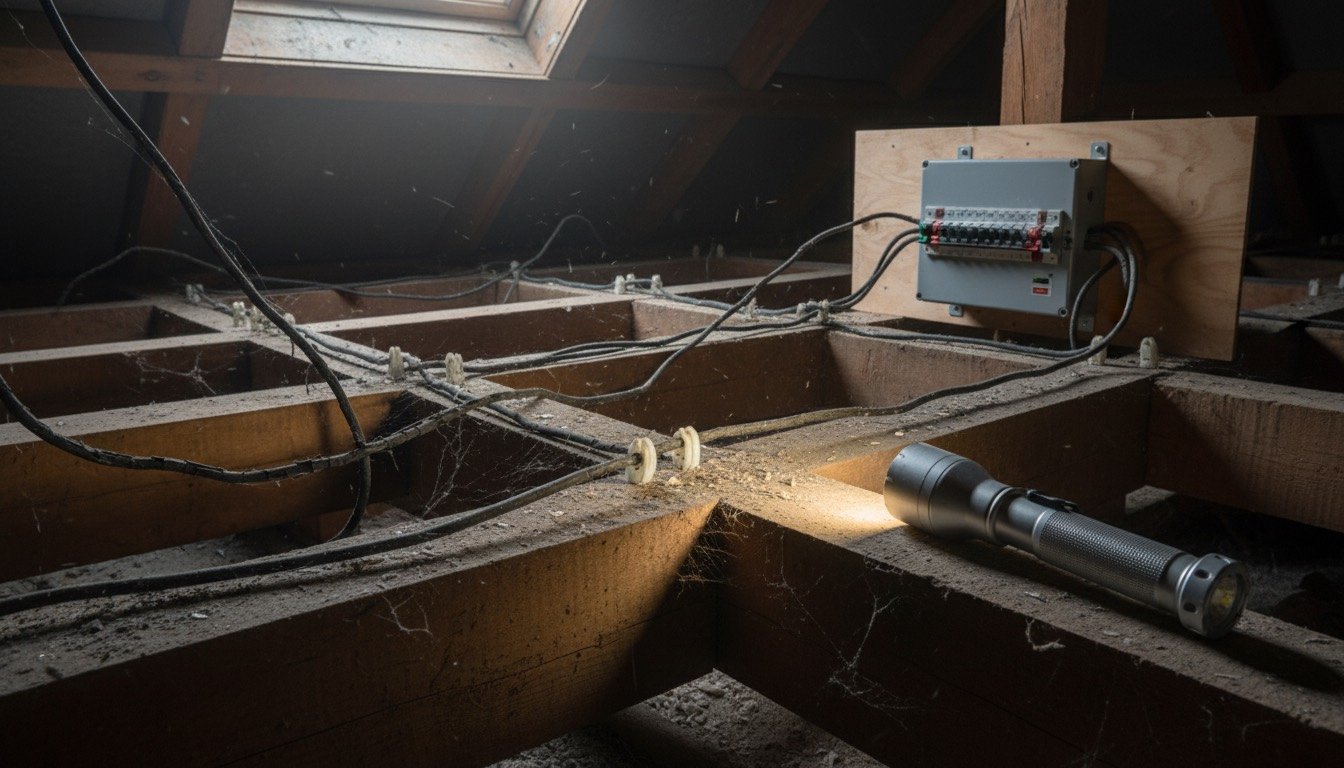
This is the step everyone skips, and it is why people waste an evening pressing the wrong button. Walk the house with a torch and answer these in order.
The distinction matters because the causes differ completely. An RCD or RCBO trips on earth leakage: water, a failing element, a nicked cable. An MCB trips on overload or a short, which is a separate problem covered in our guide to why a circuit breaker keeps tripping. If nothing has tripped and one socket is simply dead, work through the dead socket sequence instead.
- •Lights out here and next door? A supply failure. Ring 105 free from any UK phone and reset nothing.
- •Whole house dead but the street is fine? Check the main switch on the consumer unit before flicking anything.
- •Roughly half the house dead, sockets and some lights together? A split-load board, and one of its two 63A or 80A RCDs has gone.
- •One circuit dead and the device that moved has a small Test button? That is an RCBO: earth leakage on that circuit only.
- •One circuit dead and the device has no Test button, just a switch? That is a plain MCB: overload or short circuit, not leakage.
- •One socket dead with Test and Reset buttons on the faceplate? That is an SRCD, our nearest equivalent to the American GFCI outlet. Garages, sheds and outdoor sockets are often fed through one.
Tools, time and realistic cost
- •Torch. Consumer units live in dark cupboards and under stairs.
- •Plug-in socket tester, £12 to £30. It flags a missing earth or reversed polarity; it does not prove a circuit safe. Our socket tester picks cover what is worth buying.
- •Replacement RCD socket if yours has failed: £12 to £30 for a decent double.
- •Time: two minutes to reset, 20 to 45 minutes for a proper half-split test.
- •Electrician: a £60 to £120 minimum call-out, then £45 to £75 an hour outside London and £70 to £110 inside it. See our electrician cost breakdown.
How to reset it, step by step
- •1. Switch off and unplug everything on the circuit, including fused connection units feeding an extractor fan or immersion heater.
- •2. For an RCD socket, press Reset firmly until you feel a definite click. Some units need a deliberate push, not a tap. No click means no supply, so check the MCB feeding it.
- •3. For a consumer unit RCD or RCBO, push the lever fully DOWN first, then back UP. A tripped device often sits half-latched and pushing straight up achieves nothing.
- •4. If a split-load RCD still will not hold, switch every MCB under it off, reset the RCD, then switch them back on one at a time. The one that drops it is your faulty circuit.
- •5. Plug appliances back in one at a time, two minutes apart. Give heating appliances longer: a failing element often only leaks once hot.
- •6. Note what caused the trip and stop using it. Immersion heaters, electric showers, kettles and old tumble dryers are the usual suspects.
- •7. Press Test afterwards to confirm the device still works, then reset. Do this every three months, as the label inside most UK consumer units instructs.
It will not reset: symptom by symptom
If it holds with everything unplugged but drops the moment you load it, you have a faulty appliance. If it will not hold with the whole circuit disconnected, the fault is in the fixed wiring, and that is where DIY stops.
- •Trips instantly with nothing plugged in: damaged cable, water in a back box or a failed device.
- •Trips only when it rains: water in an outdoor socket, garden lighting or a shed supply. Very common here from October onwards.
- •Trips at 4am with nobody up: something on a timer. Immersion heater on Economy 7, a freezer defrost cycle, a towel rail.
- •Trips 20 minutes into a shower or wash cycle: an element breaking down as it warms.
- •Random trips in a house full of electronics: accumulated standing leakage. Every switched-mode supply leaks a milliamp or two, and twenty on one 30mA RCD leaves no headroom. Splitting onto RCBOs is the fix.
- •Test button does nothing: the device has failed and is giving no protection. Replace it.
Where DIY stops in the UK
Resetting a device, unplugging appliances and running a half-split test are all within reach of a competent householder. Beyond that, the boundary in England and Wales is Part P of the Building Regulations. Swapping a failed RCD socket like for like is not notifiable, but a new circuit, a consumer unit replacement or work in a bathroom is, and must be certified by a registered electrician on a scheme such as NICEIC or NAPIT, or signed off by building control. Scotland and Northern Ireland run their own equivalents; our guide to notifiable electrical work has the detail.
Call someone immediately if the RCD will not hold with the circuit disconnected, if there is scorching, buzzing or a burning smell, if the tripping began after a leak, or if the circuit serves a shower, cooker or EV charger. All of those sit firmly in the category of electrical work you should never do yourself. If your board is an old rewireable fuse box with no RCD protection, an Electrical Installation Condition Report is the sensible next spend: £150 to £300 for a typical three-bed, and legally required every five years if you let the property in England.
Found this useful?
There's plenty more — hundreds of guides and honestly-tested product reviews for every corner of your home.
Browse All Guides