Roofing & Exterior · 6 min read · 11 April 2026
How to Restore Original Wood Windows (UK Sash & Casement Guide, With Real Costs)
Original Victorian and Georgian joinery is usually slow-grown pine that outlasts anything sold today. Here is the honest method, the real per-window cost, and the point at which you hand it to a joiner.
By the Nims Casa editorial team — written from professional cleaning experience and checked against our editorial standards.
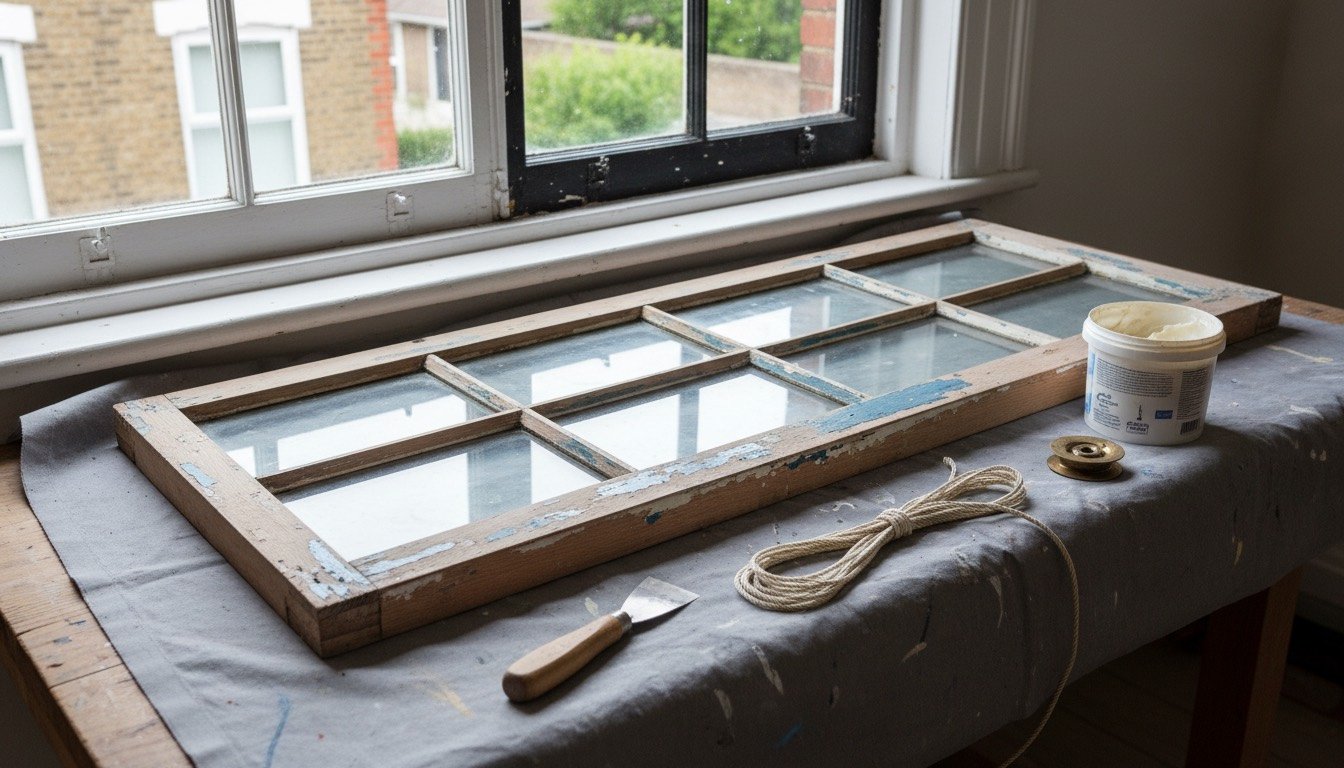
A sash that rattles, sticks and streams with condensation is rarely a window at the end of its life. Strip a Victorian box sash and you usually find slow-grown Baltic pine with 20-plus growth rings to the inch, denser than the redwood in most new timber windows. What has failed is the paint film, the linseed putty, the cords, and about 40mm of the bottom rail where water sat for thirty winters. All replaceable parts.
The money makes the case. A specialist charges £550–£1,200 per sash window for a full overhaul, against £1,400–£2,600 to have a like-for-like double-glazed timber sash made and fitted. Doing it yourself, materials come to £60–£150 a window. That gap is almost entirely labour, which is why the job is worth learning and why quotes vary so wildly.
Safety First: Lead, Glass and Height
Assume every paint layer below the top two contains lead. Lead paint was only fully banned for UK domestic sale in 1992, and pre-1960s coatings routinely run 5–40% lead by weight. Swab kits cost about £20 for eight tests; a lab sample is £30–£60. Our notes on lead paint safety in old houses cover clearance and disposal. The other two real hazards are old glass, often 2–3mm thick and prone to shattering under a hacking knife, and height.
- •Never dry-sand or blowtorch lead paint. A hot air gun above 450°C vaporises lead; an infrared stripper at 200–260°C does not. Hire, £35–£50 a day.
- •FFP3 mask, coveralls, nitrile gloves. Seal the room, damp-wipe, bag waste separately, and don't eat in the work area.
- •Wet-sand with 120–180 grit and a spray bottle. Cut-resistant gloves and goggles near glass.
- •Work from a tower outside, never leaning out of a first-floor opening. Alloy tower hire, £90–£150 a week.
- •New glass within 800mm of floor level or 300mm of a door edge must be toughened or laminated under Approved Document K.
Tools and Materials, With Honest Prices
The tool spend amortises across every window in the house. Consumables per window are genuinely cheap.
- •Infrared stripper or temperature-controlled heat gun — hire £35–£50/day, buy £250–£400
- •Hacking knife, putty knife, 25mm and 50mm bevel chisels, multi-tool — £70–£120
- •Linseed oil putty, 2kg — £12–£18 (two to three sashes); glazing sprigs, 500g — £6
- •Waxed sash cord No.6, 30m — £14–£22 (three windows)
- •Two-part epoxy repair kit — £50–£80; wood filler for non-structural work — £10–£14
- •Oil-based stain-blocking primer 1L — £22–£30; undercoat and exterior satinwood, 750ml — £18–£28 each
- •Brush-pile draught seal kit — £25–£55 per window
- •4mm float glass cut to size — £40–£80 a pane; weights, pulleys, fitch fasteners — £15–£45
- •Sheeting, tape, abrasives, brushes — £40–£60
Realistic Time and Cost: DIY vs a Joiner
Budget 16–24 hours for your first box sash, spread over a fortnight, because putty and paint dictate the timetable. By the third window it drops to 10–14 hours; a casement takes 6–10. A specialist joiner does a full sash overhaul in one to one and a half days.
Per window in 2026: DIY materials £60–£150; professional draught-proofing and re-cording only, £220–£400; full overhaul £550–£1,200, rising towards £1,400 in central London or on large Georgian six-over-six sashes. Weigh that against what window replacement costs before writing restoration off as the expensive route.
On a professional job the split is roughly 80% labour, 20% materials, and that ratio is the most useful test of a quote you have. If a firm quotes £900 a window with £350 of materials, either they are fitting new sashes rather than repairing yours or the figure is padded. Benchmark day rates: general joiner £190–£280, sash specialist £240–£360, London £300–£450.
The Restoration, Step by Step
This sequence is for a box sash. For casements, skip steps 3 and 9 and work on the hinged leaf at a bench.
- •1. Survey. Probe every rail and cill with a bradawl. Soft beyond 6mm is rot; if more than a third of a rail has gone, plan a splice, not filler.
- •2. Test for lead, then seal the room and sheet the floor before you disturb a single flake.
- •3. Remove the sashes. Prise off the staff bead, cut the cords while holding the weight (4–8kg, and it will drop), lift out the lower sash, then the parting bead and upper sash. Label in pencil.
- •4. Strip. Hold the infrared stripper 15–25 seconds per patch, then scrape with the grain. You only need bare timber where you are repairing or re-puttying.
- •5. De-glaze where needed. Soften the putty, hack it out, pull the sprigs, support the pane as you lift it. Keep the original glass — the ripple and seeds cannot be bought back.
- •6. Repair. Cut rot back to sound wood at 45 degrees. Two-part epoxy handles losses to about 50mm; beyond that, splice in Accoya or seasoned redwood, glued and pinned. Prime end grain within 24 hours.
- •7. Re-putty. Prime bare rebates with thinned oil primer first, or the timber pulls the oil out and the putty cracks within a year. Bed the glass on a 2mm bead, sprig every 200mm, face at 45 degrees, leave 7–14 days to skin.
- •8. Draught-proof. Plough a 4mm groove in the parting and staff beads for brush pile, plus a compression seal at the meeting rails. Done properly this cuts sash air leakage by 60–80% — the principle behind whole-house draught-proofing.
- •9. Re-cord and rehang. Renew all four cords even if one broke. Set the length so the sash sits 3mm off the cill when down, and adjust weights until it holds anywhere in its travel.
- •10. Paint. Primer, undercoat, two thin topcoats, denibbing with 240 grit between. Carry the topcoat 2mm onto the glass to seal the putty line, and pick a breathable system — see paint for historic homes.
Troubleshooting the Problems You Will Actually Hit
- •Putty cracks within a season: the rebate was not primed, or you painted before it skinned. Rake out and redo.
- •Sash sticks after painting: paint has bridged the parting bead. Run a blade down the joint, then wax the running surfaces — never silicone spray, which ruins future paint adhesion.
- •Sash drifts down or slams up: weights are unbalanced. Adjust in 250g steps.
- •Still rattling after de-draughting: the meeting rail seal is too thin. Fit a taller pile or a screw-adjustable fitch fastener.
- •Condensation pooling on the cill: that is moisture load and ventilation, not a window fault, as our guide to damp and mould sets out.
- •Paint peeling in sheets at 18 months: water behind the film, usually an unpainted bottom edge or a blocked cill drip groove.
- •Cord snaps again inside a year: unwaxed cotton line. Only No.6 waxed cord lasts, and it should give 40 years.
When to Stop — and How to Judge a Quote
Hand it over when the box frame rather than the sash is rotten, when a cill needs replacing, when the pane is bigger than roughly 900 x 600mm at height, or when the building is listed or sits in a conservation area under an Article 4 direction. Frame and cill work means dismantling the box in situ — joinery, not decorating — and unauthorised alteration to a listed building is a criminal offence, worth reading beside the mistakes that catch people out in period homes.
A sound quote itemises per window and names the method: how many splices, epoxy or new timber, whether original glass is retained, which draught seal, how many coats. Materials should land near a fifth of the total, with a written 5–10 year guarantee on the joinery. Treat as suspect a single round number for the whole house, a firm insisting every sash must be replaced without opening one up, more than 25% demanded up front, or a price produced after a fifteen-minute look from the pavement. Ask to see two local jobs finished three years ago; sashes that have taken three British winters tell you more than a brochure.
Found this useful?
There's plenty more — hundreds of guides and honestly-tested product reviews for every corner of your home.
Browse All Guides