Roofing & Exterior · 6 min read · 9 April 2026
Historic Home Renovation Mistakes That Wreck UK Period Homes
Most of the damage we get called in to undo in Victorian and Edwardian houses wasn't caused by neglect. It was caused by someone spending money on the wrong thing, confidently.
By the Nims Casa editorial team — written from professional cleaning experience and checked against our editorial standards.
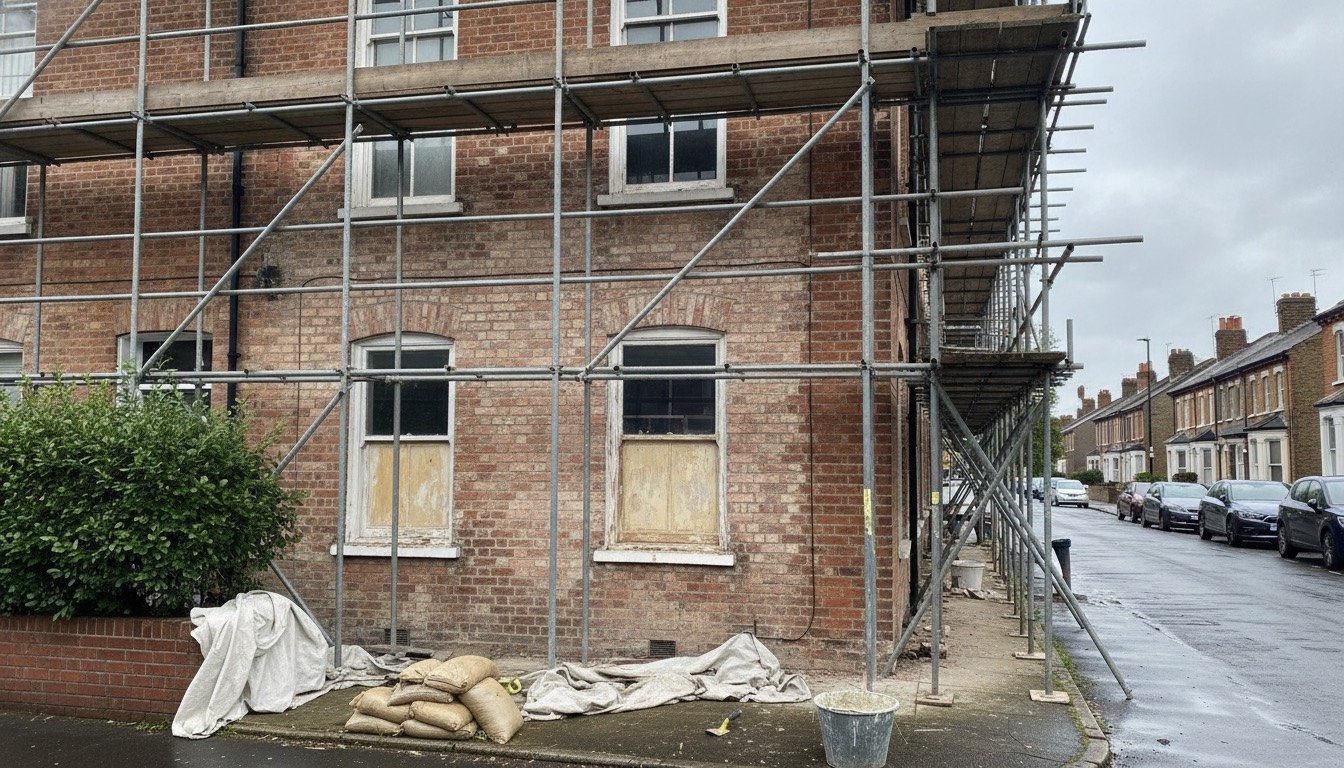
Most of the damage we get called in to undo in Victorian and Edwardian houses wasn't caused by neglect. It was caused by someone spending money on the wrong thing, confidently: cement render over soft handmade brick, or uPVC casements dropped into a conservation area with an Article 4 direction on it.
Old buildings are not badly built modern ones. They were designed to take on moisture and release it again, and they went up long before Part P, Gas Safe and building control existed. Soft materials, modern hazards and a legal layer most owners never read: that is where the money goes.
Ranked by consequence, not by how obvious they look
Owners agonise over paint colour while a builder dry-sands 1950s gloss in the next room. This is how we triage a period house.
- •Tier 1, can injure or kill: disturbing asbestos coating or insulating board; dry-sanding or blowlamping lead paint; gas work without Gas Safe registration; structural openings without support.
- •Tier 2, £5,000 to £30,000 of avoidable damage: cement pointing and render on solid walls; injected damp courses treating a misdiagnosis; spray foam in a period loft; gypsum over lime; blocked airbricks.
- •Tier 3, legal and resale consequences: unauthorised alterations to a listed building; window replacement in an Article 4 area; notifiable work with no certificate for the buyer's solicitor to find.
- •Tier 4, money simply wasted: decorating before the roof and drying-out are done, then doing it again eighteen months later.
The three that can genuinely hurt you
Asbestos gets underestimated because people picture 1970s factories. In housing it turns up as textured ceiling coating applied any time up to 1999, insulating board around airing cupboards and soffits, and asbestos cement in garage roofs. Sanding a textured ceiling is one of the highest-exposure jobs a homeowner can do. A UKAS lab sample costs £35 to £60, a refurbishment survey £300 to £600, and insulating board removal is licensed work only. A builder who shrugs at a textured ceiling is telling you how the rest of the job will go.
Lead paint is in most UK houses decorated before the late 1970s, and high-lead domestic paint was only banned from general sale in 1992. The killers are dry sanding, orbital sanders with no extraction, and hot-air guns run hot enough to fume the lead. Work wet, use a poultice stripper or a low-temperature infrared plate, and bag the waste — handling lead paint in old houses covers the methods that don't create dust.
Then the wiring. Rubber-insulated cable from before the mid-1960s crumbles when disturbed, and rewireable fuse boxes with unearthed lighting circuits are still common. In England and Wales, new circuits and bathroom work are notifiable under Part P and need certifying by a registered competent person or signing off by building control; Scotland uses Building Standards. A three-bed rewire is £3,500 to £7,000, and it is first-fix work, not something bolted on after plastering.
Suffocating a wall that was built to breathe
A solid brick or stone wall has no cavity and usually no damp-proof course. It handles water by absorbing it and letting it evaporate through soft mortar and permeable finishes. Seal it and the moisture leaves somewhere else: the face of your brick, or the back of your skirting.
The classic sequence is a repoint in strong cement. The mortar is now harder than the brick, freeze-thaw damage transfers to the brick faces, and two winters later you are indenting brick at £90 to £150 per m² instead of repointing at £45 to £85. Choosing lime mortar over Portland cement is not heritage sentiment, it is cheaper over ten years.
- •Cement render on solid walls: cracks, then holds water behind the crack. Removal and lime rendering runs £70 to £120 per m².
- •Gypsum skim over lime, or vinyl emulsion over either: both trap what the wall needs to release. Use haired lime or clay plaster, and mineral or clay paint.
- •Injected chemical damp courses, sold off a free survey by the firm doing the treatment. True rising damp is far rarer than raised ground levels, a bridged air gap or failed gutters. Pay £250 to £500 for an independent damp and timber survey from someone with nothing to sell.
- •Airbricks blocked by a new patio or render: joist ends rot within five years.
- •Spray foam between period rafters: hides decay, restricts ventilation, and several lenders will not lend on it. Removal £2,000 to £4,500.
The consent mistakes nobody budgets for
Internal work to an unlisted house is your own business. Once a property is listed that stops: consent covers internal alterations too, including removing panelling, chimneypieces or staircases, and unauthorised work is a criminal offence under the Planning (Listed Buildings and Conservation Areas) Act 1990. Councils serve enforcement notices requiring reinstatement at your expense, with no time limit.
Conservation areas catch more people: permitted development survives there in reduced form until an Article 4 direction removes it, after which windows, doors and rooflights need a planning application. That is why swapping timber sashes for uPVC is so expensive — you may be ordered to put them back. Weigh restoring the original sashes at £250 to £600 per window against slim-profile timber replacements at £900 to £1,600.
Then keep the paperwork. Replacement windows need FENSA or Certass registration, or a building control application. Structural openings, chimney breast removal and loft conversions need building control, and when building control and planning permission apply sets out the thresholds. All gas work is Gas Safe territory, including capping off a redundant back boiler. Landlords in England also need a five-yearly EICR, an annual gas safety record and a MEES-compliant EPC; listed buildings are not automatically exempt.
Doing the right jobs in the wrong order
The commonest way to waste £10,000 is sequencing. Plaster and paint go on before the roof covering, flashings and rainwater goods are sound, before ground levels are dug back below internal floor level, and long before the walls have dried. Solid masonry dries at roughly 25mm of thickness per month, so a 340mm wall saturated for a decade is not ready for finishes the same autumn you stripped it.
Work outside-in and services-first: watertight, then drainage and ground levels, then strip out, then first-fix, then dry it with heat and ventilation, then plaster, then decorate. If damp is your starting point, diagnose it before buying materials — the usual culprits are in our guide to the recurring faults in 100-year-old houses.
Where DIY has to stop
You can competently repoint a small area in lime, ease and repair sashes, patch lime plaster, lift floorboards and strip paint wet. Stop and call someone the moment any of the following appear.
- •Textured coating, insulating board or cement sheet you cannot date after 1999 — sample it, don't sand it.
- •Any gas appliance, pipe or cap-off: Gas Safe registered engineer only, by law.
- •New circuits, consumer unit changes or bathroom work: Part P registered electrician, certificate filed.
- •Cracks that are new, widening or stepping at more than about 5mm: a structural engineer costs £400 to £900 and settles the argument.
- •Structural openings, beams or chimney breast removal: engineer's calculations plus building control.
- •Next step: work through our old house renovation checklist before agreeing a single quote.
Found this useful?
There's plenty more — hundreds of guides and honestly-tested product reviews for every corner of your home.
Browse All Guides