Energy & Insulation · 6 min read · 12 July 2026
How to Size a Home Generator: UK Loads, kVA Maths and the Part P Limit
Most people buy far too much generator, or far too little. Here is the arithmetic that actually decides it for a British house, plus the legal line you cannot cross with the wiring.
By the Nims Casa editorial team — written from professional cleaning experience and checked against our editorial standards.
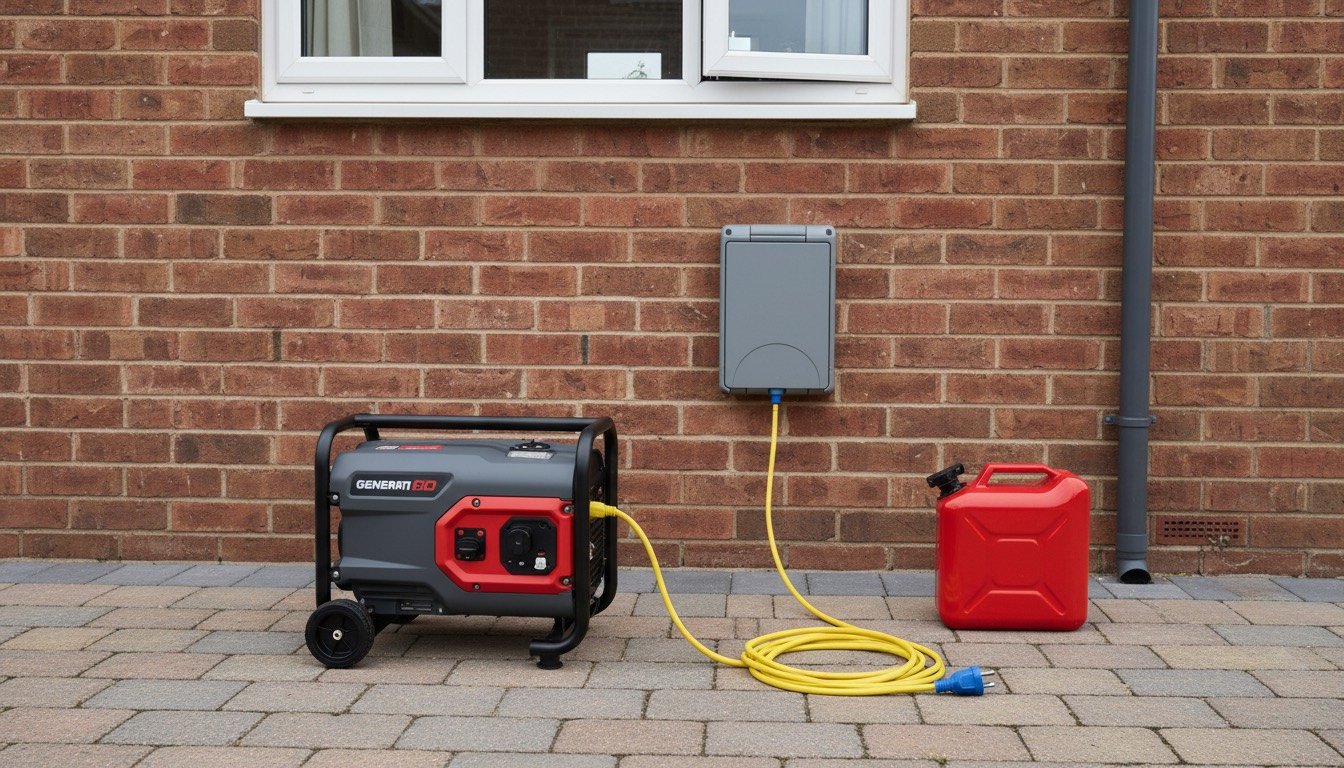
Two mistakes dominate. Someone spends £1,100 on a 6 kW open-frame set that drinks three litres an hour to run a fridge and a router, or buys a £280 suitcase generator that stalls the instant the freezer compressor kicks in. Both were chosen off the biggest number on the box — almost always the surge rating, not the continuous one.
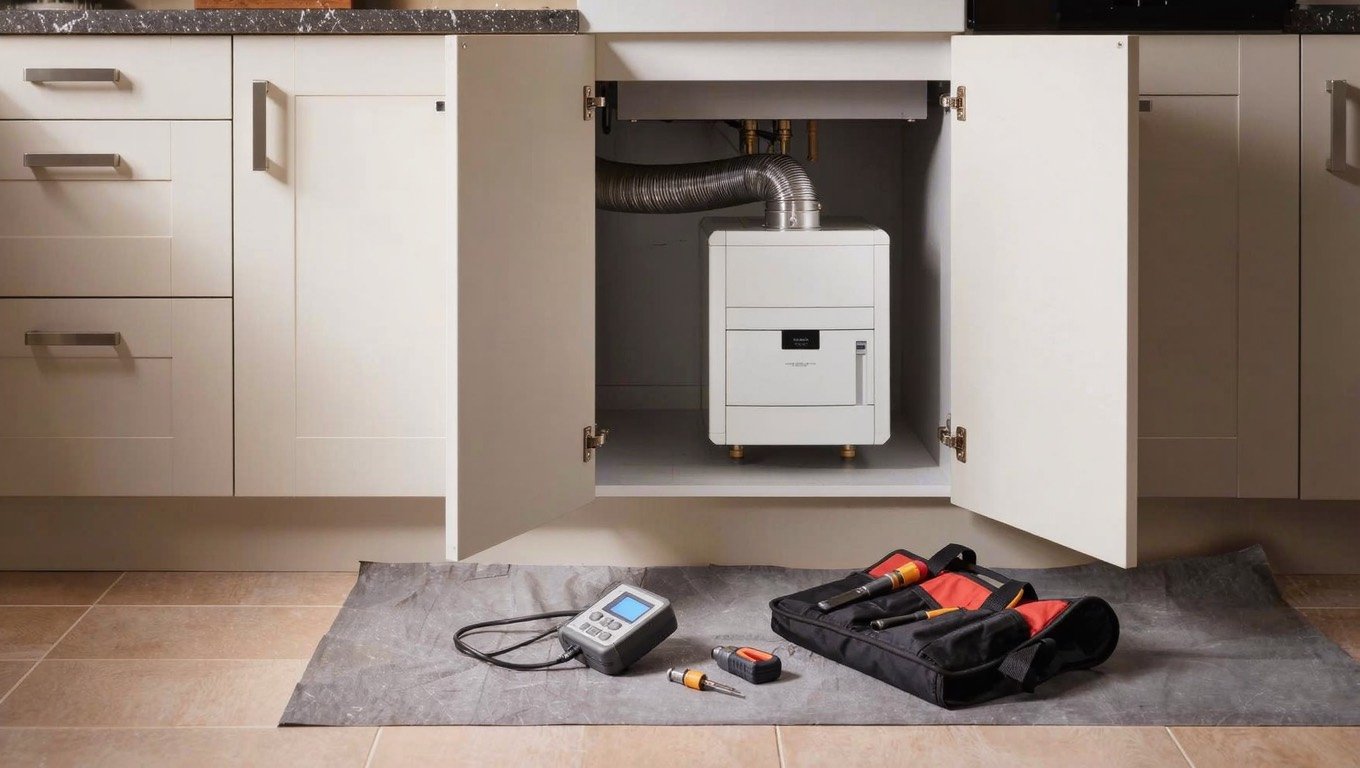
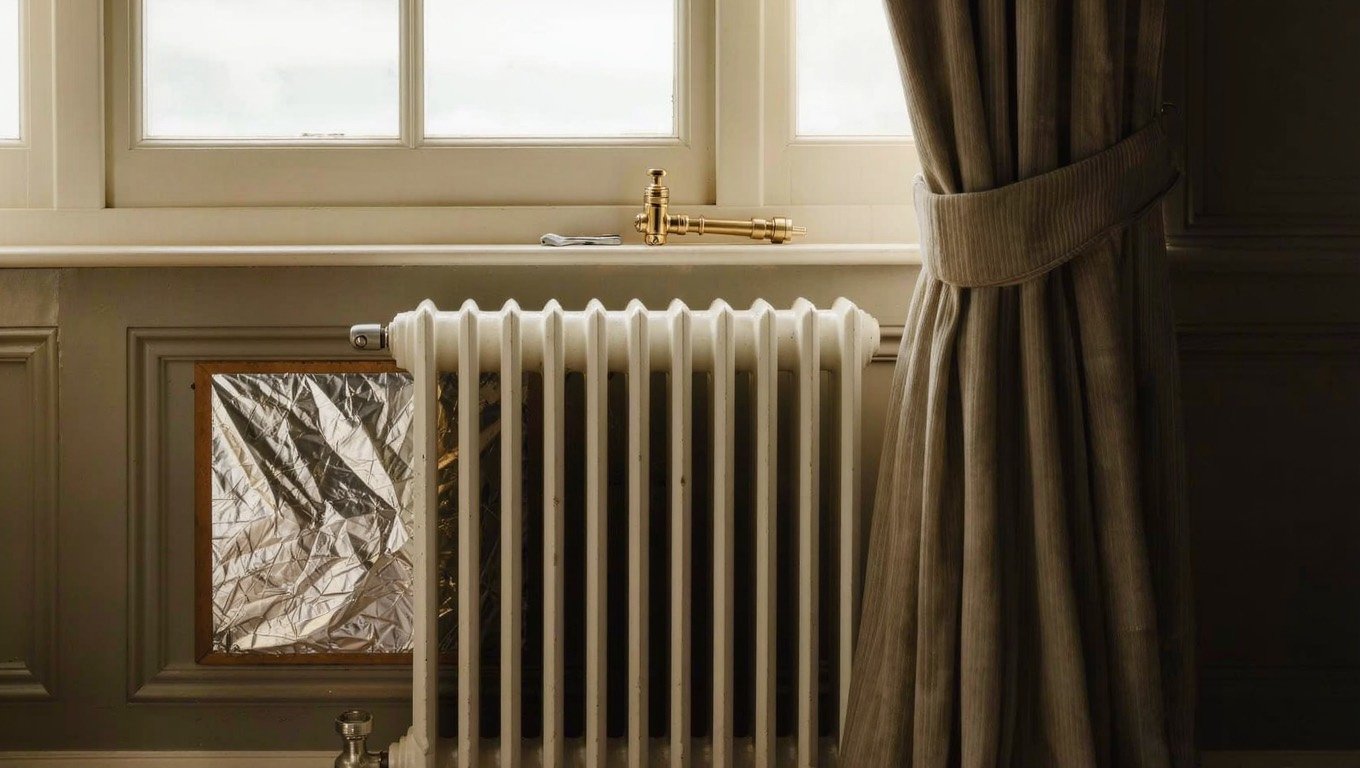
British homes are far easier to back up than American ones, and most advice online ignores it. Three-quarters of us heat with mains gas, so there is no 3 kW air handler to carry: a combi boiler and pump draw about 130 W. Done honestly, the sums put a three-bed semi on a 2.5 kW inverter set.
Safety First: The Three Things That Kill People
Carbon monoxide fills the coroners' reports. A generator runs outdoors, on hard standing, four metres or more from any door, opening window, trickle vent or air brick. Not in the garage with the door up, not in a porch, not in a shed. A running set in a garage reaches lethal CO levels in under ten minutes.
Second is backfeeding — a double-ended 'suicide lead' plugged into a socket to energise the house. It pushes 230 V back onto the network, where it can kill an engineer working on a line he believes is dead. Unlawful, uninsurable, and precisely why changeover switches exist. Third, fuel.
- •Petroleum (Consolidation) Regulations 2014: up to 30 litres at home unnotified, in approved containers only — 10 litres per plastic can, 20 per metal one. Above that, notify your Petroleum Enforcement Authority.
- •Petrol goes stale in three to six months; add stabiliser or run the carburettor dry. LPG and diesel keep far longer.
- •Refuel cold only, and fit a BS EN 50291 carbon monoxide alarm in the nearest room.
Tools and Materials
Sizing is a desk job with one cheap gadget. Installation afterwards is another matter.
- •Plug-in energy monitor, £12–£20 — reads real watts, not the optimistic label figure. A clamp meter with inrush capture (£40–£70) is optional but catches starting spikes.
- •Your main fuse rating, printed on the cut-out: 60 A, 80 A or 100 A. A 100 A single-phase supply is roughly 23 kVA, the ceiling of what the house can ever draw.
Realistic Time and Cost
Measuring takes 48 hours with the monitor on the fridge-freezer and boiler, plus twenty minutes of arithmetic. Budget hardware separately from the connection — the connection is what catches people out. Doing how to calculate your home's electrical load first makes these figures fall out almost automatically.
- •2.0–2.2 kW petrol inverter, £380–£600: boiler, fridge-freezer, lighting, router, charging.
- •3.2–3.5 kW inverter, £700–£1,100: adds a microwave or a kettle, one at a time.
- •7–10 kVA diesel or LPG standby with automatic transfer, installed: £6,000–£15,000. Read what a standby generator really costs first.
- •Changeover switch and weatherproof inlet, fitted by a registered electrician: £450–£900 with the certificate.
- •Fuel: a 3 kW inverter at half load burns 1.0–1.2 litres an hour, so £30–£36 per 24-hour outage.
Real UK Load Figures to Work From
Measured figures from British kit at 230 V, not badge values. Note how small the heating load is and how enormous the water-heating load is — that asymmetry is why UK sizing differs from American guidance.
- •Combi boiler, controls and pump: 120–150 W running, about 250 W on pump start. Oil boiler with burner motor: 300–500 W running, 800–1,200 W starting.
- •Fridge-freezer: 100–200 W running, 600–1,200 W surge. Chest freezer: 80–150 W, roughly 600 W surge.
- •Whole-house LED lighting 100–200 W; router, chargers, laptop and TV 150–250 W. Cellar or sump pump, 0.4 kW: 400 W running, 1,200–1,800 W starting — and if yours cycles constantly, read why a sump pump keeps running first.
- •Kettle 2,800–3,000 W; microwave about 1,300 W input. Electric shower 8,500–10,500 W and immersion heater 3,000 W belong nowhere near a domestic generator.
The Sizing Method, Step by Step
Work through these in order; step five is the one people skip. Headroom separates a set that hums for three days from one that browns out and cooks a boiler PCB.
- •1. List tier one: the loads that must stay live. For most UK homes that is boiler, fridge-freezer, lighting and communications. Nothing else.
- •2. Measure each with the plug-in monitor over 24–48 hours, then add the running watts. A three-bed semi lands between 450 W and 700 W.
- •3. Find the single largest starting surge, usually the fridge-freezer or a pump. Count one only — two motors starting together is vanishingly rare.
- •4. Add that surge to the running total: 600 W plus a 1,000 W surge gives 1,600 W peak demand.
- •5. Add 25% headroom for future kit and derating in heat: 1,600 W becomes 2,000 W.
- •6. Convert to kVA if the set is rated that way — divide by a power factor of 0.8, so 2,000 W is 2.5 kVA.
- •7. Compare against rated continuous output, never the 'maximum' figure. A set sold as 3.2 kW may be rated at only 2.8 kW continuous.
- •8. Check harmonic distortion. Anything with a circuit board — condensing boiler, heat pump controls, inverter fridge — needs a true sine wave under 5% THD, so an inverter set, not a cheap AVR one.
- •9. Check runtime: a 4-litre tank at 1.1 litres an hour gives under four hours.
Troubleshooting: When the Numbers Were Wrong
- •Engine bogs down when the freezer starts: starting surge exceeded. Stagger loads, or step up one size.
- •Boiler fires then locks out on a fault code: harmonic distortion or unstable frequency, usually an AVR generator.
- •Generator runs but its own socket is dead: the built-in RCD has tripped, or the set has a floating neutral needing earth-neutral bonding — your electrician's call.
- •Diesel set smoking and wet at the exhaust: wet stacking from chronic under-loading. Run at 50–80% of rated output.
- •It copes, but you refuel every three hours: right set, wrong tank. Consider LPG on a 13 kg bottle, or a home battery with an EPS output.
Where DIY Stops: Part P and Getting It Connected
You can size a generator yourself and run an arctic-grade extension lead to a fridge. What you cannot lawfully do in England and Wales is wire it into the fixed installation. A generator inlet, changeover switch or automatic transfer switch all involve new circuits and consumer unit work, notifiable under Part P of the Building Regulations: a registered competent person (NICEIC, NAPIT or ELECSA) issuing a certificate, or building control notified before work starts. Scotland and Northern Ireland have their own equivalents.
A second layer gets missed. Any generator that can run in parallel with the mains, even momentarily, falls under the network operator's G98 or G99 rules and must be notified. A break-before-make changeover never parallels; an automatic transfer switch almost always needs the paperwork. Landlords carry a further duty: the Private Rented Sector electrical safety regulations cover the whole installation, generator included, with an EICR every five years.
Get two quotes — typical electrician rates show whether £600 for an inlet and changeover is fair locally. Meanwhile work through a power outage checklist: a torch, filled water containers and a gas hob carry most households through a 12-hour cut with no engine.
Found this useful?
There's plenty more — hundreds of guides and honestly-tested product reviews for every corner of your home.
Browse All Guides