Heating & Cooling · 6 min read · 11 August 2026
How to Sleep in the Heat: What Actually Works on the UK's Tropical Nights
Tropical nights are the ones that break people. Here's the checklist that gets a UK bedroom sleepable — plus an honest, thermometer-tested verdict on every freezer trick.
By the Nims Casa editorial team — written from professional cleaning experience and checked against our editorial standards.
The Met Office logged more tropical nights — nights that never drop below 20°C — in the past five summers than in the previous twenty. British homes are built to hold heat, almost none have air conditioning, and most bedrooms sit directly beneath a loft that hits 45°C by mid-afternoon.
The fix is rarely one clever trick — it's a sequence of jobs done at the right times of day, plus knowing which famous hacks do anything at all. Work through this checklist in order and most bedrooms come down 3–4°C by bedtime.
First, Diagnose: Why Is Your Bedroom Actually Hot?
Before spending a penny on gadgets, spend £5 on a digital thermometer-hygrometer and take two 10pm readings: one in the bedroom, one just outside an open window. The pattern tells you which problem you have, because the fixes differ.
- •Bedroom 3°C+ warmer than outside: trapped heat. The evening cross-draught routine below is your priority.
- •Bedroom and outside both above 23°C: ambient heat. Window-opening can't help; cool your body instead — bedding, airflow across skin and the one freezer trick that works.
- •Ceiling warm to the touch at 10pm: heat loading from the loft above. Daytime exclusion helps, but this is where sleeping downstairs wins outright.
- •Humidity above 60% and clammy sheets: sweat can't evaporate, so you feel hotter than the thermometer says. Moving air helps most; running one of the better dehumidifiers for two hours before bed makes the same temperature feel cooler.
- •A reasonable 20–21°C but you're still overheating: your bedding or mattress is the problem. Memory foam is the usual culprit — skip to the bedding section.
Daytime Checklist: Lock the Heat Out (9am–8pm)
Every degree you exclude during the day is a degree you don't have to shift at night. These tasks cost almost nothing and take under ten minutes combined.
- •By 9am — close curtains and blinds on every east- and south-facing window. Two minutes, free; a blackout roller blind runs £12–£25 if you're buying.
- •By 10am — shut the windows once the air outside is warmer than inside, typically 10am to 8pm in a heatwave. Free. It feels wrong, and it works.
- •All day — keep the loft hatch shut. Lofts hit 40–45°C, and an unsealed hatch leaks that heat straight onto the landing. £4 of foam draught strip if it sits loose.
- •All day — switch off heat sources in the bedroom: laptops, consoles on standby, clustered chargers. An idling console adds real heat to a small room. Free.
- •Late afternoon — avoid the oven and tumble dryer; both dump heat into the house exactly as it peaks. Free.
Evening Routine: 8pm to Lights Out
The moment the outside air drops below the bedroom temperature — usually 8–9pm, later in cities where brick and tarmac keep radiating — reverse everything you did at 9am.
- •Open windows on opposite sides of the house, plus the internal doors between them, for a cross-draught. Two minutes, free. One open window barely moves air; a path through the house does.
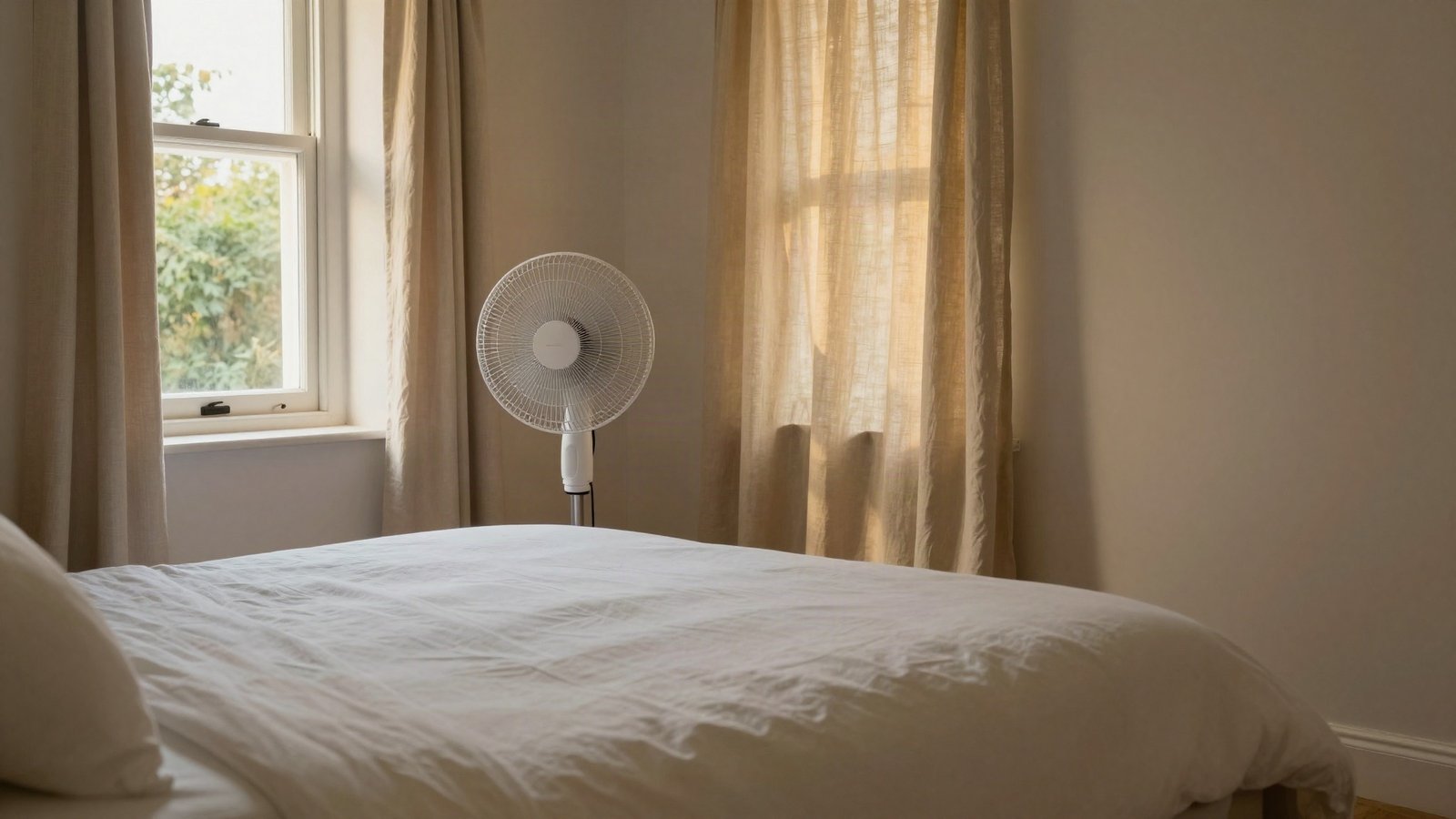
- •Point one fan out of the hottest window for the first hour to exhaust warm air, then turn it to the bed. A basic pedestal fan is £25–£35; the quiet DC type worth having near your head runs £80–£100 and costs about 1p a night.
- •If you have a ceiling fan, check it's spinning anticlockwise so it pushes air down across you — the ceiling fan direction guide covers the switch.
- •Take a lukewarm shower, not a cold one — cold water constricts blood vessels so you retain heat. Five minutes.
- •Chill a hot water bottle of tap water in the fridge and put it at your feet — cooling the feet shifts how hot you feel more than anything else here. Free.
Bedding: Cotton Beats Clever (£15–£60)
Synthetic bedding causes half the can't-sleep-in-heat complaints we hear. Polyester and microfibre trap sweat against your skin, leaving you damp and awake by 2am. Cotton percale — the crisp, matte 180–200 thread count weave — breathes properly and costs £25–£60 for a double set from supermarkets, Dunelm or M&S; linen is better still but starts around £80.
Swap the duvet rather than kicking it off: a 4.5 tog summer duvet is £15–£30, and plenty of people sleep best under a cotton cover alone. Memory foam runs hot because it moulds around you and kills airflow; a cotton or wool topper (£30–£50) is the cheap fix, and our round-up of the best mattresses flags which foams sleep coolest if you're due a replacement. You'll sweat through more than you think, so wash the protector weekly and air the mattress properly once the weather breaks.
Freezer Tricks: The Honest Verdicts
The same hacks resurface every heatwave. We've run the lot past a thermometer; here's what survives.
- •Pillowcase in the freezer (sealed bag, one hour): cool for about ten minutes — enough to help you drop off, useless for staying asleep. Verdict: marginal, but free.
- •Bowl of ice in front of a fan: roughly 1°C within a metre of the fan, gone in half an hour, and it raises humidity as it melts. Verdict: skip it.
- •Damp flat sheet over you (the Egyptian method): evaporation does cool you, but only in dry, moving air — on a muggy night it just makes everything clammy. Verdict: dry, breezy nights only.
- •Hot water bottle, two-thirds filled and frozen, at your feet: one to two hours of genuine relief, no mess, repeatable. Verdict: the best of the lot.
- •Frozen socks: brief, unpleasant, and they wake you as they warm. Verdict: no.
When Upstairs Isn't Worth Fighting
If the bedroom still reads 26°C at 11pm after all of the above, stop fighting physics. A north-facing ground-floor room in the same house typically sits 3–5°C cooler, because heat rises and the roof has soaked up sun all day. A decent airbed is £25–£40, and decamping downstairs beats every gadget here — the trades do it in every heatwave.
The longer-term fixes overlap neatly with winter ones. Topping loft insulation up to 270mm slows heat coming down through the ceiling in July just as it slows heat escaping in January, and insulating the attic is a weekend job. If you're tempted by a portable air conditioner, size it before you buy — the kW-per-room sizing method takes ten minutes and stops you buying a unit that can't cope. Budget £250–£400 plus 30–40p an hour to run.
Short on Time? Do These Three
If tonight is the hot one, this is the triage order.
- •Curtains closed on sun-facing windows by 9am, windows shut by 10am — free, four minutes, worth 2–3°C by evening.
- •Cross-draught plus fan-out-the-window from 8pm — free if you own one fan, and the biggest single lever in most homes.
- •Cotton bedding and a 4.5 tog (or no) duvet — £15–£60, transformative whatever the room temperature does.
The Full Kit, If You're Starting From Nothing
Thermometer-hygrometer £5, blackout roller blind £15, pedestal fan £30, cotton percale set £30, summer duvet £20: about £100 makes a hot bedroom sleepable, and every item earns its keep next summer. Buy in September if you can — fans routinely double in price the week the forecast turns red.
Found this useful?
There's plenty more — hundreds of guides and honestly-tested product reviews for every corner of your home.
Browse All Guides