Home Decor · 5 min read · 4 July 2026
Interior Design Mistakes to Avoid in UK Homes (Ranked by What They Cost You)
Most rooms that feel wrong are not badly decorated - they are badly measured. Here are the errors that cost the most, why sensible people keep making them, and what a tenant can safely undo.
By the Nims Casa editorial team — written from professional cleaning experience and checked against our editorial standards.
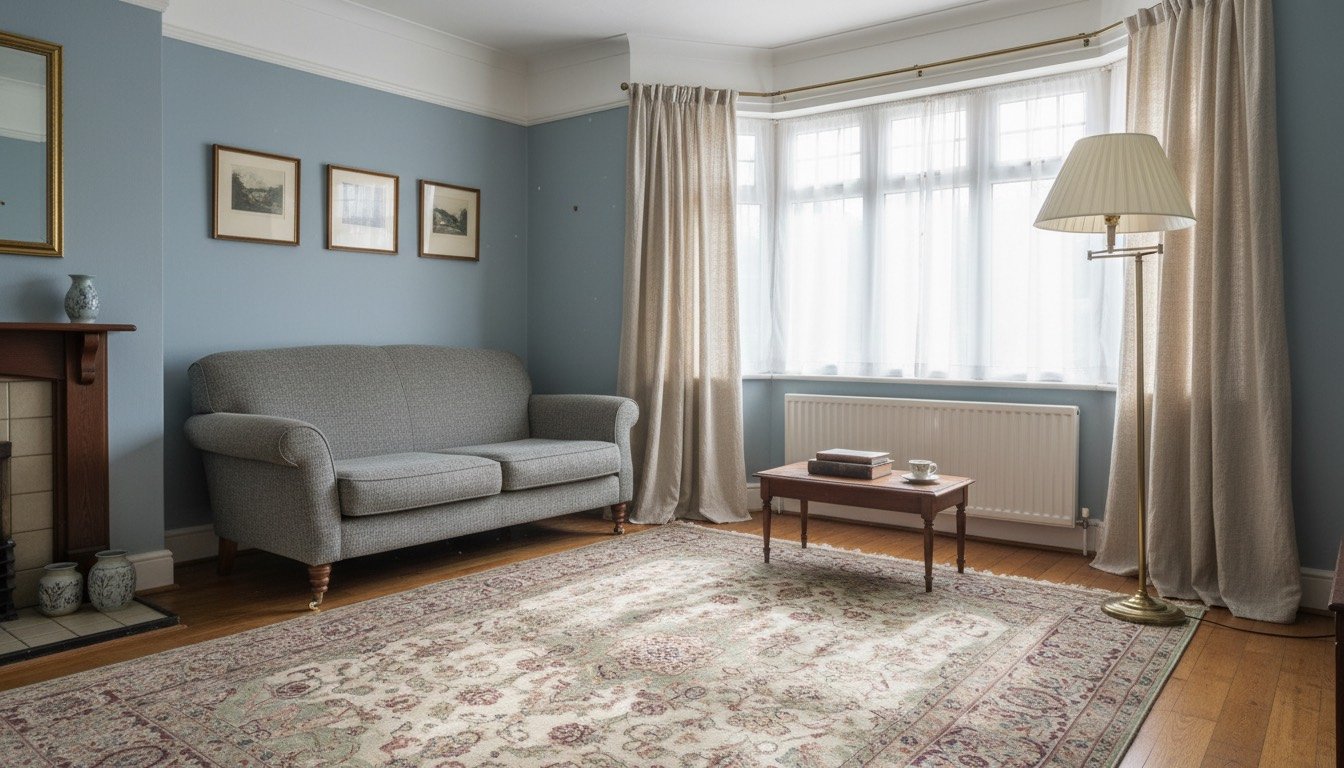
Fifteen years of walking into other people's houses to paint and fit them shows a pattern: the uncomfortable rooms rarely contain bad taste. Somebody guessed at a measurement, bought the item anyway, then arranged their life around it.
This list is ordered by consequence: money wasted, work to undo, or risk to the building. The last group is how houses catch fire.
The mistakes ranked by consequence
- •1. Buying a sofa before measuring the access route. A 2.2m three-seater that will not turn a Victorian half-landing costs £900-£2,000 plus restocking, or £120-£250 to take a window out.
- •2. Fitted joinery in the wrong place. Wardrobes across a chimney breast, or shelving that kills the only sensible sofa wall: £1,500-£4,000 to fit and much the same to undo.
- •3. Painting a room from a 100ml tester dabbed onto the existing wall. Two coats of the wrong grey is £45-£90 plus a full day, twice.
- •4. An undersized rug. A 160 x 230cm leaves a standard UK living room floating; most need 200 x 290cm so the front legs of every seat land on it.
- •5. Hanging art too high. Centre pictures at 145-150cm from the floor, 15-20cm above a sofa back. Free to fix, and nothing reads as amateur faster.
- •6. Skimpy curtains. Pole 15-20cm above the frame, extended 20-25cm each side, hem 1cm off the floor. A 140cm panel tight to the architrave makes a porthole.
- •7. One central ceiling light - the cheapest thing wrong with most British living rooms.
Why sensible people keep making them
Almost none of this is aesthetic failure. Showrooms lie about scale: a sofa in a 400 square metre warehouse looks compact, and the same piece in a 3.4 x 4.2m through-lounge is furniture you squeeze past. UK stock is unhelpfully varied too - a new build with 2.35m ceilings and a Victorian terrace with 2.9m need different curtain drops, picture heights and lighting, yet the same shop sells both the same fitting.
The commonest cause is buying in the wrong order: sofa, rug, paint, bafflement. Work backwards - fix the layout on paper, buy the largest pieces to that plan, and let the paint colour answer to the fabric. Paint is the cheapest thing in the room.
How to avoid or fix each one
- •Tape the plan on the floor and live with it for three days. Keep walkways at 60-75cm and 40-45cm between sofa edge and coffee table - arranging furniture in a small living room covers awkward shapes.
- •Test paint on paper: two coats on A4 lining paper, moved wall to wall, checked at 8am, 2pm and 8pm. North-facing UK rooms carry a blue-grey cast that flattens greiges.
- •Three light sources per room, all at 2700K. Mixing 2700K with 4000K 'daylight' bulbs is the commonest reason a room feels off; see layering lighting in a room.
- •In small rooms, paint skirting, architrave and window reveal the same colour and sheen as the wall - one of the tricks in making a small room look bigger.
- •Never back a sofa onto a radiator. You lose the warmest surface in the room into the upholstery and create a cold pocket behind it that grows mould by February.
The genuinely dangerous ones
Drilling blind is the big one. Cables run in prescribed safe zones - vertically and horizontally from sockets and switches, and within 150mm of a corner or ceiling - so a mirror hung 40cm above a socket sends the bit at a live line. Use a multi-detector on metal and live settings, run the drill through an RCD, and move the fixing if it chirps.
- •Hanging heavy items on plasterboard with the plugs from the box. Dot-and-dab leaves a 10-25mm void and red plugs pull through; use spring toggles, and treat anything over 15kg as a job for the timber behind.
- •Dry-sanding paintwork in a house built before about 1970. Lead dust is the real hazard in period decorating - wet-sand or use a chemical stripper.
- •Boxing in a boiler, gas meter or gas fire behind a media wall. Access panels and ventilation clearances are not optional, and a Gas Safe engineer will refuse to service it.
- •Blocking airbricks, trickle vents or extractor outlets with furniture or panelling - how you buy black mould on the external bedroom corners by January.
- •Secondhand upholstery with no fire-safety label, and daisy-chained extension leads coiled under a rug behind the sofa.
The renter-safe version: what you can undo before check-out
All of the above applies in a rented flat, but the fixings do not. The test for any tenant change: can it be removed in under an hour, leaving a surface an inspector calls fair wear and tear? Photograph every wall on move-in day, and keep whatever you take down in a labelled box.
- •Adhesive strips rather than screws - but test one on hidden skirting for 72 hours. On chalky old emulsion, or paint under four weeks cured, they lift the surface. Warm with a hairdryer before peeling.
- •Tension rods inside window reveals and free-standing rails instead of drilled poles. Heavy interlined curtains pull a single rod down, so use two.
- •Swap bulbs, not fittings. Warm dimmables and rechargeable cordless lamps change a rented room with zero holes; plug-in wall lights with a cord-hider along the skirting replace wired sconces.
- •Large rugs over tired landlord carpet. Peel-and-stick vinyl is fine over existing lino or ceramic, never over bare floorboards where the adhesive lifts the finish.
- •Removable wallpaper only on sound, fully cured matt emulsion - it rarely leaves lining paper cleanly, so trial a 20cm square inside a cupboard.
- •Get painting permission in writing. Our rental-friendly decor guide covers the wording.
When to stop and call someone
Stop when the job touches gas, fixed wiring, structure or damp. New lighting circuits, moved sockets and anything inside a consumer unit are notifiable work in England and Wales - budget £45-£70 an hour, or £250-£450 for a new switched lighting point. Removing a chimney breast needs a structural engineer and building control.
Damp is the other absolute stop. If a wall is cold and wet rather than merely condensating, do not panel it, build against it or seal it with paint. The cause is usually a gutter, a raised path or a failed seal.
For the scheme itself, two hours of professional time beats one wrong sofa. UK designers charge £60-£125 an hour, or £800-£2,500 for a full room scheme: see what an interior designer costs, then work through our Home Decor hub room by room.
Frequently asked questions
- •Is a feature wall always a mistake? No, but a bright colour on the shortest wall of a small room usually is. Colour on the wall behind you as you enter reads better.
- •Should I paint a small room white to feel bigger? Not automatically - brilliant white in a north-facing British room goes grey and cold. A soft off-white, or a deeper shade taken across woodwork and ceiling, gives more depth.
- •What does correcting a room cost? Around £250-£600 covers new lighting, a correctly sized rug, curtains rehung and a repaint, assuming the furniture stays.
Found this useful?
There's plenty more — hundreds of guides and honestly-tested product reviews for every corner of your home.
Browse All Guides