Garden & Outdoor · 6 min read · 1 May 2026
Lawn Care Mistakes to Avoid (Including the Ones Only Old Houses Suffer)
Most poor British lawns are not diseased. They are cut too short, fed out of sequence and, in older properties, sitting on a foot of builder's rubble nobody has ever mentioned.
By the Nims Casa editorial team — written from professional cleaning experience and checked against our editorial standards.
Almost every disappointing lawn we get called to has the same three faults: the mower is set too low, the feed goes down whenever the bag was bought rather than when the grass can use it, and the ground gets walked on all winter while it is sodden. Fix those and you have solved most of the problem before spending anything.
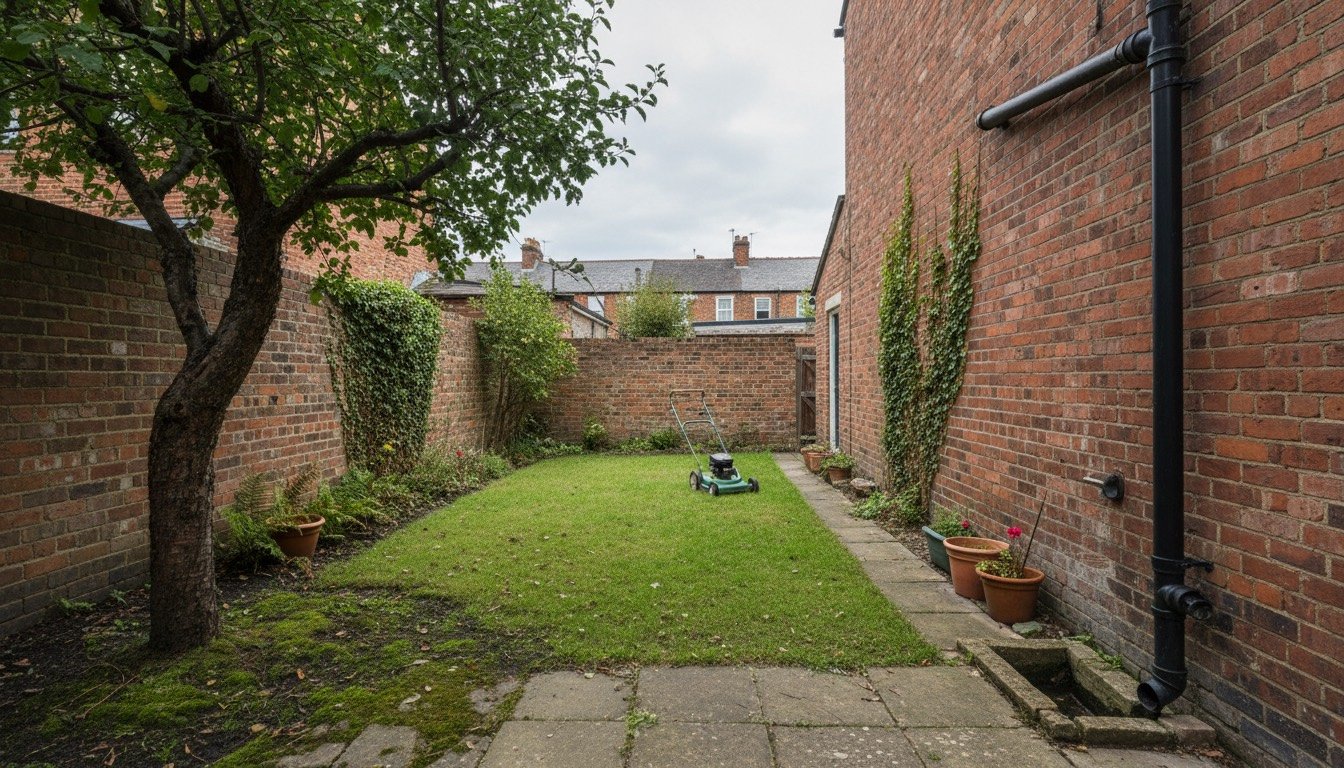
The rest is usually the house. Gardens behind Victorian and Edwardian properties rarely sit on decent soil. They sit on the spoil from building the house, lime mortar, brick bats, coal ash and the odd length of salt-glazed drainpipe, capped with 100mm of imported topsoil. That changes what the lawn needs, and which mistakes are merely annoying rather than dangerous.
The mistakes ranked by consequence
Ranked by cost to you rather than by how often garden centres mention them. The top three can hurt you or flood a neighbour. The rest cost you a season.
- •1. A corded mower on a socket with no RCD protection: electrocution. Common in houses still on a rewireable fuse board.
- •2. Spiking or digging over shallow Victorian services: a punctured clay drain or severed cable, £300 to £1,500 to put right.
- •3. Over-applying fertiliser or weed-and-feed: scorched stripes needing £40 to £70 of reseeding, plus nitrate into the surface water drain.
- •4. Cutting too short: thin, moss-prone turf that takes a full growing season to recover.
- •5. Watering little and often: shallow roots, and a lawn that browns off in the first dry fortnight of July.
- •6. Scarifying or overseeding at the wrong time: £30 to £60 of seed feeding the pigeons.
- •7. Ignoring compaction and drainage: permanent moss, however much iron you throw at it.
Mowing: the mistake that causes most of the others
Scalping happens because people equate short with tidy, and because most rotary mowers leave the shop on the lowest setting. For an ordinary domestic lawn, 25 to 40mm is the working range, rising to 40 to 50mm in shade and through July and August. Grass cut at 20mm has almost no leaf left to photosynthesise with, so it thins and moss fills the gap you made. Never take more than a third of the leaf in one pass.
The second error is timing. Cutting a heavy clay lawn while it is wet smears and compacts the surface, which is exactly what moss wants. Wait until clippings stop clumping in the collector. And keep the blade sharp: a blunt one tears rather than cuts, leaving a whitish, frayed tip across the lawn within two days. Replacement rotary blades are £12 to £25.
- •30mm in spring and autumn, 40mm plus in high summer and shade.
- •First cut of the year on the highest setting: late March in the south, mid April further north.
Feeding and watering out of sequence
Fertiliser is not interchangeable across the year. A high-nitrogen spring feed applied in October pushes soft growth into the first frost and invites fusarium. An autumn feed applied in April does nothing visible, and you conclude fertiliser does not work. Use roughly 9-7-7 from mid April once soil is above about 8C, and a low-nitrogen, high-potassium 4-0-8 in September. Apply by weight, not by eye; the order is set out in our lawn fertiliser schedule.
Overseeding fails mainly because of cold soil. Seed needs 8 to 10C to germinate, so late April to early June, or better, late August to late September. Sow at 25 to 35g per square metre into raked soil and keep it damp for three weeks. Watering has the same failure mode: five minutes with a hose each evening trains roots into the top 20mm, whereas one soak of 10 to 15 litres per square metre a week sends them down. Our lawn watering guide has the timings.
Old gardens behave differently: rubble, lime and Victorian drains
Push a screwdriver into a lawn behind a pre-1920s terrace and you will usually hit resistance at 100 to 150mm. That is the builder's rubble. It drains erratically, holds few nutrients and stops roots dead, which is why these lawns brown off first in a dry June and puddle first in a wet January. More feed will not fix it. Repeated autumn hollow-tine aeration with a sandy top dressing will, over three or four seasons; when to aerate explains the timing.
Lime mortar in that rubble also lifts soil pH. We routinely test period back gardens at 7.5 to 8 against the 5.5 to 6.5 fine grasses prefer, which makes iron unavailable and leaves the lawn pale however much nitrogen goes on. A £10 test kit before you buy anything is money well spent. Underneath, Victorian salt-glazed clay drains were laid shallow and are now brittle. A collapsed or root-blocked run shows as one permanently soft, dark green patch between the gully by the back door and the boundary. Check that before blaming the grass; improving garden drainage covers the diagnosis.
- •Above pH 7.5, choose seed with more ryegrass and less fine fescue; it tolerates alkaline ground far better.
- •Assume shallow, unmarked services in any garden undisturbed since the 1970s. Cables were often laid at 100 to 150mm with no conduit and no warning tape.
- •Never grow vegetables in the first metre against the wall of a period house. Decades of stripped lead paint end up there.
The genuinely dangerous ones
A pre-1970s installation with a rewireable fuse board has no residual current device, so a nicked flex or damp extension lead on a corded mower can kill before anything trips. If you cannot confirm your socket circuits are RCD-protected, use a plug-in RCD adaptor to BS 7071 for every outdoor tool. They cost £12 to £20 and are the cheapest insurance in the shed. If the board is still a bakelite fuse carrier, have an electrician assess it and let cordless tools take over outdoors.
The rest of the serious list is short. Petrol mower blades keep spinning after the engine stops, so pull the plug cap before going near the underside. Ferrous sulphate moss killer stains block paving a permanent rust brown within minutes. Selective weedkillers need dry, still weather and pets kept off until the leaf is dry. Do not mow across a slope steeper than about 15 degrees with a self-propelled machine.
When to stop and call someone
Call a drainage engineer rather than a lawn firm if a patch stays wet through a dry fortnight, if there is any smell at the gully, or if the ground has slumped in a line. A CCTV survey is £120 to £250 and identifies roots, a partial collapse or silt. Call an electrician before buying any corded outdoor tool for a house still on a fuse board.
Otherwise, most lawn work is worth doing yourself. Where a professional earns the fee is scarifying and hollow-tine aerating a compacted period garden: expect £120 to £250 for a one-off pass on about 100 square metres, or £25 to £45 a visit on an annual programme, as professional lawn care costs sets out. To map the whole year, start with lawn care basics for the UK.
Found this useful?
There's plenty more — hundreds of guides and honestly-tested product reviews for every corner of your home.
Browse All Guides