Garden & Outdoor · 6 min read · 1 May 2026
Lawn Care Schedule by Month: A UK Calendar That Actually Works
Spread spring feed in February and you have wasted £25. Spread it in late April and you see the difference in ten days. Here is the month-by-month calendar UK lawns actually respond to.
By the Nims Casa editorial team — written from professional cleaning experience and checked against our editorial standards.
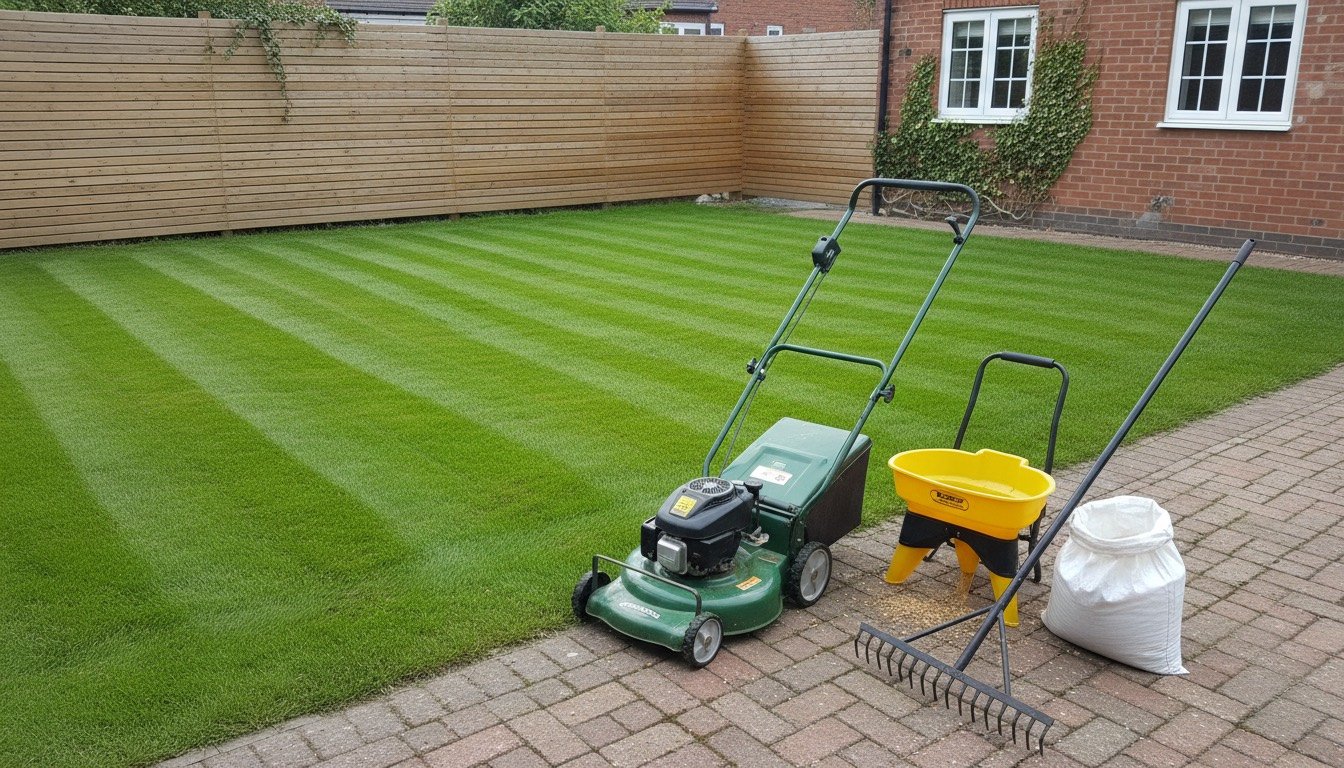
Spread a bag of spring feed in February and you've wasted £25: the grass isn't growing, the nitrogen leaches away in the winter rain, and the moss gets the benefit. The same bag in the third week of April shows inside ten days.
This is the diary we work to on domestic lawns from Kent to Cumbria, allowing that everything shifts two to three weeks between the south coast and central Scotland. Our lawn care basics guide covers why each job matters; this page is the when.
Work to Soil Temperature, Not the Calendar
Buy a soil thermometer — about £8 — and push it 75mm into the turf mid-morning. Four thresholds decide almost everything below.
- •5-6°C sustained: grass starts growing. First cut, blades at maximum height. Mid-March in the south west, mid-April in Scotland.
- •8-10°C and rising: seed germinates reliably. Below that it sits in the cold, rots, or feeds the pigeons.
- •10°C air with weeds in visible growth: selective weedkillers translocate. On a cold or drought-stressed lawn they simply don't work.
- •12°C soil with moisture present: the nematode window for leatherjackets and chafer grubs, roughly early September to mid-October.
January to March: Repair, Sharpen and Wait
The temptation in February is to do something. Resist it — walking on saturated or frosted turf compacts the top 50mm and leaves footprint-shaped dead patches you'll be fixing in May.
- •January (10 minutes weekly, then £45-70): keep leaves and furniture off wet grass, and book the mower service and blade sharpen before the March queue. A blunt blade tears the leaf tip, which browns and invites disease.
- •February (30 minutes, £12-18): treat moss with ferrous sulphate lawn sand on a still, dry day. It blackens in 7-14 days, but leave the raking until the grass is growing.
- •Mid-March to early April (45 minutes): first cut at 40-50mm, clippings boxed off, and recut the border edges with a half-moon iron. Drop 5mm per cut thereafter, never more than a third of the leaf in one pass.
April to June: Feed, Weed and Set the Mowing Rhythm
The lawn repays the work now. Growth peaks in May: weekly mowing is the minimum, and twice a week in a wet spring isn't excessive.
- •Mid to late April (30 minutes, £22-30 per 100 m²): spring feed, high nitrogen, around 35 g/m². A £25-40 spreader pays for itself the first time you avoid stripes of scorch.
- •Late April to May (45 minutes, £15-25): treat broadleaf weeds with an amateur-approved selective product on a dry, calm day above 10°C, leaving 3-4 days either side of mowing.
- •April to May (2 hours, £30-45): overseed thin and shaded patches at 25-35 g/m². Seed lying on thatch never roots, so read how to overseed properly first.
- •May to June (weekly): mow at 25-35mm, leaving clippings down in dry spells to return nitrogen and shade the crown. Repair wear paths in June, before the ground dries out.
July and August: Survival Mode, and the Hosepipe Rules
An established lawn browning off in July is dormant, not dead, and greens up within a fortnight of proper rain. New seed and fresh turf are the genuine exceptions.
- •Raise the cut to 40-50mm, mow less often, and skip nitrogen entirely. Longer grass shades its own roots; feeding a stressed lawn in a dry spell scorches it — the commonest July call-out we get.
- •Under a Temporary Use Ban — the legal name for a hosepipe ban — hosepipes and sprinklers on lawns are banned under section 76 of the Water Industry Act 1991. Watering by can, butt or grey water stays legal; breach is a criminal offence, fine up to £1,000.
- •Where watering is allowed, water hard and rarely: 10-15 litres per square metre once a week beats a daily sprinkle, and the watering timings matter more if you're metered.
- •Watch for grub damage — turf lifting like a carpet, badgers digging at dusk. Treatment is a September job.
September to December: The Half of the Year That Counts
If you work on the lawn for one month a year, make it September: the soil is still warm, rain is returning and weed competition has collapsed. Germination that takes 21 days in April takes 7-10 days now.
- •Early September (3-4 hours, scarifier hire £35-50/day): scarify out thatch and dead moss. Expect six or seven waste bags from 100 m² and a lawn that looks wrecked for a fortnight.
- •September (2-3 hours, aerator hire £50-80/day): hollow-tine the compacted strips — paths, under the washing line, the goalmouth. When to aerate a lawn explains why solid spiking on clay achieves little.
- •Straight after (2 hours, £60-90 per 100 m²): overseed at 35 g/m² and top dress with 70:30 sand/loam at 2-3 kg/m², brushed in until the grass tips show through.
- •Late September to October (30 minutes, £22-30): autumn feed — low nitrogen, high potassium — which hardens the plant rather than forcing soft growth. The fertiliser schedule lists the analyses worth buying.
- •October to December (20 minutes weekly): clear leaves — a fortnight of wet sycamore leaves yellow patches that survive until May. Last cut at 40mm once growth stops, then stay off frosted grass.
Supplies, Costs and What to Skip When Time Is Short
For a typical 100 m² back garden, budget £120-200 a year on materials and 18-22 hours including mowing. A professional four-visit programme runs £220-360 and rarely includes cutting — our professional lawn care costs breakdown compares the two.
- •Worth owning: rotary mower, spring-tine rake, half-moon edging iron, spreader (£25-40), soil thermometer (£8), stiff yard broom.
- •Worth hiring: scarifier and hollow-tine aerator for one September day, £85-130 for the pair.
- •Consumables per year: spring feed, autumn feed, 2-3 kg of seed, one weed treatment, one moss treatment, 200 kg of top dressing.
- •Only three hours to give it? Mow at the right height, feed in April, scarify and overseed in September — that trio delivers most of the visible result.
- •Not worth doing yourself: full turf replacement, levelling a badly undulating lawn, anything needing a professional-only product.
The UK Rules That Catch People Out
Lawn care feels unregulated right up until it isn't. Five points come up repeatedly on domestic jobs.
- •Professional-only pesticides: most lawn fungicides and the stronger selective herbicides are approved for professional use only. Using one without City & Guilds PA1 and PA6 certification is an offence even in your own garden — ask any contractor for their certificates.
- •Grub controls: no approved amateur insecticides remain for chafer grubs or leatherjackets. Nematodes on warm, moist soil are the only legitimate route; anyone selling a spray is selling something illegal or useless.
- •Garden waste: section 34 of the Environmental Protection Act 1990 makes you responsible for waste leaving your property. If the gardener taking your scarifying bags isn't a registered waste carrier and fly-tips them, you can be prosecuted.
- •Nesting birds: trimming a boundary hedge between March and August risks disturbing an active nest, an offence under the Wildlife and Countryside Act 1981. The lawn edge is fine; the hedge above it isn't.
- •Renting: mowing and general tidiness are almost always the tenant's obligation under an assured shorthold tenancy, while trees, boundary fences and drainage stay with the landlord — read the clause before anyone deducts from a deposit.
Found this useful?
There's plenty more — hundreds of guides and honestly-tested product reviews for every corner of your home.
Browse All Guides