Garden & Outdoor · 5 min read · 14 August 2026
Lawn Recovery After Drought: The September Rescue Plan
A straw-brown lawn after a heatwave is usually dormant, not dead. Here is the professional September rescue plan — and the one thing you must not do to it yet.
By the Nims Casa editorial team — written from professional cleaning experience and checked against our editorial standards.
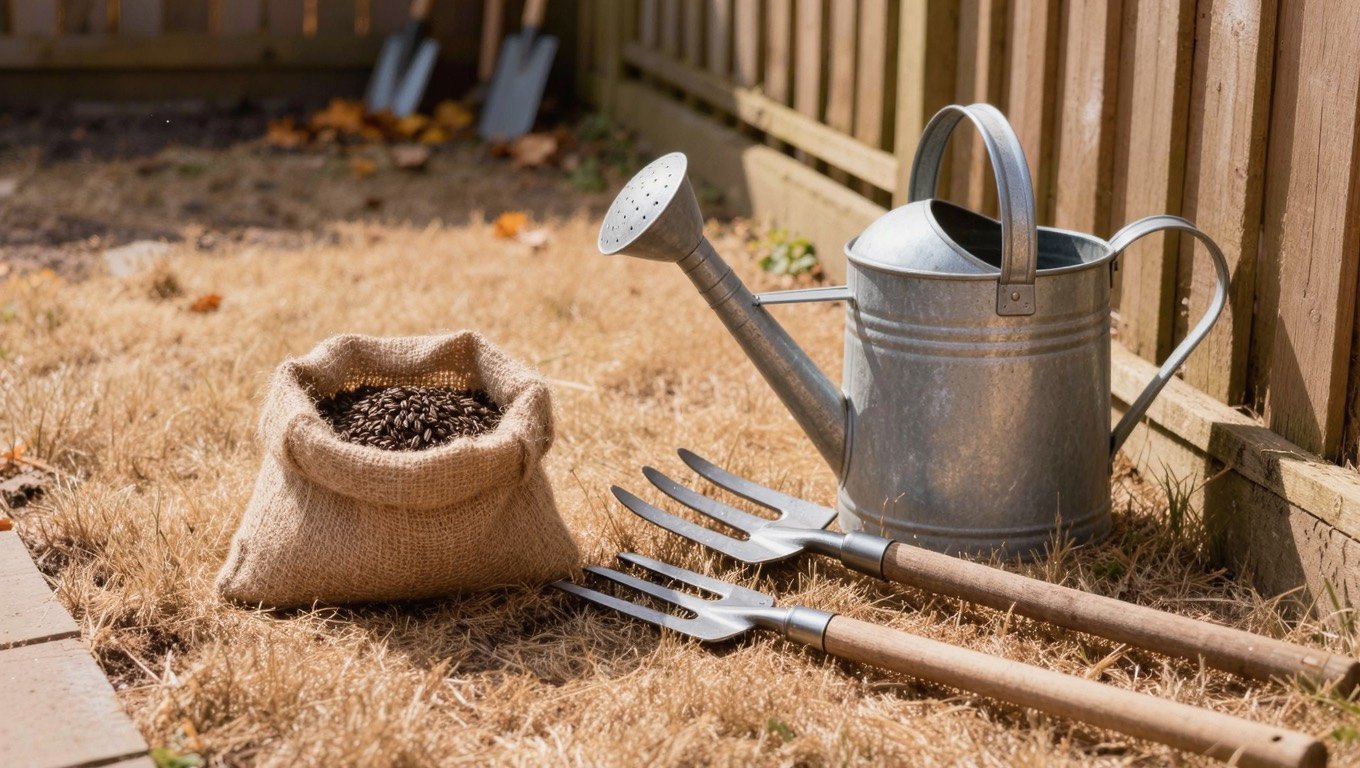
Six weeks of heat and a hosepipe ban will turn most UK lawns the colour of a coir doormat, and every August the same question lands: is it dead? Almost always, no. The perennial ryegrass and fescues in most British lawns survive drought by shutting down: the blades go straw-brown, but the crown and roots sit tight and wait for rain. A lawn that looks written off in mid-August is typically 70-90% alive.
What kills lawns is what people do next: feeding, scalping or re-turfing in a panic. The professional approach is to do very little until the weather breaks, then hit one hard fortnight of renovation in September, when UK soil is still 14-18°C, the dew returns and seed germinates in 7-14 days. This is that plan, with real costs.
Is It Dormant or Dead? Do This Test First
Before you spend a penny, spend ten minutes diagnosing. Dormant grass and dead grass look identical from standing height; at soil level they are completely different.
- •The tug test: grab a tuft of brown grass and pull firmly. Dormant grass resists because the roots are alive; dead grass lifts out, roots and all.
- •The crown check: part the blades at the base. A whiteish or pale-green crown means it is alive; brown, brittle and papery all the way down means that patch has died.
- •The bucket test: soak one square metre with 10 litres of water every other day for a week (a watering can is fine under most hosepipe bans — check your supplier's rules). Green shoots within 7-10 days mean dormant.
- •Map the genuinely dead patches with canes. Under 30% dead, patch and overseed. Over about 50%, a full renovation is quicker and cheaper than chasing patches.
Safety First — and Why You Must Not Feed It Yet
The single worst thing you can do to a drought-stressed lawn is feed it in August. Granular fertiliser is a salt: on dry, shallow-rooted grass it draws moisture out and scorches, and any nitrogen that gets in forces soft top growth the damaged roots cannot support. Hold all feed until renovation is done and rain has returned — usually mid to late September. Our lawn fertiliser schedule covers what comes after that.
On the physical side: powered scarifiers throw stones, so wear safety glasses, ear defenders and boots, and keep the cable behind the machine. Walk the lawn for wire pegs, toys and hose fittings before the first pass — the scarifier will find them otherwise, expensively. Where drought has cracked clay soil, mind your ankles; cracks open 5 cm wide.
Tools, Materials, Time and Cost
For a typical 80 m² UK lawn, budget a weekend of work and £70-130 if you hire kit. Materials are the cheap part — this job is almost all labour, which is why professional quotes look expensive.
- •Grass seed: 25-35 g/m² for overseeding, roughly 2.5 kg for 80 m². A quality ryegrass/fescue mix is £8-14 per kg (£20-35 total). Cheap seed is false economy — germination on budget mixes can be under 60%.
- •Scarifier: hire one for £25-45 a day, or use a spring-tine rake free on small lawns (hard work — allow an hour per 20 m²).
- •Aerator: a garden fork costs nothing; a hollow-tine hire machine is £35-50 a day and worth it on compacted clay.
- •Top dressing: 70/30 sand-loam mix at £6-9 per 25 kg bag; 4-6 bags covers the patches (£25-50).
- •Autumn lawn feed (low nitrogen, high potassium): £10-18 per 100 m².
- •Time: 6-10 hours over two or three sessions, plus 10 minutes of watering every dry day for three weeks after seeding.
The September Rescue Plan: Step by Step
Wait until rain has returned and the lawn has greened as far as it will on its own — usually early September — then work through this in order.
- •1. Mow at the highest setting, dropping over two cuts to about 25 mm. Never scalp a recovering lawn; you will expose bare soil to weed seed.
- •2. Scarify out the dead material — drought leaves a mat of dead blades and thatch that seed cannot get through. Two passes at 45 degrees; 10 bin bags of debris from an average lawn is normal.
- •3. Aerate the compacted areas, where baked soil now sheds water instead of absorbing it. Fork or hollow-tine every 10-15 cm; our guide on when to aerate a lawn covers which method suits your soil.
- •4. Overseed the whole lawn at 25-35 g/m², heavier on the dead patches you mapped. Rake the seed in so it touches soil — seed sitting on thatch is bird food. Full technique in how to overseed a lawn.
- •5. Top-dress bare patches with 5-10 mm of sand-loam mix and firm with the back of the rake.
- •6. Water lightly every dry day for 14-21 days: the top 2 cm must stay damp until germination. A daily sprinkle now beats summer's deep-and-infrequent rule — see our lawn watering guide.
- •7. Apply an autumn feed (high potassium, low nitrogen) 2-3 weeks after germination to harden new grass for winter.
- •8. First cut when new grass reaches 6-7 cm — sharp blades, highest setting — and otherwise stay off the lawn until October.
Troubleshooting: When Recovery Stalls
Give the plan three to four weeks before judging it, then work through these in order of likelihood.
- •No germination after 3 weeks: almost always moisture. September sun still dries the surface by lunchtime; water morning and early evening. Ryegrass shows in 7-10 days, fescues take up to 21.
- •Patchy germination where it browned first: buried rubble or hard compaction. Fork deeply, top-dress and re-seed those areas.
- •Green haze appears then thins: birds, or seed sown onto thatch. Rake harder, re-seed, and net the worst patches for a fortnight.
- •Patches that never greened despite rain: possibly not drought at all — chafer grubs and dog urine mimic it. Lift a turf flap and look for white C-shaped grubs; our brown patches guide covers all eight causes.
- •Everything recovered except under trees: root competition for water, not failure. Overseed with a shade mix and accept thinner grass there.
When to Call a Professional — and What a Fair Quote Looks Like
Call in help if more than half the lawn failed the tug test, if a fork will not go in 8 cm, or if you cannot face a weekend of raking — scarifying is genuinely hard labour. A full professional renovation (scarify, aerate, overseed, top-dress, feed) typically runs £3-5 per m² in most of the UK, so £250-400 for an 80 m² lawn. Roughly 70% of that is labour and machinery, 30% materials — which you can sanity-check, because you now know the seed and dressing for that lawn cost £50-85 retail.
A fair quote itemises the seed rate and mix, states the number of scarifier passes, and schedules the work for September or early October. Be suspicious of anyone quoting under £150 for a full renovation (they will skip the scarifying, which is the whole job), anyone offering to feed a still-brown lawn in August, and anyone pushing re-turfing at £15-25 per m² laid before testing whether the lawn is simply dormant — that is paying ten times the price to replace grass that was about to recover on its own. Once it is back, a sensible lawn care schedule by month — taller summer mowing, the occasional deep soak — is what stops next year's drought hitting as hard.
Found this useful?
There's plenty more — hundreds of guides and honestly-tested product reviews for every corner of your home.
Browse All Guides