Home Decor · 6 min read · 10 April 2026
15 Ways to Make Your Home Feel Luxurious on a Budget
Expensive-feeling homes aren't about spending — they're about light, texture, order and freshness. Fifteen tricks that cost little and change everything.
By the Nims Casa editorial team — written from professional cleaning experience and checked against our editorial standards.
Walk into a home that feels expensive and it's rarely the furniture price tags doing the work — it's light, texture, order and freshness. Those cost far less than a kitchen refit, and you can shift all four in a weekend.
The trick is knowing where a few pounds change everything and where spending more buys nothing. A £15 dimmer switch can do more for a room's mood than an expensive new sofa; an oversized rug does more for its proportions than a matching furniture set. Some of the biggest wins cost nothing at all.
This guide covers the fastest lighting fixes, the textiles that separate a 'nice' room from an expensive one, the hardware and paint swaps that change how a room reads, and the deep-clean step most budget lists skip — plus a realistic UK price list and a mistakes section.
Light first: the fastest way to make a room feel expensive
Lighting does more of the work than anything else here, and it's the cheapest fix. Sort out how a room is actually lit before touching paint or furniture.
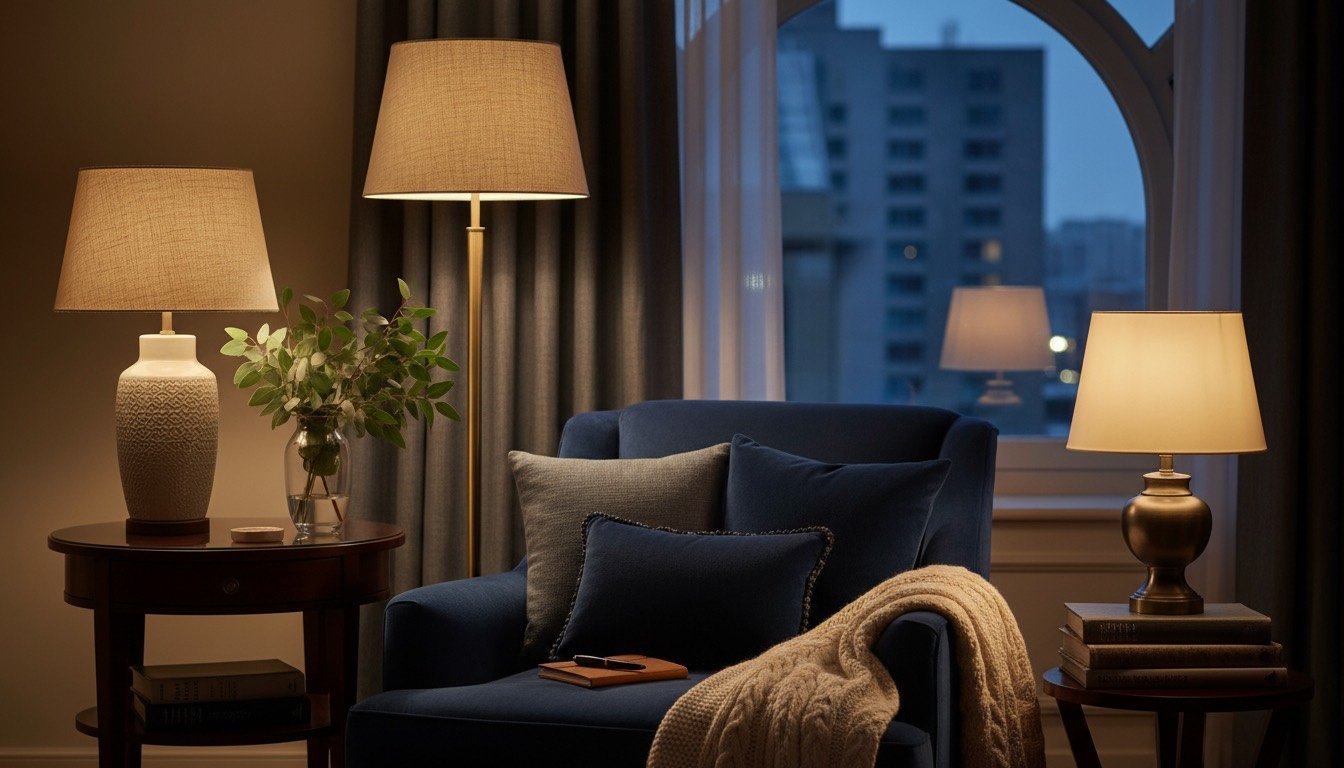
- •Turn off the main ceiling light and build layers instead — a floor lamp, a table lamp and a smaller accent light at different heights read as considered; one central pendant reads as an office.
- •Replace every bulb with warm white (2700K), never daylight or cool white — cool bulbs are the fastest way to make a living room feel like a waiting room.
- •Fit a dimmer switch in rooms you relax in. Parts cost around £12–£20 and a confident DIYer can fit one in twenty minutes; an electrician will do it for roughly £60–£90 including the call-out.
- •Position the largest mirror you can afford opposite or beside your main window to bounce daylight around the room. Our lighting layers guide covers planning a room's light in layers rather than from one fitting.
Texture and textiles: where 'nice' becomes 'expensive'
Once the light is right, texture separates a pleasant room from one that photographs like a hotel suite. The rule is variety in texture, discipline in colour.
- •Layer cushions in three textures — velvet, boucle and linen work well together — but keep them within two colours. Five patterns and five colours reads as cluttered, not styled.
- •Replace thin polyester throws with one good wool or chunky-knit throw (£35–£70). One good throw beats four cheap ones.
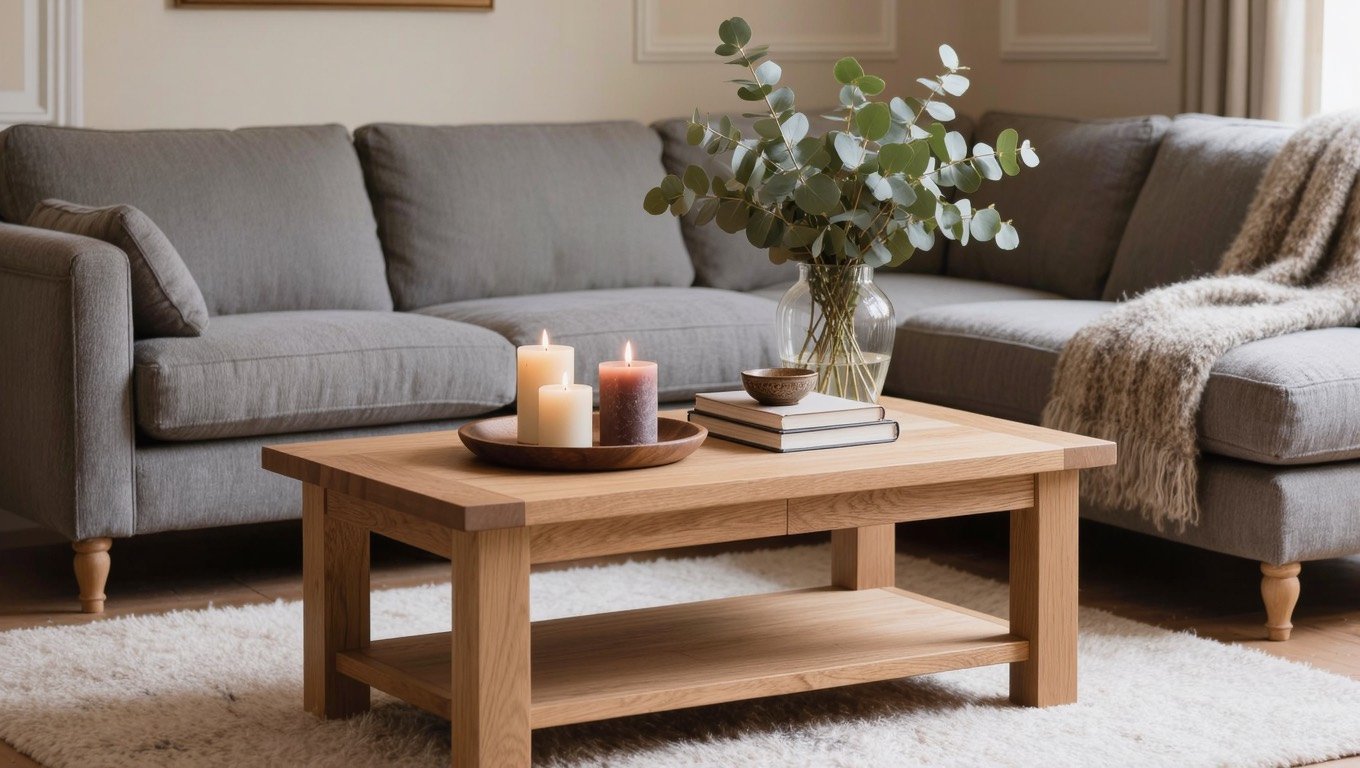
- •Size up your rug. An undersized rug that leaves bare floor around the sofa is the most common giveaway of a budget room — front sofa legs should sit on it. Our guide to choosing a living room rug covers sizing by room dimensions.
- •Iron or steam curtains and bedding. Crumpled linen says 'unfinished'; pressed says 'hotel'. A handheld steamer (£25–£45) earns its keep before guests arrive.
Hardware and paint details that make a room read as 'new'
These are the smallest jobs here and the ones most people skip, because they don't show up in a photo — you only notice them in person, which is the point.
- •Swap plastic switches and sockets in main rooms for brushed metal or matt black ones — £4–£12 per plate plus fitting, or £150–£250 for a living room and hallway done by an electrician; go beyond a like-for-like swap only with a qualified sparky.
- •Change your kitchen cupboard handles. Around £40 of new hardware across a standard kitchen reads like a re-fit, especially with a wipe-down of the cabinet fronts.
- •Paint interior doors and skirting a deep colour — inky blue, forest green, aubergine — in eggshell or satin rather than gloss. Our eggshell vs satin paint guide covers which finish suits which surface; expect £25–£35 per tin.
- •Decant soap and detergent into glass or ceramic dispensers and hide the plastic bottles — a five-minute job that clears most branded clutter from a kitchen or bathroom.
Declutter, add life, then deep-clean the things you've stopped noticing
The last changes cost the least and shift the most, because they're about subtraction and maintenance rather than buying anything new.
- •Clear surfaces back to around one-third full. Empty space is the real luxury signifier — expensive-feeling homes have less on display, not more. Our room-by-room decluttering guide breaks the job into manageable chunks.
- •Bring something living into main rooms — fresh flowers, a few eucalyptus stems, or a large plant. It signals a home that's cared for daily, not just tidied for visitors.
- •Deep-clean carpets, sofa fabric, grout lines and windows — the trick most budget lists leave out. No amount of styling rescues a flattened, greying carpet. A professional carpet and upholstery clean typically costs £60–£120 for an average living room; see our UK carpet cleaning cost guide for a full breakdown.
What it actually costs: a realistic UK budget
You don't need every item — pick two or three that suit your room. Rough current UK prices:
- •Warm-white (2700K) bulbs: £3–£6 each
- •Dimmer switch, parts only: £12–£20
- •Large floor or leaning mirror: £45–£150
- •Wool or chunky-knit throw: £35–£70
- •Living room rug (roughly 160x230cm): £80–£220
- •Brushed metal switch plates, fitted (living room + hallway): £150–£250
- •Kitchen cupboard handles, full kitchen: £35–£50
- •Eggshell paint for doors, per 2.5-litre tin: £25–£35
- •Professional carpet and upholstery clean, living room: £60–£120
- •A realistic total, done gradually, sits between roughly £400 and £700 — a fraction of even a modest redecorate.
Common mistakes that undo the expensive look
A few habits quietly cancel out everything above.
- •Mixing bulb temperatures in the same room — one warm lamp next to one cool ceiling light looks worse than either alone.
- •Buying a rug that's technically nice but too small. Go one size up in a cheaper material rather than the 'right' size in an expensive one.
- •Ignoring curtains and blinds while polishing everything else — staleness in soft furnishings undercuts a freshly cleaned room. Our guide to cleaning curtains and blinds covers methods that don't involve taking them down.
- •Choosing gloss paint for doors instead of eggshell or satin, which highlights every dent and brush mark.
- •Styling before cleaning — flowers on top of a grubby carpet draw more attention to the mess, not less.
When to call in a professional
Most of this list is genuine DIY, but a few jobs are worth paying someone else for.
- •Electrical work beyond a like-for-like faceplate swap — new circuits, dimmers on unfamiliar wiring, kitchens or bathrooms — should go to a registered electrician; UK Part P regulations require certain work to be certified.
- •Carpets with ingrained pet stains, old spills or a musty smell are usually beyond a hired machine. Our guide to how often carpets need professional cleaning covers realistic intervals.
- •Painting more than three or four doors is faster and smoother with a decorator's sprayer than by hand.
Frequently asked questions
**What's the single best budget change for making a home feel expensive?** Light layering and a dimmer switch. Swapping a ceiling pendant for two or three warm lamps costs little and changes how a room feels within minutes.
**How much does it realistically cost to do all fifteen changes?** Done gradually, including a professional carpet clean, most UK living rooms can be transformed for roughly £400–£700 — a fraction of a modest redecorate.
**Why does my rug make my living room look cheap even though I like it?** Almost always because it's too small. A rug that leaves a gap of bare floor around the sofa breaks up the room instead of anchoring it; sizing up, even in a cheaper material, usually fixes it.
**Do I need to redecorate to make my home feel luxurious?** No. Most changes here sit on top of your existing decor rather than replacing it. Paint is the only job that touches the room's fabric, and even that's limited to doors and trim.
**Is warm white or cool white lighting better for a living room?** Warm white, around 2700K, reads as more expensive in living rooms and bedrooms. Cool white, 4000K and above, suits kitchens and utility spaces.
**How often should carpets and upholstery be professionally cleaned?** Roughly every 12–18 months for most households, sooner with pets or heavy foot traffic — see our carpet cleaning cost guide above.
Found this useful?
There's plenty more — hundreds of guides and honestly-tested product reviews for every corner of your home.
Browse All Guides