Cleaning Guides · 6 min read · 17 June 2026
How to Clean Curtains & Blinds (Mostly Without Taking Them Down)
Curtains hold a year of dust, odour and window condensation's side effects — and most clean up without ever leaving the pole. The method per window covering.
By the Nims Casa editorial team — written from professional cleaning experience and checked against our editorial standards.
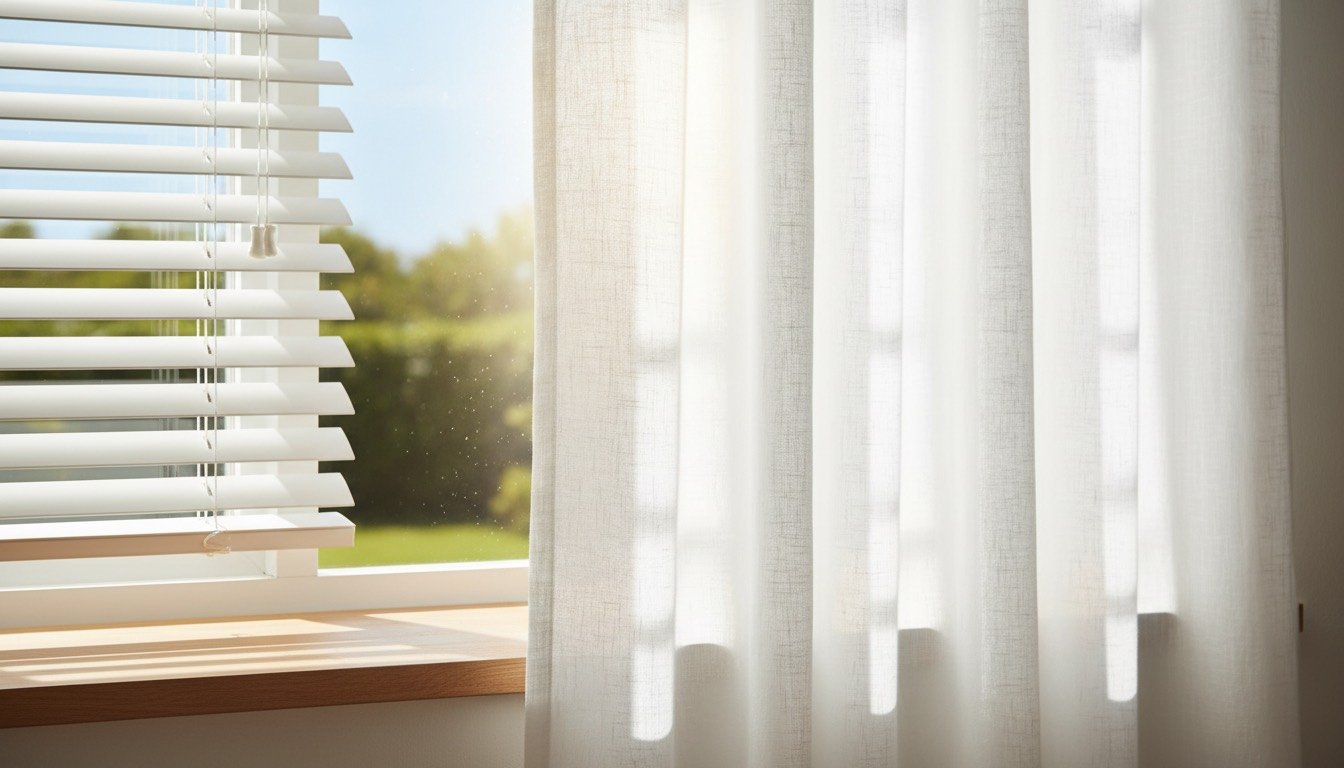
Window dressings are the forgotten textiles in most British homes. They filter every draught, soak up cooking smells, and quietly host the mould that forms at hems wherever condensation collects overnight. Ignore them for a year — which most households do, since taking curtains down is a proper job — and they're holding a startling amount of dust by the time anyone notices.
The reassuring part is most maintenance never needs a stepladder and a free afternoon. Curtains take a monthly vacuum in place; venetian blinds respond to a five-minute trick with kitchen tongs; roller and vertical blinds clean almost entirely where they hang. This guide covers the method for every common window covering in UK homes, what a proper job costs, the mistakes that shrink linings and warp slats, and when it's time to call a professional.
Get the order right, too: clean window coverings before the windows and sills beneath them, or you're just moving dust downward and doing the job twice. Do the whole lot annually as part of a wider seasonal refresh, and most people notice a room smells different afterwards without being able to say exactly why.
Tools and materials you'll need
None of this needs specialist kit, and most households already own the basics. Here's what actually earns its keep:
- •A vacuum with an upholstery or crevice attachment — see our guide to the best vacuum cleaners if suction has dropped off. £40–£180
- •Kitchen tongs (any old pair — it's a one-way trip) and two microfibre cloths, elastic-banded to the ends. Already in most drawers
- •A garment or handheld steamer for refreshing hanging curtains — see our steam iron and steam generator reviews. £25–£90
- •A fabric-safe mould spray for hem spotting — see our tested mould and mildew removers. £4–£8
- •A soft dusting brush for slats, if tongs aren't for you. £5–£12
- •A spare bathtub or basin for bathing greasy venetian or vertical louvre blinds. No extra cost
How to clean curtains without taking them down
Most curtains need nothing more than this routine, done monthly, with an occasional proper wash:
- •1. Fit the upholstery tool and vacuum top to bottom, working pleats and header tape first — that's where the heaviest dust collects.
- •2. Work the hem last. It's where condensation, pets and passing shoes deposit the grubbiest dirt, and where mould is most likely to start.
- •3. For a mid-season refresh, hold a garment steamer six inches from the fabric and work top to bottom — steam relaxes creases, lifts odour and kills dust mites without any washing risk.
- •4. Check the care label before washing. Many curtains are dry-clean only because of shrink-prone linings or fused header tapes — see our guide to laundry symbols if it's unfamiliar.
- •5. If machine washing is allowed, use a cool, gentle cycle with no spin, and wash curtains separately from anything with metal hooks or rings attached.
- •6. Rehang while still damp and let gravity press the pleats, avoiding ironing large panels. Ventilate the room as you would when you dry laundry indoors.
- •7. Treat mould spotting at the hem with a fabric-safe remover before washing, not after — washing tends to set a stain rather than lift it.
Cleaning venetian, vertical, roller and Roman blinds
Every blind type has its own quirks, and treating them all the same is how slats end up bent and vanes end up in the wash looking worse than before.
- •Venetian (aluminium or wood-look PVC): the tongs trick cleans both slat faces in one pass — wrap a microfibre cloth around each side, band it on, and run along every closed slat. For greasy kitchen blinds, unhook and bathe in warm water with washing-up liquid, rinse, then drip-dry flat over a rail rather than rolled in a towel.
- •Vertical fabric louvres: vacuum top to bottom per vane; most systems let you unclip vanes to machine-wash rolled inside a pillowcase on a cool, gentle cycle. Remove the weighted hem chain first, or it rattles around the drum.
- •Roller blinds: unroll fully and vacuum both sides before spot-cleaning marks with a barely-damp cloth and washing-up liquid. Always dry fully unrolled — rolling a damp blind back into its tube is the most common cause of mildew inside the fabric.
- •Roman blinds: vacuum in place on low suction, working with the folds. Anything lined, interlined or blackout-backed should go to a specialist, since home washing warps the internal battens and shrinks the lining unevenly against the face fabric.
Removing mould, condensation stains and lingering odours
Mould at the hem is condensation's calling card. Warm, moist indoor air meets cold glass overnight, condenses, runs down and soaks into whatever fabric touches the sill — our guide to autumn condensation covers why it starts and how to reduce it at the source.
Treat mould spotting with a fabric-safe remover before you wash, testing an inside seam first. Washing over an untreated stain tends to set it rather than lift it. If condensation recurs, wiping the glass each morning with a window vacuum stops the water reaching the curtain at all.
Common mistakes that damage curtains and blinds
A few habits do more damage than the dirt ever would:
- •Washing dry-clean-only curtains on a normal cycle — the lining shrinks faster than the face fabric, leaving a puckered hem no ironing fixes.
- •Rolling a damp roller blind straight back into its tube, which traps moisture and grows mildew invisibly until the smell gives it away.
- •Scrubbing venetian slats with an abrasive sponge instead of a soft cloth — it strips the coating and attracts dust faster.
- •Ironing curtains on a hot setting with fused header tape still in place; direct heat can melt or bubble the tape.
- •Leaving mould untreated because it's 'just behind the curtain' — hems against a damp sill keep regrowing mould within weeks of a wash.
- •Tumble-drying anything with metal eyelets, rings or a weighted hem chain, which can scratch the drum or tear the fabric.
When to call a professional
Book a professional when linings, interlining or blackout backing are involved, or when mould has spread across a wide area rather than sitting at the hem — fabric sprays are for spot treatment, not remediation. Expect roughly £15–£30 per curtain panel, or £60–£150 for a full set collected, cleaned and rehung. For blinds, a specialist clean of wide venetians too large for a domestic bath typically runs £25–£60 per blind.
Frequently asked questions
**How often should curtains actually be washed?** Vacuum monthly and wash or professionally clean once or twice a year for most rooms. Kitchens and homes with pets or smokers benefit from washing every three to four months.
**Can I put curtains in the tumble dryer?** Only if the label allows it and there are no metal rings, eyelets or a weighted hem chain fitted. Even then, low heat is safer, since high heat can shrink linings unevenly.
**Why do my curtains keep getting mould at the bottom even after washing?** Because the underlying condensation problem hasn't been fixed. If the hem sits against a cold, damp windowsill overnight, mould regrows within weeks regardless of how thoroughly you wash.
**Is a garment steamer enough, or do curtains need an actual wash?** Steaming refreshes brilliantly and is enough for a curtain that's only been hanging a few months. It won't remove ground-in dirt, grease or mould, so treat it as maintenance rather than a substitute for a proper wash.
**Do venetian blinds really need to come down for cleaning?** Not usually — the tongs trick and a soft dusting brush handle most dust in place. Take them down only when slats are visibly greasy, typically over a kitchen hob, or when the tilt mechanism needs checking.
**What's the safest way to clean blackout-lined curtains?** Treat them as dry-clean only unless the label says otherwise. Blackout linings are usually a bonded layer that shrinks at a different rate to the face fabric, so a home wash is the likeliest way to ruin the drape.
Found this useful?
There's plenty more — hundreds of guides and honestly-tested product reviews for every corner of your home.
Browse All Guides