Heating & Cooling · 6 min read · 8 April 2026
MERV 8 vs MERV 13 Filters: Differences, Pros, Cons and Cost in UK Homes
The higher number is not automatically the better filter. Whether MERV 13 beats MERV 8 in a British house depends on the housing, the fan, and how much of your air goes anywhere near it.
By the Nims Casa editorial team — written from professional cleaning experience and checked against our editorial standards.
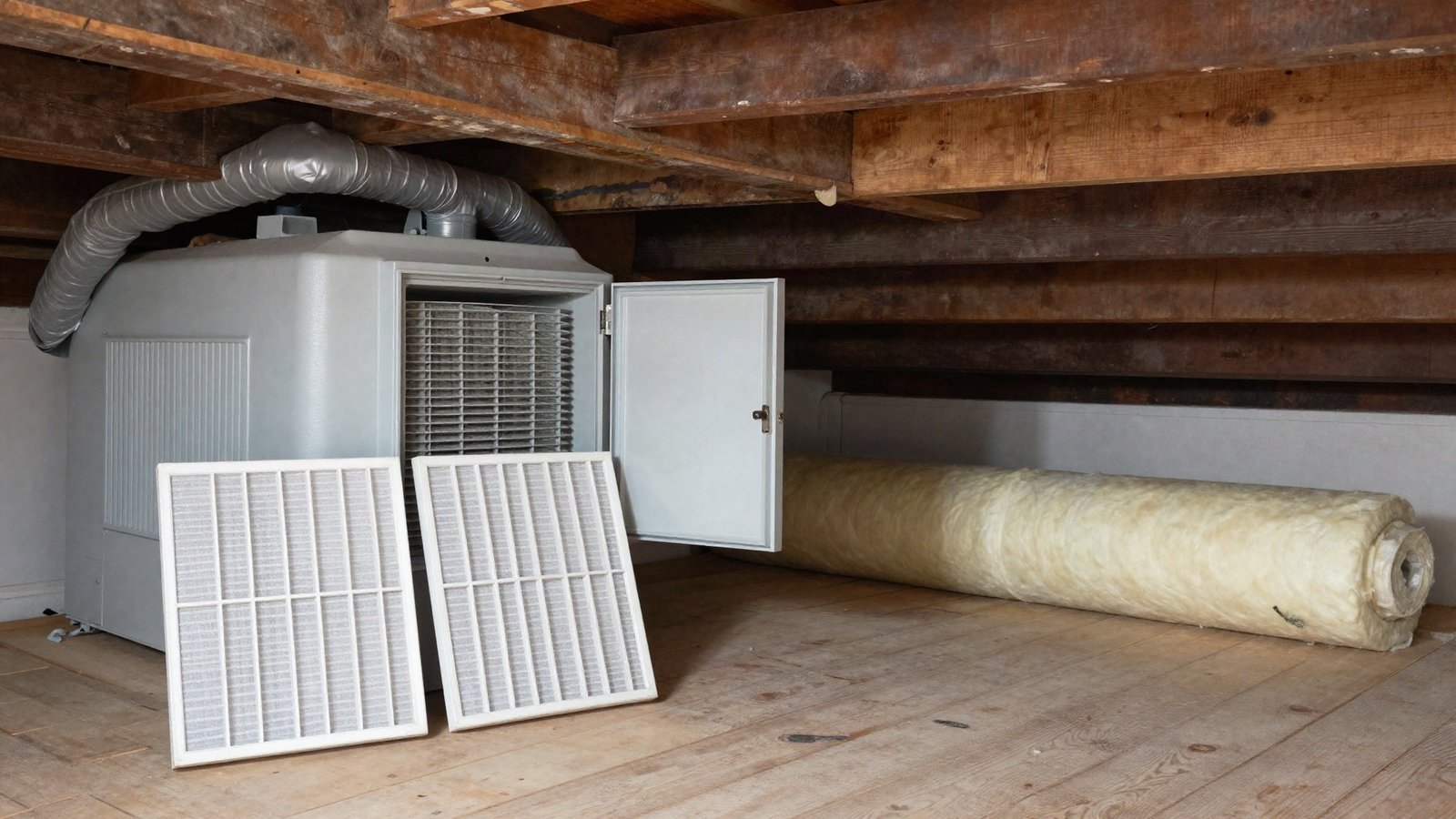
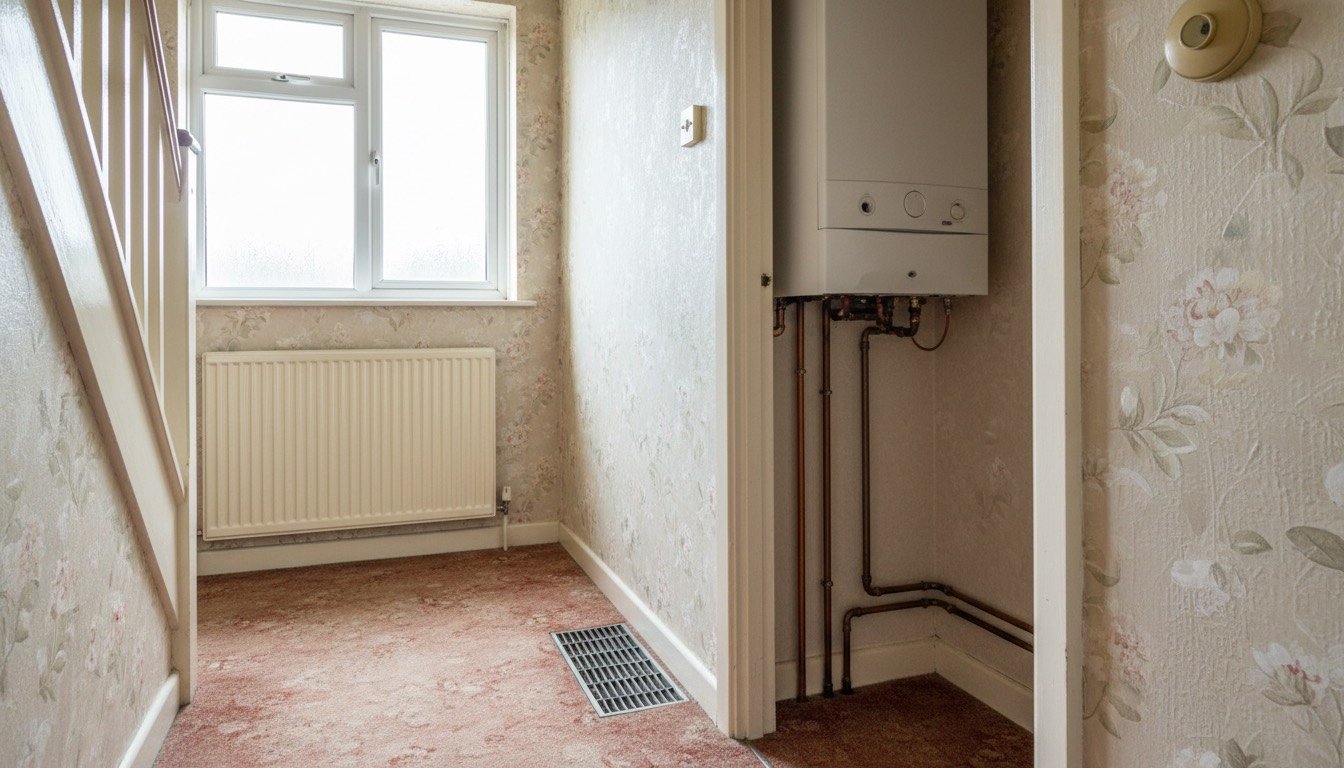
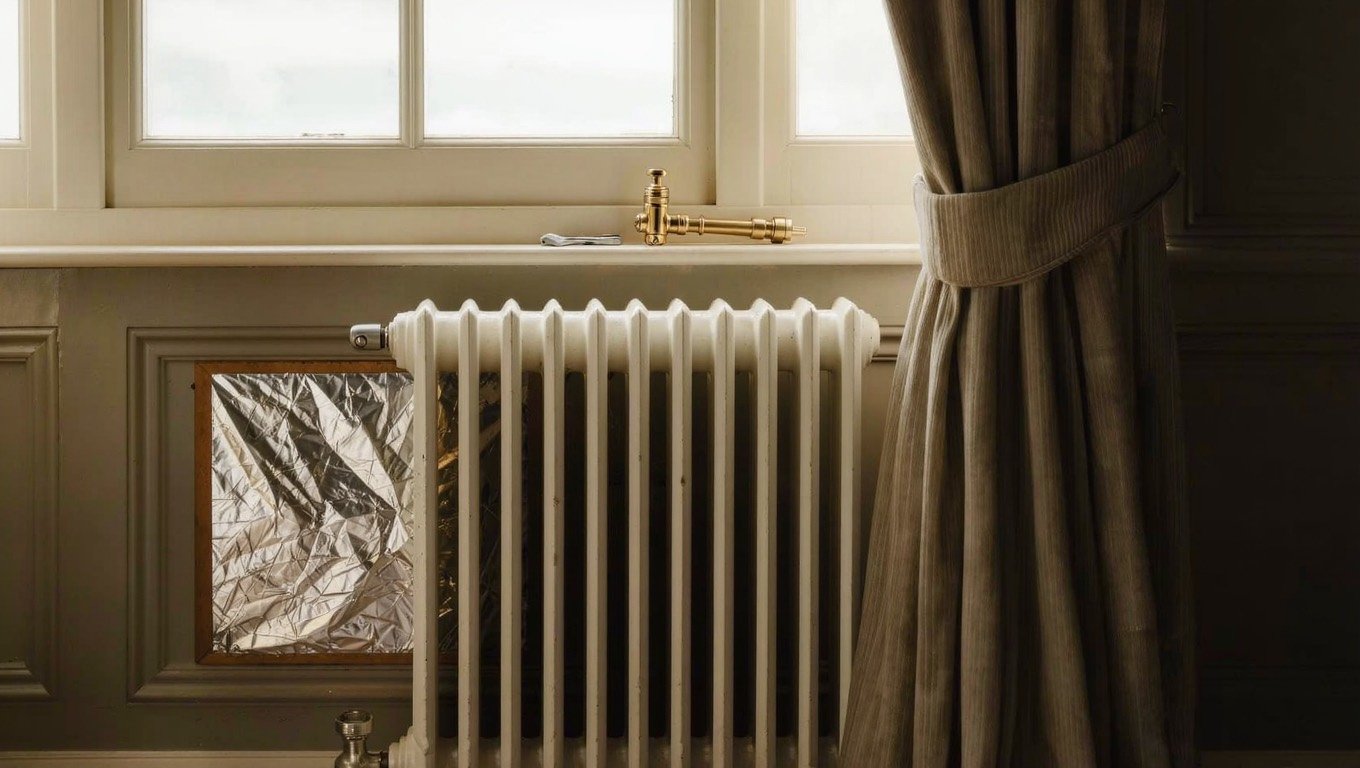
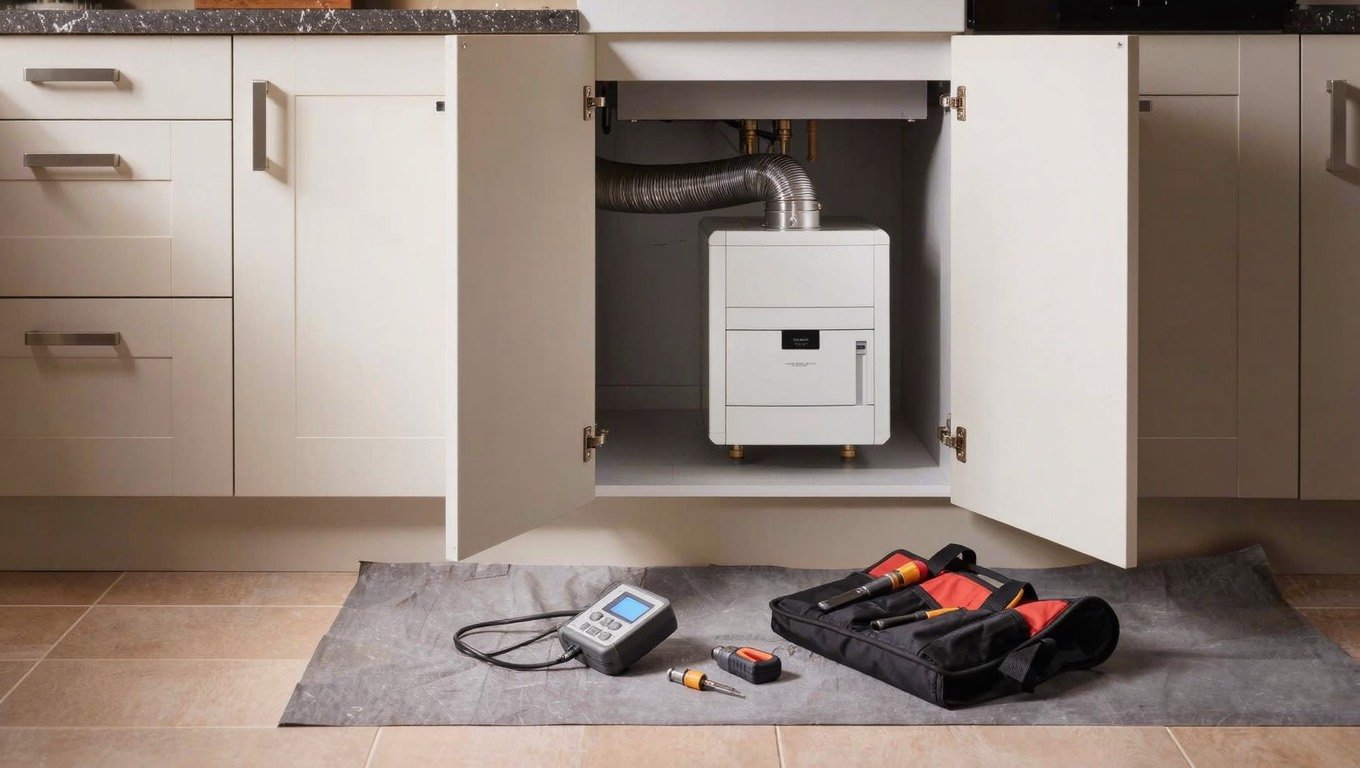
Most homes here never encounter a MERV rating, because we heat with wet radiators off a boiler and there is no ducted air stream to filter. The number starts to matter the moment you have mechanical ventilation with heat recovery, ducted air conditioning, or a loft-mounted air handler serving a converted attic.
Nearly all the advice online assumes a large American blower with static pressure to spare. British kit is smaller, quieter and far less tolerant of a restrictive filter. Get this wrong and a technically superior filter delivers less clean air than the cheap one it replaced.
The side-by-side, in numbers
MERV comes from ASHRAE 52.2. Filters sold here are labelled to ISO 16890, which replaced the old EN 779 G4-to-F9 grades in 2018, so translate before you buy.
- •Equivalence: MERV 8 sits at roughly ISO Coarse 60-70%, old G4/M5 territory. MERV 13 corresponds to about ePM1 50%, formerly F7.
- •0.3-1 micron (traffic soot, wood-burner smoke, cooking aerosol): MERV 8 captures 5-20%. MERV 13 must capture at least 50%.
- •1-3 micron (mould spores, fine mineral dust): MERV 8 around 20-35%; MERV 13 at least 85%.
- •3-10 micron (pollen, skin flakes, plaster dust): MERV 8 around 70%; MERV 13 above 90%.
- •Clean pressure drop across a 25mm panel at 2.5 m/s: MERV 8 typically 25-45 Pa; MERV 13 typically 65-110 Pa. That gap is the whole argument.
- •UK prices: MERV 8 panels £8-15, MERV 13 £18-35. Heat recovery filter pairs run £20-45, or £35-70 for the ePM1 set.
Performance: what the extra grade buys
Everything MERV 8 does well, MERV 13 also does. The difference lives at the sub-micron end, exactly where combustion particles sit — diesel exhaust, wood-burner smoke on a still January evening, the fine particulate off a gas hob. On an A-road terrace that is a real improvement, and the main reason to upgrade.
The caveat is that efficiency is half the equation. What counts is clean air delivery: efficiency multiplied by the volume actually passing the filter. Choke airflow by 25% to gain efficiency and you end up level, or worse. And no panel filter touches radon, nitrogen dioxide, VOCs or carbon monoxide, because those are gases. Radon needs sub-floor depressurisation or a sump if you are in an affected part of Cornwall, Devon, Derbyshire or Northamptonshire.
Installation: the housing matters more than the number
MERV 8 is a drop-in swap. MERV 13 is a system decision, and these are the checks worth making first.
- •Depth. A 25mm panel has little pleat area, so MERV 13 in that format chokes. A 100mm deep pleat can drop less pressure than a 25mm MERV 8, because there is four times the media. Convert the housing first.
- •Fan type. Older PSC motors lose airflow as resistance rises. EC fans compensate by drawing more power — until they run out of headroom too.
- •Face velocity. Aim for 1.5-2.5 m/s at the filter face. Above 3 m/s, pressure drop climbs steeply and captured dust blows off the media.
- •Sealing. A 5mm gap around a badly fitted panel lets 15-20% of the air bypass the media entirely. Improvised plywood filter boxes are the usual culprit.
- •Coil frosting. On ducted air conditioning, reduced airflow ices the evaporator. Frosting within a fortnight of a filter change means the filter is why.
- •Open flues. With a back boiler, open-flued gas fire or solid fuel appliance in use, do not alter extract rates without checking flue performance and alarm dates — see preventing carbon monoxide poisoning. Pre-1970s wiring is the other trap: an EC fan upgrade may need the circuit checked first.
The old-house case: solid walls, sash windows and leaky ductwork
This is where imported advice falls apart. A pre-1919 solid-wall terrace with original sashes, a suspended timber ground floor and four open chimney breasts is not a sealed box: air-tightness tests on that stock routinely return 12-20 m³/h·m² at 50 Pa, against 3-5 for a modern build. Most of the air in the room arrived through the sash box, the floorboard gaps and the flue, not through your filter.
So the order of work is draught-proof the obvious leakage paths, seal the ductwork, then upgrade the filter. Retrofit ducting in these houses runs through lath-and-plaster ceiling voids or down redundant flues and leaks at every joint — sooty flue dust drawn into the supply side loads a fine filter within weeks. Tape and mastic do more for air quality than two grades of filter.
Lime plaster and lath also buffer humidity in a way gypsum does not, so damp complaints here usually respond to ventilation rather than filtration — check the signs of poor home ventilation first.
Maintenance and change intervals
A loaded filter is a restrictive filter, and MERV 13 loads faster because it catches more.
- •MERV 8 / G4 in a heat recovery unit: inspect at 6 months, replace at 9-12 months in a rural or suburban setting.
- •MERV 13 / ePM1 in the same unit: 6-9 months urban, 12 rural. Most unit manufacturers specify six regardless.
- •Ducted air conditioning, 25mm panels: every 3 months, monthly through a heavy pollen spring or with shedding pets.
- •Deep 100mm pleats: 6-12 months, and cheaper per year than quarterly thin panels.
- •Hold it up to a window. If you cannot see light through the media it is done, whatever the calendar says — how often to change an air filter sets out intervals by household.
- •Check the airflow arrow points downstream and wipe the housing seals.
The 10-year cost, worked out
Assume 26p per kWh and a heat recovery unit running continuously in a three-bedroom house.
- •MERV 8 route: pairs at £24, replaced 1.5 times a year, is £360 over ten years, with no real fan energy penalty.
- •MERV 13 route: pairs at £45 on the same cycle is £675, plus roughly 8 W of continuous extra fan power — 70 kWh, or £18, a year — adding £180. Total around £855.
- •Difference: about £495 over ten years, or £50 a year. That is the real price of the upgrade, not the £20 per filter usually quoted.
- •Ducted alternative: converting a 25mm housing to a 100mm deep-pleat rack costs £180-350 once, halves the change frequency and cuts the pressure penalty — over ten years it beats quarterly thin MERV 13 panels on both.
Who each suits, and the verdict
Choose MERV 8 if you are stuck with 25mm panels, if the fan is an older PSC type, if the filter's real job is protecting a coil, or if you live in a leaky pre-1919 property where infiltration dwarfs the filtered volume. Choose MERV 13 if the system has measured static pressure headroom, a deep-pleat housing or an EC fan, and you have a real reason to want sub-micron capture: a main road outside, wood smoke locally, or asthma in the house.
The verdict: MERV 13 is the better filter and the wrong choice more often than people expect. In a well-sealed house with a system designed to take it, spend the extra £50 a year. In a draughty Victorian terrace on 25mm panels and improvised ductwork, put that money into sealing and ventilation first. For one bedroom only, a standalone purifier with a true HEPA element beats either grade.
Found this useful?
There's plenty more — hundreds of guides and honestly-tested product reviews for every corner of your home.
Browse All Guides