Heating & Cooling · 6 min read · 12 April 2026
How Much Does Radon Mitigation Cost in the UK? 2026 Price Guide
Two things set the bill, and the radon reading is only one of them. The other is what your ground floor is built from - which is why the first quote usually arrives before anyone has lifted a floorboard.
By the Nims Casa editorial team — written from professional cleaning experience and checked against our editorial standards.
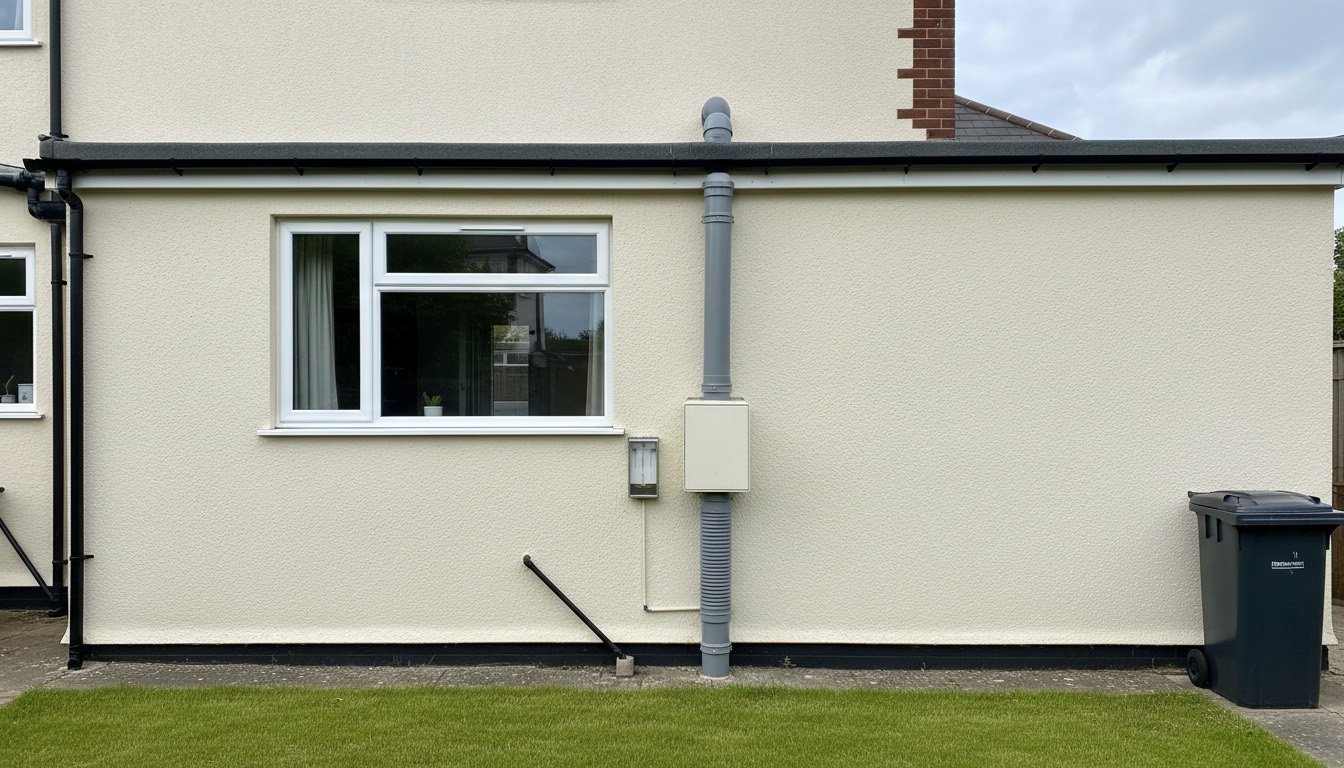
Two things set the bill, and the radon reading is only one of them. The other is what sits under your ground floor - yet most quotes land before anyone has lifted a board or checked the airbricks. That is why people routinely pay £1,500 for a job a £380 ventilation fix would have solved.
A typical UK house is sorted for £900 to £1,800 all in. The honest range runs from about £150 - clearing render-blocked airbricks, sealing a service duct - to £3,500 for a twice-extended house needing two systems. Working out which end you sit at costs a £55 test kit and three months.
What Radon Mitigation Costs in the UK in 2026
Radon work is priced by method, not floor area, so the useful question is not "what does a house this size cost?" but "which of these am I buying?" Bands quoted this year, VAT included.
- •Three-month test, two alpha-track detectors: £50-£60. Free or subsidised in some Affected Areas - ring your council's environmental health team first.
- •Pre-works diagnostic survey: £250-£450, usually credited against the job.
- •Sealing floor gaps, service entries and a floor hatch: £60-£250 in materials, a day or two of your time.
- •Clearing or adding airbricks and periscope vents to a suspended timber floor: £150-£450.
- •Positive input ventilation (PIV) unit fitted in the loft: £550-£950.
- •Active radon sump with fan, dug externally: £900-£1,600.
- •Internal sump cored through a concrete floor, including reinstatement: £1,200-£2,200.
- •Underfloor extract fan serving a suspended timber void: £700-£1,400.
- •Two or more sumps on an extended or split-level footprint: £2,000-£3,500.
- •Validation test after the works: £50-£60. An unmeasured system is decoration.
Diagnose First: Which Radon Problem Do You Actually Have?
Nobody should buy a sump because a map is shaded red. Work these five steps in order; most houses land in a cheaper band than the first quote assumed.
- •1. Measure, don't assume. Two detectors, three months, one in the main bedroom and one in the room you use most, a metre clear of windows and radiators. Results are seasonally corrected - a heating-season reading can sit 30-50% high.
- •2. Read it against two thresholds. Below 100 Bq/m3 (the Target Level), do nothing structural. From 100 to 200, cheap measures only. From 200 to 400 - above the Action Level - PIV and a sump both work, so price decides. Above 400, go straight to an active sump; above 1,000, retest in weeks, not months.
- •3. Identify the ground floor, because it sets the method. A slab over hardcore is sump territory; one sump often depressurises 200 m2. A suspended timber floor has nothing to depressurise and needs airflow instead - a sump quote for that floor tells you the surveyor never looked.
- •4. Find the entry route with a torch: the under-stairs void, an integral garage, where the gas main comes through the slab. If there is a cellar, that is the source - sealing its door and venting the space may be the whole job.
- •5. Rule out what doesn't work. Radon is an inert gas - HEPA filters and desiccant units do nothing to it. If you want one for damp or dust, see air purifiers versus dehumidifiers; it is not a radon cost.
Unit Costs, the Labour Split and Running Costs
Take a mid-range £1,300 external sump. Materials run £260-£400: 110 mm solvent-weld pipe and bends £45-£70, sump former £30-£60, in-line radon fan £130-£220, manometer and sealant £40. The rest is labour - two people for one to one and a half days at £350-£450 per team day - roughly a 70/30 split. Cheap quotes cut the labour day, and that is where sealing and commissioning get skipped.
The fan draws 20-45 W continuously: 175-395 kWh a year, or £45-£100. Fans last five to ten years and cost £180-£350 to replace fitted - budget that with your other annual home maintenance costs. Never switch one off overnight; levels return to baseline within hours.
What Moves the Price
- •Ground floor construction - slab, suspended timber, beam-and-block or cellar. This alone swings a job by £800.
- •Inside versus outside. Coring a kitchen slab means a diamond core rig, dust sheets and reinstatement: add £300-£600 over an external dig.
- •Extensions. A rear extension on a different floor build-up frequently means a second sump and a longer pipe run.
- •Access. A mid-terrace with no side entry forces internal pipework and boxing-in: add £200-£400.
- •Region. London and the South East run 15-25% above Cornwall, Devon, Derbyshire and Aberdeenshire, where specialists compete.
- •Exclusions. Check the survey, the fan's spur and VAT are in the figure. Often none are.
Three Worked Examples
- •1930s semi, Derbyshire, solid concrete throughout, 280 Bq/m3. External sump, pipe to above the gutter, 30 W fan. Survey £300 (credited), works £1,250, validation £55. Total £1,305; retest 42.
- •Victorian terrace, Cornwall, suspended timber floor, 340 Bq/m3. Three airbricks rendered over, a fourth buried by a raised patio. Clearing them and adding four periscope vents came to £380, plus £70 of sealant. Retest 155 Bq/m3 - under the Action Level, above target. PIV added at £780; second retest 88. Total £1,283, though stage one alone would have satisfied a lender.
- •1990s detached, Northamptonshire, extended over beam-and-block while the original half is slab, 620 Bq/m3. Two sumps, two fans, one cored through the kitchen floor. £2,850 plus £160 reinstatement. Validation 71 - expensive because of the floor, not the reading.
How to Sanity-Check a Quote
No licensing regime governs this trade, so prices for identical work vary by 40% and quality varies more. If you are buying rather than living there, fold this into your home survey costs.
- •Which floor construction did you measure, and how? "Assumed from the age of the property" is the wrong answer.
- •Is a validation test in the price? A quote with no post-works measurement is a sale, not a remediation.
- •Which fan, by model, and what pressure does it develop at the design flow?
- •Where does the pipe discharge? Above the eaves, two metres clear of an opening window - never into a loft.
- •Is a manometer fitted where I can see it? Without one you cannot spot a seized fan.
- •Who wires the fused spur, and is Part P notification included?
- •Walk away from anyone selling air purification as remediation. Proper whole-house ventilation systems help with moisture and stale air, but here they support the fix, not replace it.
How We Costed This
Figures are 2026 UK prices, built from contractor quotes in Devon, Derbyshire, Northamptonshire and Aberdeenshire, merchant prices for pipework and radon-rated fans, and published testing charges. All include VAT at 20% and exclude redecoration and anything structural uncovered on the way. Sump labour has risen 4-6% a year since 2023 while detector prices have barely moved, so anything costed over a year ago is out by roughly a tenth.
If your reading came from a cellar, price that separately - sorting out a damp cellar and sealing its route into the house often halves the figure as a side effect. If a suspended floor void is the culprit, weigh the ventilation options above against full crawl space encapsulation costs; doing both at once saves a day's labour.
Found this useful?
There's plenty more — hundreds of guides and honestly-tested product reviews for every corner of your home.
Browse All Guides