Costs & Hiring · 6 min read · 27 May 2026
New Homeowner Maintenance Checklist: Your First Year, Printable (UK)
The survey said no significant defects and the keys are in your hand. That is the moment the maintenance clock starts — and nobody hands you the schedule that goes with it.
By the Nims Casa editorial team — written from professional cleaning experience and checked against our editorial standards.
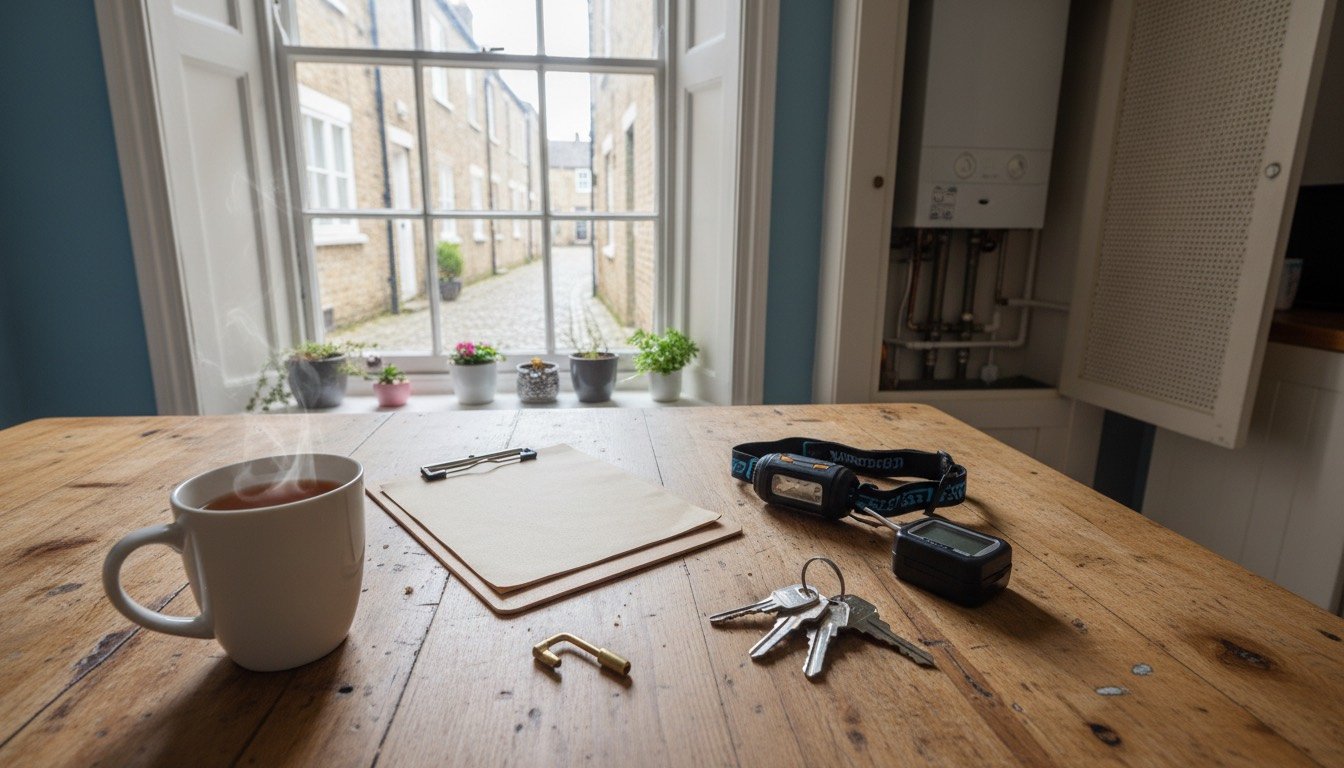
Most first-year problems in a British house are not dramatic. They are a gutter blocked since the previous owner stopped caring, a stopcock nobody can find at 11pm, and a boiler last serviced in 2019. None of it shows up on a homebuyer report: a surveyor describes condition on one dry Tuesday.
What follows is the schedule we hand clients after a move — jobs grouped by how often they need doing, with real timings and UK prices, and a clear line around work you are not legally allowed to do yourself.
Week one: do these before you unpack
Nothing here costs much, and each item is something you would otherwise hunt for in an emergency with water coming through a ceiling. Budget one evening.
- •Find and free the internal stopcock, usually under the kitchen sink. Turn it fully off and back on; seized stopcocks are very common. Photograph and label it. Buy a stop tap key for the external one too, £6-£12.
- •Open the consumer unit, press each RCD test button, check the circuits are labelled. A rewireable fuse box with no RCD protection needs replacing: £450-£750 for a changeover.
- •Test every smoke and CO alarm and read the manufacture date on the casing. Anything over ten years old is scrap even if it beeps. £15-£25 smoke, £20-£35 CO.
- •Photograph the gas, electricity and water meter readings on completion day.
- •Bleed the radiators and note boiler pressure: 1.0 to 1.5 bar cold is normal for a combi. 30 minutes, £2 for a bleed key.
- •Change the euro cylinders on external doors: £15-£30 each, 20 minutes per door.
Monthly: the ten-minute round
Do this the same weekend every month. The circuit takes under ten minutes once you know the route, and it catches most of the slow leaks that become four-figure repairs.
- •Press-test every smoke and CO alarm. 2 minutes, £0.
- •Torch under every sink, behind the washing machine and around the toilet base, looking for staining and crusted white deposits rather than active drips. 3 minutes.
- •Glance at the boiler pressure gauge. A gauge that keeps falling means a leak or a tired expansion vessel; see bleeding radiators and re-pressurising the boiler.
- •Run the taps and flush the loo in any room you rarely use — dried-out traps let drain smells straight in.
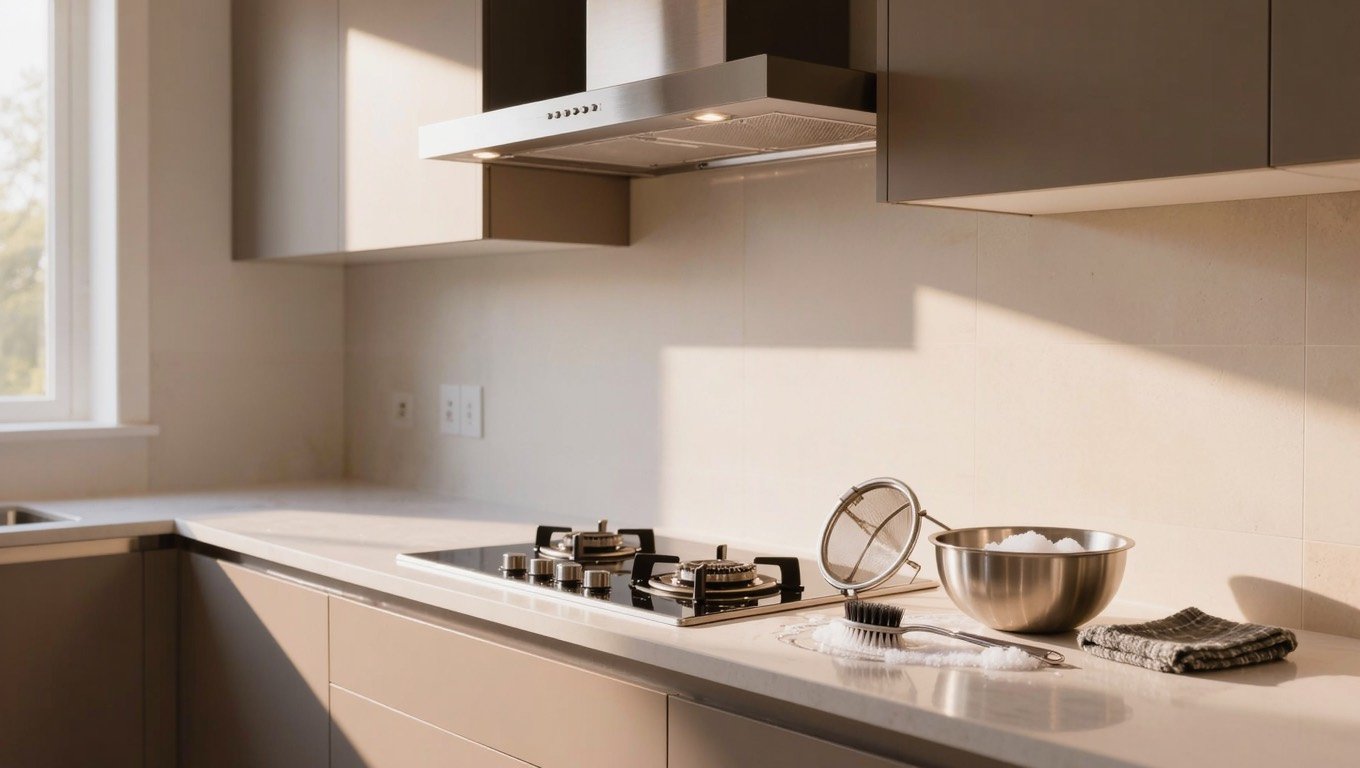
- •Degrease the cooker hood filter every 4-6 weeks: dishwasher on a hot cycle, or 20 minutes in soda crystals. £3 a box.
- •Empty the washing machine pump filter. 5 minutes, and it heads off the most common 'won't drain' callout at £70-£90.
Seasonal: grouped for British weather
Our climate is wet rather than extreme, so the seasonal jobs that matter are about water getting in and staying in. Prices assume a three-bed semi.
- •SPRING: Inspect the roof from the ground with binoculars for slipped slates (20 minutes, £0). Check pointing on the south-west elevation, which takes the driving rain. Treat fences and sheds — £16-£25 for 5 litres, half a day.
- •SUMMER: Book the boiler service now. June rates run £70-£100; the same job in October is £110-£150 with a wait. Repaint external woodwork in a settled dry spell, surfaces above 8°C. Check loft insulation depth — 270mm of mineral wool is the standard, £22-£30 a roll to top up.
- •AUTUMN: Clear gutters, hoppers and gully grates once the leaves drop. Two to three hours DIY or £70-£150 for a two-storey clear — the highest-value job here, and gutter cleaning and maintenance covers the safe method. Lag loft pipework at £3-£5 per 2m. Sweep the chimney if you burn anything: £60-£95.
- •WINTER: Hold the heating at 12-14°C if the house is empty more than a day, and read how to prevent frozen pipes first. Walk outside during heavy rain and watch where water actually goes. Wipe window condensation daily and ventilate, or you will be reading about damp and mould by March.
Annual jobs with legal weight
This is where a UK checklist differs from an imported one. Several of these jobs are restricted by law rather than by skill, and doing them yourself invalidates insurance and can stall a future sale.
Gas is absolute: only a Gas Safe registered engineer may work on gas appliances, pipework or flues, and that includes moving a cooker. Electrical work in England and Wales falls under Part P of the Building Regulations — new circuits, consumer unit replacement and work in bathrooms are notifiable, and must be certified or signed off by building control.
- •Boiler service by a Gas Safe engineer: £70-£150 a year, usually a condition of the manufacturer's warranty.
- •Landlords: an annual Gas Safety Record (CP12) is a legal duty, as is an EICR every five years in England, a smoke alarm on every storey and a CO alarm in any room with a fixed combustion appliance.
- •Owner-occupiers: an Electrical Installation Condition Report every ten years, £150-£300 for a three-bed. Do it in year one on a pre-1990 property with no paperwork.
- •Replacement windows and doors need FENSA or CERTASS certification. Missing certificates surface at conveyancing.
- •Check whether an inherited garden room, knocked-through wall or loft conversion had building regs sign-off. Permitted development covers many outbuildings but never removes the building regs duty — see when you need planning permission.
Supplies that cover almost all of it
No workshop needed. This kit covers every task above for roughly £150-£220.
- •Head torch, £12-£20 — frees both hands under a sink or in a loft.
- •Radiator bleed key and a 250mm adjustable spanner, £8.
- •Pin-type moisture meter (£15-£25) and a digital hygrometer (£10-£15). Hold indoor humidity under 60% and most mould never starts.
- •Telescopic gutter scoop or a wet-and-dry vacuum with gutter attachment, £45-£90.
- •Silicone sealant, gun, PTFE tape, tap washers and jubilee clips — £20 the lot.
- •An EN131 ladder only if you are steady on one; otherwise budget £80-£150 a year for proper access equipment.
What to prioritise when time or money is short
When something has to give, prioritise by consequence: water, then heat, then structure. That means gutters before gloss paint, every time. Budget roughly 1% of property value a year across your first decade — £2,800 on a £280,000 semi, most of it unspent until a boiler or roof lets go. Our annual home maintenance cost guide breaks that down by house age.
- •One hour a year: exercise the stopcock, test all alarms, check boiler pressure.
- •Half a day: add gutters, downpipes and a ground-level roof inspection.
- •One day: add the boiler service, a loft check for daylight and damp staining, and fence treatment.
- •Two days: add external woodwork, bathroom silicone and a drainage walk in wet weather.
Where to stop and call someone
Stop at anything gas, anything involving a new circuit or the consumer unit, anything more than one storey up, and anything structural — a fresh crack wider than a £1 coin edge, a bouncing floor, movement above a window. Those are consequence problems, not confidence problems. Everything else here is within reach of someone who has never owned a house: do week one this weekend, and put the seasonal jobs in a calendar.
Found this useful?
There's plenty more — hundreds of guides and honestly-tested product reviews for every corner of your home.
Browse All Guides