Plumbing · 6 min read · 10 June 2026
Signs Your Pipes Need Replacing — and How to Tell Which Problem You Actually Have
A copper pinhole leaks about half a litre an hour — quiet enough to run for months behind a kitchen unit. Here is how to tell a dying pipe from a tired tap before you spend a penny.
By the Nims Casa editorial team — written from professional cleaning experience and checked against our editorial standards.
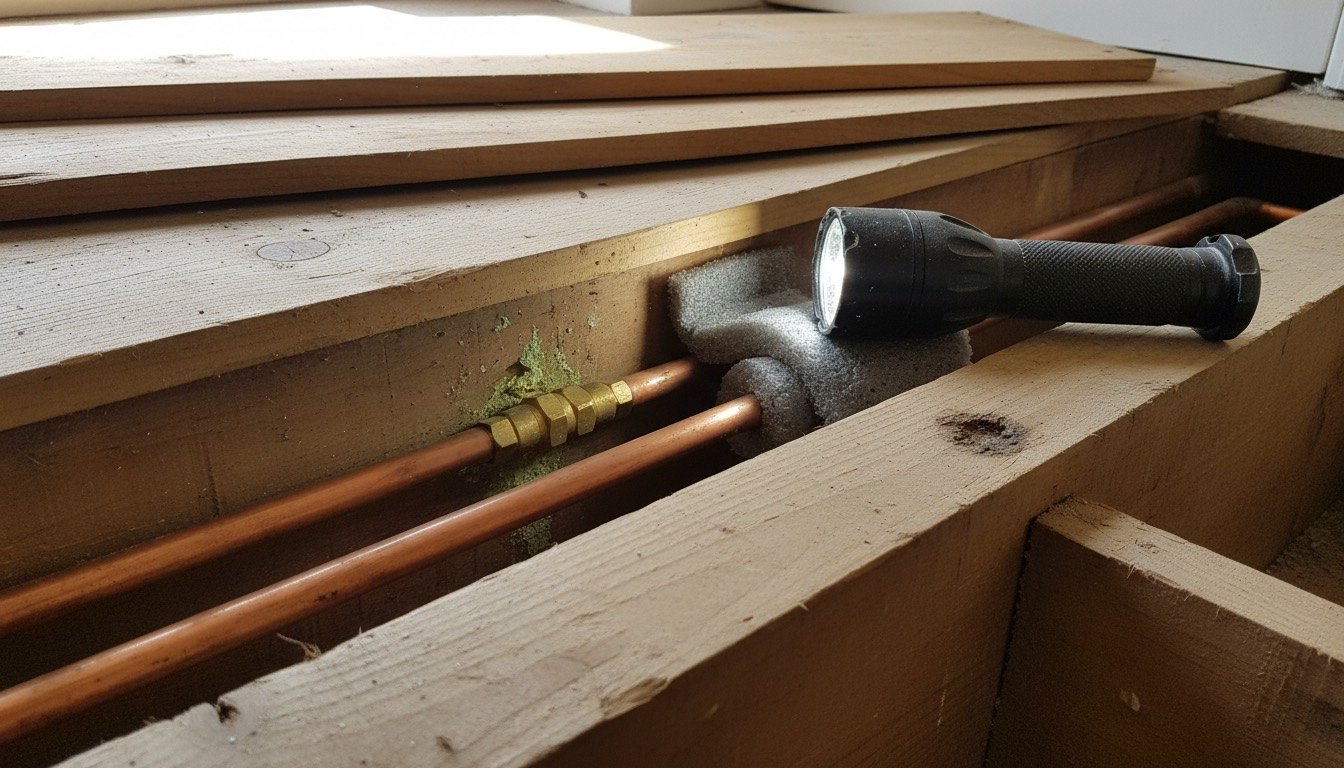
A pinhole in a 15mm copper pipe releases about half a litre an hour. Quiet enough to run behind a kitchen unit for three months, and cheap enough to fix with a £6 slip coupler — right up until the chipboard floor swells and the ceiling below comes down.
The awkward part: the same few symptoms — weak flow, brown water, banging, a damp patch — come from four unrelated causes, and only two mean the pipework is finished. Diagnose first. A £3,500 quote and a 40p washer start from the same complaint.
Start Here: Four Questions That Narrow It Down
Work through these before you lift a floorboard. Each answer kills off roughly half the possible causes, and all four take under half an hour with a bucket and a torch. If they point at the incoming main rather than the house, read our breakdown of low water pressure and its nine causes — supplier-side faults are fixed free.
- •1. One outlet or the whole house? Time a 10-litre bucket at the kitchen cold tap: under 60 seconds is healthy, over 90 needs investigating. Repeat elsewhere. Bad everywhere means the supply pipe or stop tap; bad at one means that tap or its flexi.
- •2. Hot only, cold only, or both? Hot only is usually scale in the cylinder coil or a seized gate valve, not the pipes. Cold only on the mains side is the incoming supply.
- •3. Sudden or gradual? Anything that changed overnight is mechanical — a valve, an airlock, debris after mains work, a burst. Anything that has crept down over five to ten years is the bore narrowing: replacement territory.
- •4. What is it made of, and how old is the house? Material and age decide whether you patch or plan.
Identify the Pipe Material — It Decides Everything
British housing stock holds four generations of plumbing, each failing differently. Scratch a clean patch with a coin and hold a magnet against it. Copper is no longer the automatic replacement under floors — our comparison of plastic push-fit versus copper pipe covers where each earns its keep.
- •Lead: dull grey, soft, scratches to bright silver, bulbous wiped joints, no magnetic pull. Common on the incoming supply in pre-1970 homes. It does not fail — it simply should not be there.
- •Galvanised steel: a magnet sticks firmly and joints are threaded, not soldered. Interwar to the early 1960s. It rusts from the inside and the bore closes year on year; flushing never brings the flow back.
- •Copper: standard from the mid-1970s, imperial half-inch until about 1975 then metric 15mm and 22mm. It fails at points, not along its length — pitting pinholes, blue-green staining at the plughole, and brass fittings crumbling from dezincification.
- •Plastic push-fit: grey or white, flexible, early 1990s onwards. The pipe outlives most of us; failures are at fittings — a missing insert, an undercut end, a joint pushed home halfway.
Symptom to Cause: What Each Sign Really Means
The mapping we use on site. Match your symptom to a line rather than assuming the worst.
- •Brown water clearing after 30 seconds, worst first thing → galvanised steel rusting internally. If it never clears and neighbours have it too, ring the water company.
- •Flow that has faded slowly over five to ten years → scale or tuberculation narrowing the bore. The clearest genuine replacement signal there is.
- •A second pinhole in the same run within 18 months → that run is finished. Patching a third time is money thrown away.
- •A damp ceiling under a bathroom → nine times in ten a joint or a shower tray seal, not the pipe wall.
- •Banging when the washing machine shuts off → water hammer from pressure or unclipped pipework, not corrosion. What causes water hammer explains the fix.
Causes, in the Order You Should Suspect Them
Ranked by what we actually find. Three call-outs in four stop at number one or two.
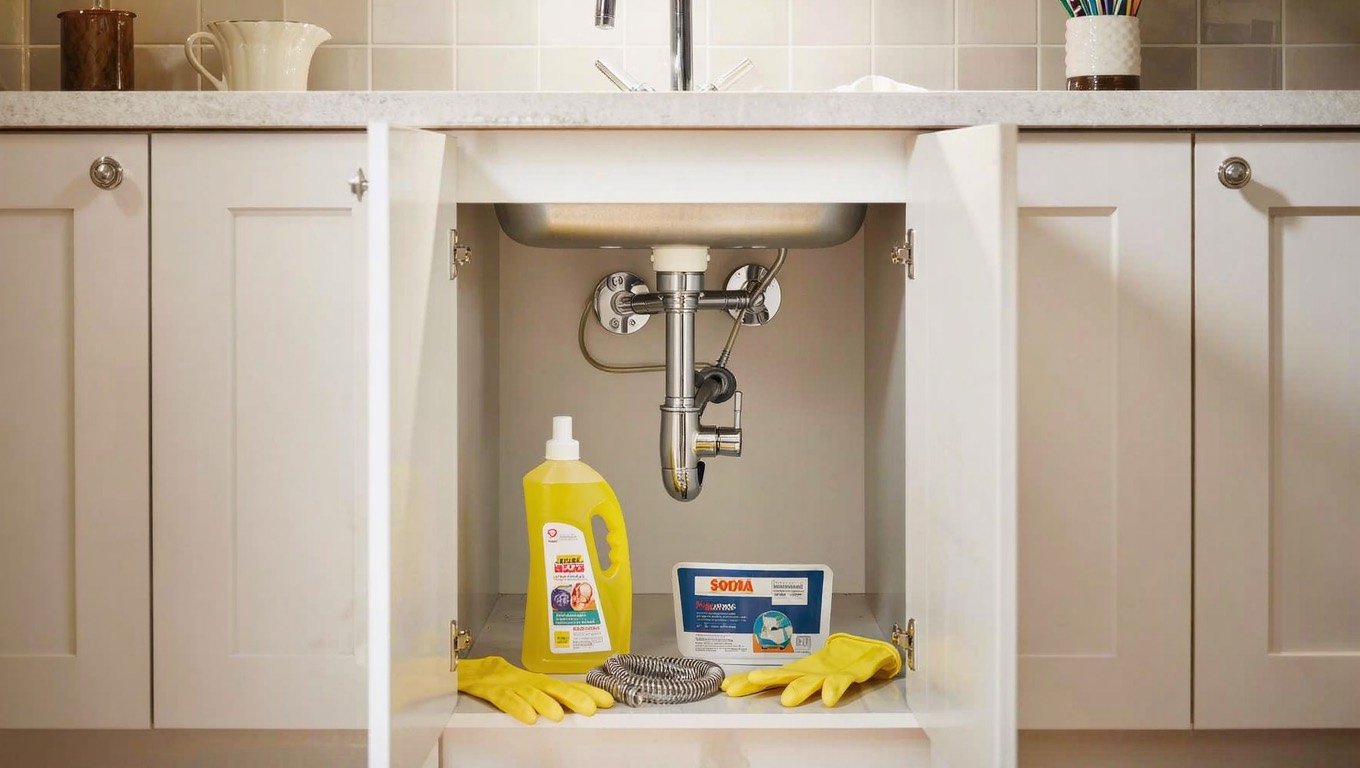
- •1. A fitting, valve or flexible tap connector — not the pipe at all. Braided flexis under basins last eight to ten years and cause more house floods than anything else we attend.
- •2. Scale, across the hard-water belt of southern and eastern England where supplies run 200-350 ppm. It furs cylinders and shower valves long before it kills a pipe.
- •3. Isolated pitting in copper, usually from flux left inside a joint at installation, or water travelling too fast through undersized pipe.
- •4. The buried supply pipe between boundary stop tap and house — old lead or 1960s black alkathene, cracked by ground movement, roots or a driveway laid over it. Your responsibility, not theirs.
- •5. Whole-system material failure: galvanised steel, or brittle 1980s plastic fittings. Uncommon, but total when it happens.
- •6. Supplier-side pressure, or a part-closed boundary valve. Free to check before accepting any repipe quote.
Fixes, Ordered from Lowest Risk to Highest
Stop as soon as the problem goes away. Test your internal stop tap first — if you cannot shut the water off in 60 seconds, you are not ready to open a pipe. Then rule out a hidden leak: close that stop tap and watch the meter's leak indicator for 30 minutes. Movement means water is escaping underground, and our method for finding a water leak covers the tracing.
- •Free: open the stop tap fully, descale the tap aerators, and gauge mains pressure at the outside tap. One to three bar is normal; above four wants a pressure reducing valve.
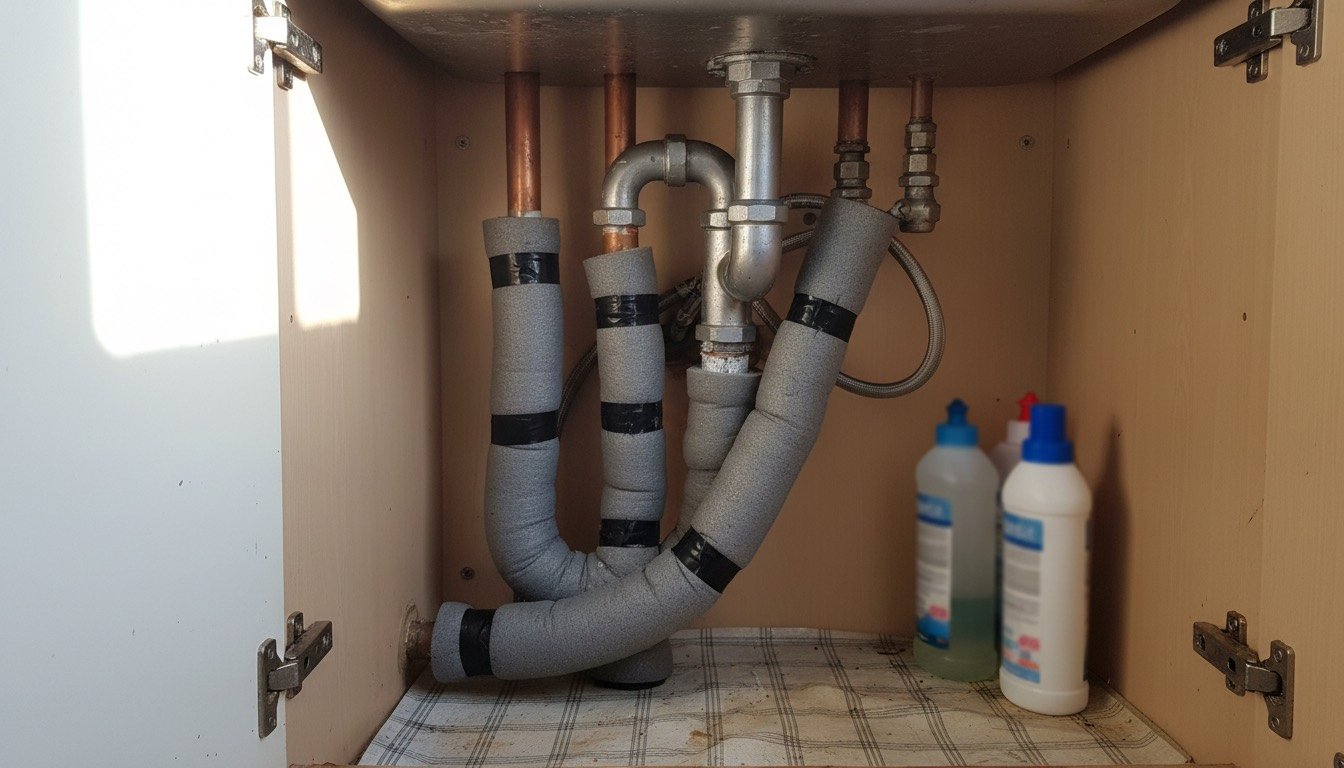
- •£5-£30, no drain-down: replace braided flexis on a schedule, swap seized service valves, fit a water hammer arrestor, lag loft pipes with 19mm-wall foam at £1.50 a metre.
- •£20-£60, drain-down needed: cut out a pinhole and fit a 15mm slip coupler. Ten minutes of work, an hour of refilling. Fair as a first repair, pointless as a third.
- •£300-£900: one run replaced under floors, plaster made good.
- •£700-£1,800: the buried supply pipe in 25mm MDPE, moled rather than trenched. Ask your supplier first — most replace their side free once you have done yours.
- •£3,500-£6,000: a full repipe of a three-bed semi, four to eight days, plus £800-£1,500 to replaster and redecorate.
Where DIY Has to Stop
Learn this line before you need it — read the emergency steps for a burst pipe now rather than at eleven at night. Stop and call someone if the pipe is lead and needs cutting, which increases lead release and needs correct transition fittings; if the work sits upstream of your internal stop tap, which belongs to the supplier or an approved contractor; if water is near a consumer unit or ceiling downlights, in which case kill the power and touch nothing; or if the fault is on an unvented cylinder, notifiable under Building Regulations Part G.
Our honest rule: repair the first pinhole, investigate the second, price a replacement run at the third. Where two independent symptoms point at the pipe itself — falling flow plus discoloured water — patching only shuffles money from repair to repair. Get three written quotes, insist each states the material and whether making good is included, then check them against our UK plumber rates by job.
Found this useful?
There's plenty more — hundreds of guides and honestly-tested product reviews for every corner of your home.
Browse All Guides