Organisation & Storage · 6 min read · 6 June 2026
Small-Space Storage Ideas That Actually Work in UK Homes
The UK has some of Europe's smallest homes — but most of them waste metres of storage in plain sight. Where the hidden capacity lives.
By the Nims Casa editorial team — written from professional cleaning experience and checked against our editorial standards.
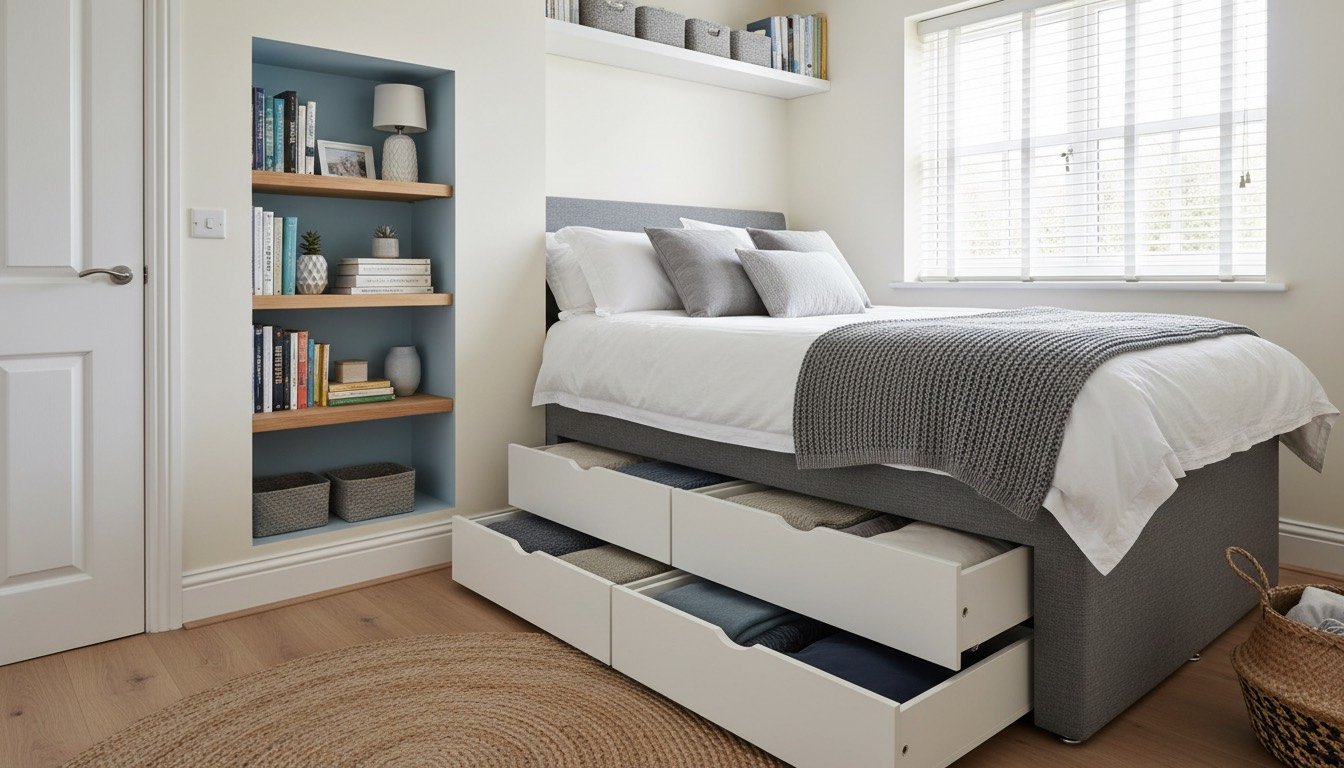
British homes are some of the smallest in Europe, yet in almost every property we work in the same five zones sit empty: the walls above head height, the void under the bed, the space over each door, the alcoves beside a chimney breast, and the inside of doors themselves. The problem is almost never a lack of square metres — it's storage capacity going unused because it isn't at eye level.
This guide covers where that capacity lives, how to audit a room before buying anything, the furniture that pulls double duty, and the tools and prices you'll meet in a UK shop in 2026. Whether you're in a Victorian terrace with awkward alcoves, a new-build flat with barely a boxroom, or a rented studio where you can't drill a picture hook, there's a version of this that works.
How to audit a small room for hidden storage
Spend twenty minutes on these five checks before buying anything — it's the difference between storage that fits first time and a returns queue.
- •Look up first. Measure from your tallest furniture to the ceiling — anything above roughly 180cm is dead space until a shelf goes there.
- •List every door in the room, including cupboards. Each one can carry an over-door rack without a screw going into a wall.
- •Check under every bed. If you can't see daylight underneath, you don't yet have proper storage there — you have a dust trap.
- •Measure both alcoves beside a chimney breast separately, even if the room looks symmetrical. Victorian breasts are rarely centred, and shelving cut to one measurement often won't fit the other side.
- •Photograph the room from the doorway and mark up wasted verticals with a pen — far easier to spot in a still image than while standing in the clutter.
Think in vertical metres: shelving that works
The floor in a small room fills up fast; the walls almost never do. Shelving that runs floor to ceiling, with rarely used items kept up top, makes far better use of a wall than a low, deep unit that eats into the floor plan while storing less. A tall, shallow bookcase — around 30cm deep — typically holds more than a squat unit twice its footprint, and feels lighter because it doesn't block sightlines.
Picture-ledge rails above door height are worth finding a stud for — they hold books spine-out with no visible bracket. Wall-mounted bike hooks (£10–£25 a pair) free up floor space in a hallway, and pegboard in kitchens or utility rooms (£25–£60 for a 60x120cm board plus hooks) turns a blank wall into hanging storage without adding a drawer.
The five most under-used storage zones in UK homes
- •Under beds: the single biggest untapped cupboard in most homes. An ottoman lift-up frame (£300–£700 for a double) turns the whole base into one sealed void; wheeled underbed boxes (£12–£25 each) or vacuum bags (£3–£8) do a similar job for out-of-season bedding.
- •Alcoves beside a chimney breast: made-to-measure shelving from a joiner typically runs £150–£400 per side, or a floating-shelf kit costs £60–£150 DIY. Either way, a dead niche becomes a proper home for books and boxes.
- •Over doors: a single shelf above the architrave of each internal door is almost invisible from eye level but holds plenty — a basic bracket-and-board version costs under £20 in materials.
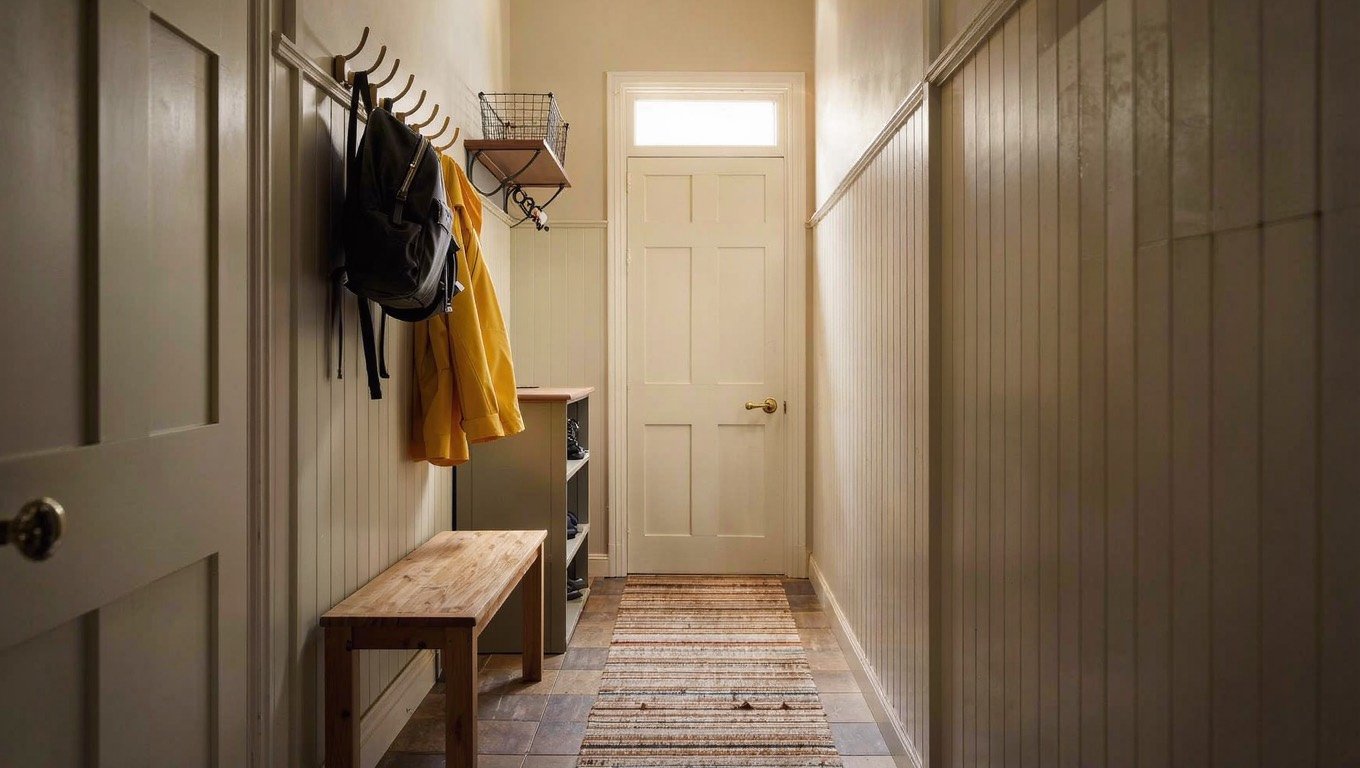
- •Under the stairs: full pull-out drawers cost roughly £1,000–£3,000 fitted, which only makes sense mid-renovation. A cheaper option is coat hooks and a slim console (£40–£90) under an open flight.
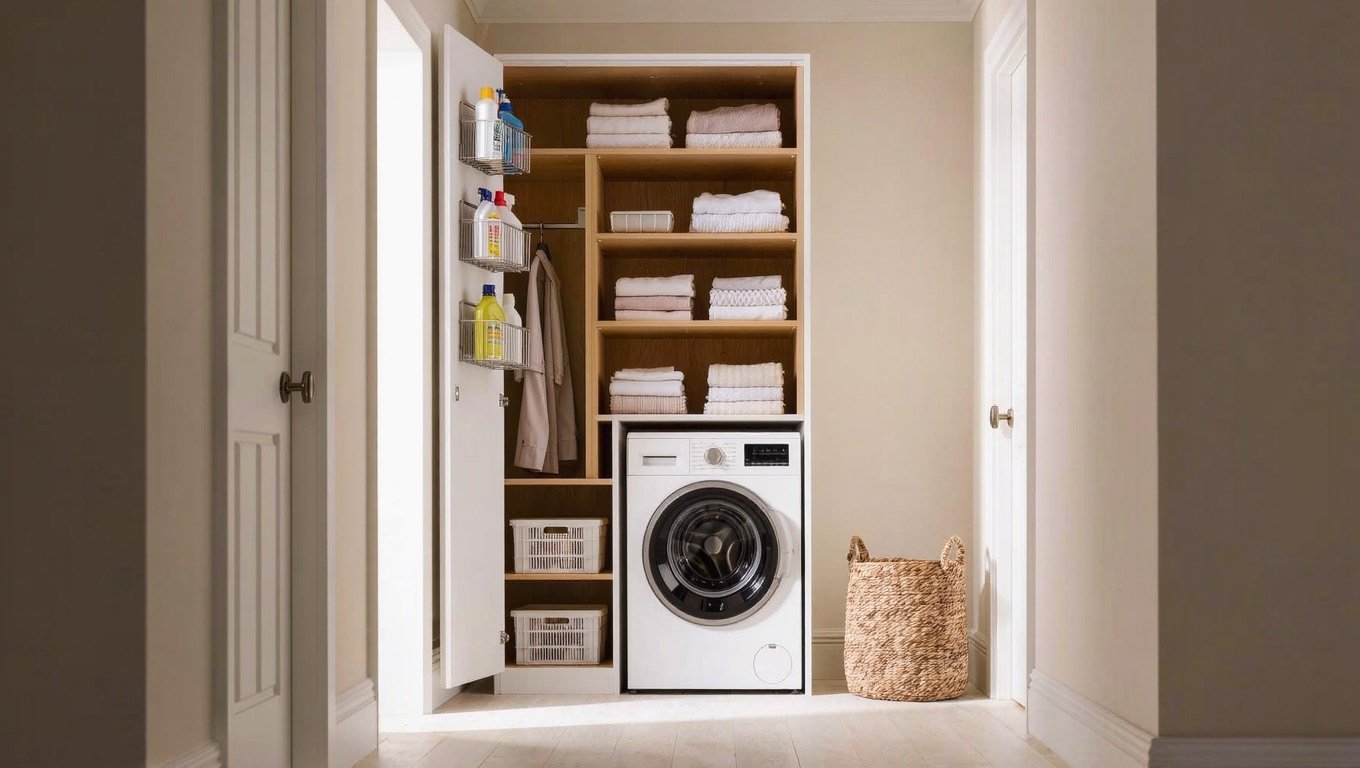
- •Backs of doors: over-door racks for toiletries, chopping boards or shoes cost £8–£20 each and need no fixings that would worry a landlord.
Furniture that earns its floor space twice
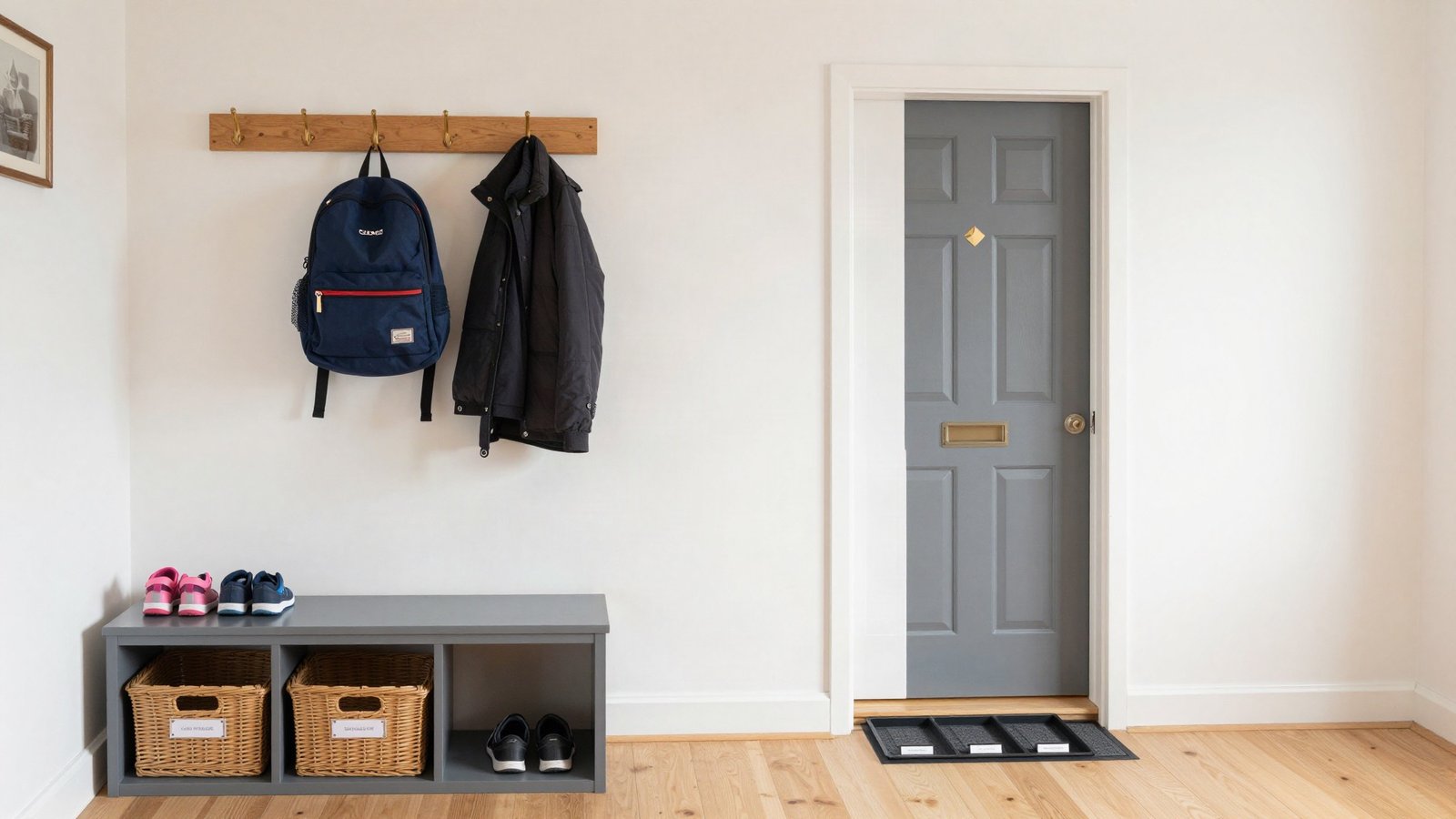
Every large piece in a small room should do two jobs. Ottoman beds and storage footstools are the obvious examples, but a bench with a lift-up lid, nesting side tables, and a sofa raised on legs — which reads as more spacious and leaves a shallow storage line beneath — all work the same way. If the layout itself is the real problem, arranging furniture in a small living room is worth reading first.
One note from the cleaning side of this business: choose closed storage over open where you can. Open shelving suits daily-use items but collects dust faster in a small room with limited air circulation — expect to wipe it weekly, not monthly. Keep the open-shelf look to one feature wall; see open shelving versus closed cabinets for that trade-off.
Tools, fittings and typical UK prices
Most of this is a weekend job with a modest kit list:
- •Stud detector — £15–£30; essential before drilling a stud wall or masonry, especially in older lath-and-plaster properties.
- •Spirit level (60cm) — £8–£15; a shelf 3mm out over 60cm looks crooked from across the room.
- •SDS drill with masonry bits — £45–£90 to buy, or £25–£35 a day to hire, for brick or block behind plaster.
- •Heavy-duty shelf brackets — £4–£12 a pair; check the weight rating before loading a shelf with books.
- •Ottoman bed frame, double — £300–£700; the highest-impact single purchase on this list.
- •Underbed boxes with lids — £12–£25 each; choose wheeled ones if there's clearance.
- •Over-door hooks and racks — £8–£20 each, no fixings required.
- •Floating shelf kit, pair, 60cm — £25–£45 basic MDF, £60–£120 solid wood.
Common small-space storage mistakes
Buying storage before measuring is the most common one. A unit that's 32cm deep won't fit an alcove that's 28cm deep, and most furniture like this isn't easily returned once built. Measure the narrowest point of an alcove, not the widest.
The second is overfilling the visible layer — a shelf packed three books deep isn't storage, it's deferred clutter. Decluttering room by room is worth doing first, since removing what you don't need is cheaper than buying more places to keep it.
The third is ignoring weight limits, particularly on alcove shelving and over-door racks — a shelf rated for 5kg holding a row of hardbacks will eventually pull its fixings out of plasterboard.
When to bring in a professional
Fitted alcove shelving or a bespoke wardrobe in a period property with uneven walls is best measured and built by a joiner — expect £150–£400 per alcove, or £800 upwards for a full fitted wardrobe run, for a finish flat-pack can't match on an out-of-square wall. Plan a wardrobe fit-out properly rather than piecemeal: see organising a small closet and wardrobe organisation. If the property is simply too small for what you need to store, loft conversion costs and garage and shed storage cover the two routes most homeowners try before moving house.
Frequently asked questions
**Do I need a stud finder for small-space shelving?** For anything load-bearing, such as alcove shelving or a bike hook, yes — a basic detector costs under £20 and prevents a shelf pulling out under weight. A single lightweight over-door hook rarely needs one.
**Are ottoman beds worth the extra cost over a normal frame?** In a genuinely small bedroom, yes. A double ottoman at £300–£700 replaces several underbed boxes, since the whole base lifts as one unit rather than leaving only a 15–20cm gap.
**Will landlords allow over-door and wall storage?** Over-door racks need no fixings, so they're always fine. Adhesive hooks rated for light loads are usually acceptable too, but check the tenancy agreement first and keep any original fittings to reinstall when you leave.
**How deep should alcove shelving be?** Measure the alcove at its narrowest point, since chimney breasts are rarely square, and order shelving 1–2cm shallower than that to allow for skirting board and any bow in the wall.
**Is open shelving a bad idea in a small kitchen?** Not inherently, but it needs more cleaning than a cupboard — expect to wipe it weekly rather than monthly, since dust settles faster where air circulation is limited.
**What's the cheapest way to add storage to a rented flat?** Over-door racks, wheeled underbed boxes, tension rods inside alcoves, and freestanding units on legs together typically cost under £100 and leave no trace when you move out.
Found this useful?
There's plenty more — hundreds of guides and honestly-tested product reviews for every corner of your home.
Browse All Guides