Home Decor · 6 min read · 14 August 2026
Summer to Autumn Decor: The Gradual Switch That Avoids Clutter
Skip the one-day pumpkin haul. A three-weekend changeover — textiles, then lighting, then accents — brings autumn in without letting summer pile up in the corner.
By the Nims Casa editorial team — written from professional cleaning experience and checked against our editorial standards.
Most homes do not need more autumn things; they need a slower switch. The classic mistake is one big September haul — pumpkin ornaments and plaid throws dumped on top of summer pieces that never got put away — so by half-term the living room holds two seasons and looks like neither.
Having styled and cleared enough UK living rooms to watch this happen every year, we stage the change over three weekends between late August and early October: textiles first, then lighting, then accents. Each stage takes an hour or two, costs little or nothing, and — crucially — forces the summer version of each item into storage before its replacement comes out.
The Three-Weekend Plan at a Glance
Spreading the changeover matches how the season actually arrives in Britain. Late August evenings are still light past eight; by the end of September it is dark before seven. A staged switch keeps the room in step with the weather, and because each weekend has one job, nothing new enters the house until its summer equivalent has left. The same staged logic applies to the practical side of the season — our September home reset runs the maintenance equivalent in parallel.
- •Weekend one (late August to early September): swap textiles — cushion covers, throws, bedding — and wash, bag and store the summer set the same day.
- •Weekend two (mid-September): change the lighting — 2700K bulbs throughout, lamps on at dusk, candles back on the table.
- •Weekend three (late September to early October): finish with accents — vases, dried stems, one styled shelf — and complete the colour bridge.
Weekend One: Textiles First
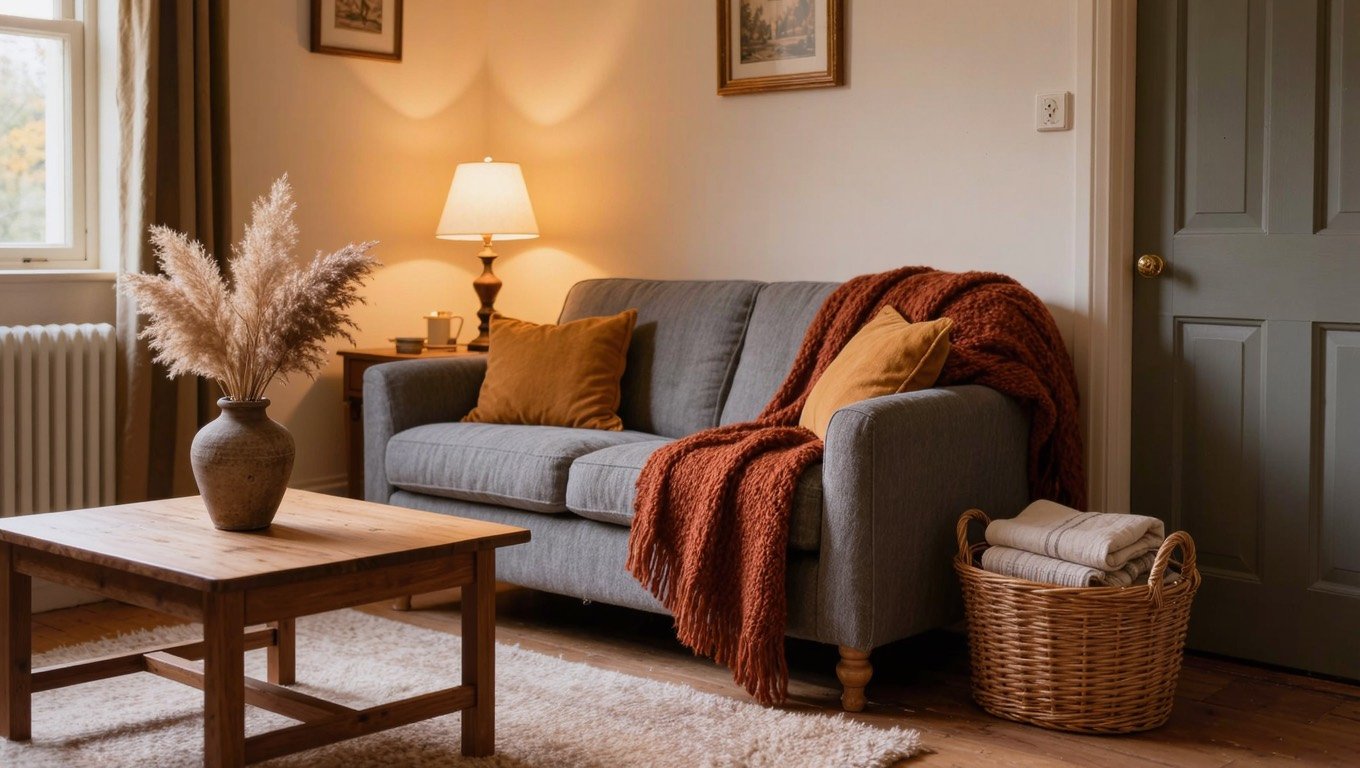
Textiles change a room's temperature faster than paint ever will, and they are the cheapest lever you have. Do not buy new cushions — buy covers. A 45cm cover in boucle, brushed cotton or corduroy runs £4 to £14 at Dunelm, IKEA or H&M Home, and covers fold flat into a single drawer where whole cushions would colonise a cupboard. Two rust or ochre covers on a neutral sofa read as a full seasonal change.
Add one heavier throw — wool or chunky knit, £20 to £45, and check TK Maxx first, where last season's £60 throws routinely sit at £25 — and in bedrooms move from cotton percale to brushed cotton, around £30 to £40 for a double set. The discipline that matters: everything summer gets washed, dried and bagged the same weekend. The rotation logic from our seasonal wardrobe system applies to soft furnishings too — one labelled vacuum sack per room, flat under a bed.
Weekend Two: Lighting Is the Real Season-Changer
If you only do one weekend, do this one. Autumn cosiness is roughly 80 per cent light temperature and 20 per cent everything else. Check the bulb in every living-space fitting: anything marked 4000K (cool white) or 6500K (daylight) will fight every candle and throw in the room. Swap living room, bedroom and hallway bulbs to 2700K warm white — £3 to £6 each for LED at B&Q or Screwfix — and you may need to buy nothing else at all.
Then move light down to seated height. An overhead pendant on its own makes an October evening feel like a waiting room; two table lamps and a floor lamp, each around 400 to 800 lumens, do the real work — the full method is in our guide to layering lighting in a room. A £10 plug-in timer set for dusk means a warm-lit room every evening, which matters more once the clocks go back in late October. Before buying new fittings, fix the common lighting mistakes first — one badly placed cool-white bulb undoes the lot.
Weekend Three: Accents and the Colour Bridge
Jumping straight from coastal blues and whites to burnt orange is what makes a room feel redecorated rather than seasonal. Bridge instead: ochre, olive, terracotta and warm neutrals all sit comfortably next to summer brights, so the pieces from weekend one still work as the palette deepens. Save the deep rusts, plums and forest greens for this final pass.
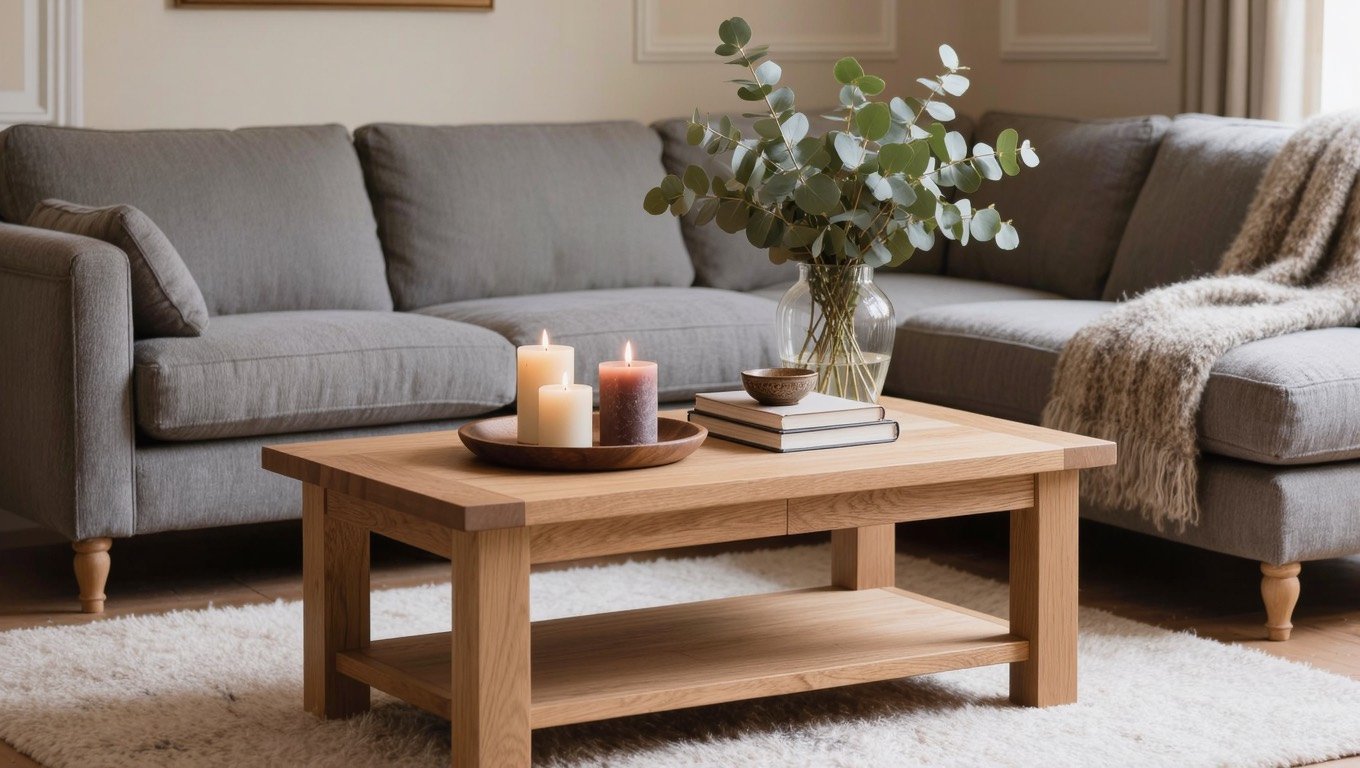
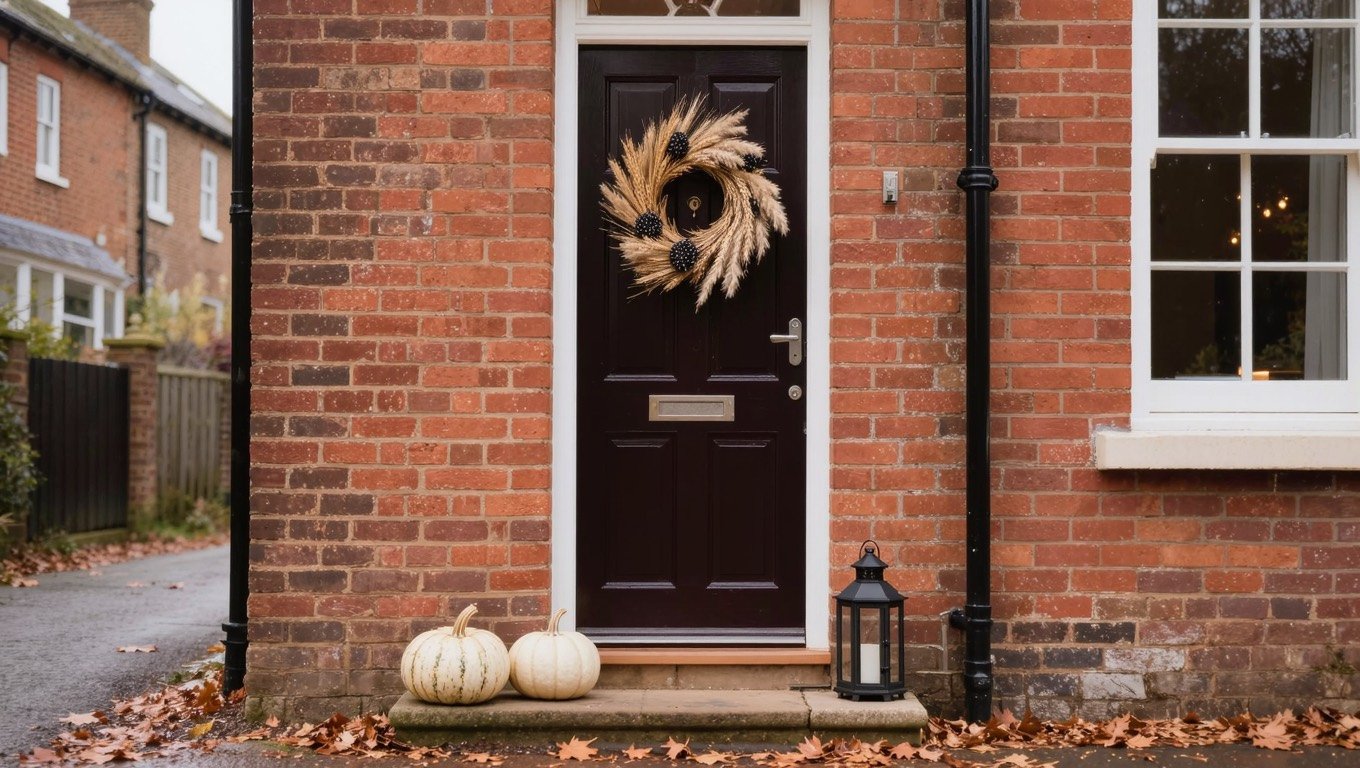
Swap fresh flowers for dried — pampas, bunny tails and seed heads last until spring, which beats £8 a week on supermarket stems. Restyle the coffee table and one shelf, not every surface: three objects read as styled, seven read as clutter. This is also the weekend for anything Halloween-ish — after the base palette is in, never before. When you do get to it, this year's Halloween decor trends covers what works with an autumn palette rather than against it.
- •Dried stems in stoneware or amber glass instead of weekly fresh flowers (£6–£15, lasts six months)
- •One large candle or lantern per room rather than five small ones dotted about
- •Rotate prints you already own into existing frames — a £0 change that reads as new
- •A darker fabric lampshade (£10–£20) warms a lamp you already have
Store, Donate or Let It Go
The transition is the year's best decluttering trigger, because every summer piece passes through your hands anyway. One rule: anything that did not come out this summer skips storage and goes to the charity shop that week. Store the keepers washed, in vacuum bags or labelled 60-litre boxes; a loft is fine in a house, but in a flat use under-bed and small-space storage so the spring swap is not a chore. If the maybe pile is winning, fold the textile sort into a proper room-by-room declutter rather than fighting the same boxes twice a year.
Three Budgets, Including £0
None of this requires spending anything; money just makes it faster. In a small UK room — the 3.5m by 4m terrace lounge, the new-build box bedroom — restraint wins: one throw, two cushions, one lamp. Small rooms saturate quickly, and the spend that earns its keep is bulbs and one decent lamp, never ornaments.
- •£0: rearrange. Turn seating towards the fireplace or lamp corner instead of the window, move your best lamp into the living room, and shop the house for candles and darker textiles.
- •Under £50: four cushion covers (£20), six 2700K LED bulbs (£20), one bunch of dried stems (£8).
- •Under £150: all of the above plus a wool-mix throw (£35), a plug-in timer with a second lamp or smart bulb set (£30–£50), and a darker lampshade.
The Renter-Safe Version
Everything above is already reversible — that is deliberate — but tenants can push further without risking the deposit. Skip anything that needs a drill: lean a large mirror or framed print on the mantel or a deep windowsill instead of hanging it, use self-adhesive hooks rated to 2kg for wreaths and light frames (pull the tab down flat to remove and they leave paint intact), and choose freestanding plug-in lamps over anything that touches the wiring.
Smart bulbs are the renter's best autumn buy: a dimmable 2700K smart bulb costs £10 to £15, turns a landlord's cold fitting warm in seconds, and moves out with you. Layer your own curtains on a tension rod inside the window recess rather than swapping the landlord's, and put a washable rug over tired carpet — it guards against exactly the stains deposits get docked for. There is a fuller playbook in our rental-friendly decor guide, but the short version holds: if it cannot come off cleanly or come with you, it does not go up.
Found this useful?
There's plenty more — hundreds of guides and honestly-tested product reviews for every corner of your home.
Browse All Guides