Roofing & Exterior · 5 min read · 3 April 2026
Seamless vs Sectional Gutters: UK Costs, Pros, Cons and the Honest Verdict
A dripping joint sends most people shopping for seamless guttering. Sometimes that is the right answer and sometimes it is £1,800 spent on the wrong fault entirely.
By the Nims Casa editorial team — written from professional cleaning experience and checked against our editorial standards.
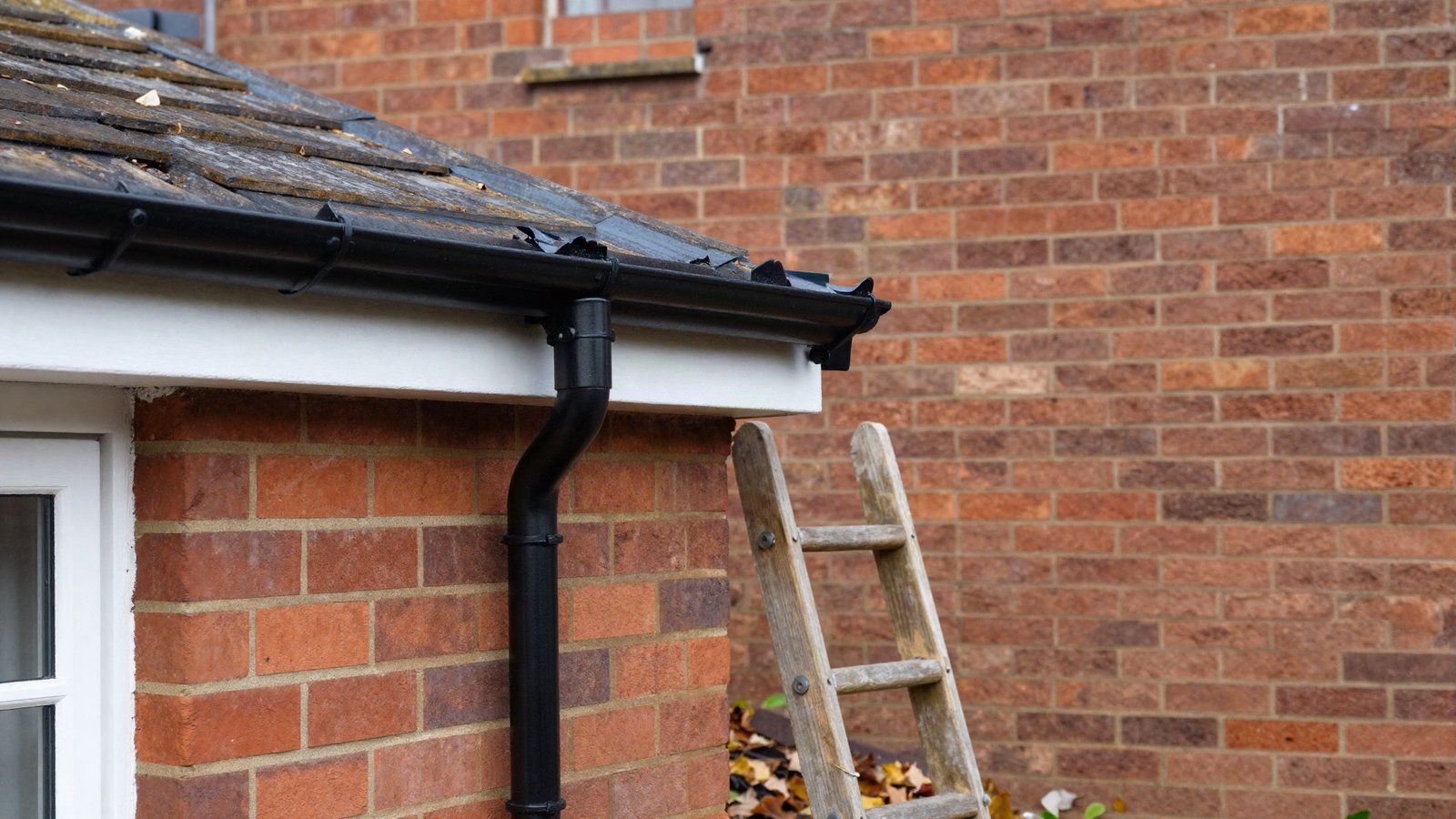
A gutter that drips onto the path below has usually failed at a joint, and that single observation is what sends most homeowners looking at continuous aluminium. The logic is sound: a 12-metre run formed from one unbroken length has nowhere along its middle to leak. Whether that is worth roughly double the price of uPVC depends entirely on which fault you are actually looking at.
In Britain the comparison is rarely the American one. It is roll-formed aluminium, extruded from a coil on the back of a van outside your house, versus sectional uPVC in 2m and 4m lengths from a builders' merchant, with cast aluminium and cast iron sitting above both on price and on conservation-area approval lists. Here is how the two behave once UK rainfall, ladder access and a decade of ownership are factored in.
Start here: which gutter fault do you actually have?
Spend ten minutes outside during genuine rain with a torch, and another ten on a dry day looking at the staining. Continuous guttering eliminates exactly one category of failure. Work out whether that is your category before you accept a quote.
- •Drips and a green algae streak below one specific point, with the rest of the run dry — a failed union gasket, or a joint pulled apart by thermal movement. This is the fault seamless guttering genuinely removes.
- •Water sheeting over the front lip in heavy rain while the joints stay dry — a capacity, fall or blockage problem. A continuous run changes nothing here.
- •Water tracking down the wall behind the gutter — the roofing underlay is not dressed into the gutter, or there is no drip trim under the first course of tiles. New guttering of any type will do exactly the same.
- •A visible sag holding standing water between brackets — brackets spaced beyond 1m, or a softening fascia board. Fix the timber and the spacing, not the gutter.
- •Overflow only at the corner or above one downpipe — a blockage, or a 68mm downpipe serving more roof area than it can take.
- •Rust-coloured weeping along an entire run on a Victorian or Edwardian property — cast iron corroding from the inside. Replacement is due, and uPVC may not be permitted.
Seamless vs sectional: the side-by-side
Only the first symptom above is an argument for going seamless. If yours sits in the middle of that list, the money is far better spent on brackets, falls and a proper clear-out — twice-yearly gutter cleaning prevents most of it, and a single failed union is a twenty-minute job covered in our guide to fixing a leaking gutter. With that established, the two systems compare like this.
- •Material: seamless is 0.7mm aluminium coil, roll-formed on site and polyester powder-coated. Sectional is usually uPVC, occasionally cast aluminium or cast iron in fixed lengths.
- •Joints per house: seamless has joints only at corners, stop ends and outlets — typically four to six on a three-bed semi. Sectional uPVC adds a union every 2m or 4m, so ten to fourteen on the same house.
- •Fitted cost: seamless aluminium £45-£75 per linear metre; sectional uPVC £22-£38 per linear metre; cast aluminium £85-£140 per linear metre.
- •Guarantee: seamless installers commonly offer 20-25 years on the coating and workmanship. uPVC systems carry around 10 years, and most fitters warrant labour for one or two.
- •Colour: seamless is powder-coated to any RAL reference, including heritage blacks and greys. uPVC is limited to white, black, brown, grey and anthracite.
- •Repairability: a damaged 2m uPVC length is swapped for about £9 in materials. A dented or split seamless run has to be re-formed and refitted along its full length.
- •Weight and rigidity: aluminium holds its line under a full load of wet leaves and slush. uPVC flexes, which is why bracket spacing matters far more on it.
Performance in British rain
Capacity is set by the profile, not by the seams. Standard 112mm half-round uPVC with a centrally fed 68mm downpipe carries roughly 1.0-1.1 litres per second, which suits a roof plane up to about 45m² in most of England. Deepflow and hi-cap profiles at 115-125mm carry roughly half as much again, which is what you want on the west coast of Scotland, in Cumbria or anywhere with a steep 45-degree pitch throwing water forward. Seamless aluminium is available in equivalent ogee and deep half-round sizes, so it is a like-for-like swap on capacity — no more, no less.
Where the systems genuinely differ is thermal movement. uPVC expands around 2.5mm per metre across the swing from −5°C on a January night to 35°C on a south-facing fascia in July. That is why every union has an expansion mark inside it, and why guttering butted hard into the clips pops its seals within two summers. Aluminium moves roughly half as much, and a continuous run absorbs it through sliding brackets rather than at a joint. On exposed elevations that difference is the whole argument. Neither system stops leaf load, which is a separate decision covered in our comparison of gutter guards and gutter screens.
The 10-year cost, worked through
Take a typical three-bed semi: about 24 linear metres of guttering, three downpipes, two-storey access requiring a tower or a light scaffold. Sectional uPVC comes in at £620-£900 fitted, of which materials are only about £180. Seamless aluminium on the same house runs £1,250-£1,750, and there is very little regional variation because the machine and the two-man crew are the cost, not the metal.
Over ten years the uPVC house will typically need two or three union gaskets replaced. Do it yourself and it is £12; call someone with a tower and it is £90-£150 a visit. South-facing white uPVC also chalks and greys noticeably by year eight to twelve. The aluminium house should need nothing beyond cleaning, with the coating still within guarantee. Ten-year totals land around £780-£1,100 for sectional and £1,300-£1,800 for seamless — the gap does not close inside a decade. It closes somewhere around year eighteen to twenty-two, once the uPVC has been replaced a second time. For a fuller regional breakdown, see our gutter installation cost guide.
Installation and access
Sectional uPVC is a realistic DIY job on a bungalow, garage or single-storey extension. Set the fall at roughly 3mm per metre towards the outlet — a string line from a datum nail is how fitters do it, not a spirit level. Space brackets at no more than 1m, tightening to 800mm on exposed coastal and Pennine elevations, and always put a bracket within 150mm of each union. Leave the expansion gap the manufacturer marks inside the clip.
Seamless is never a DIY option: the coil, the roll-forming machine and the crimping tools belong to the installer, and the run is formed to length on the ground then lifted whole. On anything above single storey, both systems become a scaffold job rather than a ladder job under the Work at Height Regulations 2005, and any competent firm will price access separately. Whatever you fit, check the fascia first — 18mm treated softwood that has gone soft under a leaking joint will not hold £1,600 of aluminium, and that repair belongs to the same visit. Listed buildings and many conservation areas will refuse uPVC outright, which quietly settles the argument in favour of cast or seamless aluminium.
Maintenance realities
Neither system reduces cleaning. Both want clearing twice a year: late November once the leaf fall has finished, and again in March before the spring downpours. Aluminium coatings survive that treatment better — use a plastic scoop rather than a trowel on either, and touch in any scratch on powder coating with the manufacturer's paint pen before it starts to bloom.
uPVC responds to warm water with a little washing-up liquid and a soft brush; avoid bleach, which attacks the rubber seals in the unions and the plasticiser in the plastic itself. Whichever you have, the point of the exercise is what happens at ground level — overflowing gutters are one of the most common causes of damp and mould on internal walls, and persistent splashing at the base of a downpipe usually means a drainage problem in the garden rather than a gutter one.
Who each suits, and the verdict
The honest position is that this is a longevity and appearance decision, not a leak decision, because both systems leak if they are badly fitted and neither leaks if they are not.
- •Choose sectional uPVC if: you are on a budget, the house is single storey or has easy access, you are comfortable maintaining it yourself, or you may sell within five to eight years.
- •Choose seamless aluminium if: you have long unbroken runs over 6m, exposed or south-facing elevations that have already killed one set of uPVC joints, awkward two-storey access that makes future repairs expensive, or you want a specific heritage colour.
- •Choose cast aluminium sections if: you are in a conservation area or own a listed property and need the deep ogee profile, but want the repairability of sections.
- •Choose neither yet if: your diagnosis in the first section pointed at falls, brackets, blockages or roofing felt. Fix that, and you may get another eight years out of what you have.
The verdict
For most UK homes, well-fitted deepflow uPVC on 800mm bracket centres is the sensible buy, and the money saved is better spent on sorting the fascia and the downpipe run. Seamless aluminium earns its premium in two specific situations — long runs on exposed elevations, and houses where getting a ladder or tower to the gutter is a genuine expense every time. If you are still unsure whether replacement is due at all, work through the warning signs in our guide to when gutters need replacing before you take a single quote.
Found this useful?
There's plenty more — hundreds of guides and honestly-tested product reviews for every corner of your home.
Browse All Guides