Energy & Insulation · 6 min read · 5 July 2026
How to Fix a Draughty Window (Cheapest Fixes First)
The cold coming off your window is usually one of four gaps, and only one of them is expensive. Here is how to find which, seal it properly, and do it reversibly if you rent.
By the Nims Casa editorial team — written from professional cleaning experience and checked against our editorial standards.
If the pane itself is cold to the back of your hand with no air moving at all, that is a different job with different fixes — see how to stop heat escaping through the glass. The cold you feel at a window is almost never the glass. On the jobs we get called to it is where the opening sash meets the frame, a perished gasket, hinges that have dropped so the sash no longer compresses its seal, or the hidden gap where the frame meets brickwork behind the plaster. Three of the four cost under £20 to close.
Find the gap before buying anything. On a windy day run the back of a damp hand round the closed window, frame-to-wall line included. A lit incense stick is better: the smoke bends where air moves. Mark each leak with masking tape and in ten minutes you will know whether the problem is the sash, the frame, or both.
Safety first: the five-minute checks
This is one of the few DIY jobs where doing it too well creates a new problem: close every route air can take and you swap cold draughts for streaming condensation.
- •Never block a wall vent or airbrick serving a gas fire, back boiler or open-flued appliance. Those supply combustion air and are there by law.
- •Leave trickle vents open once the rest is sealed, or you get black spotting round the reveals. Our guide to damp and mould in UK homes explains why.
- •Paint applied before 1992 may contain lead. Never dry-sand or heat-strip it; scrape wet, and read lead paint safety in older houses first.
- •Work from inside where you can; external pointing above ground floor is a footed ladder job.
- •If the glass is misted between panes, the timber is soft, or a sash cord has snapped, stop. Sealing only hides the fault.
Tools, materials, time and cost
Confident-beginner level; the only skill worth practising is a straight bead of sealant. Allow 45 to 90 minutes per casement, two to three hours for a Victorian box sash, a weekend for a three-bed terrace.
Materials run £15 to £30 a window, against £180 to £350 for professional sash draught-proofing and £450 to £900 to replace the window. Whole-home draught-proofing saves roughly £40 to £90 a year on gas, so £60 across four windows pays back in one heating season.
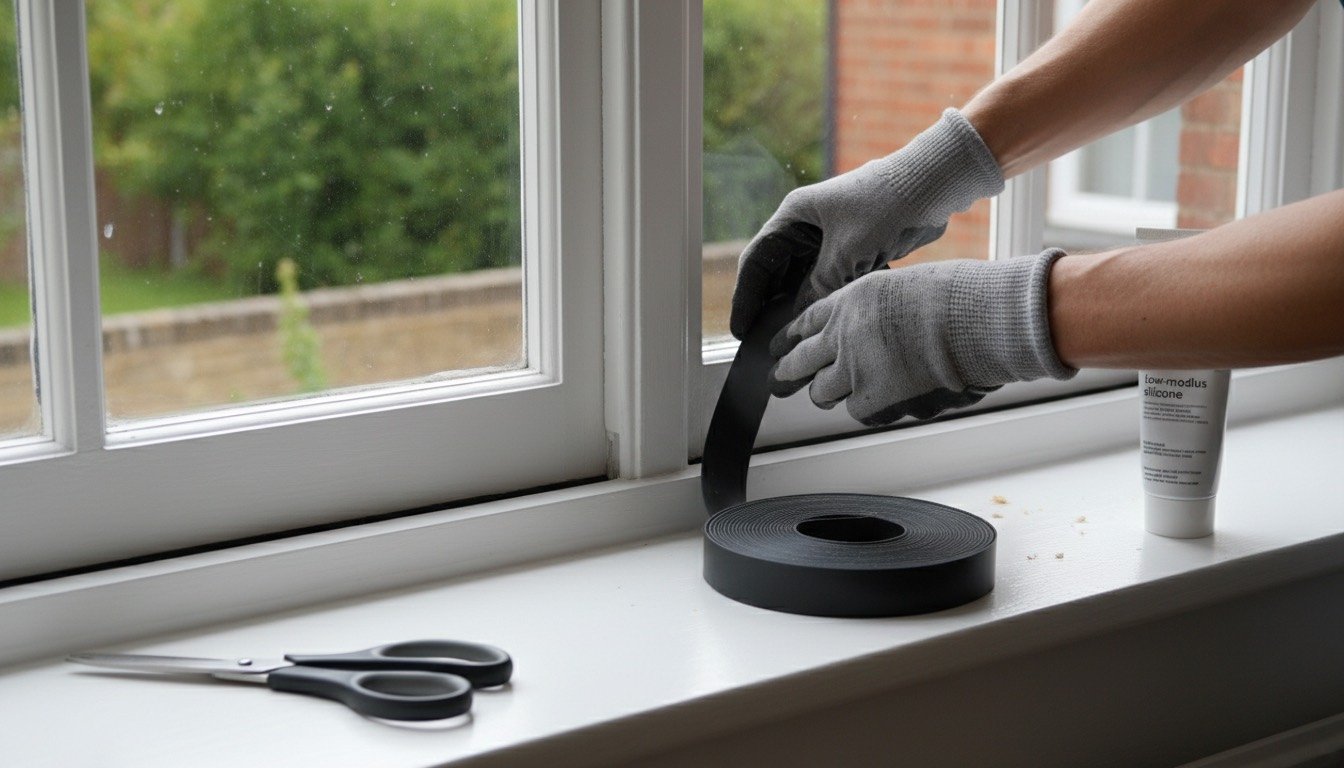
- •Self-adhesive EPDM strip, E and P profile, 10m roll — £7 to £12. E suits 2-3.5mm gaps, P suits 3-5mm. Buy both.
- •Brush pile strip for sliding sashes — £8 to £15 per window.
- •Low-modulus neutral-cure silicone for external frame-to-brick joints — £7 to £10, plus a skeleton gun (£12; cheap ones ratchet badly).
- •Flexible acrylic caulk for internal frame-to-plaster gaps — £3 to £5.
- •Secondary glazing shrink film kit — £10 to £16 for two or three windows.
- •Methylated spirit, filling knife, scissors, masking tape, 4mm allen key, hairdryer.
The step-by-step fix
Work in this order. Each stage changes how much gap the next has to deal with, and two of them cost nothing.
- •1. Test compression. Trap a strip of paper in the closed sash and pull. Wherever it slides out freely, the sash is not pressing on its seal.
- •2. Adjust before you seal. Mushroom cams on uPVC locking keeps turn with a 4mm allen key; a quarter turn towards the room pulls the sash tighter onto its gasket. Tighten the hinge screws too. This alone fixes about a third of draughty uPVC windows, for nothing.
- •3. Clean the rebate with methylated spirit and let it flash off. Adhesive fails on dusty gloss and below about 10°C, so warm the frame with a hairdryer first.
- •4. Fit the strip to the frame, not the sash, set into the corner of the rebate rather than centred. Butt the corner joints square and never stretch it round: stretched EPDM shrinks back and opens a gap by February.
- •5. Check it still shuts with firm pressure and the handle throwing fully. If it fights you, you used P where E was needed.
- •6. Sliding sashes differ: brush pile in the parting and staff beads, plus a strip along the meeting rail. If yours are original, restoring the timber sashes covers the beads.
- •7. Close the hidden gap. Rake out crumbling mastic outside and run fresh low-modulus silicone along the frame-to-brick joint, tooled with a wet finger. Inside, caulk the frame-to-plaster line and under the cill — the leak most people never find.
- •8. Film or lined curtains last, for the radiant chill sealing cannot reach.
The renter-safe version: everything reversible
If you rent, the test is simple: could you remove it in under an hour and leave no mark? EPDM strip on painted frames passes, provided you lift it within a couple of years and clear the residue with citrus adhesive remover, not a scraper. Foam, screwed secondary glazing and anything needing drilling all fail.
Report the draught in writing first. Rot, failed hinges, broken cords and perished gaskets are repairs the landlord owes you under section 11 of the Landlord and Tenant Act 1985, so a photo and a short email may get it fixed properly for free. Photograph the window before you touch it; the same reversible logic runs through our rental-friendly decor ideas.
- •Peelable seasonal frame sealing strip, on in October and off in April, leaving sound paint untouched.
- •Magnetic secondary glazing fixed with the supplied tape rather than screws, £40 to £70 per square metre, and it moves house with you.
- •Interlined curtains on the existing pole, dropped to the cill rather than stopping short, boxed in at the top with a shelf to break the convection loop.
- •Shrink film taped to the glass or glazing bead, never to flaking paint, which it will lift.
Troubleshooting: still cold after all that
- •Air still moving with the sash sealed: it is the frame-to-wall junction. Ease off one architrave and you will usually find bare gap. Stuff with loft wool, caulk, refix.
- •Whistling in high wind: the corner joints have opened. Recut as tight butts.
- •Strip lifting after a month: the frame was cold or greasy. Remove, degrease, warm and refit.
- •Cold but no air movement: that is radiant loss off single or failed glazing, and sealing will not touch it. Check the signs your windows need replacing first.
- •Condensation worse than before: you have sealed without ventilating. Open the trickle vents, run the extractors.
- •Only one bad window: smoke-test the rest, then work through the wider draught-proofing jobs worth doing and give external doors the same treatment.
When to call someone in
Draught strip is a seal, not a repair, and there is a line where DIY stops paying. Call a joiner or glazier if the timber gives under a screwdriver point, if the sash has dropped too far for the keeps to pull it square, if the unit is misted internally, or if water rather than air is getting in. Misted units are replaced, not resealed: £120 to £250 fitted per pane.
Listed buildings and conservation areas need consent before windows are altered, and sash specialists will draught-proof and rebalance a box sash for £180 to £350 with a ten-year guarantee. Anything involving a gas appliance in the room goes to a Gas Safe engineer first.
Found this useful?
There's plenty more — hundreds of guides and honestly-tested product reviews for every corner of your home.
Browse All Guides