Roofing & Exterior · 6 min read · 18 June 2026
Settling Cracks vs Structural Cracks: How to Tell the Difference, and What Each Costs in the UK
A hairline crack in the hall and a 6mm stepped split above the bay window look the same from the sofa. One costs £12 to fix. The other can cost £20,000 — and only one of them is insurable.
By the Nims Casa editorial team — written from professional cleaning experience and checked against our editorial standards.
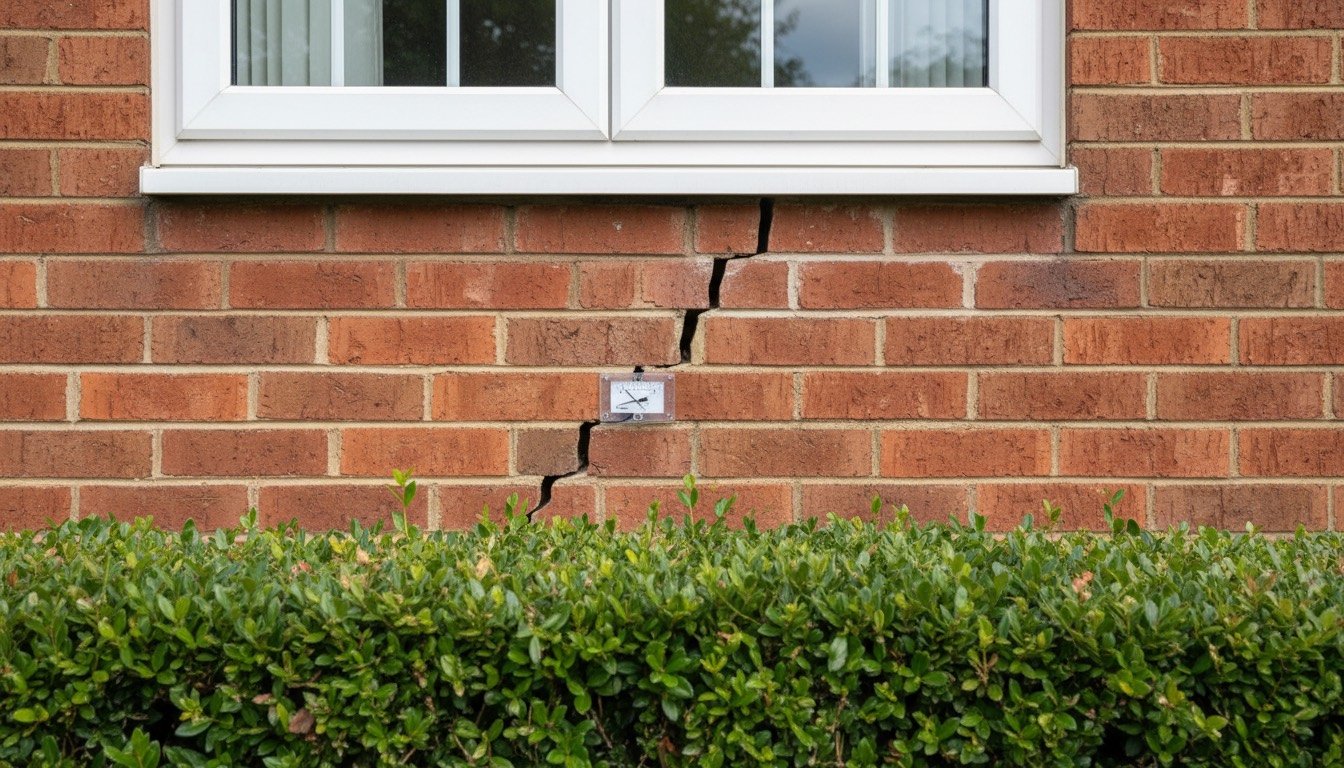
Every house moves. The question a surveyor is really answering when you point at a crack in the hallway is not "is it moving?" but "is it still moving, and is the ground driving it?" That distinction separates a tube of filler from a five-figure underpinning job, and people get it wrong in both directions — panicking over shrinkage cracks in a new plasterboard wall, then repainting over a diagonal split above the bay window that widens every August.
The difference is readable from the crack itself. The trouble is that the evidence is what gets destroyed when you reach for the filler first.
Settlement, subsidence and heave: the words that decide who pays
Settlement is downward movement caused by the building's own weight compressing the ground. It is normal, largely finished within two to five years of a new build, and not insured. Shrinkage is its harmless cousin: fresh plaster, studwork and screed lose moisture and pull tight, which is why a new house sprouts hairline cracks at ceiling perimeters in its first heated winter.
Subsidence is the ground moving away from under the foundation for reasons unrelated to the building's weight: clay shrinking in a hot summer, a thirsty tree within its own height of the wall, a leaking drain washing out fines, old mine workings. Heave is the reverse — clay swelling upward after a mature tree is felled. Both are insured perils, usually with a £1,000 excess.
Side by side: the tells that separate them
Work through these in daylight, inside and out, with a tape and a torch. Three or more hits on the structural side means treat it as structural until an engineer says otherwise; our walkthrough of how to tell if a foundation crack is serious goes deeper.
- •Width — settling: hairline to 2mm, even along its length. Structural: over 3mm and noticeably wider at one end.
- •Direction — settling: vertical or horizontal, following a plasterboard joint. Structural: diagonal at roughly 45 degrees, stepping through the mortar beds.
- •Location — settling: internal only, at ceiling junctions and extension joins. Structural: the same line inside and out, radiating from window corners.
- •Taper — settling: parallel sides. Structural: wedge-shaped; wider at the top means subsidence, wider at the bottom heave.
- •Company it keeps — settling: nothing else changes. Structural: doors bind, skirtings lift, floors slope, render cracks on the same axis.
- •Brickwork — settling rarely fractures brick faces. Structural movement cracks straight through bricks, and worsens season on season.
Twelve months of evidence
Settlement cracks stabilise: fill one properly and it stays filled. Ground-driven cracks are seasonal in clay areas, opening through late summer and closing over a wet winter, so a crack filled in November reopens the next September on the same line.
Fit a plastic tell-tale gauge (about £10 from a builders' merchant) across the widest point and photograph it monthly, date-stamped. A full wet-and-dry cycle of readings is what an engineer, a loss adjuster and a buyer's surveyor all want: swings of 2mm or more mean ground movement, anything inside 0.3mm does not. Rule out the cheap culprits first — a blocked gully soaking the wall base, or a willow or poplar too close, where tree removal costs are a fraction of underpinning.
The ten-year cost of each
UK figures for 2026. Settlement is a decorating cost; structural movement is a project, and the investigation stage alone costs more than people expect.
- •Settling crack: £8-£15 of flexible filler plus two hours DIY, or £150-£300 for a decorator to fill, skim and repaint the wall.
- •Structural engineer's report: £400-£900. A RICS Level 3 Building Survey on a purchase runs £800-£1,500.
- •CCTV drain survey: £150-£350 — a large share of suspected subsidence in older terraces traces back to a fractured clay drain.
- •Root pruning, felling and a root barrier: £600-£3,500, depending on species, access and whether a Tree Preservation Order applies.
- •Crack stitching with helical bars plus repointing, once movement has stopped: £60-£120 per metre run, so £900-£2,500 per elevation.
- •Mass concrete underpinning: £1,200-£2,200 per linear metre. One elevation of a semi lands at £12,000-£30,000; a whole house can pass £50,000.
- •Ten-year totals: £50-£300 on the settling path against £1,500 to £30,000-plus on the structural one, per our foundation repair cost breakdown.
The repair work compared, and the legal lines
A settling crack is raked to a shallow V with the corner of a scraper, filled in two thin passes with flexible acrylic filler (rigid powder filler cracks again at a movement joint), sanded at 120 grit and spot-primed. Half an hour, and permanent, because the movement has finished.
Structural repair runs the other way round: stabilise the cause, prove movement has stopped over 12-24 months, then repair the fabric. Filling first is worse than doing nothing: it destroys the evidence a loss adjuster needs and reads as concealment at resale. Three UK rules are not negotiable. Underpinning needs building control approval under Part A of the Building Regulations. Work affecting a shared wall requires two months’ notice under the Party Wall etc. Act 1996. And on a listed building or in a conservation area, altering foundations or historic brickwork needs consent first. Tell your insurer before commissioning anything, as our guide to filing a home insurance claim explains.
The renter-safe version: what a tenant can do without risking the deposit
Structure and exterior are the landlord's responsibility under section 11 of the Landlord and Tenant Act 1985, and no tenancy clause signs that duty away. Your job is to document and report, not repair.
- •Report in writing — email, never a phone call — with dated photos and a coin in shot for scale. Keep the thread; it is your evidence at deposit adjudication.
- •Monitor with a removable gauge on a low-tack pad, or pencil two marks either side and measure monthly.
- •Fill hairline cracks only, in decoration you may maintain. Flexible caulk in a matched shade counts as upkeep, not alteration.
- •Never fill anything over 2mm, diagonal, or visible outside as well as in — covering a structural crack can be argued as concealment.
- •Keep decor reversible while the issue is live: tension rods, adhesive hooks and freestanding shelving, as in our rental-friendly decor ideas.
- •If nothing happens, contact your council's environmental health team. Do not withhold rent — it risks your tenancy and will not help.
The verdict
For most UK homes the crack you are worried about is settlement or shrinkage: under 2mm, vertical or following a board joint, internal only, unchanged for years. Fill it, paint it, forget it.
Escalate to a chartered structural engineer — not a builder offering a free inspection, which is a sales visit — if a crack over 3mm appears inside and out, tapers along its length, or arrives alongside binding doors. Underpinning is one of the most over-sold repairs in the country, and plenty of cases resolve with a drain repair instead. Independent report, insurer notified, a year of monitoring, then repair; when to call a structural engineer sets out the trigger points. Move faster only for a wall visibly bulging, a crack widening week by week, a dropped lintel or a sagging ceiling — those are phone-someone-now situations, not monitoring projects.
Found this useful?
There's plenty more — hundreds of guides and honestly-tested product reviews for every corner of your home.
Browse All Guides