DIY & Maintenance · 5 min read · 2 July 2026
Shiplap vs Beadboard: Real UK Costs, Pros, Cons and Which Wall Wins
Two profiles, wildly different fitting and painting bills. Here is what panelling actually costs in the UK, split into labour and materials, and how to tell a fair quote from a fantasy one.
By the Nims Casa editorial team — written from professional cleaning experience and checked against our editorial standards.
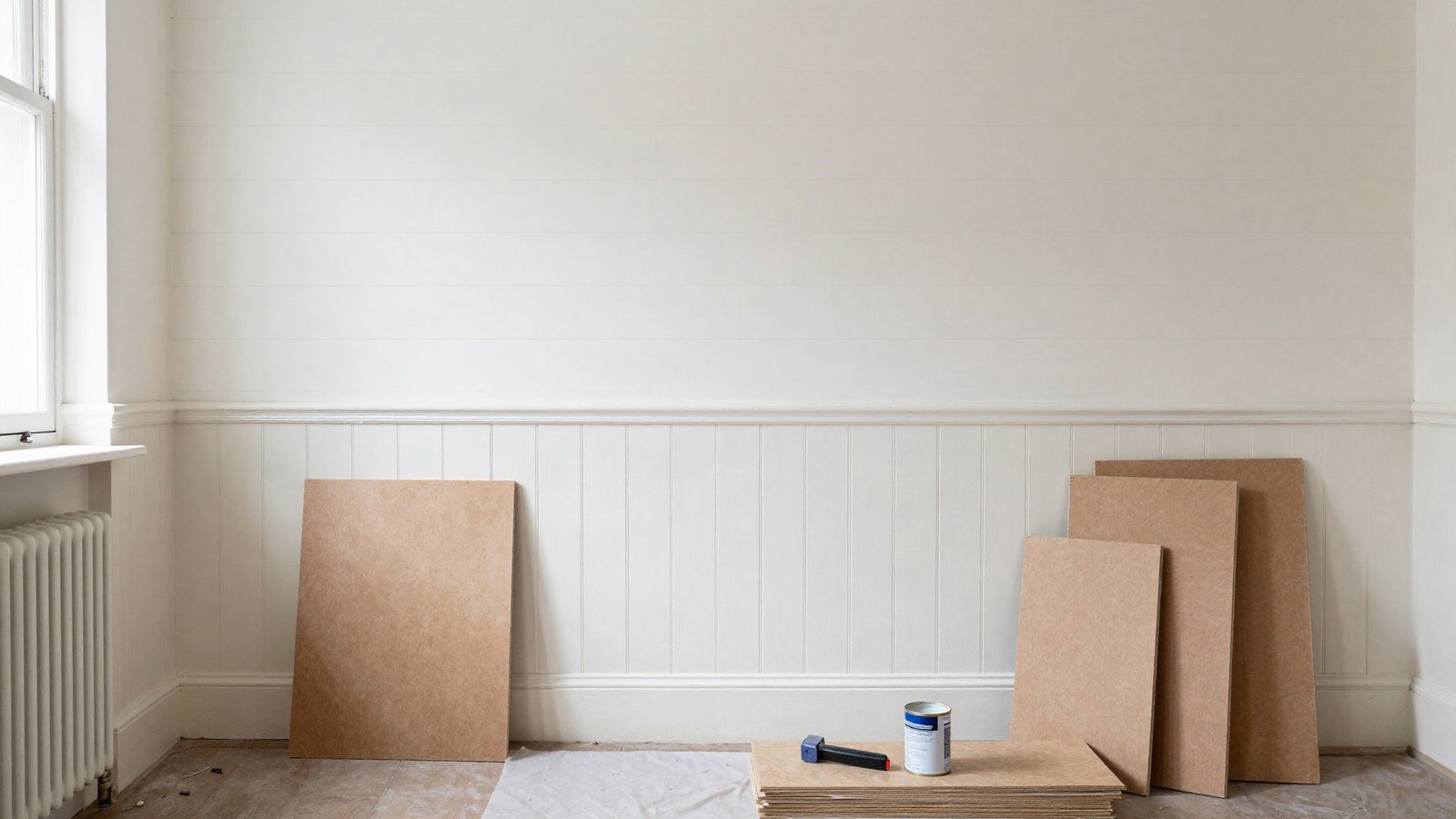
Ask three UK joiners for shiplap and you will get three different boards. In American usage, and in the social media that drove the trend, shiplap means wide horizontal boards with a shallow rebated joint and a crisp shadow gap. At a British merchant, shiplap is an exterior cladding profile with a sloped weather face; what they actually sell for interiors is V-groove tongue-and-groove, in 2.4m softwood lengths or pre-grooved MDF sheets. Beadboard has the same translation problem: here it is beaded panelling, with a rounded bead every 65-100mm.
Strip the branding away and the decision is simple: wide flat faces with a shadow line, or narrow boards with twice as many lines per metre. That choice affects fitting time, painting time and how much dust you wipe off in five years far more than it affects the material bill.
The side-by-side, without the mood board
Both come from the same merchants and go up with the same kit. What matters is geometry, and how many linear metres of edge a decorator has to cut in.
- •Profile: shiplap and V-groove give a 3-5mm shadow gap every 120-190mm. Beadboard gives a bead every 65-100mm, so double the detail per square metre.
- •Typical UK format: shiplap as 2.4m redwood lengths at £4-7 a board, or 9mm MDF sheets 2440 x 1220mm at £30-48. Beadboard is almost always bought as sheets, £32-52.
- •Material cost per square metre: £11-17 for standard MDF in either profile, £18-32 for softwood, £38-60 for moisture-resistant MR MDF or hardwood.
- •Orientation and height: shiplap runs horizontally at full or three-quarter height and widens a narrow room. Beadboard runs vertically to dado height, 900-1100mm, with a capping rail, and lifts a low ceiling.
- •Painting labour: budget 30-40% more on beadboard. Every bead needs brushing before the roller does anything useful.
- •Depth lost: 9mm board plus adhesive dabs takes 15mm off each wall, noticeable in a 1.7m-wide UK bathroom.
How each performs once it is on the wall
Shiplap's weakness is the ledge. Horizontal boards create a dust shelf at every joint, and in a hallway or above a radiator that shelf turns grey within months. Beadboard run vertically sheds dust instead of catching it, which is why it has survived in bathrooms and utility rooms for a century.
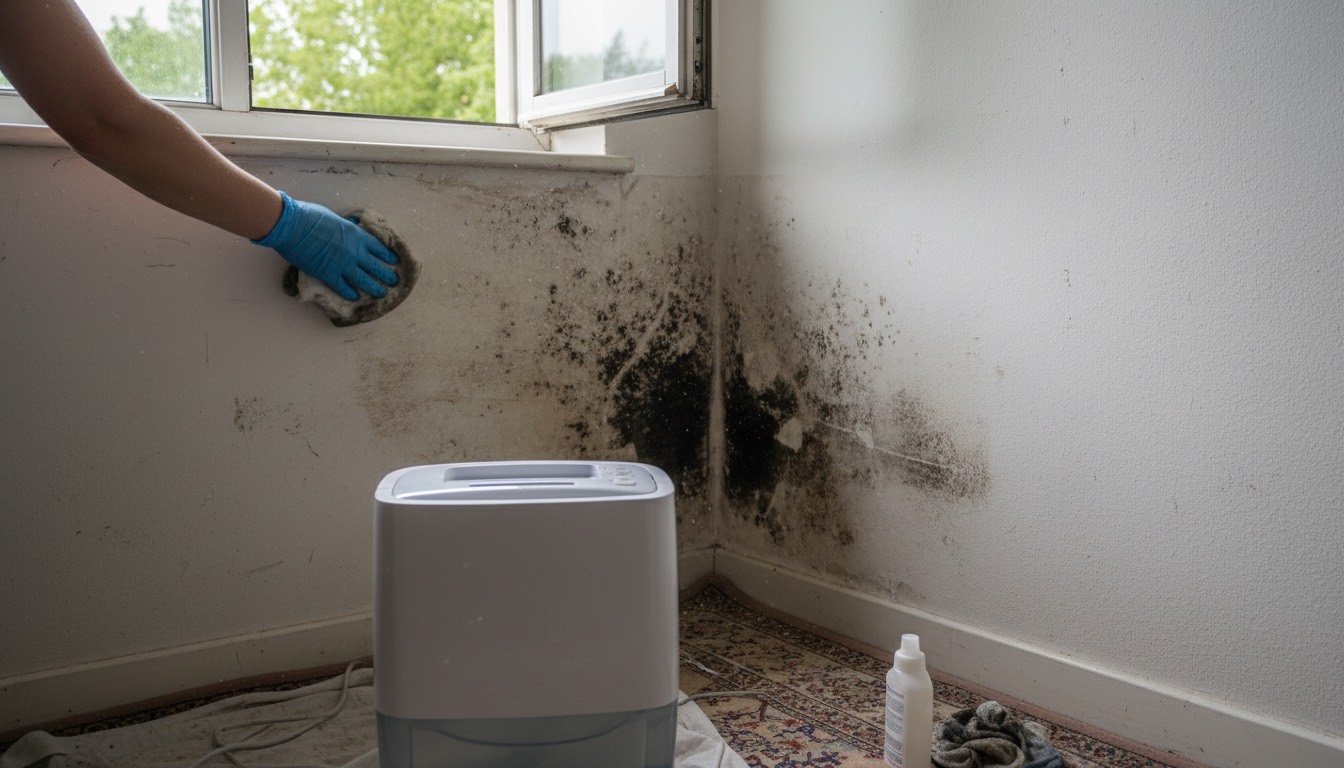
Impact resistance goes the other way. On a stairwell where bags and buggies swing into the wall, wide 9mm MDF flexes and dents; beaded boards with a capping rail take knocks better because the rail absorbs the contact. In a bathroom, neither standard MDF nor softwood belongs near a splash zone. Use MR MDF, seal every cut edge, and fix ventilation first, because panelling over a moisture problem simply hides it. If you see black spotting before you start, deal with damp and mould properly rather than cladding over it. Sockets also need box extenders, £2-4 each, so faceplates sit on the new surface; packing them out on longer screws is not acceptable work.
What it actually costs: labour versus materials
On a painted panelling job, materials are only 25-35% of the total. Labour is the bill. UK rates sit around £180-280 a day for a joiner outside the South East, £260-400 in London, and £150-240 a day for a decorator. Supply-and-fit quotes for MDF panelling generally run £55-95 per square metre in the regions and £85-140 in London, ready for paint. A full painted finish adds £18-35 per square metre on top.
Two worked examples make the split obvious.
- •Hallway, beaded dado panelling, 11 linear metres at 1m high (11 m²). Materials: sheets £150-190, capping rail and adhesive £75, primer, undercoat and eggshell £85, around £310 total. Labour: joiner two days £360-560, decorator a day and a half £225-360. Realistic total £895-1,230.
- •Bedroom shiplap feature wall, 3.6m x 2.4m (8.6 m²). Materials: MDF £110-150, fixings £25, paint £55, around £190. Labour: two-thirds of a joiner day plus a day painting, £320-450. Total £510-640, or roughly £190 doing it yourself over a weekend.
- •Sanity check: on a painted job, labour should come to two or three times the material cost. Much less and someone has underestimated the painting. Much more and you are paying for optimism.
Reading a quote properly
A quote worth accepting is itemised by square metre, names the board type and thickness, states whether skirting is being removed and refitted or the panelling stops on top of it, prices socket extension separately, and separates joinery from decoration. Ask specifically whether cut MDF edges will be primed, because raw MDF drinks paint and goes furry if it is not sealed before the topcoat.
Red flags: a flat figure for a room with no measurements taken; standard MDF quoted for a bathroom at MR MDF prices; no mention of scribing to uneven walls in a period property; a deposit above 25%; a vague VAT position. The errors here are predictable enough that we have catalogued them in common trim installation mistakes.
The 10-year cost, not the fitting day
Panelling is not a fit-and-forget surface. It is a painted surface with more edges, so it rejoins the decorating cycle sooner than flat plaster, and over ten years the repaint cost usually exceeds the installation.
Repaint intervals we see in practice: hallways and stairs every five to seven years, bathrooms and utility rooms every four to six, bedrooms eight to ten. A hallway repaint on beaded panelling costs £280-450 in labour and materials because of the bead detail; the same hallway in shiplap comes in at £200-330. Over a decade that gap is £150-350, often larger than the original difference in board price. A hard-wearing finish narrows it, which is why the eggshell vs satin paint comparison is worth five minutes before you buy tins.
Installation: where the days actually go
Neither profile is technically difficult. What eats time is everything around the boards. Most UK walls in houses built before 1970 are out of plumb by 5-15mm over a storey, so panelling gets packed or it gets scribed.
- •Half a day: removing skirting, checking for cables and pipes, marking a level datum, packing hollows with battens or shims.
- •Half to one day per 10 m²: cutting and fixing boards with grab adhesive plus 30-40mm 18-gauge brad nails every 300mm.
- •Two to three hours: capping rail, scribed internal corners, refitting skirting, extending socket boxes.
- •Two to four hours: caulking every top edge and internal corner, then filling nail holes. Skip this and the job looks homemade.
- •One to one and a half days: priming, one undercoat, two topcoats. Beadboard adds roughly a third to this stage.
Who each suits, and the verdict
Choose beadboard for bathrooms, cloakrooms, utility rooms and narrow hallways that take daily knocks. It is more forgiving on wonky period walls because the narrow boards break up the line, and vertical runs make a 2.3m ceiling feel taller. Choose shiplap for bedrooms and living rooms, where wider boards read as calmer and the horizontal run pulls a narrow room wider. Full-height shiplap can overwhelm a small room, so stop at picture-rail height if in doubt.
The honest verdict: beadboard is cheaper to buy and dearer to own; shiplap is dearer to buy and cheaper to maintain. Staying ten years in a dry room, shiplap wins on total cost. If the room is wet, busy or both, beadboard earns its extra decorating hours. One caveat before you commit: in a flat, HMO or protected stairway, extensive timber or MDF lining can run into surface spread of flame requirements under Building Regulations, so check with building control before panelling an escape route.
Not settled on a layout yet? Browse our wall panelling ideas for proportions that work in real UK rooms, then follow the measured method in how to install wainscoting. Budgeting a whole redecoration instead, start with realistic interior painting costs so the paint bill does not ambush you at the end.
Found this useful?
There's plenty more — hundreds of guides and honestly-tested product reviews for every corner of your home.
Browse All Guides