Plumbing · 6 min read · 16 April 2026
Signs of Hidden Water Damage: Catching It Before the Ceiling Goes
A stain the size of a 50p means nothing on its own. The same stain 40mm wider a month later is a three-thousand-pound problem. Here is how to tell them apart.
By the Nims Casa editorial team — written from professional cleaning experience and checked against our editorial standards.
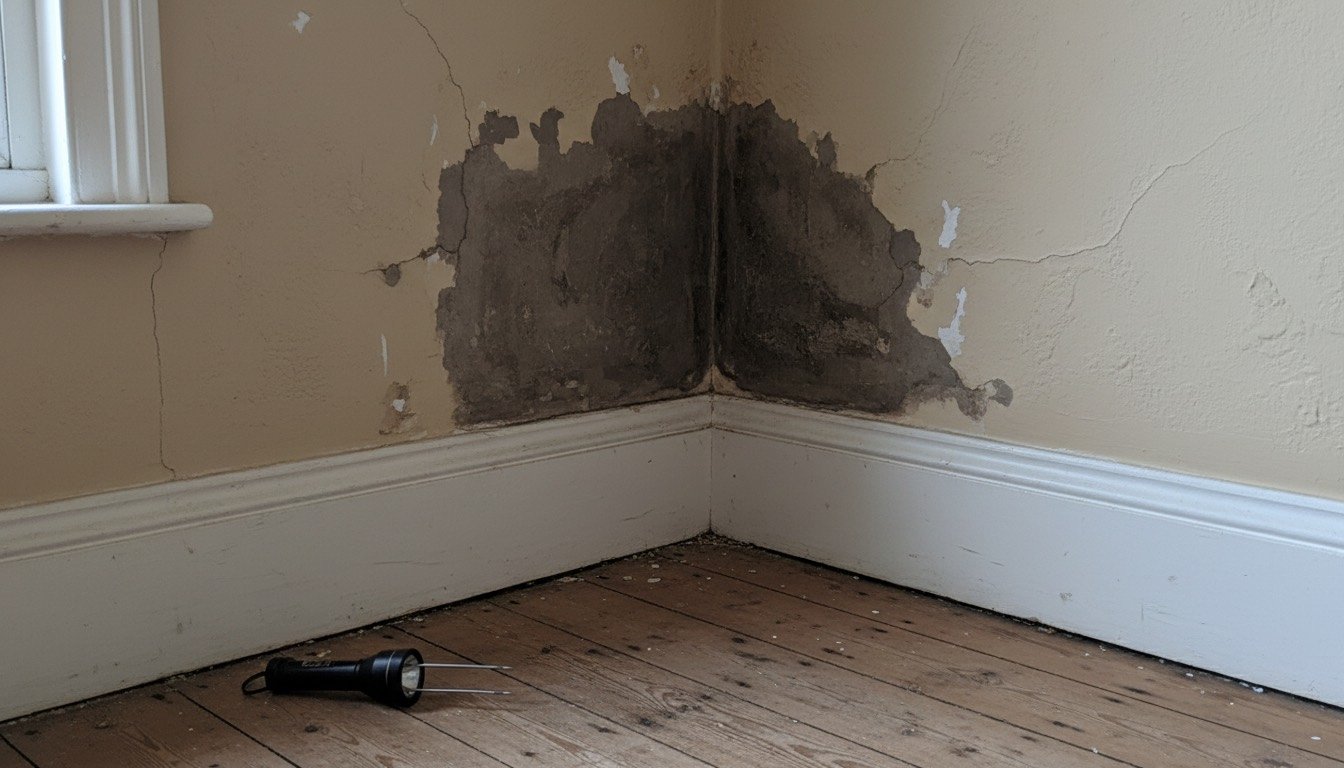
Most of the water damage we get called to has been visible for months, just not read properly. A brown ring on a bedroom ceiling that has not moved since the last tenant is old news; the same ring, pencil-marked in March and 40mm wider in April, is an active leak.
Water travels. It runs along the top of a joist, down the outside of a pipe, sideways across a plasterboard ceiling, and surfaces with no relationship to where it started. That is why this is a diagnosis job, and why the order you check things in matters more than the kit you own.
The 20-minute diagnosis, in this order
Work cold and early, when these signs show best. Do the meter test first: it is the only check returning a yes or no rather than an opinion.
- •Meter test: turn off every tap and appliance, photograph the water meter, wait two hours, photograph again. Any movement means water is going somewhere. Unmetered homes: close the internal stop tap and listen at the incoming main for hiss.
- •Smell test: walk in from outside after an hour out. A musty note in a hallway or stairs cupboard is airborne spores, registering long before anything is visible.
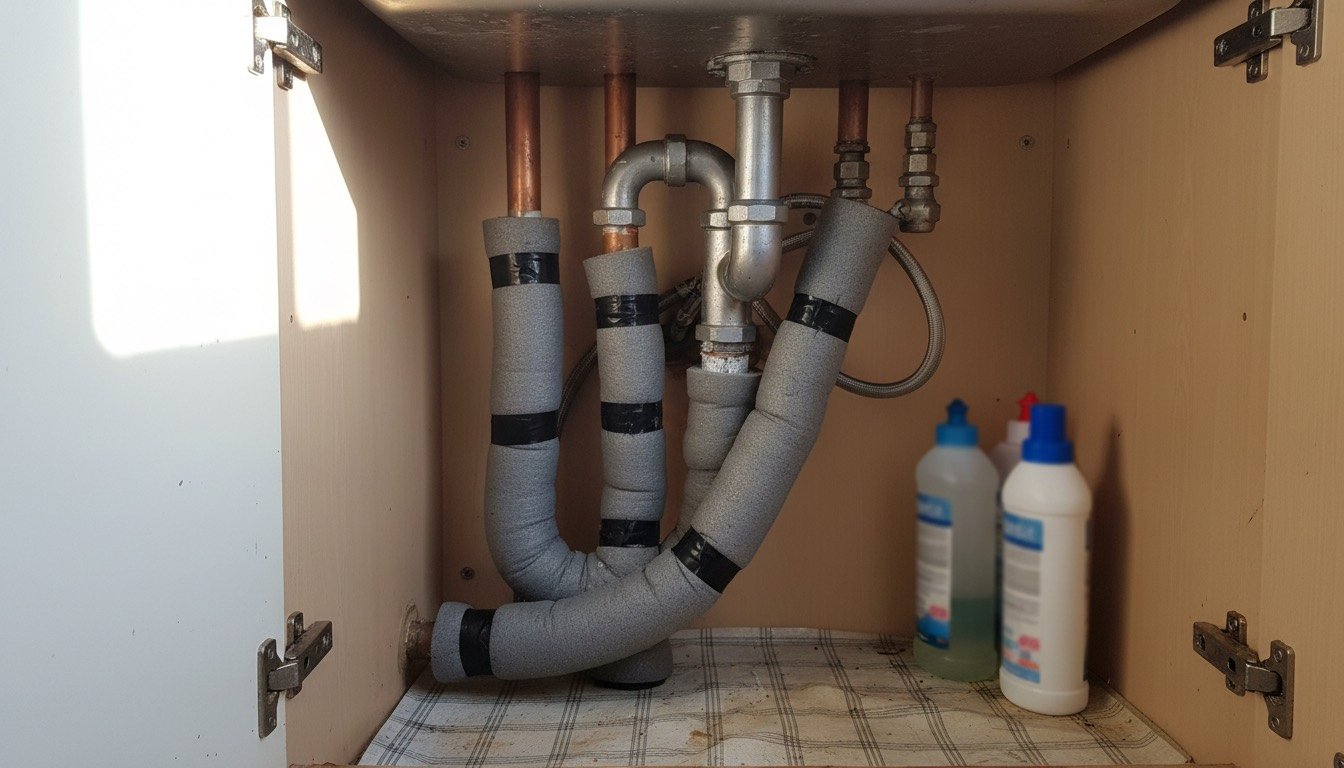
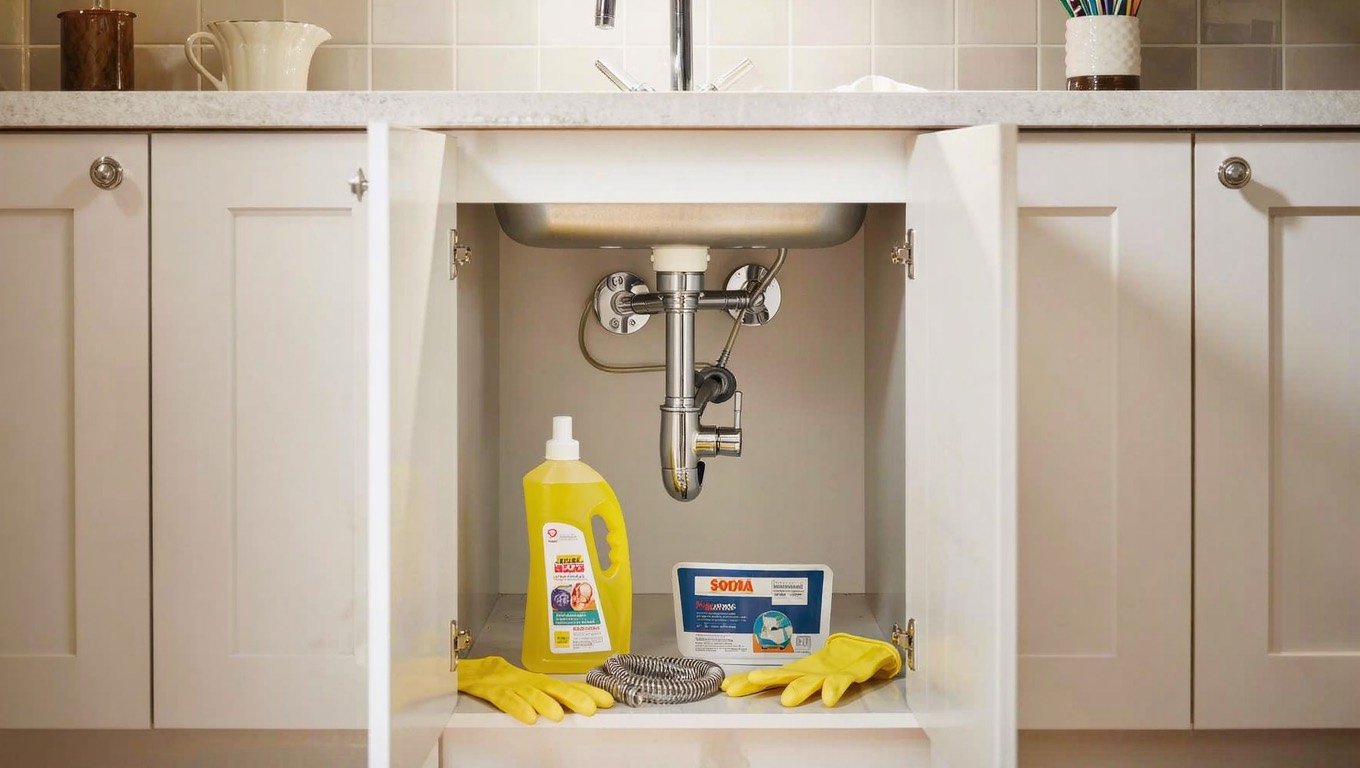
- •Under every trap: lay folded kitchen roll under the sink, basin and washing machine standpipe, checked daily for a week. It catches weeps that dry between inspections.
- •Skirting and floor: press hard near bathrooms and external doors. Sponginess or slight cupping across board widths means moisture underneath, not above.
- •Outside: check the gully at each downpipe, look for staining on render below a joint, and confirm the ground sits 150mm, two brick courses, below the damp-proof course.
Symptom to cause: reading the evidence
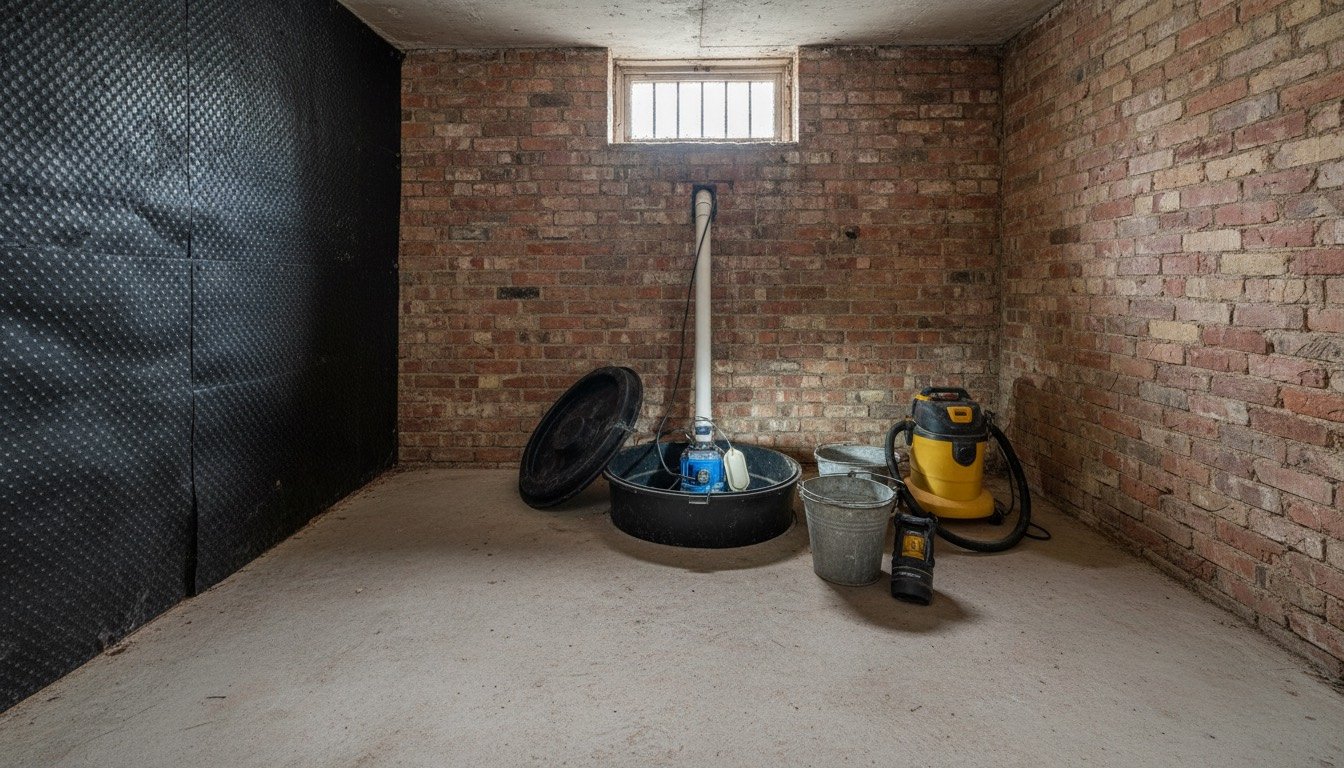
Each is a different mechanism with a different price tag, which is why lumping them together as damp costs people money. Our guide to damp and mould causes and cures goes deeper on condensation.
- •Sharp-edged brown ring with a dark centre on a ceiling: an intermittent leak from above, usually a shower tray seal, bath waste or radiator valve.
- •Soft-edged grey patch that darkens in wet weather and dries in a fortnight: penetrating damp through a solid wall, failed pointing or a blocked gutter.
- •White crystalline deposit that wipes off as powder: efflorescence, salts carried out by evaporating water. It proves water has moved through the masonry, not that it still is.
- •Horizontal tide mark up to 1.2m on a ground-floor wall: the classic rising damp presentation, but far more often a damp-proof course bridged by a raised patio or piled soil.
- •Blown, hollow-sounding plaster that crumbles to a fingernail: long-term saturation, and scrap whatever you do to the source.
- •Mushroom smell, rust-coloured dust and white strands under a floor: possible dry rot. Stop and get a specialist survey.
Causes, in the order we genuinely find them
The frequency order in UK housing stock is not what people expect. Rising damp turns up in perhaps one job in twenty, yet gets diagnosed several times more often, usually by someone selling injection cream. Cellars follow their own sequence, covered in why a cellar or basement goes damp.
- •Condensation and poor ventilation, comfortably the most common: humidity over 65 percent plus a cold surface gives you mould in six weeks.
- •Failed silicone or grout at a shower tray or bath edge, leaking millilitres per shower into the floor void.
- •Blocked gutters, split downpipe joints and choked gullies throwing water at a wall for years, cured by gutter cleaning and maintenance.
- •Roof and flashing defects, especially chimney lead and valley gutters on 1930s semis. Symptoms are seasonal and wind-direction dependent.
- •Concealed pipework, mainly compression joints buried under screed or chased into walls during an old refurbishment, and push-fit waste connections vibrating loose behind a washing machine.
Fixes in order of risk, safest first
Work down this list and stop when the meter test comes back clean. Skipping to the decisive-feeling option is how people spend £900 injecting a wall that was wet because a downpipe had split.
- •Free: open trickle vents, run the extractor 20 minutes after every shower, move furniture off external walls, dry washing on an airer in one ventilated room.
- •Under £30: a hygrometer logged morning and evening, plus a pin moisture meter. Treat pin readings as relative, because salt-contaminated plaster reads falsely high.
- •£10 to £40 and an hour: rake out and replace failed sanitary-grade silicone at the bath or shower tray, and refresh cracked grout. This alone fixes many upstairs-to-downstairs stains.
- •£150 to £250: a 10 to 12 litre dehumidifier, roughly 5p to 9p an hour to run, drying the fabric while you find the cause.
- •£250 to £450: an acoustic and thermal leak detection survey, before anyone lifts a floor. Check your policy for trace and access cover first, and see our step-by-step leak-tracing method.
- •Repair stage: pipe work, then replastering in sand-cement or breathable lime, then decoration. Budget £400 to £900 a room.
The renter's version: reversible and on the record
Tenants need a different playbook, where evidence and reversibility are everything. In England and Wales, section 11 of the Landlord and Tenant Act 1985 puts the structure, exterior and water, gas, sanitation and heating installations on the landlord, and the Homes (Fitness for Human Habitation) Act 2018 requires a home free of serious hazards, damp included. Social tenants also have fixed investigation timescales under Awaab's Law.
Everything below leaves no marks. Drilling, injecting, sealing vents or painting over mould does the opposite, and deposit adjudicators take a dim view of covered-up evidence, the same logic behind rental-friendly decor that comes off cleanly.
- •Report in writing by email, with dated photos and a pencil outline round each stain so growth is measurable. Verbal reports vanish at check-out.
- •Log humidity twice a day for two weeks with an £8 hygrometer. Readings consistently above 65 percent in a heated room point to a ventilation defect rather than lifestyle.
- •Use a plug-in dehumidifier and a heated airer. Both are yours, both leave with you, and both weaken any claim you caused the mould.
- •Do not paint over mould, inject anything, block trickle vents, lift floorboards or cut hatches. That is either an unauthorised alteration or destruction of your own evidence.
- •If nothing happens, contact your council's environmental health team, which can assess damp under the HHSRS and serve notice on the landlord.
Where DIY has to stop
Water plus electricity, gas, asbestos or structure is outside homeowner territory. Isolate at the consumer unit and call a qualified electrician for any wet ceiling rose, downlight or socket; electrical work must meet Part P of the Building Regulations in England and Wales, some of it notifiable to Building Control, and Scottish and Northern Irish rules differ. Boiler, flue and gas pipework is Gas Safe work only.
Textured coatings in homes built or refurbished before 2000 can contain asbestos, so a water-stained Artex ceiling must never be sanded or broken. Sewage, spreading dry rot, sagging plasterboard ceilings and any new crack alongside the damp need a professional. If it reaches a claim, filing a home insurance claim properly matters as much as the repair.
Found this useful?
There's plenty more — hundreds of guides and honestly-tested product reviews for every corner of your home.
Browse All Guides