DIY & Maintenance · 6 min read · 25 April 2026
Signs Your Windows Need Replacing (and the Faults That Only Need a £120 Repair)
Most windows we get called out to don't need replacing — they need a £15 gasket or a £110 glass unit. Here's how to tell the difference before a salesperson does it for you.
By the Nims Casa editorial team — written from professional cleaning experience and checked against our editorial standards.
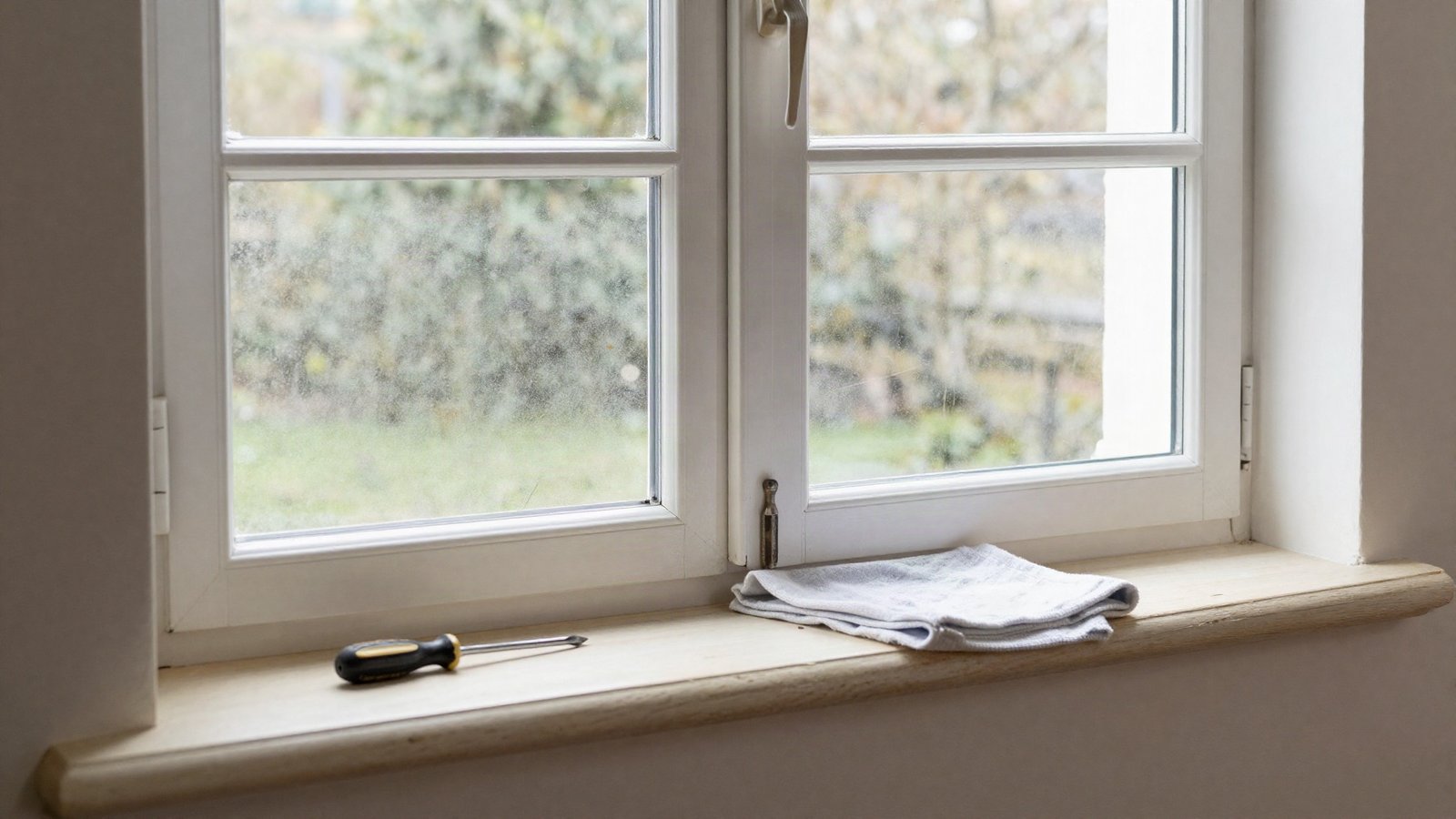
Roughly six in ten of the windows we get asked to quote for do not need replacing. They need a gasket, a friction stay, a cylinder, or one sealed unit swapped. The other four are genuinely finished, and patching those is money thrown away. Both groups look identical from the sofa: misted glass, a cold draught, a handle that needs a shove.
Here is the diagnostic sequence a window engineer runs before quoting, the faults ranked by how often we find them, and what the work costs in the UK — split into labour and materials so you can judge a quote yourself.
Start With a Ten-Minute Diagnosis
Do this on a cold, still morning with a lit incense stick. You are working out whether the fault sits in the glass, the opener, the frame or the wall — four very different bills.
- •Look at where the mist is. Between the panes and unwipeable means a failed sealed unit; on the room-side surface, wiping off, means humidity.
- •Run the smoke around the opening edge, then the frame-to-wall joint. Movement at the opener edge is a seal or hinge; movement at the plaster line is failed mastic or perished pointing.
- •Press a bradawl into the timber at the bottom corners of sash and sill. Sinking more than 5mm without effort is rot; one soft spot is a resin repair, not a new window.
- •Open each opener slowly. Bind at the top corner is usually a dropped hinge; bind all round, or a closed gap varying more than 3mm top to bottom, means the frame is out of square.
Symptom to Cause: What Each Fault Means
Match what you found to the likely cause. Note how few of these lines end in "new window".
- •Misting between the panes → failed insulated glass unit. Glass swap only; the frame stays.
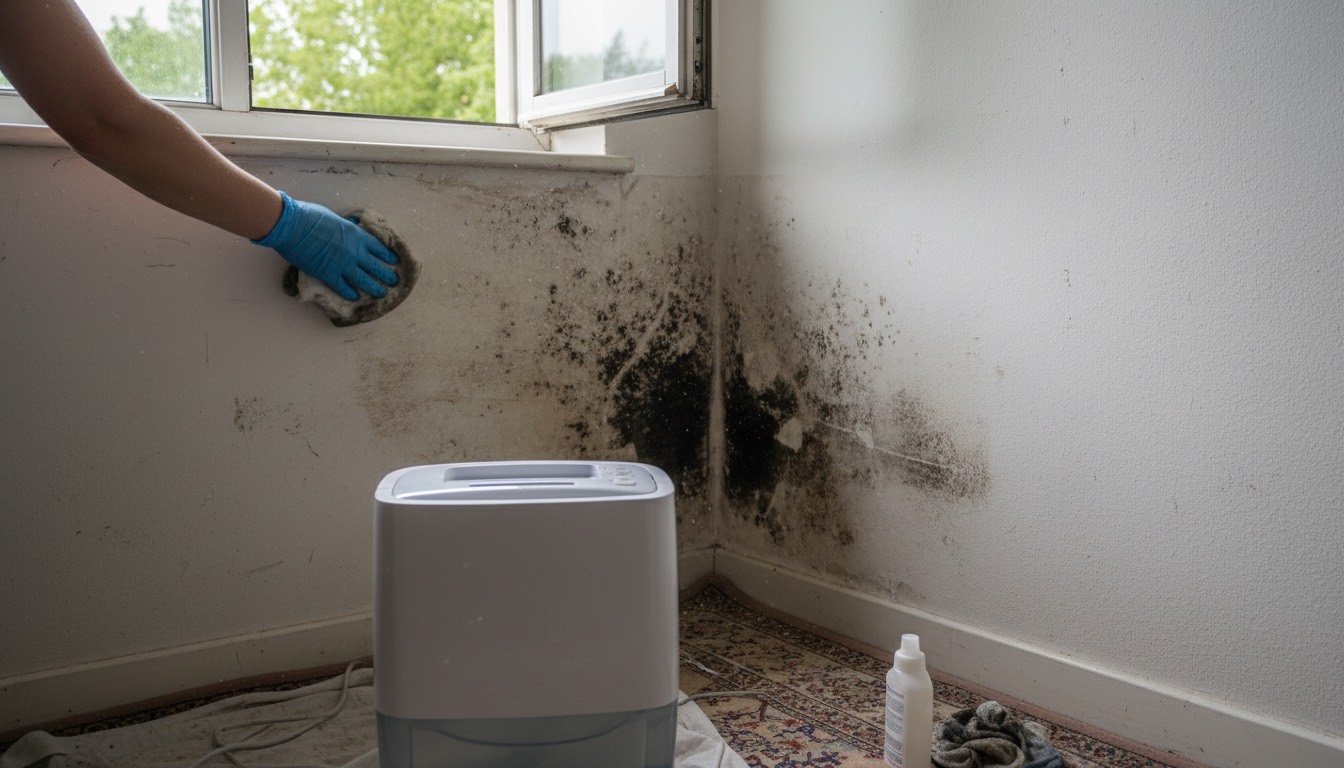
- •Condensation running down the room side each morning → indoor humidity meeting a cold surface, usually a ventilation fault. Read our guide to damp and mould before spending anything.
- •Draught along the opening edge → perished gasket or a sash no longer pulling tight. Draught at the plaster line or behind the architrave → failed perimeter seal, or an installation never foamed properly.
- •Handle stiff and needing a hard lift → worn multipoint gearbox or seized friction stays.
- •Rain entering at a bottom corner → blocked drainage slots in uPVC, or a rotted sill nose in timber.
- •Out-of-square opening or glass that keeps cracking → structural movement. This one is serious.
Causes Ranked by How Often We Find Them
Across UK housing stock — a great deal of 1990s and 2000s uPVC now past its designed life, plus pre-1930s timber — the order is consistent.
- •Failed sealed units: very common, especially south-facing bays and anything fitted before 2005.
- •Perished gaskets and draught seals: very common, as the rubber hardens at 12–15 years. Worn friction stays and hinges: the biggest single cause of "it will not shut properly".
- •Failed multipoint gearboxes, cheap handles, localised rot at bottom rails and perished external mastic: all common, all cheap to put right.
- •Genuine frame failure — split welds, sashes dropped beyond adjustment, a full rail gone soft: less common, and the real replacement trigger.
Fixes in Order of Risk and Cost
Work down this list, not up it. Every job here is cheaper than replacement, and several take an afternoon.
- •Replace the compression gasket: £3–£6 per metre, an hour per window. Our walkthrough on fixing a draughty window covers profile matching.
- •Re-seal the external perimeter with low-modulus neutral-cure silicone (£8 a cartridge, one covers three windows) and clear blocked uPVC drainage slots with stiff wire.
- •Swap friction stays: £8–£20 a pair in parts, £60–£120 fitted per window by an engineer.
- •Replace a multipoint gearbox (£45–£120 part, £90–£180 fitted; photograph the old one before ordering, as backsets vary) or upgrade to a TS007 3-star anti-snap cylinder for £25–£60.
- •Replace one sealed unit: £90–£220 supplied and fitted for a standard casement; £250–£450 for large, toughened or A-rated glass.
- •Splice and resin-repair rotted timber: £120–£300 per window from a joiner, and genuinely better on original joinery — restoring rather than replacing usually wins on cost and character both.
- •Replace the window, but only once two or more structural triggers apply.
What Replacement Actually Costs in the UK
Supplied-and-fitted, per window, including waste and FENSA or CERTASS registration: white uPVC casement £450–£900; foiled or coloured uPVC £600–£1,100; aluminium £900–£1,800; factory-finished timber £900–£2,000; timber box sash £1,200–£2,500. A three-pane bay is £1,200–£2,500 in any material. A three-bed semi with eight to ten openings lands at £4,500–£8,000 in uPVC.
The split matters. On a straightforward uPVC job, frames and glass are 55–65% of the price and fitting labour 20–30%; the balance is waste removal (£60–£150), scheme registration (£15–£25), overheads and VAT. Two fitters install five to eight windows a day at £280–£450 combined across most of the UK, £450–£600 inside the M25 — so per-window labour is £70–£120, not the £300 some quotes imply.
Worked example: six white uPVC casements on a 1970s semi. Materials at roughly £280 each is £1,680; two fitters for a day £380; skip and mastic £120; registration £20. Add 35% for overheads, warranty provision and margin, plus VAT, and £3,600–£4,200 is fair. Anything near £7,000 needs explaining.
Budget for what replacement drags in. Since June 2022, replacement windows in England must hit 1.4 W/m²K or WER band B, and trickle vents must be fitted where the originals had them — an item some installers quietly omit. Our comparison of double versus triple glazing shows where the extra £150–£250 a window pays back.
Telling a Fair Quote From a Suspect One
Get three quotes and read them side by side. The price alone tells you little; what is itemised tells you plenty.
- •Reasonable: itemised per window, U-value or WER band stated, glass spec named, scheme registration number on the paperwork, trickle vents listed, waste included, 10-year insurance-backed guarantee.
- •Suspect: one lump sum for the whole house, a "today only" discount, a price that halves when you hesitate, a deposit over 25%, or cash-only.
- •Suspect: a quote replacing frames when the fault you described was misted glass. Ask directly why the frame is going.
- •Normal variation: London and the South East run 15–25% above these ranges, the North East 10–15% below. A quote under material cost alone means thin frames, no reinforcement, or a fitter who will not exist in five years.
Where DIY Has to Stop
Gaskets, mastic, drainage slots, handles and cylinders are sensible homeowner jobs at ground level. Beyond that the line is firm: stop if the opening is out of square, or if a crack steps diagonally from the top corner of the frame into the brickwork — that is the lintel, and a structural engineer's call before anyone touches the window. Stop if the work is above ground-floor level, and stop with pre-1992 painted joinery, where the paint may be lead-based and dry sanding is hazardous.
Replacement is notifiable building work in England and Wales, so it goes through a registered installer or building control; an uncertificated window causes trouble at sale. Whether the job lasts is decided by the fitting, not the frame — the common window installation mistakes are worth reading before the fitters arrive.
Found this useful?
There's plenty more — hundreds of guides and honestly-tested product reviews for every corner of your home.
Browse All Guides