Plumbing · 6 min read · 2 May 2026
Single Handle vs Double Handle Taps: Mixer vs Pillar Taps Compared
Showrooms sell this as a style decision. In UK housing it is really a decision about water pressure, how many holes are drilled in your basin, and who fixes the thing in eight years' time.
By the Nims Casa editorial team — written from professional cleaning experience and checked against our editorial standards.
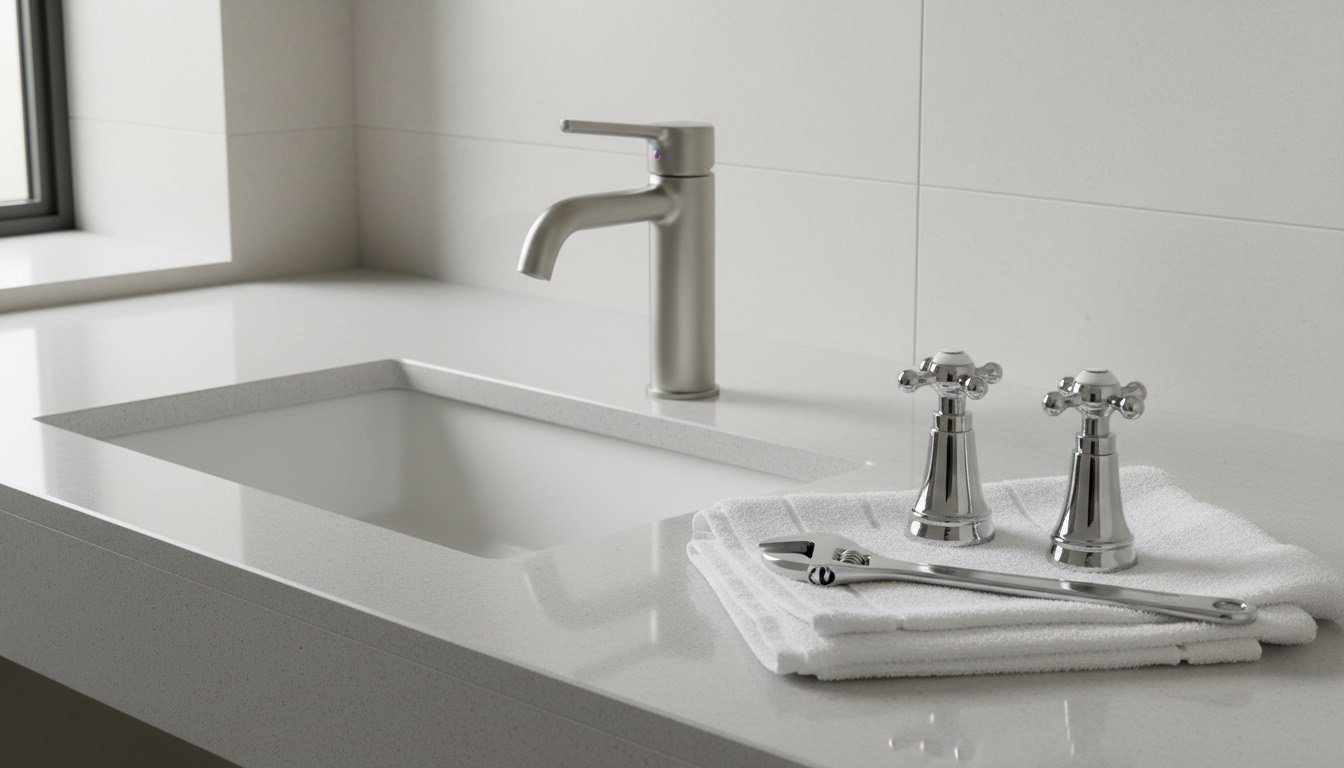
A showroom will steer you towards a single-lever monobloc within ninety seconds. Meanwhile, in a 1930s semi, two pillar taps have sat on the same basin for decades, still on their original washers.
The useful questions are narrower than style: what pressure your hot water arrives at, how many holes are drilled in the basin, and what the repair looks like in year eight. Get those right and either type serves you; get them wrong and you buy the tap twice.
The side-by-side, without the showroom gloss
Single handle means a monobloc mixer: one lever for flow and temperature. Double handle covers twin pillar taps (no mixing) and three-hole deck mixers. Period accuracy still favours twin taps on a Belfast sink or Victorian basin.
- •Temperature control: a lever finds a usable blend in two seconds. Twin pillar taps do not mix at all - you fill the bowl, or pick scalding or freezing.
- •Pressure tolerance: twin taps ignore unequal hot and cold pressure. Monoblocs do not, which rules out most cheap mixers in gravity-fed homes.
- •Failure points: one cartridge on a monobloc takes out hot and cold together. Twin taps have two independent valves.
- •Repair cost: monobloc cartridges are £8-£25 and often brand-specific. Twin tap washers cost pennies; generic 1/4-turn ceramic inserts £6-£12 each.
- •Accessibility: a lever works with a forearm, an elbow or an arthritic hand. Cross-head handles do not.
Water pressure decides this before style does
British plumbing splits in two. With a combi boiler, hot and cold both arrive at mains pressure, typically 1.5-3 bar, and almost any mixer works. With a cylinder in the airing cupboard fed by a loft tank, the hot side may run at 0.1-0.3 bar while the cold is on 2 bar mains. That imbalance is why twin taps survived here long after the rest of the world moved on.
Feed a standard mixer those pressures and the mains cold pushes the feeble hot back up its own pipe. Three fixes work: a tap rated for low pressure (spec sheet minimum of 0.1 or 0.2 bar), a dual-flow monobloc keeping hot and cold separate until the spout outlet, or a twin-impeller pump at £200-£450 plus fitting. If flow is poor everywhere, work through the causes of low water pressure first. A fast-closing lever on high mains pressure can also trigger water hammer, which twin taps rarely do.
Daily performance: scalding, energy and the kitchen
In a kitchen the lever wins outright: you can lift it with a wrist while holding a colander, and pull-out sprays have no twin-tap equivalent.
In a bathroom it is closer. A monobloc solves the classic UK basin - one tap at 60°C, the other at 8°C - but adds two problems. Scalding first: without a temperature limiter a child can pull the lever fully across. Part G caps bath fill at 48°C in new dwellings; a £25-£40 thermostatic blending valve is worth fitting where there are children or elderly relatives. Energy second: leave a standard lever centred and every ten-second hand wash fires the boiler, perhaps 200-400 kWh a year, or £15-£30 of gas. A cold-start cartridge, centre position drawing cold only, removes that at no cost.
Installation: the tap holes are the real constraint
This is where most plans die. A monobloc needs one 35mm hole, twin pillar taps two, a deck mixer three. Two holes down to one is easy on a kitchen sink - a base plate covers the spare hole for £10-£20. Drilling a new hole in a ceramic basin is not a job at all: fired ceramic chips, and no plumber will warrant it. Stainless takes a 35mm hole cutter (£15-£25); granite composite needs a fabricator.
For a like-for-like swap, allow 45-90 minutes DIY if you own a tap spanner (£8-£15) and the isolating valves genuinely shut off. Budget £6-£10 for flexi tails and £3-£5 per 15mm isolating valve where none exist. A plumber charges £70-£140 for a tap swap, £180-£300 if the backnuts are seized and the basin must come off the wall - see what a plumber costs by job.
The 10-year cost, and what actually fails
Assume a hard water area, where taps age fastest.
Mid-range single-lever kitchen monobloc: tap £110, isolating valves £8, one cartridge around year seven £18. Ten-year total roughly £136 DIY or £226 with a plumber - plus £150-£300 of wasted boiler firing if you skip the cold-start cartridge.
Pair of chrome basin pillar taps: taps £45, valves £8, four sets of washers or two ceramic inserts totalling £12-£24. Around £77 DIY or £187 fitted, and the mechanism usually outlives the chrome.
Twin taps are cheaper to buy and keep; monoblocs cost more per repair but save hot water and time daily. The trap is a discontinued cartridge - once a range is dropped, a £15 part becomes a £120 tap, so check spares before buying. When either type weeps it is rarely the whole tap: see our guide to fixing a dripping tap. Twice a year, soak the aerator in descaler for 20 minutes. Never put limescale gel on brushed brass or matt black; the lacquer goes patchy. The same limescale routine applies.
The renter-safe version
If you rent, changing a tap is an alteration and drilling a sink is one you cannot undo. Under section 11 of the Landlord and Tenant Act 1985 the landlord must keep water supply installations in repair, so a seized or dripping tap is a repair request, not a project - report it in writing. If you want an upgrade anyway, get written consent by email, keep the original tap boxed, and refit it before the final inspection.
- •Swap the aerator, not the tap. An insert costs £4-£8, unscrews by hand, and a 5 litre/minute version makes a harsh mains tap civilised. Keep the original in a labelled bag.
- •Descale instead of replacing: citric acid in a bag tied over the spout overnight often revives a dead-looking tap.
- •Ask about a blending valve rather than fitting one - most landlords will fund a real safety improvement.
- •Avoid rubber twin-tap couplers: the £10 gadgets clamped over two pillar taps leak within weeks and can work a tap loose.
- •Fix the look, not the plumbing: clean the sealant line, replace a stained plug and chain for £5, polish out limescale pitting. Our rental-friendly ideas use the same logic elsewhere.
Who each suits, and the verdict
Choose a single-lever monobloc if you have a combi or unvented cylinder, one tap hole or an adaptable sink, or anyone with limited hand strength. Specify a cold-start cartridge and check spares are catalogued.
Choose twin taps if you are gravity-fed and unwilling to pump, if a ceramic basin already has two holes, or if you want the cheapest thing that lasts twenty years on a 40p washer.
For most modern UK homes the verdict is the single lever: daily convenience and the wasted hot water it prevents outweigh the higher repair cost. It stays close in a gravity-fed Victorian bathroom, and anyone calling twin taps obsolete has never fitted a low-pressure mixer to a loft-tank system. Start from our plumbing guides hub and price the whole job first.
Found this useful?
There's plenty more — hundreds of guides and honestly-tested product reviews for every corner of your home.
Browse All Guides