Heating & Cooling · 6 min read · 18 July 2026
Smart Thermostat vs Programmable Thermostat: Costs, Real Savings and Which Suits a UK Home
A programmable thermostat that someone actually sets properly beats a smart one left on factory defaults, every winter. Here is what the upgrade really saves, and where DIY has to stop.
By the Nims Casa editorial team — written from professional cleaning experience and checked against our editorial standards.
Most of the money in a heating upgrade is not in the thermostat. It is in whether the schedule matches when people are genuinely in the house, and whether the boiler runs at a flow temperature that suits it. A £45 programmable stat set honestly will out-save a £250 smart one left on the factory schedule.
The two are not doing the same job, though. One switches the boiler against a clock and a temperature dial. The other adds presence detection, weather data, phone control and, on better models, the ability to modulate the boiler instead of banging it on and off.
The two, side by side
In the UK a "programmable thermostat" means a combined programmable room stat on the hall wall, or an older boiler programmer paired with a simple dial stat. Both are treated the same here. The American "C-wire problem" barely applies: UK stats are usually battery powered or fed from a wiring centre.
- •Price - programmable: £25-£70 wired, £60-£110 wireless. Smart: £99-£149 entry kit, £180-£280 well specified, £350-£650 with smart radiator valves.
- •Boiler control - programmable: dry-contact on/off. Smart: on/off on cheap units, or OpenTherm/eBUS modulation on tado°, Honeywell Home T6, Drayton Wiser and Bosch kit, letting the boiler throttle down rather than cycle.
- •Zoning - programmable: one zone unless you add a second programmer and motorised valve. Smart: one zone as standard; room-by-room control needs smart TRVs at £50-£75 per radiator.
- •Wi-Fi drops - both keep heating. Mainstream smart stats store the schedule on the device, so you lose the app, not the heat.
- •Service life - programmable: 10-15 years, swapped like-for-like in fifteen minutes. Smart: 7-10 years, plus the risk the maker withdraws the app.
Performance: where the savings actually come from
A gas-heated three-bed semi burns 11,000-12,000 kWh a year on heating and hot water; at 6-7p per kWh that is £700-£850. Fitting a working room stat, a sensible programme and thermostatic radiator valves to a house with none takes 10-18% off. Going from a well-used programmable to a smart stat is far smaller: 4-10%, or £30-£75 a year.
The households that beat those numbers have irregular hours. If someone is home at 11am Tuesday and nobody is in until 7pm Thursday, geofencing earns its keep; if four people leave at eight and return at six, a programmable already captures it. Check the cheaper wins first: draught-proofing pays back faster than any control, and if one room is colder than the rest, no hall stat will fix it.
- •Flow temperature beats the thermostat - dropping a condensing combi from 75°C to 55-60°C on the radiator dial saves 6-9% on gas by keeping it condensing. That change is free.
- •Modulating control - an OpenTherm stat holding the boiler at part load beats on/off cycling by a further 3-6% on most modern combis.
- •Smart TRVs are the biggest smart-only gain - shutting two unused bedrooms down all winter beats every algorithm, but the heads cost £150-£300.
Fitting one: the DIY line and the Gas Safe line
This is where a buying decision becomes a safety decision. Swapping a room thermostat is not notifiable under Part P in England and Wales - it is a replacement on an existing circuit - so a competent DIYer can do it. Opening the case of a gas boiler is different, and it does not stop being gas work because you are only touching a terminal block.
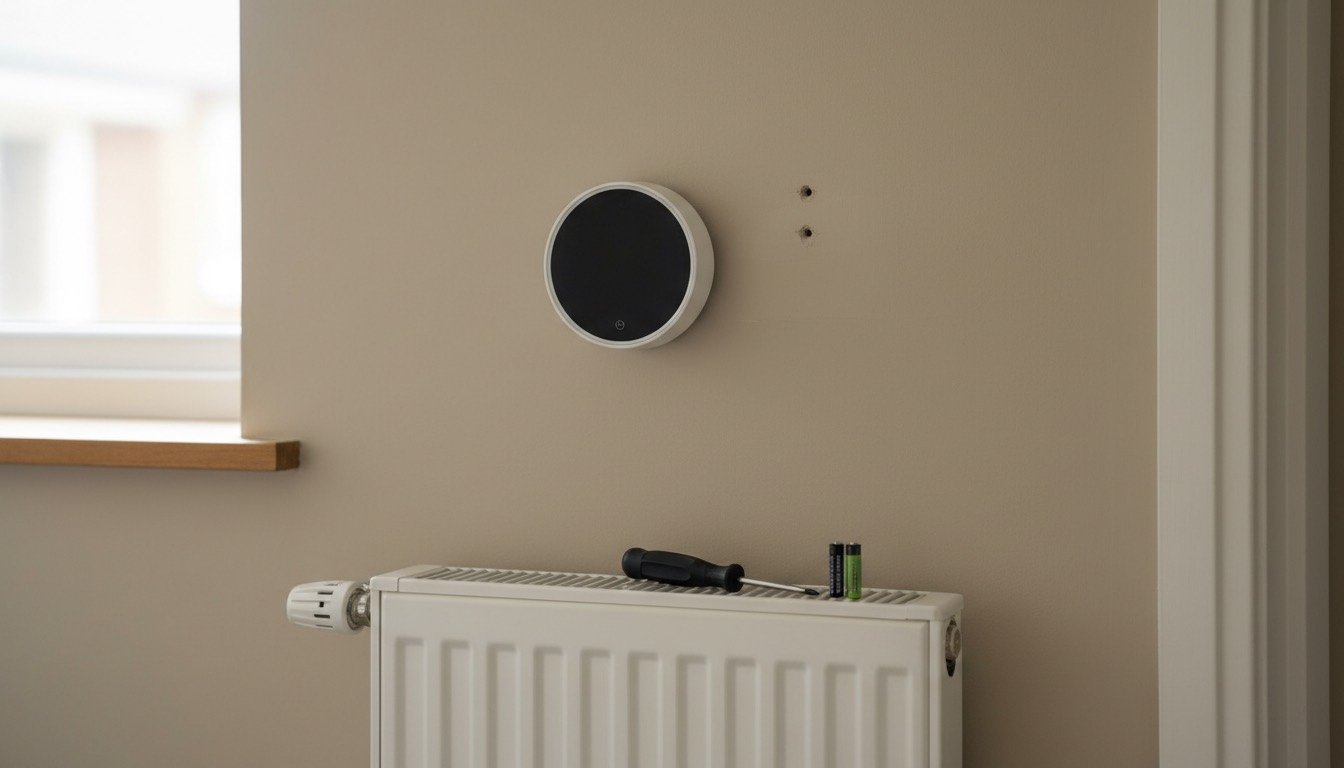
- •A competent DIYer can - isolate at the fused spur or consumer unit, prove dead with a two-pole tester (not a neon screwdriver), photograph the wiring, and fit a like-for-like stat to the same terminals.
- •A competent DIYer can - fit a wireless stat whose receiver plugs into a 13A socket, and fit smart TRV heads, which screw onto existing valve bodies with no draining down.
- •Get a Gas Safe registered engineer - for anything needing the boiler casing off, including every OpenTherm or modulating connection to the boiler PCB. Check their ID card lists boilers.
- •Get a heating engineer - for a system boiler with a cylinder, or an S-plan or Y-plan wiring centre. Mis-wiring one can leave a cylinder heating with no way to stop it.
- •Get an electrician - if the stat sits in a bathroom, there is no isolation point, or you find rubber-insulated or unearthed cable behind the backplate.
- •Stop and call someone - if you find scorching at a terminal or a live wire with no obvious source. Scotland works to Building Standards rather than Part P; the Gas Safe boundary is identical UK-wide.
The ten-year cost, honestly
Kit price is the small number. Fitting a wall stat professionally is £80-£180; a full smart kit on a system boiler, £150-£250.
- •Programmable, DIY fit - £55 stat, £12 of cells, one replacement at year ten. Ten-year total: about £70.
- •Single-zone smart, DIY wireless fit - £199 kit, £25 batteries, plus an optional £24.99-a-year assistant subscription. Ten-year total: £225 without it, £475 with.
- •Smart plus five smart TRVs, professionally commissioned - £199 kit, £320 of heads, £180 labour, one head failing around year seven. Ten-year total: roughly £800.
- •Payback - at £50 a year of real saving, the £225 DIY smart route repays in three and a half years.
Living with them: batteries, updates and obsolescence
A programmable stat is boring in the best sense: two cells every couple of years and a re-programme when the clocks change. Smart kit brings firmware updates, re-pairing after a router change, and a risk worth pricing in - Google stopped selling Nest thermostats in Europe in 2025 and withdrew app support from first- and second-generation Learning Thermostats.
Neither removes the real maintenance. UK wet central heating has no air filter, so changing a furnace filter has no equivalent here. What you do have is a magnetic filter on the return pipe cleaned at the annual service, radiators that need bleeding with the boiler pressure at 1 to 1.5 bar, and TRVs that seize if never moved.
Heat pumps and older systems change the answer
If you have an air source heat pump, ignore most of the above. Heat pumps want long, steady runs at low flow temperatures with weather compensation, and a smart stat that simply switches them on at 6am will cost you money and shorten compressor life - use the manufacturer's controller. On a back boiler or a pre-2005 non-condensing boiler, a modulating stat has nothing to modulate.
Who each suits, and the verdict
Choose a programmable thermostat if your household runs to a routine, you have one heating zone, your boiler is on/off only, or you are renting. Choose a smart thermostat if your hours are unpredictable, your combi supports OpenTherm, or you want individual bedroom control.
Our verdict: for most UK houses the smart thermostat is the better buy, but by a narrower margin than the packaging suggests, and only if it modulates the boiler and you set it up properly. Spend the first £150 on draught-proofing and a lower flow temperature, then buy the stat - the rest of the season's jobs sit in our heating and cooling guides. Start with our smart thermostat picks, then spend twenty minutes programming it around your real week.
Found this useful?
There's plenty more — hundreds of guides and honestly-tested product reviews for every corner of your home.
Browse All Guides