Energy & Insulation · 6 min read · 14 August 2026
VAT on Energy Bills Explained: The 5% Rate and What You Can't Avoid
Every unit of gas and electricity you buy carries 5% VAT, and the debate about scrapping it keeps returning. Here is what the tax actually adds to a typical bill, and which parts of that bill you can genuinely control.
By the Nims Casa editorial team — written from professional cleaning experience and checked against our editorial standards.
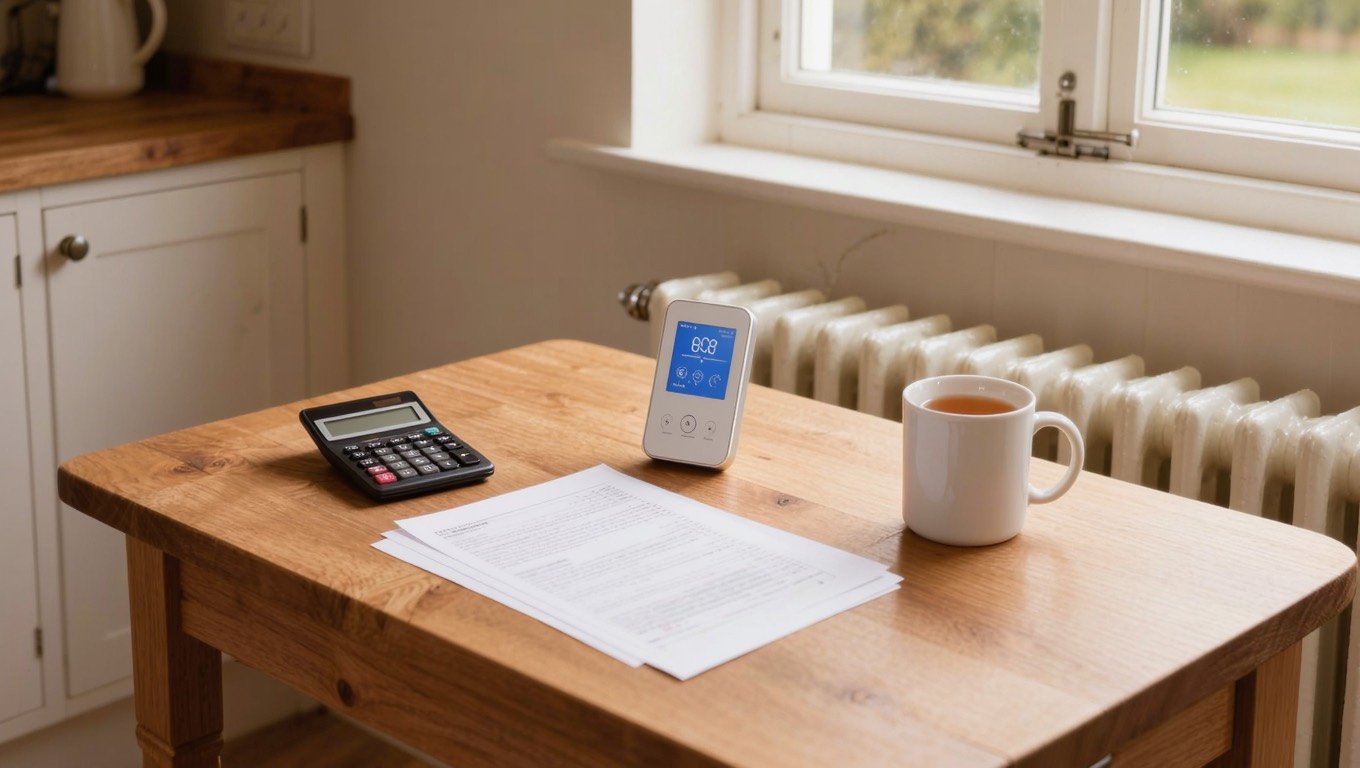
Whenever energy prices make the news, the same question surfaces: why is there tax on something as essential as heating? The answer is that domestic gas and electricity carry VAT at a reduced rate of 5%, and because it sits quietly at the bottom of the bill, most households have no idea what it actually costs them. On a typical dual-fuel bill it works out at roughly £7 a month.
After years of helping householders pick apart bills that made no sense, we can tell you the VAT line is the simplest part. This guide explains the 5% rate, shows the arithmetic on scrapping it, and breaks down the full bill so you know which costs are fixed and which you can shrink.
What VAT on energy bills actually is
VAT on domestic fuel and power is charged at 5%, the UK's reduced rate, rather than the standard 20% you pay on most goods. It arrived at 8% in 1994 and was cut to 5% in 1997. EU rules once prevented its removal; that barrier went with Brexit, which is why the debate about scrapping it resurfaces every time prices spike. No government has yet done it.
One detail worth knowing: VAT is applied to the whole bill, after everything else. That includes your unit charges, your standing charges and the policy levies buried in the pricing. In other words, part of what you pay is tax charged on top of other charges, which is why the VAT line grows automatically whenever any other part of the bill rises.
How your energy bill breaks down
Before you can judge what any tax change is worth, you need to know what you are actually paying for. Under recent price cap levels, a typical household pays roughly 26p per kWh for electricity and around 6p per kWh for gas, plus standing charges of about 50p a day for electricity and just over 30p a day for gas, varying by region. Those standing charges alone come to roughly £300 a year before you have used a single unit. Behind those headline figures, the money splits like this:
- •Wholesale energy: roughly 40% of the bill. The gas and electricity itself, bought on markets that move daily.
- •Network costs: around 15-20%. Maintaining the pipes and wires that deliver energy to your door. Fixed, and largely recovered through the standing charge.
- •Policy and social levies: around 10-15%, weighted heavily onto electricity. These fund renewable schemes, insulation programmes for low-income homes and the £150 Warm Home Discount.
- •Supplier operating costs and margin: billing, metering, customer service and a regulated sliver of profit.
- •VAT at 5%: applied to the sum of all of the above.
What scrapping the 5% would actually save you
The arithmetic is simple, and it is worth doing because the debate often implies bigger numbers than the sums support. Because VAT is 5% on top of the pre-tax amount, the tax portion of any bill is the total multiplied by 5 and divided by 105. Recent price cap levels have put the typical dual-fuel household paying by direct debit at around £1,750 a year, based on Ofgem's standard assumption of 2,700 kWh of electricity and 11,500 kWh of gas.
- •Typical home, £1,750 a year: the VAT portion is about £83, so scrapping it saves roughly £7 a month.
- •Larger or poorly insulated home, £2,500 a year: about £119 a year, just under £10 a month.
- •Small well-insulated flat, £1,200 a year: about £57 a year, under £5 a month.
Who pays 5% and who pays 20%
The 5% rate applies to all domestic supplies, full stop. If you work from home, your supply is still domestic and still 5%; there is no separate rate for home offices, and employees cannot reclaim the VAT.
Businesses pay the standard 20% plus the Climate Change Levy, with one important exception: the de minimis rule. Premises averaging under 33 kWh of electricity or 145 kWh of gas per day get the 5% rate with no levy. Many corner shops, small offices and village halls qualify without realising it, and suppliers do not always apply it automatically. Buildings at least 60% residential in energy use, such as care homes and student accommodation, qualify for 5% on the whole supply, as do charities for non-business activities.
What you can't avoid, and what you can shrink
You cannot avoid VAT on a domestic bill, you cannot opt out of the levies, and standing charges follow the meter, not your behaviour. Short of switching to a rare tariff that trades a lower standing charge for higher unit rates, that fixed layer of the bill is beyond your control.
What you can control is consumption, and because VAT is a percentage, every kWh you avoid also trims the tax. The boring measures beat the gadgets every time: programming the thermostat properly so you heat rooms only when occupied beats any smart plug, and working through a home energy efficiency checklist room by room costs nothing but an afternoon. If you own the property, loft insulation remains the best pound-for-pound upgrade in most UK homes; our guide to how much insulation costs puts realistic figures on it.
The renter-safe version: cutting the bill without risking your deposit
Tenants carry the same VAT and levies as owners but cannot touch the building fabric, so the trick is sticking to reversible measures. First, know your rights: if your name is on the energy account and you pay the supplier directly, you are entitled to switch tariff or supplier, whatever the letting agent implies, though check the tenancy agreement and tell the landlord if it requires notice. You can also request a smart meter on the same basis, which ends estimated billing and the overpayment that comes with it.
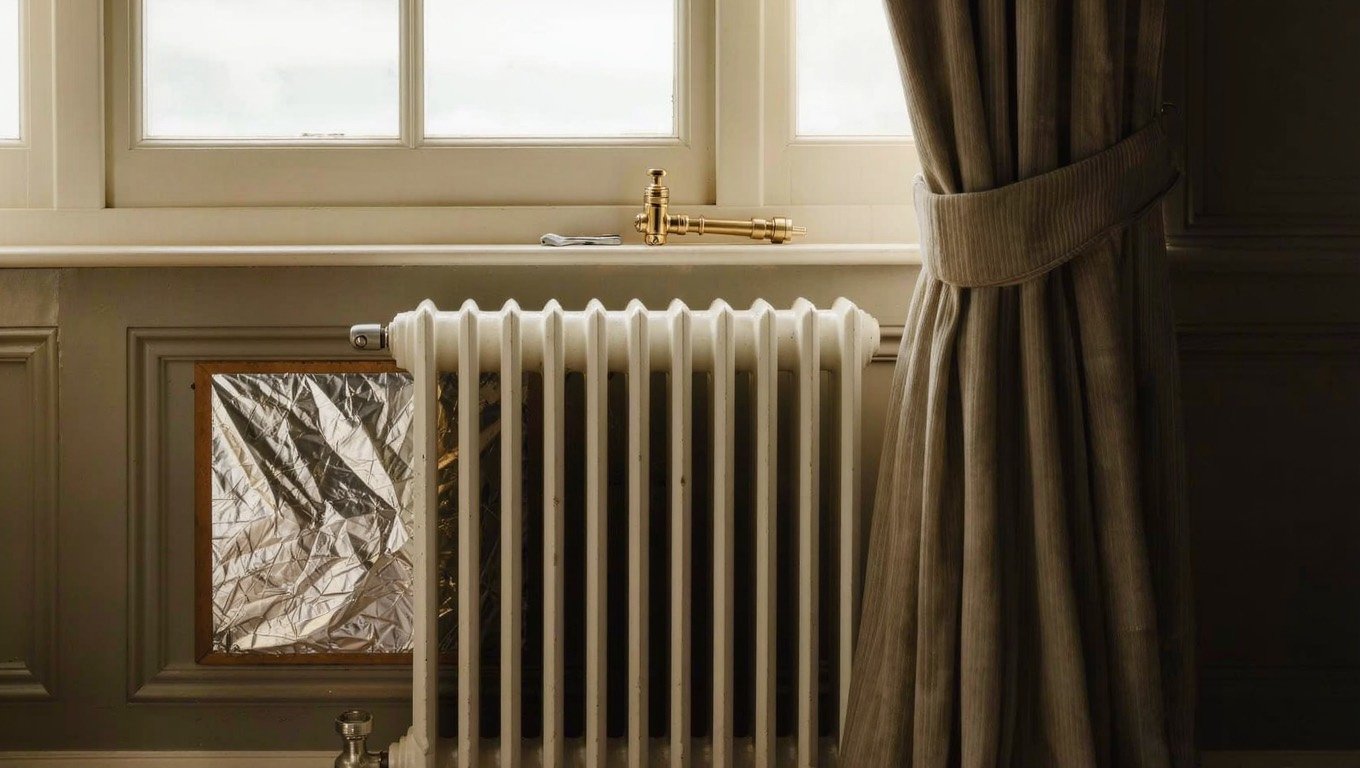
Inside the property, stick to measures that leave no mark. Self-adhesive draught excluder strip, heavy curtains and letterbox brushes all come out when you leave; our draught-proofing guide covers the reversible options. Foil reflector panels tuck behind radiators on external walls without fixings. If radiators are cold at the top, bleeding them and re-pressurising the boiler is a 15-minute job any tenant can do, no permission needed. What to avoid: screwing secondary glazing battens into window frames, drilling walls for insulation panels, or touching the boiler beyond the pressure valve. Those are deposit deductions waiting to happen.
Quick answers
- •How much is VAT on energy bills? 5% on all domestic gas and electricity, applied to the whole bill including standing charges and levies.
- •Is VAT charged on the standing charge? Yes. The 5% applies to every element of the bill, not just the units you use.
- •Can I get the 5% rate for my small business? Possibly. If you average under 33 kWh of electricity or 145 kWh of gas per day, ask your supplier to apply the de minimis rate.
- •Would scrapping VAT cut my bill by 5%? Slightly less: because the tax sits on top, removing it cuts the total by 5/105, about 4.8%.
- •Has the rate ever changed? Once. It arrived at 8% in 1994 and was cut to 5% in 1997. It has never been removed.
Found this useful?
There's plenty more — hundreds of guides and honestly-tested product reviews for every corner of your home.
Browse All Guides