Garden & Outdoor · 6 min read · 21 July 2026
Vegetable Planting Calendar: A Month-by-Month UK Sowing Schedule for Older Gardens
Most sowing charts assume an open plot, free-draining loam and a frost date you can set your watch by. Here is the calendar that works in real British gardens — walls, clay, coal ash and all.
By the Nims Casa editorial team — written from professional cleaning experience and checked against our editorial standards.
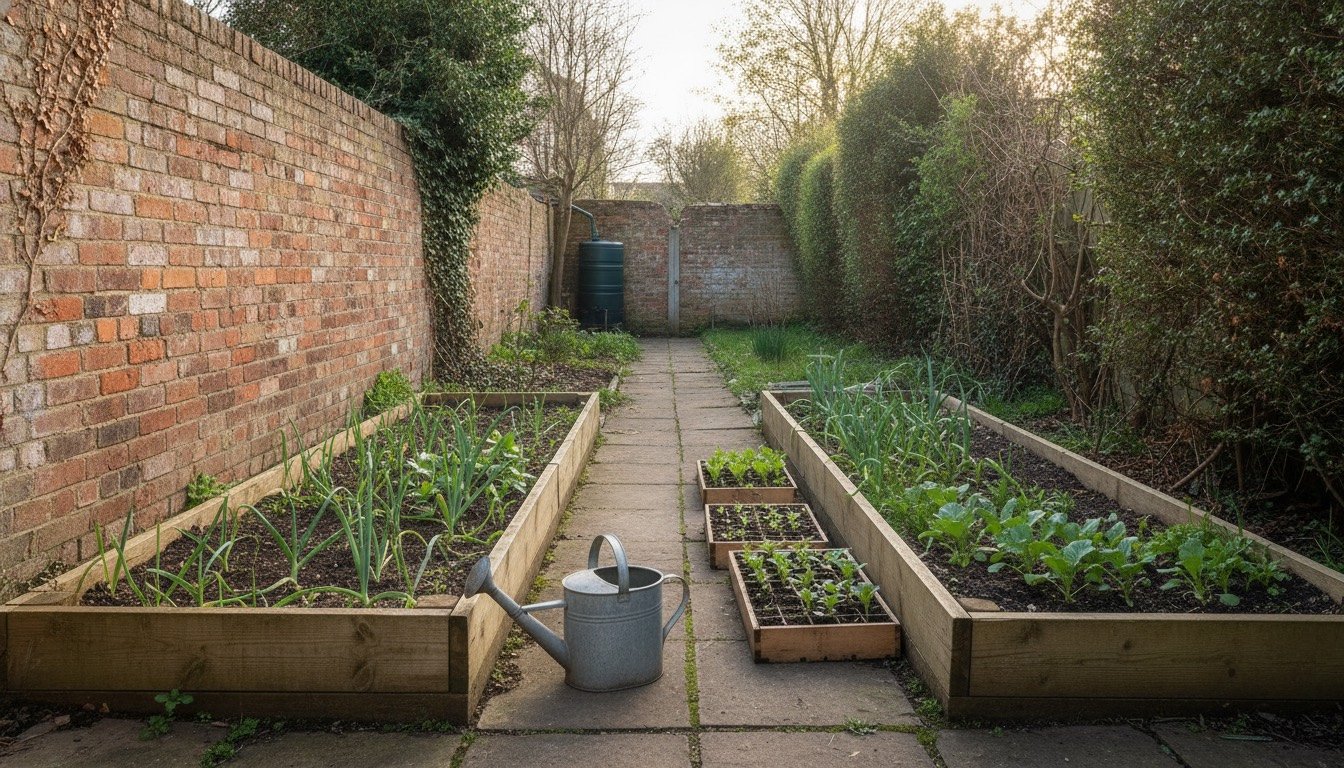
A planting calendar is only as good as the ground it is printed for. The chart on the back of a seed packet assumes an open, level plot with free-draining loam — which describes almost no garden behind a British terrace. Long narrow plots behind Victorian and Edwardian houses are walled on two or three sides, shaded for half the day, and sitting on soil that has absorbed a century and a half of coal ash, mortar washings and buried rubble.
The dates do not change wholesale; they shift, some earlier and some later, and a few crops stop being worth the bed space. Below are the sowing windows that work in the UK, the recurring jobs grouped by how often they actually need doing, and honest timings and costs. If you are starting from bare ground, read how to start a vegetable garden first.
Read Your Old Garden Before You Read the Calendar
A solid brick wall is a heat battery. A south- or west-facing Victorian boundary, 225mm of solid brick with no cavity, soaks up sun all afternoon and gives it back overnight — commonly 2-3°C warmer within 600mm of it on a clear April night. That strip buys you a fortnight at each end of the season. The same wall causes two problems: lime mortar leaches calcium into the soil at its base, so pH there often reads 7.5-8.0 while open ground reads 6.2-6.5, and that strip is also where flaking pre-1970s paint and coal ash have landed for decades. Brassicas love the alkalinity; potatoes will scab. Keep leafy and root crops a metre clear of the house wall, or grow them in raised beds filled with clean imported topsoil.
Then there is the drainage. Old terraces almost always have a shallow salt-glazed clay drain running to the rear boundary, plus the compacted footprint of a demolished outside WC or coal store. Both leave a strip that stays waterlogged into April while the rest of the plot has dried, and March-sown seed simply rots there.
- •Dig one 300mm test hole per bed in February. Ash, clinker or brick rubble means that bed is for raised-bed growing, not parsnips.
- •Fill the hole with water. Still standing after four hours? Compacted subsoil or an old drain run — sow there three weeks later.
- •Test pH at the wall base and in open ground separately; a £8 kit shows the difference clearly.
- •Mark the frost pocket — the shaded corner that stays white when the rest has thawed. Nothing tender goes there before June.
The Sowing Calendar, Month by Month
Dates assume the Midlands: shift a fortnight earlier for the south and south-west, a fortnight later for northern England, three weeks later for Scotland and upland Wales. Last frost is realistically mid-May in the south and early June up north; first frost lands mid-October to early November. Work the beds out on paper first with a companion planting plan.
- •January: order seed. Sow broad beans and sweet peas in root trainers in a cold frame. Force rhubarb under a bucket.
- •February: chit first earlies on a cool bright sill at 7-10°C. Sow onions, leeks, greenhouse tomatoes, and chillies with 20°C bottom heat.
- •March: plant first early potatoes and onion sets. Direct-sow carrots, parsnips, beetroot, spinach, radish and early peas under fleece.
- •April: plant second earlies and maincrop. Sow sweetcorn, courgettes, squash and beans indoors in modules; brassicas into a seedbed.
- •May: harden off and plant out tender crops after your local last frost. Sow swede, kale, chard and maincrop peas.
- •June: last sowings of French beans, courgettes and sweetcorn. Sow carrots now to dodge the first carrot-fly generation. Earth up potatoes.
- •July: sow spring cabbage, oriental leaves, turnips and quick beetroot. Plant leeks into final positions. Keep salad succession going.
- •August: sow overwintering spinach, winter lettuce, spring onions and green manure on cleared beds.
- •September: plant Japanese overwintering onion sets and spring cabbage. Lift maincrop potatoes as the haulms die back.
- •October: plant garlic — it needs four to six weeks below 10°C to split into cloves. Sow Aquadulce Claudia broad beans direct.
- •November: last broad beans and garlic. Plant bare-root fruit. Cover empty beds; bare soil in a walled garden caps hard under winter rain.
- •December: no sowing. Order seed, wash pots, sharpen tools and turn the compost heap.
Recurring Jobs by Frequency
Sowing dates get the attention, but plots are won or lost on repeat jobs. In a walled town garden airflow is poor and humidity sits high, so mildew and blight arrive earlier than on an open allotment — weekly inspection matters more here than half a mile away on open ground.
- •Weekly, March to September: hoe seedling weeds while small, check for slug damage after rain, sow the next round of salad every two to three weeks.
- •Weekly, June to August: water deeply twice rather than lightly daily — 10-15 litres per square metre reaches the root zone. Tie in and pinch out tomatoes.
- •Monthly, all year: turn or top up the heap. Our guide to making compost covers the carbon-to-nitrogen balance that stops it going slimy.
- •Monthly, April to September: high-potash liquid feed for tomatoes, courgettes and beans once flowering starts.
- •Autumn, once: clear spent crops, lift and store roots, mulch 50mm of well-rotted manure over every empty bed.
- •Winter, once: wash pots in hot soapy water, sharpen hoe and secateurs, re-test soil pH every third year.
Realistic Time and Cost per Task
These figures are for a two-bed plot of roughly 1.2m x 3m each — the size that fits down the side of a terrace garden without swallowing the lawn.
- •Building two timber raised beds: 4-5 hours, £120-£180 in materials — see how to build a raised garden bed for the cut list.
- •Filling them: 2 hours, £90-£140 for a bulk bag delivered, or £6-£8 per 40-litre bag of peat-free multipurpose.
- •A February sowing session: 45 minutes; £2.50-£3.50 a packet, roughly £25-£35 for a year's seed.
- •Seed potatoes and sets: £5-£7 for 2kg, £3-£4 for 60 onion sets; 40 minutes to plant a bed.
- •Weekly hoeing and inspection, March to September: 20-30 minutes per bed, no cost.
- •Summer watering: 10-15 minutes daily. A 210-litre butt costs £35-£55 and repays itself in two seasons — see how to collect rainwater.
- •Fleece and insect mesh: £8-£12 for 10m of fleece, £20-£30 for 2m x 5m of fine mesh. Thirty minutes to fit, and it saves the whole carrot crop.
- •Autumn mulching: 1-2 hours, £40-£70 of well-rotted manure for both beds at 50mm.
The Supplies You Actually Need
Ignore the gadget aisle. Nine items cover everything above, and most last a decade if you clean them in December.
- •Border fork and spade — narrow blades are far easier in a confined walled plot.
- •A sharp swan-neck or oscillating hoe, sharpened twice a season.
- •40- and 24-cell module trays and a dibber, so roots transplant intact.
- •Peat-free multipurpose compost and vermiculite for covering fine seed.
- •Horticultural fleece for frost, fine mesh for carrot fly and cabbage white.
- •Bamboo canes, soft twine and cane toppers.
- •A water butt with a tap high enough to take a can beneath it, plus a 9-litre can with a fine rose.
- •Ferric phosphate pellets or beer traps — damp shaded walled corners are slug paradise.
- •A pH kit, a min/max thermometer, and pencil labels. Not biro; it fades by June.
What to Prioritise When You're Short on Time
Most gardens fail in July, not March. The sowing is exciting and the maintenance is not. If you can only give the plot an hour a week, spend it in this order, and accept that a small well-tended bed beats a large neglected one every year.
- •Water first. A courgette that dries out at flowering aborts its fruit; a weedy but watered bed still crops.
- •Hoe second, and only where seedlings are competing. Established plants tolerate weeds far better than young ones.
- •Harvest third — beans, courgettes and salad stop producing the moment they set seed.
- •Drop the fussy crops when stretched: parsnips, celeriac and cauliflower go first.
- •Keep the reliable ones: potatoes, broad beans, runner beans, courgettes, kale, chard and salad all forgive neglect and cope with shade.
- •Mulch every empty patch. Ten minutes in autumn saves two hours of weeding in April.
Questions We Get Asked Most
Can I grow anything worthwhile in a north-facing walled garden? Yes. Four hours of direct sun will carry chard, kale, lettuce, spinach, beetroot, potatoes and most herbs. Tomatoes, aubergines and peppers will not crop unless they sit against a sunny wall or under glass.
Should I lime the soil? Only after testing. Beds near an old lime-mortared wall are usually alkaline enough already, and more lime will lock out iron and manganese.
Is old town-garden soil safe for vegetables? Generally yes, provided growing beds stay clear of the base of painted walls and you wash and peel roots properly. If the house has been repainted many times or sits on a long-busy road, spend £35-£50 on a laboratory soil test before committing a season.
The single best change for an old walled plot? Raised beds of clean topsoil — they lift roots above compacted Victorian subsoil, warm two weeks earlier, and sidestep the ash layer entirely. The rest of our Garden & Outdoor guides cover the build, soil and irrigation detail.
Found this useful?
There's plenty more — hundreds of guides and honestly-tested product reviews for every corner of your home.
Browse All Guides