Garden & Outdoor · 6 min read · 14 August 2026
Water Butt Installation and Rainwater Harvesting: The Post-Drought Setup Guide
The hosepipe ban made the case; autumn rain does the filling. How to size, fit and link water butts properly — including the diverter height trick that stops overflows soaking your wall.
By the Nims Casa editorial team — written from professional cleaning experience and checked against our editorial standards.
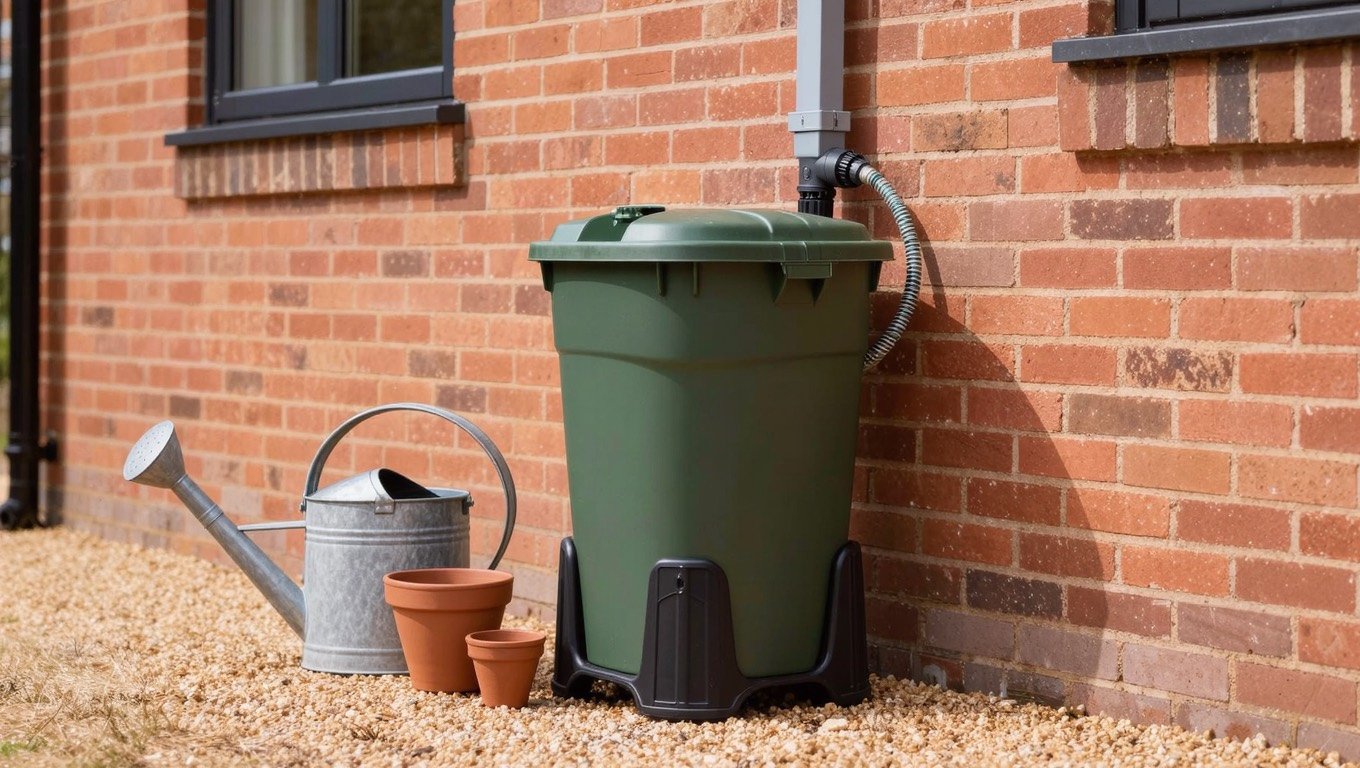
The hosepipe bans of the last two summers taught gardeners one lesson: the cheapest water in the garden is the rain that fell on your roof in October. A 210-litre water butt refills from just 7mm of rain landing on half a typical semi's roof, and fitting one is a 90-minute job with hand tools. Do it now, in late summer, and the autumn rain does the filling for you.
Before you buy anything, diagnose your actual situation — downpipe type, roof area and how much watering you really do. The most common failure isn't bad fitting; it's the wrong kit bought for the wrong downpipe, or a tank so oversized it never empties and turns green.
First, Diagnose Your Setup: Downpipe, Roof and Demand
Ten minutes with a tape measure saves a return trip to the DIY shed. Run these three checks before choosing a butt or a diverter kit.
- •Downpipe type: most UK plastic downpipes are 68mm round or 65mm square; a universal diverter kit fits both. Older houses may have 110mm round pipe (buy the larger diverter), cast iron, or grey asbestos-cement — if it's the last, read the final section before touching it.
- •Roof area: 1mm of rain on 1m² of roof yields roughly 1 litre. Measure the footprint of the roof section feeding your downpipe — a 30m² rear slope on a semi collects around 18,000 litres in an average English year, more in the wetter west.
- •Demand: a watering can holds 10 litres, and an evening round of pots and borders uses 40-60. Patio pots only? A 100-litre slimline butt is plenty. A typical garden suits a 210-litre butt on the main rear downpipe; serious veg growers should plan for two linked butts of 400 litres or more.
Safety First
A full 210-litre butt weighs over 210kg — more than two washing machines. It needs a firm, level base: two paving slabs bedded on sharp sand, never bare soil, which softens in rain and lets the tank lean and topple. Sort the base before the tank is full, not after.
- •Fit a child-safe, lockable lid. A part-filled butt is a drowning hazard for toddlers and pets, and an open one is a mosquito nursery by July.
- •Stored rainwater is not drinking water. Use it on ornamentals, fruit bushes and established veg; stick to mains for seedlings and anything eaten raw.
- •Wear eye protection when sawing the downpipe — you cut at shoulder height and plastic swarf flicks upwards.
Tools, Materials, Time and Cost
Everything here is stocked at Screwfix, Toolstation, B&Q and most garden centres. Budget £40-£120 all in and allow 60-90 minutes. For context on bigger systems — underground tanks start around £2,500 installed — see our rainwater harvesting cost guide.
- •Water butt with lid and tap: £25-£90 by size (a 210-litre butt with stand and tap typically £50-£70)
- •Universal rain diverter kit: £10-£20 — check the box lists your pipe size (68mm round / 65mm square)
- •Butt stand: £15-£30, or a plinth of engineering bricks — the tap needs about 30cm of clearance for a can
- •Hacksaw, tape measure, pencil and spirit level
- •Drill with the kit's hole saw if your butt has no pre-cut inlet
- •Washing-up liquid for persuading hose onto connectors
Fitting a Diverter to a Round or Square Downpipe
The diverter is the clever part: it skims water flowing down the pipe into the butt, then, once the butt is full, lets the flow carry straight on to the drain. That self-stopping trick only works if the diverter sits level with the inlet hole in the side of the butt, never above it.
- •1. Set the butt on its stand in its final position beside the downpipe, on the levelled slab base.
- •2. Mark the downpipe level with the butt's inlet hole. Too low and the butt never fills; too high and rain keeps coming after it's full, overflowing through the inlet and soaking the wall.
- •3. Cut through the pipe at the mark with a hacksaw, then make a second cut to remove the section your kit specifies — usually 30-40mm. Square 65mm pipe cuts exactly like round; universal kits include adapters for each profile.
- •4. Deburr the cut ends, push the diverter body onto the upper pipe and re-join the lower pipe into its base. Wet plastic grips hard — washing-up liquid helps.
- •5. Drill the inlet hole with the supplied hole saw if it isn't pre-cut, fit the grommet, and run the hose from diverter to butt — short, with a slight fall towards the tank.
- •6. Close the tap, then pour a bucket of water into the gutter above — you should see flow into the butt within seconds.
- •7. Check the nearest pipe bracket; if the cut has left over a metre of unsupported pipe, add one (about £2) so it doesn't rattle in wind.
Linking Butts and Keeping the Water Clean
One downpipe can feed several butts. A linking kit (£8-£12) joins two tanks near the base so they fill and empty as one — site them at the same height or the lower one does all the work. The simpler retrofit is connecting the second butt to the first's overflow, filling them in sequence. Shed and greenhouse roofs are worth harvesting too — even a 6x4 shed yields over 2,000 litres a year — and our guide to collecting rainwater covers those smaller setups.
Clean water is mostly about what you keep out. Gutters full of rotting leaves send tannin-stained soup into the tank, so clear them each autumn — our guide to cleaning gutters safely covers the ladder work.
- •Keep the lid sealed and shade the butt where possible — sunlight plus nutrients equals green algae
- •Fit a filter basket or first-flush diverter at the inlet to keep grit and leaf fragments out
- •Empty and scrub the butt once a year with a stiff brush and clean water — no bleach needed
- •Use the water — turnover is the best cleaner. A butt emptied fortnightly stays sweet; a stagnant one smells by August
Winter Care and Whether a Pump Is Worth It
Most diverters have a summer/winter setting. Flip it to winter — or pull the hose and cap the inlet — before the first hard frosts, and run the butt down to three-quarters full so ice has room to expand. Water grows about 9% in volume as it freezes, and a brim-full sealed tank can split at the seams. The tap is the thinnest plastic and the first casualty, so lag it through prolonged freezes.
A pump earns its keep in two cases: the butt sits far from where you water, or you want to feed a drip irrigation system from stored rain. A submersible butt pump (£35-£70) drops in through the lid and gives enough pressure for a hose lance. If you only fill a can under the tap, save the money — gravity is free. And if you barely water at all, spend the budget on water-saving landscaping instead.
Troubleshooting and When to Call a Professional
Work down this list in order — causes are ranked from most to least likely.
- •Butt never fills: diverter too high or hose running uphill — refit so the hose falls towards the tank, and check the gutter actually discharges into this downpipe during rain.
- •Fills, then overflows through the lid: the diverter sits above the inlet, so it can't self-stop. Lower it, or fit an overflow kit routed to the drain.
- •Only a trickle in heavy rain: the diverter filter is clogged with moss — pull it out and rinse it, monthly through autumn.
- •Green or smelly water: light or organic matter is getting in. Seal the lid, shade the tank, empty and scrub, then let it refill.
- •Damp wall behind the pipe: the cut joints are misaligned and weeping. Refit — persistent leaks soak brickwork and can track damp indoors.
- •Call a professional for three jobs: cutting cast-iron downpipes (brittle, and the joints need proper remaking); anything involving grey asbestos-cement rainwater goods on pre-1980s houses — never saw these, a roofer can replace the run in plastic for £150-£300; and underground harvesting systems, which mean excavation, pumps and non-return valves.
Found this useful?
There's plenty more — hundreds of guides and honestly-tested product reviews for every corner of your home.
Browse All Guides