Energy & Insulation · 6 min read · 1 July 2026
How Much Does Rainwater Harvesting Cost? UK Prices for 2026
Rainwater harvesting in Britain ranges from a £45 butt to a £6,000 buried tank. Here are the real 2026 numbers, what your installer is actually charging for, and when the sums simply do not work.
By the Nims Casa editorial team — written from professional cleaning experience and checked against our editorial standards.
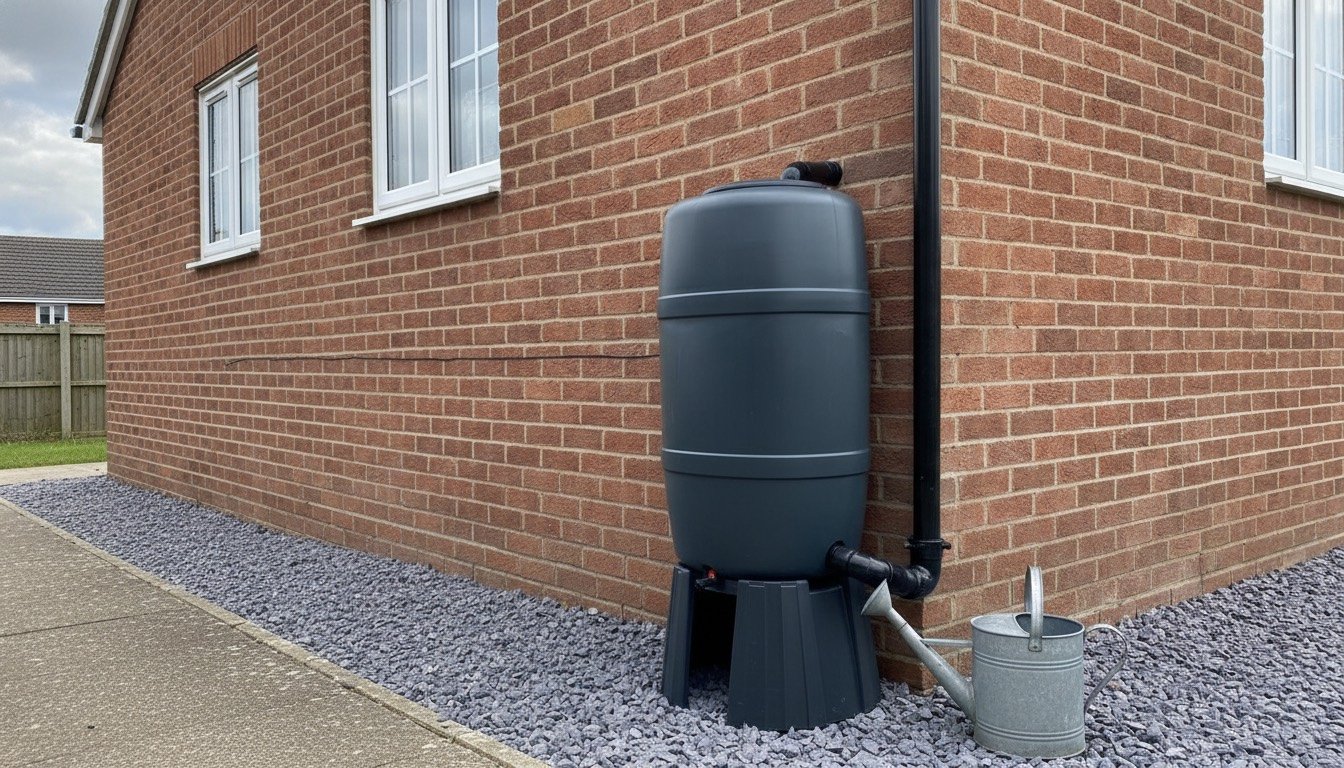
Ask three installers what it costs to catch the rain off your roof and you get three wildly different answers, because the phrase covers everything from a £45 butt on a downpipe to a 6,000-litre tank buried under the front garden feeding the loos and the washing machine. The gap is not just money — it is regulation, groundwork, and a payback that can outlast your mortgage.
Below are the 2026 UK numbers as they appear on merchant price lists and on quotes crossing our desk: component by component, labour separated from materials, three worked jobs, and where the maths stops working. Prices include VAT at 20% unless stated.
Typical UK price ranges in 2026
There are three tiers, and the cost jumps by roughly an order of magnitude at each step. Most households who think they want a harvesting system actually want tier one or two.
- •Tier 1 — butts and linked butts, garden only: £45-£220, fitted by you. No labour, no notification, no regulations.
- •Tier 2 — above-ground pumped tank for irrigation, an outside tap and jet washing: £700-£2,200. A 1,000-1,500 litre slimline tank or IBC, first-flush filter, submersible pump, half a day of labour.
- •Tier 3 — underground system plumbed to WCs and the washing machine: £3,200-£6,800 retrofitted; £2,400-£4,200 on a new build, where the digger is already on site and the work is VAT zero-rated.
Unit costs: what each part costs
If a quote is one number with no breakdown, price the parts yourself and see what is left over. Several water companies still run subsidised butt schemes, where a £70 butt-and-diverter lands at £30-£35. Our sustainable home improvement ideas guide uses the same bands.
- •Water butt, 100-210 litres: £25-£70. Diverter kit £12-£25, stand £15-£35, linking kit £10-£18
- •Reconditioned food-grade 1,000-litre IBC £80-£160; slimline above-ground tank, 1,000-1,500 litres, £350-£700
- •Underground tank: 3,000 litres £950-£1,400; 4,500-6,000 litres £1,500-£2,600
- •Vortex or basket filter £120-£350; header tank with Type AB air gap kit £180-£350
- •Pump: garden submersible £70-£220; direct-feed pressure pump with control unit £450-£900
- •Mini digger and operator £450-£900 a day; muck-away grab lorry £280-£450 a load; pea shingle backfill £70-£95 a bulk bag
- •Labour: groundworker £320-£480 a day, two-man team £550-£750; plumber £280-£420 a day, £400-£550 in London; commissioning and handover £150-£250
Labour versus materials: where the money goes
Tier one is 100% materials. Tier two runs roughly 80/20 materials to labour; the tank and pump dominate and a competent plumber has it running in four hours.
Tier three catches people out. A buried system splits close to 50/50, and the hole is the expensive half: excavation, muck-away and backfill take 25-30% of the total, often £1,200-£1,900 before a litre is stored. If a 1.5-tonne digger cannot reach the back garden, spoil comes out by barrow and labour doubles. Get your gutters cleaned and sound first — a system fed by blocked guttering silts up its filter within a season.
- •Pushes it up: no digger access, clay or made ground, a high water table needing a concrete surround, long runs to the tank, plumbing crossing finished floors, London and the South East (add 15-25%).
- •Brings it down: trenching it yourself, groundworks already priced into an extension, one downpipe carrying most of the roof, and garden-only use, which sidesteps the Water Fittings Regulations entirely.
Three worked examples
- •Terrace in Leeds, garden only: two 210-litre butts linked off the rear downpipe, stands, diverter and linking kit — £165 in parts, 90 minutes' work. Collects roughly 4 m³ a year, worth £11 on a meter. The real benefit is soft water for the pots and a full butt when a hosepipe ban lands in July.
- •1990s detached in Cambridgeshire, pumped garden system: 1,500-litre slimline tank £560, first-flush filter £130, pump and pressure switch £215, fittings and slabs £150, half a day's plumbing £190 — £1,245. Roughly 18 m³ a year through a drip irrigation system, saving £50 annually and keeping a young hedge alive through a ban that would have cost £300 to replant.
- •Four-bed detached in Surrey, underground retrofit: 4,500-litre tank £1,650, filter, pump and controller £860, excavation and muck-away £1,450, backfill and slab £390, two days' plumbing £790, header tank and air gap £260, commissioning £200 — £5,600 including VAT for both WCs, the washing machine and an outside tap, around 45 m³ a year.
Will it pay back? The honest maths
Metered water plus sewerage sits at roughly £2.30-£3.60 per cubic metre in 2026 — South West and Southern at the top, Severn Trent and Yorkshire nearer the bottom. Every cubic metre of rain you use displaces a metered one, and because sewerage charges are calculated from your mains meter, you avoid both halves of the bill.
Run the Surrey job: 45 m³ × £2.90 = £131 a year, less £22 of pump electricity (1.5-2 kWh per m³ at 27p a unit) and a £120 service every other year. Call it £50-£90 net against £5,600 spent — payback in decades, with a £250-£500 pump replacement due around year twelve. Anyone quoting an eight-year payback on a retrofit is assuming heroic consumption. Tiers one and two are different: cheap enough that drought resilience alone justifies them, and pairing them with water-saving habits indoors shifts more off the bill than any tank.
Buried systems do stack up for high-usage metered households, properties on a borehole, sites with water neutrality conditions, and new builds where the extra over a soakaway is £2,000-odd. Otherwise you are buying resilience, not a return.
How to sanity-check a quote
A sound quote for anything plumbed into the house reads like a specification, not a sentence.
- •A sizing calculation to BS 8515 showing roof area, local rainfall and predicted yield. A 60 m² roof footprint in Essex (580mm of rain) yields about 25 m³ a year; in Cardiff, nearer 48 m³.
- •Named backflow protection — a Type AB air gap on the mains top-up, because non-potable rainwater is fluid category 5. If "air gap" appears nowhere, that is a red flag.
- •Marked non-potable pipework and notification to your water supplier: a legal requirement, not an upsell.
- •Excavation priced with a stated spoil volume and muck-away allowance. "We'll dig it out and see" is how a £4,500 job becomes £6,200.
- •Commissioning, a warranty (tanks 15-25 years, pumps 2-5) and annual servicing at £90-£180.
- •Suspiciously cheap: an underground retrofit under £2,800 usually means a shallow tank with no proper surround. Suspiciously dear: over £7,500 with no access problem on the drawing.
- •VAT stated explicitly — retrofit is 20%, and harvesting kit is not on the reduced-rate energy-saving materials list.
Methodology and geography
These figures come from UK merchant listings checked in early 2026 plus installer quotes from the Midlands, the South East, Yorkshire and South Wales, rounded to sensible bands and excluding Highlands and islands delivery surcharges of £120-£300.
Geography moves both sides of the equation: rainfall runs from roughly 550mm a year in Essex to over 1,100mm in Cardiff and the west of Scotland, so the same roof yields twice as much in the west, and tariffs vary by nearly 50% between companies. Check your own rainfall and per-cubic-metre rate before committing. Still choosing between a butt and something buried? Start with how to collect rainwater, then water-saving planting — the cheapest cubic metre is the one you never needed.
Found this useful?
There's plenty more — hundreds of guides and honestly-tested product reviews for every corner of your home.
Browse All Guides