Electrical · 6 min read · 9 July 2026
Signs of an Overloaded Circuit Before the Problem Gets Worse
Circuits rarely fail dramatically. They warm at the weakest joint for months first — and in older UK houses the fuse board often never says a word about it.
By the Nims Casa editorial team — written from professional cleaning experience and checked against our editorial standards.

Circuits rarely fail with a bang. They warm at the weakest terminal, bake the plastic around it, then let go. By the time a socket has browned, the cable behind it has run hot for months — which is why the early warnings matter more than the failure.
Overload is not the same as a fault. A short circuit dumps hundreds of amps in milliseconds and the protective device clears it. Overload is a 32A ring carrying 40-odd amps hour after hour through joints that were fine in 1974 — slow, cumulative, and easy to live with for years without noticing.
Quick diagnosis: the 15-minute version
First establish whether this is overload or a fault. The two behave differently and get fixed differently.
- •Trips only when several things run at once (kettle plus toaster plus dishwasher) — thermal overload. The MCB is doing its job.
- •Trips the instant you switch one particular appliance on, every time — a fault in that appliance or its wiring, not overload. Stop using it.
- •Trips at random with nothing obvious running — usually earth leakage on the RCD: damp outdoor sockets or a tired immersion element.
- •Nothing trips at all but sockets feel warm — the most dangerous version, and the one older properties specialise in.
- •Switch the circuit's appliances off, restore them one at a time and add up the rating plates. Divide by 230 for amps: 3kW kettle = 13A, 2.5kW dryer = 11A, 2.2kW dishwasher = 9.5A. Our walkthrough on working out your electrical load does a whole property.
- •Feel the faceplate with the back of your hand after 30 minutes of heavy use. Body-warm is worth watching; uncomfortable to hold is a job for today.
Symptom to cause: what each sign is telling you
- •Lights dim and stay dimmer while the kettle boils — volt drop across a loaded or high-resistance circuit. A brief flicker as a fridge starts is normal; a sustained sag is not.
- •A warm socket faceplate, or one that buzzes at 50Hz — loose terminal screws or too much sustained current. Heat means resistance, and resistance means a joint that is failing.
- •Brown staining around the pins, or a plug top gone tacky — arcing has already happened. Replace both, then find out why.
- •A sharp fishy or acrid smell near a socket, switch or the consumer unit — overheating plastics releasing their flame retardants. Isolate that circuit now.
- •One appliance's 13A plug fuse blowing repeatedly — it is drawing more than it should, or the fuse is undersized for the load.
- •A warm extension reel — most are rated 13A fully unwound but only about 3A coiled, and nobody unwinds them.
Causes, in the order we actually find them
- •The kitchen. One 32A ring feeding kettle, toaster, microwave, dishwasher and washing machine is genuinely marginal, and everyone boils the kettle at the same time.
- •Space heating. Two 2kW fan heaters on one circuit through a cold snap is 17A of continuous load nobody planned for.
- •Loft conversions, garden rooms and extensions spurred off an existing ring instead of given their own circuit — the commonest cause in retrofitted homes.
- •Daisy-chained extension leads: a four-way into a four-way, all fed through one 13A plug that cannot deliver more than 3.1kW — usually with a tumble dryer on the end.
- •Worn accessories where the plug now sits loosely and contact resistance climbs yearly — a bigger factor in why a circuit breaker keeps tripping than most people expect.
Why older houses hide overload for years
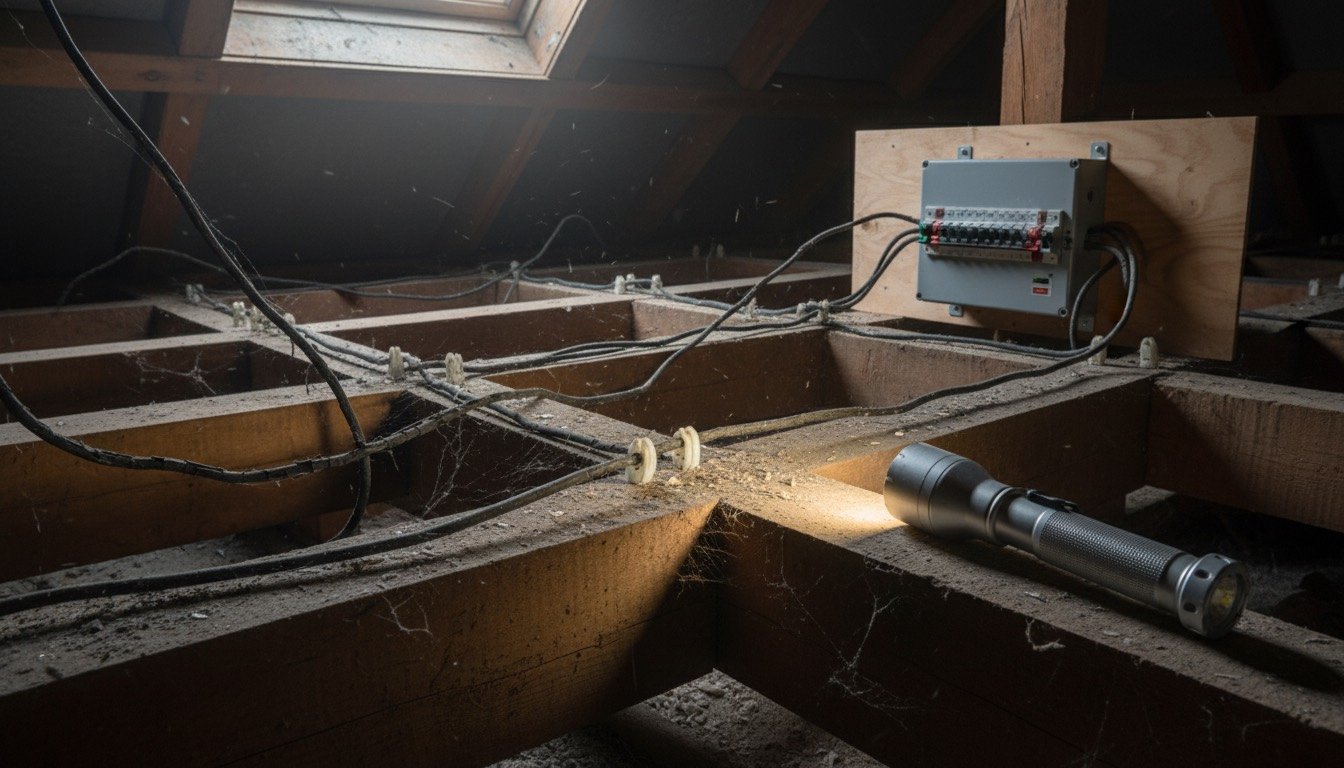
Anything built before about 1970 needs reading differently, because the protection was designed to another standard. A rewireable fuse board (BS 3036) has a fusing factor near 2, so 30A fuse wire will carry 45 to 55 amps for tens of minutes before it ruptures; a modern MCB clears at roughly 1.45 times its rating. A Victorian terrace on its original fuse box therefore gives you no trip and no warning — just cable running above its design temperature inside a wall.
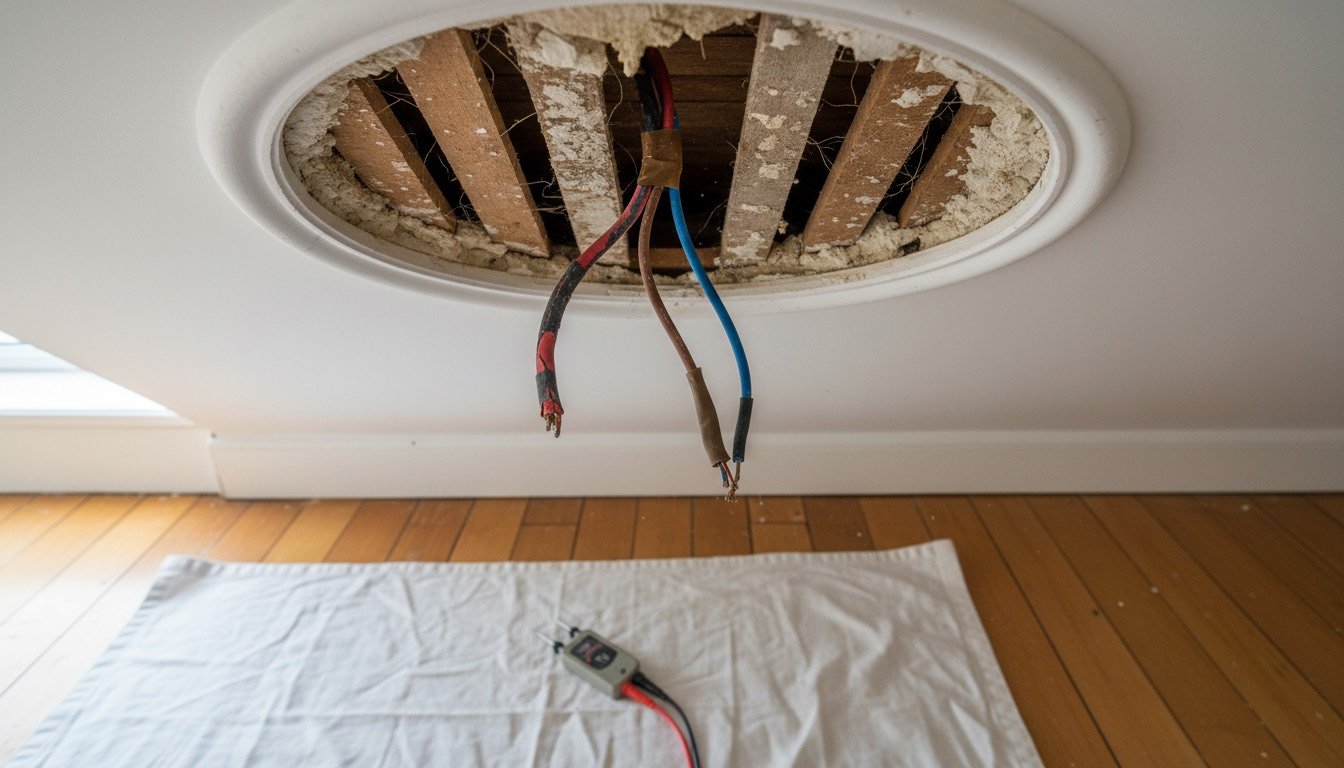
The construction compounds it. Cables chased into lime plaster on solid brick have no cavity and no air movement, so they cannot shed heat the way a plasterboard partition does. Junction boxes sit above lath-and-plaster ceilings nobody has opened since the war, and sockets get added into sash bay panelling as a spur off a spur. Rubber (VIR) and cloth-braided cable also goes brittle with age, a process heat accelerates — one of many problems that stack up in 100-year-old houses.
- •Black round-pin sockets, bakelite switches or cloth-covered flex: assume end of life, not merely overloaded.
- •Lighting circuits wired before the mid-1960s often have no earth conductor, so metal fittings and most smart switches cannot legally go on them.
- •A 1960s 'rewire' typically gave a whole floor one 30A ring — fine for a telly and a lamp, hopeless for a modern kitchen.
- •No RCD on the board means no protection for cables buried less than 50mm deep, which in a solid-wall house is most of them.
Fixes, ordered from lowest risk to highest
- •Redistribute the load. Free, immediate, and it settles roughly half the cases we attend: move the tumble dryer to another circuit, stop running kettle and microwave together.
- •Unwind reels fully, retire the daisy chains, and check each plug fuse suits its appliance — 3A up to about 700W, 13A above.
- •Replace a discoloured faceplate like for like — circuit isolated, locked off, proved dead with a two-pole tester. If that is not routine to you, hand it over; a plug-in socket tester confirms polarity but says nothing about heat.
- •Book an EICR (Electrical Installation Condition Report): £150-£300 for a typical three-bed, and it puts measured numbers on circuit loading.
- •Have a dedicated radial run for the heavy appliance: £200-£450, more where solid walls need chasing.
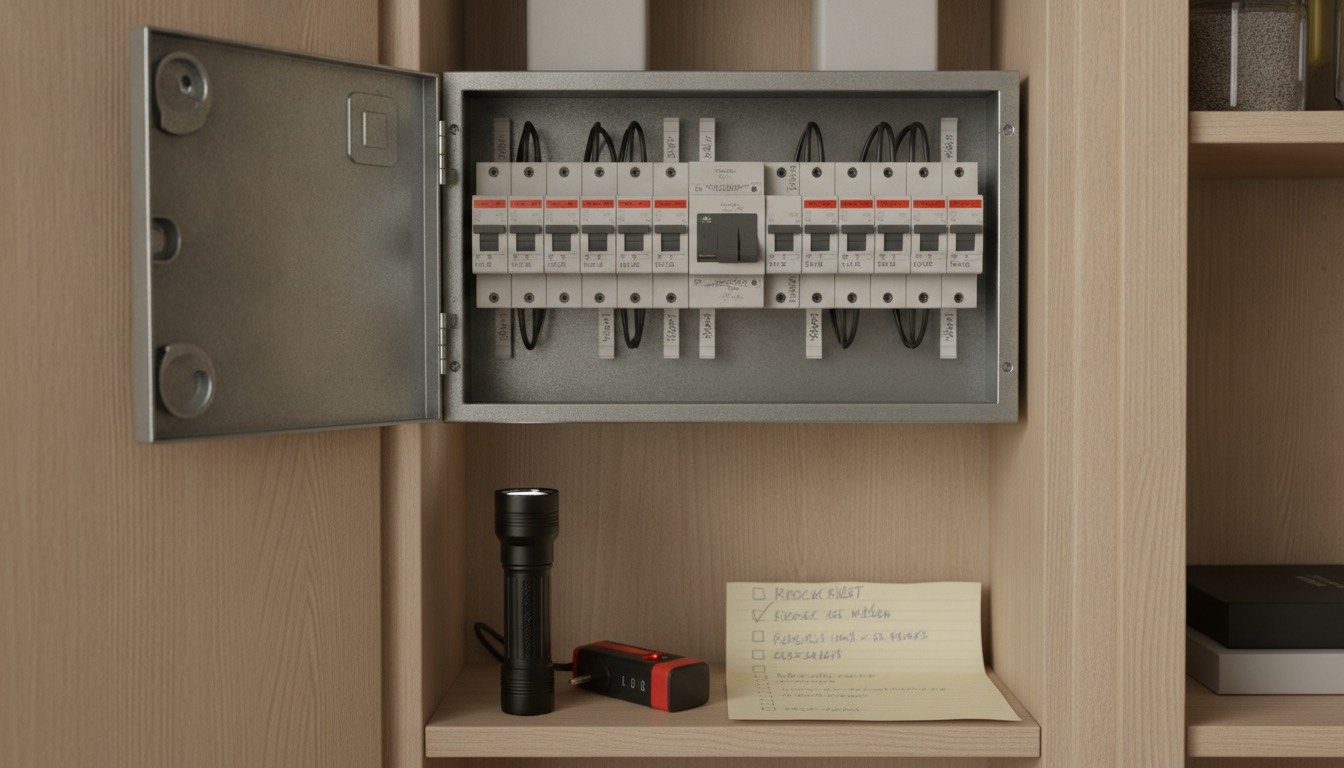
- •Replace the consumer unit with an RCBO per circuit: £450-£800 fitted. Our guide to when a fuse board is past it sets out the tipping points.
- •Partial or full rewire: £3,500-£7,500 for a three-bed, and the honest answer if the insulation is rubber.
Where DIY has to stop
Stop and isolate the circuit if you find scorch marks, melted plastic, a burning smell, an MCB that trips the moment you reset it, or fuse wire replaced with a nail or foil. If the meter tails, service head or supplier's cutout feel warm or fizz, that equipment is not yours to touch: ring 105 and report it to your network operator.
In England and Wales, adding a circuit, replacing a consumer unit or working in a room containing a bath or shower is notifiable under Part P of the Building Regulations — certified by an electrician registered with NICEIC, NAPIT or similar, or notified to building control first. Wales still counts kitchens and outdoor work where England no longer does, and Scotland and Northern Ireland run their own equivalents.
Expect £45-£90 an hour outside London and £70-£120 inside it, usually with a minimum charge — our breakdown of electrician costs covers call-out structures. Cheap against the alternative, and overloaded old circuits sit squarely inside the list of work nobody should attempt themselves.
Found this useful?
There's plenty more — hundreds of guides and honestly-tested product reviews for every corner of your home.
Browse All Guides