Garden & Outdoor · 5 min read · 11 June 2026
Above Ground vs In Ground Pool: Costs, Upkeep and What Old Houses Change
Two pools, two entirely different commitments. Here is what each really costs over ten British summers, and why a Victorian house can add £12,000 before a single tile is laid.
By the Nims Casa editorial team — written from professional cleaning experience and checked against our editorial standards.
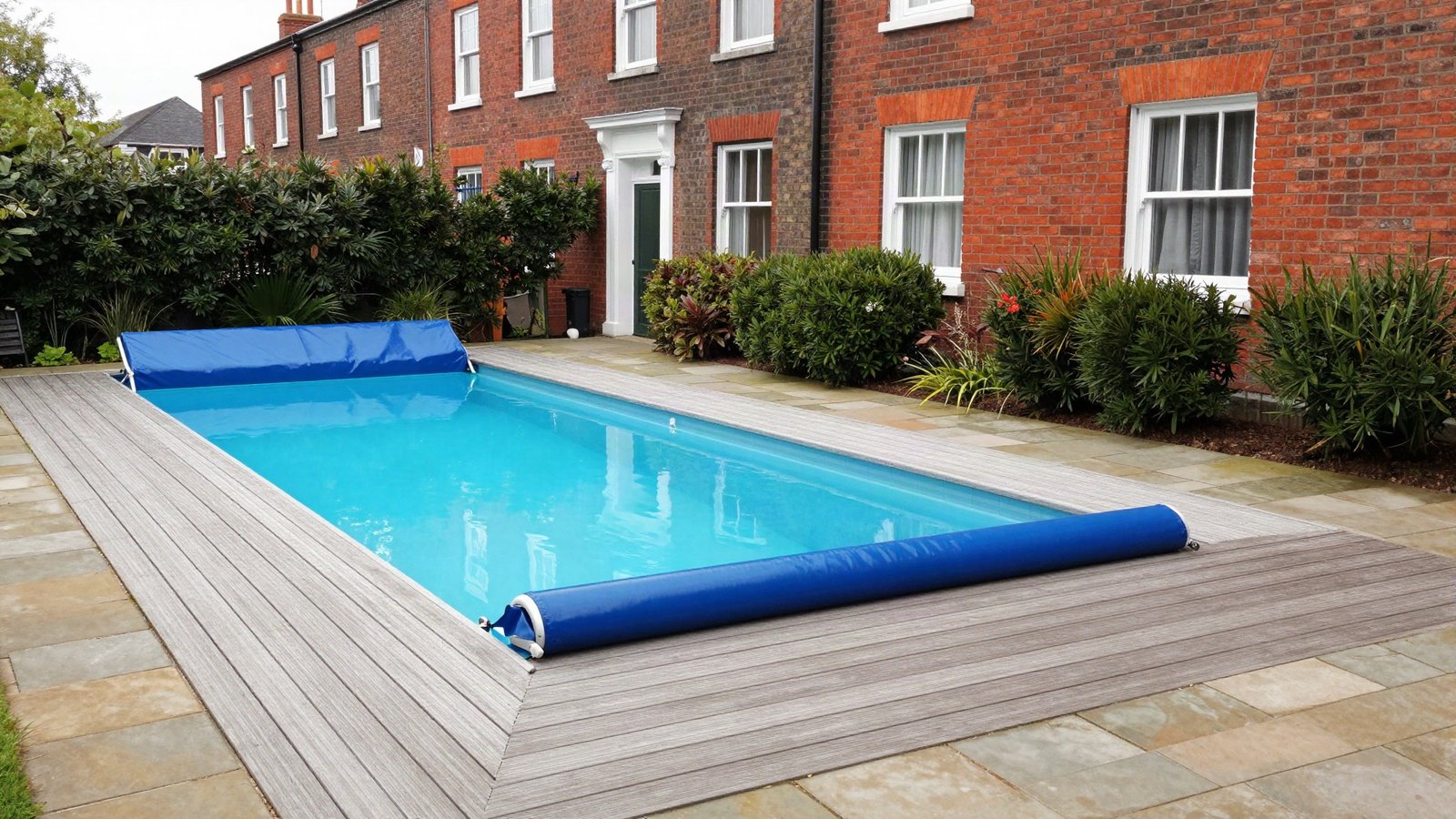
Two families ask us the same question every April and get opposite answers. One has a 1990s detached house with a flat lawn and a driveway a lorry can reverse onto. The other has an 1890s terrace with a walled garden, a side return you can barely get a barrow down, and London clay under all of it. Which format makes sense is decided far more by the ground and the house than by anything in a brochure.
Here is what each costs to buy, heat and live with through a British year — plus the complications a period property adds, because digging 1.5 metres down three metres from Victorian brick footings is a different job from digging in a 2005 garden, and nobody prices that until the excavator is on site.
The side-by-side comparison
Strip out the marketing and the two differ on six things that matter.
- •Install (2026 UK): steel- or resin-framed above-ground pool £350–£2,500 on a prepared base; timber-clad semi-permanent £6,000–£15,000; in-ground vinyl liner at 8m x 4m £38,000–£58,000; one-piece GRP shell £35,000–£52,000 craned in; sprayed concrete £60,000–£110,000.
- •Lead time: a frame pool is swimmable in a weekend. In ground runs 8–14 weeks from first dig, longer where the water table is high.
- •Depth: above ground is 0.9–1.35m — fine for cooling off, useless for a proper turn. In ground runs 1.1m to 2.0m and can be stepped.
- •Lifespan: frame pools 3–8 seasons here; timber above-ground 10–15 years; an in-ground shell 30–50 years, with a liner change every 8–12 years at £3,500–£6,000.
- •Ground works: above ground needs a level base of 100mm consolidated MOT Type 1 under sand. In ground means excavating 45–60 cubic metres and getting it off site.
- •Reversibility and resale: an above-ground pool is gone in a day; filling in a dug pool later costs £4,000–£9,000. In most of the UK a pool is value-neutral at best, so build it because you will swim in it.
Installation: what changes when the house is 120 years old
This is where period property quietly rewrites the budget. Victorian and Edwardian houses commonly sit on stepped brick footings only 450–600mm deep, often with no concrete beneath. Excavating below those footings within three metres of a neighbour's wall triggers a Section 6 notice under the Party Wall etc. Act 1996: a surveyor at £1,200–£2,000, an engineer's design for the dig sequence at £800–£1,500, and sometimes a shallower pool than you wanted. Shrinkable clay plus a mature lime or plane nearby is also the classic recipe for seasonal movement in old terraces, and many of the common problems in 100 year old houses begin with somebody altering how water behaves near the footings.
Drainage is the second trap. Victorian gardens are typically served by shallow salt-glazed clay pipes with mortar joints, often combined foul-and-surface. A sand filter backwash dumps 200–400 litres a minute, which will surcharge a tired clay run and push it out at the joints. Backwash must go to foul drainage with your water company's consent — never a soakaway or rainwater gully — and old ceramic runs often need lining first at £600–£1,500.
Electrics are the third. Pool plant needs a dedicated supply: typically 32A on SWA buried at 600mm with warning tape, on a 30mA RCD, with supplementary bonding of every extraneous conductive part inside the BS 7671 Section 702 zones. A pre-1970s rewireable fuse box offers none of that and no spare ways, so budget £1,800–£3,500 for a consumer unit and submain.
Then access. With no rear vehicle access, 90-odd tonnes of spoil leaves by conveyor, grab lorry or barrow, routinely adding £3,000–£8,000. A rear-garden pool is usually permitted development, but listed status, conservation areas and any enclosure change that entirely — see our guide to planning permission and building regulations.
Performance through a British summer
The physics favours the in-ground pool. Buried water sits against soil at 9–12°C year-round and is sheltered from wind; an above-ground pool has thin walls exposed on all sides, so it heats fast on a good day and dumps that heat overnight. On an exposed coastal plot a frame pool can shed 3–4°C in one still, clear night without a cover.
Covers are the biggest lever either way. Evaporation is roughly 70% of heat loss from an uncovered outdoor pool, so a cover is the difference between a £400 season and a £1,200 one — choose properly with our pool cover buying guide. Realistically, an above-ground pool on a 5–8kW heat pump holds 27–28°C from late May to mid-September; in ground, a correctly sized inverter unit manages early May into October.
The ten-year cost of ownership
Assume electricity at 26p/kWh, an inverter heat pump at a seasonal COP near 4.5, a cover used properly, and water at £2.20 per cubic metre plus sewerage. The install figure is broken down further in our pool cost guide.
- •Above ground, 5.5m x 3.7m frame pool: £1,400 pool, £900 heat pump, £700 base, £250 cover and roller — about £3,250 to start. Running costs £250 electricity, £90 chemicals, £60 filter media, £40 water top-up: around £440 a year, plus one replacement in year six at £1,600. Ten-year total: roughly £9,250.
- •In ground, 8m x 4m liner pool, straightforward site: £45,000 installed. Running £750 electricity, £220 chemicals, £200 service, £60 water, £40 insurance uplift — about £1,270 a year. Liner change year nine £4,800, heat pump £2,600. Ten-year total: roughly £65,100.
- •In ground, same pool behind an 1890s terrace: add surveyor and engineer £2,800, access and muck-away premium £5,500, drain lining £1,400, consumer unit and submain £2,600. Ten-year total: roughly £77,400 — a 19% premium purely for the age and access of the house.
Maintenance: the weekly reality
Both need the same three things: filtration hours, balanced water and a winter plan. Filtration is what people under-buy — you want the full volume turned over twice a day in summer, meaning 8–10 hours of pump time, not the four the pool shop suggested.
Chemistry is where they diverge. Small above-ground volumes swing fast: a warm bank holiday with six people in 12,000 litres can flatten the free chlorine overnight. Pools above 45,000 litres are more forgiving but punish neglect expensively, because a liner stained by low pH is a liner replaced early. Test twice weekly in season, hold pH at 7.2–7.6 and alkalinity at 80–120ppm, and pick your sanitation route with our saltwater vs chlorine comparison. Budget 20–30 minutes a week above ground, 45–60 in ground, less with a robot.
Who each one suits
Based on the jobs that go well and the ones that end in regret.
- •Above ground suits: renters and anyone who may move within five years; sloping gardens where excavation is disproportionate; families wanting somewhere to cool off rather than swim lengths; period houses where party wall, drainage and access costs make a dug pool absurd.
- •In ground suits: households who will genuinely swim three or four times a week for a decade; level gardens with vehicle access; anyone wanting real depth, an automatic cover or year-round use under an enclosure.
- •Neither suits: a high water table, a garden that already floods, or a household that will not commit to weekly testing. An unmaintained pool of either kind is green by the second summer.
The verdict
For most UK households, and almost every pre-1920s house with restricted access, above ground is the right answer. It costs about a seventh as much over ten years, it does not involve negotiating with your neighbour's foundations, and if you use it less than you imagined you have lost £3,000 rather than £70,000. Spend the difference on a good cover and an inverter heat pump, not a bigger shell.
The in-ground pool earns its money in one situation: a level, accessible garden and a household that will swim properly, for years. If that is you, commission a ground investigation and drainage survey before accepting any quote, add 15% contingency on anything built before 1930, and read how to maintain a swimming pool before the water goes in rather than after.
Found this useful?
There's plenty more — hundreds of guides and honestly-tested product reviews for every corner of your home.
Browse All Guides