Kitchens & Bathrooms · 5 min read · 18 April 2026
Acrylic vs Tile Shower: UK Costs, Pros, Cons and the DIY Limit
One choice decides whether you are scrubbing grout lines in 2036 or wiping a panel down in ninety seconds. Here is what each really costs to fit, live with and repair in a UK bathroom.
By the Nims Casa editorial team — written from professional cleaning experience and checked against our editorial standards.
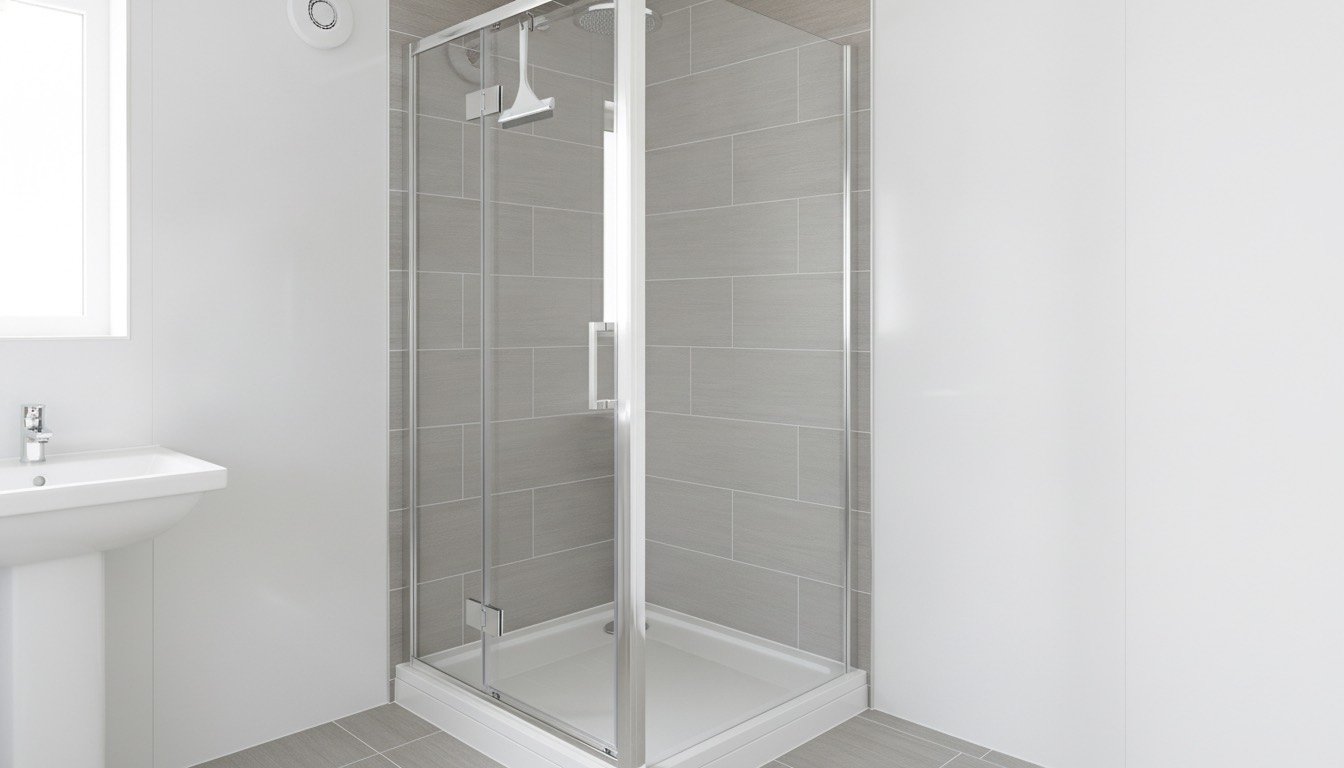
A tray, three walls and a screen. It looks like a styling decision and it is really a maintenance decision, because these two systems do not fail in the same way. Panelled showers fail visually — they dull, they scratch, they date. Tiled showers fail structurally, at the tray junction, about eighteen months after someone skipped the tanking to save £90.
Acrylic here means a moulded acrylic or stone resin tray with bonded wall panels — 2400mm x 1000mm sheets fixed with the maker's adhesive and trims. Tile means a boarded, tanked substrate with ceramic or porcelain bedded onto it. What separates them is how much bad workmanship each will tolerate.
Acrylic vs tile shower: the side-by-side
A 900mm x 900mm enclosure, roughly 8-10 m² of wall, fitted by a tradesperson in an average UK town in 2026:
- •Fitted cost: acrylic £900-£1,800; tile £1,600-£3,500 (a level-access wet room, £3,500-£7,000)
- •Time on site: acrylic 1-2 days; tile 3-5 days allowing for adhesive cure, grouting and silicone
- •Leak paths: acrylic has 4-8 silicone and trim joints; tile has 40+ linear metres of grout plus the same silicone
- •Substrate: acrylic sits on sound, flat, moisture-resistant plasterboard; tile wants 6-12mm backer board or a tanking membrane
- •Repairability: acrylic means replacing a whole panel; tile means chiselling out individual tiles
- •Perceived value: in a £400,000-plus house tile reads as investment, gloss panel reads as rental fit-out
Performance: how each holds up in a British bathroom
Modern panels are nothing like the flimsy PVC of the 1990s — a moisture-resistant core with a bonded acrylic or high-pressure laminate face, and they shrug off UK hard water better than cement grout ever will. The weakness is abrasion: one pass with a cream cleaner or green scourer leaves marks you cannot polish out of a matt finish. In Kent or Cambridgeshire water, a gloss panel that never gets squeegeed looks tired by year eight — not damaged, just permanently hazy.
Tile wins on hardness and loses on joints. Porcelain absorbs under 0.5% water by weight against 3-10% for standard ceramic, which is why it belongs in a shower and cheap ceramic does not — see our guide to porcelain and ceramic tile. The tile is rarely the problem. Cement grout is porous and darkens, and that black line along the bottom 300mm is almost always failed silicone rather than dirty grout, which is why scrubbing achieves nothing. Epoxy grout costs three to four times more and still looks the same in 2036.
Installation: exactly where DIY stops
Panels are genuinely DIY-friendly. A tiled shower is a waterproofing job with tiles on top, and the tiling is the easy half. Here is the boundary as a fitter would draw it in the UK.
- •FAIR GAME: stripping out an old enclosure, screen and panels. If the ceiling has a textured coating and the house predates 2000, do not sand or scrape it — have it tested first.
- •FAIR GAME: bonding acrylic panels to a sound, moisture-resistant substrate with the maker's own adhesive and trims. Check the wall with a 2m straightedge; over 3mm out needs packing or skimming first.
- •FAIR GAME: wall tiling above a tray already fitted, level and water-tested, on proper backer board — slow, but within a careful amateur. See our tile installation mistakes guide.
- •FAIR GAME: renewing silicone every three to four years, which avoids most of what people mistake for leaks. Method in replacing silicone sealant around a bath.
- •CALL A PROFESSIONAL: anything electrical — an electric shower, a spur, a shaver socket, an isolator, a fan off the lighting circuit. Bathrooms are special locations under BS 7671, and in England and Wales this is notifiable under Part P, needing a registered electrician or building control sign-off.
- •CALL A PROFESSIONAL: moving the waste, altering the trap or setting the tray. A tray more than about 2mm out of level will pond, and re-siting a waste in a timber floor can mean notching joists — structural work, not carpentry.
- •CALL A PROFESSIONAL: tanking a wet room floor or fitting a level-access former. One failed membrane over a ground-floor ceiling costs £900-£3,000 to put right, and no insurer treats it as an accident.
- •CALL A PROFESSIONAL: anything touching the boiler, unvented cylinder or gas supply. Gas Safe for gas, G3 for unvented. No exceptions.
What it costs to fit, and the 10-year total
An acrylic build: stone resin tray £130-£300, three panels £220-£550, screen £150-£450, £60 in trims and adhesive, then one to two days of fitting at £300-£550. A tiled build: tray or former £150-£450, backer board £180-£300, tanking kit £60-£120, 8-10 m² of porcelain £200-£600, adhesive and grout £90-£160, plus three to five days of labour at £700-£1,400. Tilers outside London charge £180-£280 a day or £45-£90 per m²; add 30-40% inside the M25. Sanity-check quotes against our shower installation cost breakdown.
Over ten years, acrylic fitted at £1,350 needs two silicone refreshes at £15 in materials if you do them yourself and nothing else compulsory — £1,380 all in, with panels that look dull but work perfectly. Tile fitted at £2,600 takes silicone at year four (£20), grout sealer twice (£25 each) and a professional regrout of the lower third at year eight (£250) — roughly £2,920. Tile is not vastly dearer to own. It is dearer to buy, and it punishes a bad installation with a bill that dwarfs both figures.
Maintenance: what each one actually demands
Both live or die on ventilation. An intermittent bathroom extractor should shift 15 litres per second and run on for 15 minutes after use. If yours does not, you will get mould whichever surface you chose.
- •Acrylic, weekly: squeegee after each use, then mild washing-up liquid. For limescale, white vinegar diluted 1:4, five minutes, no hotter than hand-warm.
- •Acrylic, never: cream cleaners, scouring pads, standing bleach or acetone. Fine scratches in gloss lift with 2000-grit wet paper and plastic polish; matt cannot be rescued.
- •Tile, yearly: reseal cement grout in year one, then every two to three years. Epoxy needs none of this.
- •Tile, every three to four years: renew silicone at the tray junction and internal corners. Technique for the grout itself is in how to clean grout.
- •Both, monthly: pull the shower trap and clear the hair. Standing water turns a minor seal failure into a ceiling stain.
Who each one suits
Choose acrylic panels if you are refreshing a bathroom you will not keep forever, if the room is a small internal box, if you would rather not disturb the substrate behind, or if the household will not tolerate a fortnight of upheaval. It is also the sensible call for a loft or garage-conversion en suite on a stretched budget.
Choose tile if the bathroom is a keeper, if you want a level-access or wet room layout, or if you are already deep in a strip-out and the £900 difference is noise. Work through how to plan a bathroom remodel before committing — the tray position, not the finish, locks in your costs.
The verdict
For most UK households replacing a tired shower in an existing bathroom, acrylic panels are the better-value answer: half the disruption, a fraction of the leak risk, and a job a competent DIYer can genuinely part-own. For a bathroom you intend to keep fifteen years or more, particularly a level-access one, tile earns the extra — provided the waterproofing is done by someone who does it every week.
What should not swing it is how they look in a showroom. Both look excellent on day one. What matters is whether the money you save on the surface is quietly being spent on a leak you cannot see yet.
Found this useful?
There's plenty more — hundreds of guides and honestly-tested product reviews for every corner of your home.
Browse All Guides