Energy & Insulation · 6 min read · 2 July 2026
Blown-In vs Batt Insulation: Differences, Pros, Cons and UK Costs
Two ways to fill the same space, two very different jobs. Here is how loose-fill and mineral wool quilt really compare in British lofts and cavities, with installed prices.
By the Nims Casa editorial team — written from professional cleaning experience and checked against our editorial standards.
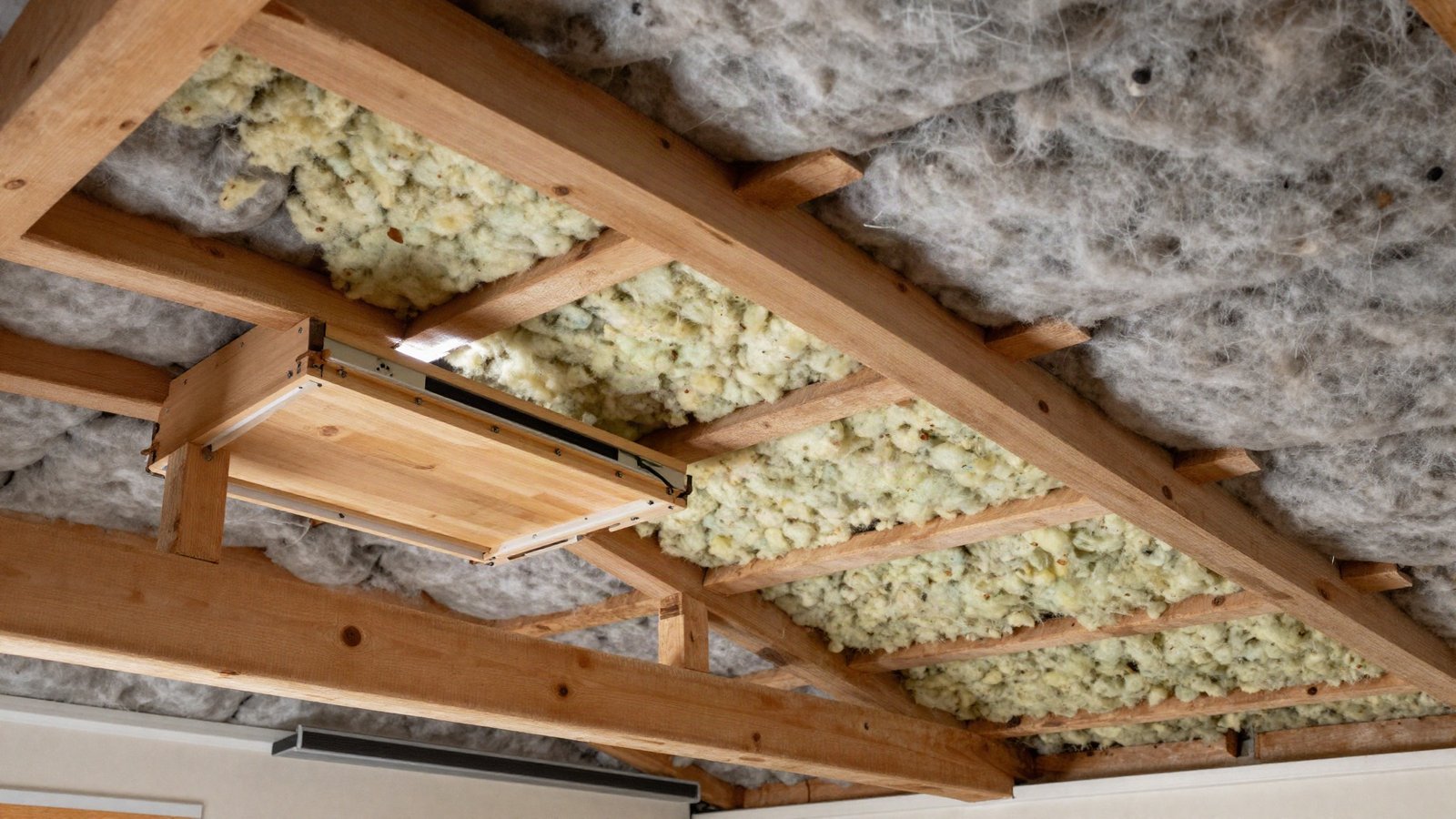
A loft topped up with mineral wool rolls and a loft blown full of loose fibre can show the same U-value on paper and behave completely differently in January. The difference is rarely the material: it is how completely the stuff fills the awkward corners, whether anyone left the eaves clear, and whether the depth survives the boxes of Christmas decorations.
The choice is narrower than it looks. Rolls dominate British lofts because the joists are exposed and a homeowner can lay them on a Saturday; blown material dominates cavity walls because there is no other way in. The two genuinely compete only where the geometry gets difficult.
What each material actually is
"Batt" is American shorthand that has drifted into UK usage. What a merchant sells you here is mineral wool quilt — glass or rock wool in 100mm to 200mm rolls, or semi-rigid slabs cut to friction-fit between studs at 400mm or 600mm centres. Thermal conductivity (lambda) sits around 0.040 to 0.044 W/mK, and lower lambda means more resistance per millimetre.
Blown insulation is any loose material fired through a hose. Three types matter here.
- •Blown cellulose — recycled newsprint treated with borate for fire and pest resistance, roughly 0.038-0.040 W/mK. Used in lofts and timber frames.
- •Blown mineral fibre — chopped glass or rock wool at 0.040-0.044 W/mK. The traditional UK cavity fill.
- •EPS bead — polystyrene bonded with adhesive as it enters the cavity, around 0.033 W/mK. Better per millimetre, and the usual choice on exposed, wet-side walls.
Blown-in vs batt insulation side by side
As products they are close. As installed systems in a real roof they diverge fast.
- •Access: rolls need a clear, walkable joist layout; blown fill needs only a hose and a hatch, and reaches behind purlins and tanks.
- •Gap tolerance: blown material flows around cables and odd joist spacing; rolls void at every obstruction unless cut accurately.
- •DIY viability: rolls are entirely DIY. Blown work needs a machine, a mate, and for cavities a registered installer.
- •Reversibility: rolls lift out in minutes for a rewire; loose fill must be vacuumed out at £15-£25 per m².
- •Cavity walls: blown only — nothing else fits down a 50mm cavity through 22mm holes.
- •Studs and sloping ceilings: quilt or semi-rigid slab wins on cost and simplicity.
- •Fire and pests: mineral wool is non-combustible and rodent-proof; mice burrow into loose fill.
Performance: 270mm, and why coverage beats lambda
The target in a UK loft is 270mm of mineral wool, which puts a typical ceiling near the 0.16 W/m²K Approved Document L expects when you renovate a thermal element in an existing home — roughly 100mm between the joists, 170mm across them at right angles. Blown fibre needs the same settled depth; cellulose slightly less; bead less again.
Continuity matters far more than the lambda on the packaging. Leave a 5% gap — around the hatch, at the eaves, where a roll was shoved past a cable — and you lose considerably more than 5% of the benefit, because heat crowds through the thin spots. That is where blown fill quietly wins in a messy roof. If upstairs rooms stay cold despite a full-looking loft, the fault is usually coverage, not thickness; the signs of under-insulation show up long before the meter reacts.
Neither is an air barrier. Do the air sealing first — hatch, pipe penetrations, tops of stud walls — because warm damp air convecting past insulation defeats any depth you buy.
UK costs and the ten-year picture
Figures below are 2026 prices for a three-bed semi with about 50m² of loft and 90m² of cavity wall; labour varies about 20% north to south.
- •Mineral wool rolls, DIY: £6-£9 per m² of materials for a full 270mm build-up — about £350-£450, plus a weekend and a sore back.
- •Mineral wool rolls, installed: £14-£22 per m², so £700-£1,100 including clearing and reinstating stored items.
- •Blown loose fill in a loft: £20-£30 per m² installed, £1,000-£1,500. The premium buys access you cannot crawl into.
- •Blown cavity wall fill: £18-£28 per m² of wall, typically £1,300-£2,200 for a semi, drilled and made good.
- •Ten years of savings: bare ceiling to 270mm saves £230-£300 a year in a gas-heated semi — £2,300-£3,000 a decade against a £400 DIY spend.
- •The catch: 100mm topped to 270mm saves only £30-£45 a year, a ten to fifteen year payback on a paid job. Do that one yourself.
Building Regs, guarantees and the electrics
Laying quilt between and over loft joists is not notifiable. Insulating at rafter level during a conversion or re-roof is: that renovates a thermal element, so building control expects the current U-value target plus the fire and ventilation provisions of a habitable roof space.
Cavity fill is a different world. Use a TrustMark-registered installer working to PAS 2030, insist on the CIGA 25-year guarantee, and check the survey records your BRE wind-driven rain exposure zone. In zones 3 and 4 — much of Wales, the South West, the west coast — full-fill fibre in a marginal wall is how you get damp patches on the windward gable.
Part P matters more than people expect. Recessed downlights must not be buried unless rated for it; use fire-rated fittings with proprietary loft caps. Cables buried in insulation must be derated — a 2.5mm² twin and earth fully surrounded drops to roughly 13A of usable capacity, nowhere near a 32A ring final. Re-routing or upsizing that circuit is notifiable work in England and Wales. Landlords also note: MEES bars letting below EPC band E, and insulation is usually the cheapest way to lift a band.
How each one fails
Both last 40 years or more if kept dry, so failures are installation faults, not wear. Rolls fail by compression: board over 270mm of quilt with chipboard on the joists and you have squashed it to 100mm across every boarded run. Raised loft legs at £4-£6 each fix that.
Blown fill fails by settlement and migration. Cellulose blown below its specified settled density can drop 10-20% in two years, so ask for density on the certificate, not just depth. It drifts from the eaves without baffles and pours out of an unedged hatch.
Either way, keep a continuous 25mm ventilation gap at the eaves and fit trays before insulating. A sealed, unventilated cold roof drips condensation onto the ceiling in February, which then gets blamed on the insulation — see our notes on damp and mould and the loft insulation walkthrough.
The verdict: who should choose what
Visible joists, reasonable headroom, few obstructions: buy rolls. It is the cheapest thermal improvement available to a British household, genuinely DIY, and it keeps the ceiling void accessible. Choose blown insulation when the geometry beats you — part-boarded lofts, deep purlins, dormer cheeks, timber frames — and without question for cavity walls, with an exposure survey and a CIGA-backed guarantee.
At rafter level, do not let anyone sell you spray foam under the tiles before you read up: several major lenders still treat it as a valuation problem, as our spray foam comparison explains. Price the job with the insulation cost guide before accepting a quote.
Found this useful?
There's plenty more — hundreds of guides and honestly-tested product reviews for every corner of your home.
Browse All Guides