Energy & Insulation · 6 min read · 5 July 2026
Spray Foam vs Fibreglass Insulation: Differences, Pros, Cons and UK Costs
One of these is a £400 Saturday job you can undo with a bin bag. The other is a five-figure commitment your surveyor may refuse to sign off. That difference matters more than the lambda value.
By the Nims Casa editorial team — written from professional cleaning experience and checked against our editorial standards.
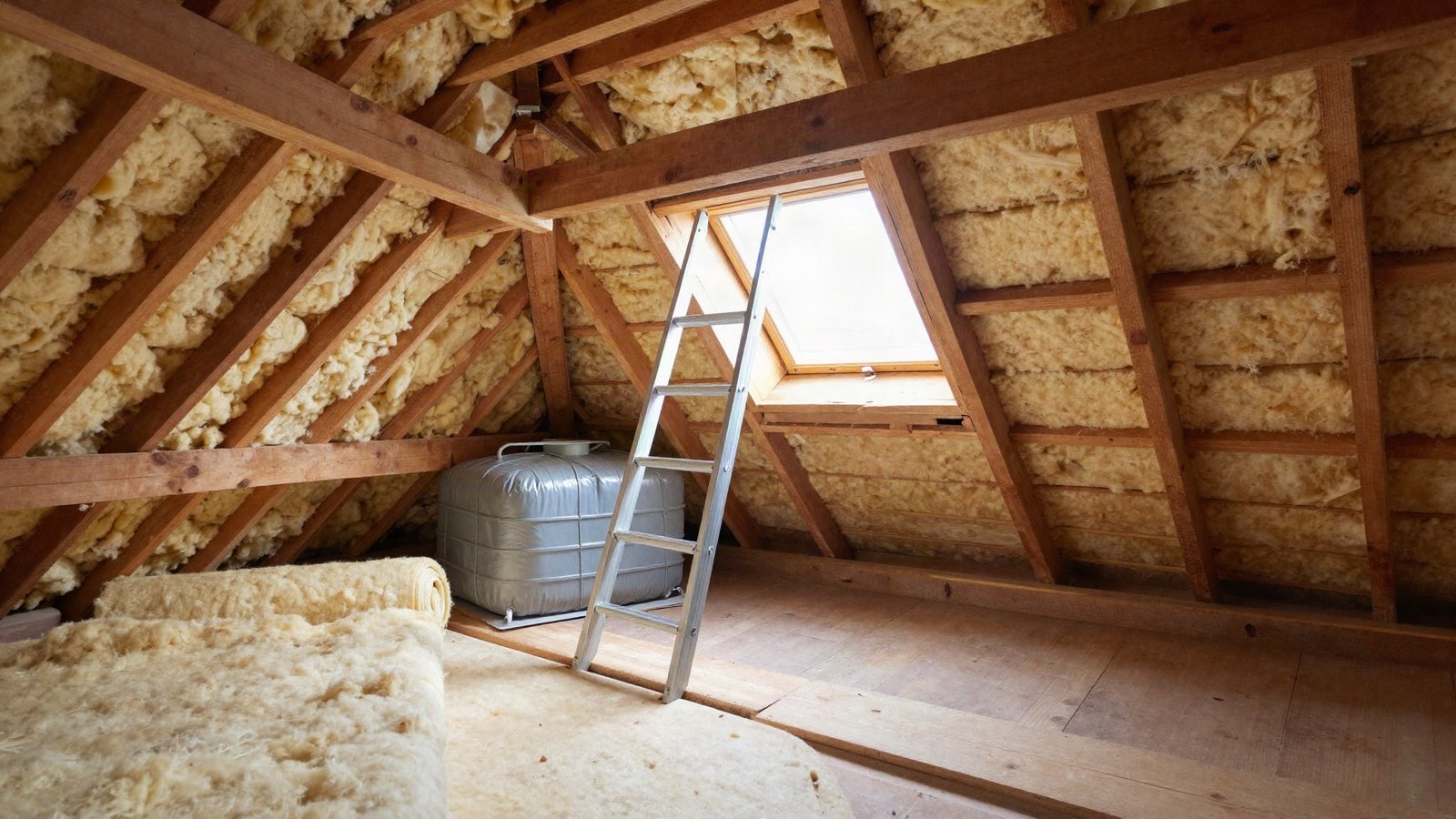
Walk into a hundred British lofts and ninety-odd will have mineral wool slumped between the joists, laid in the mid-1980s and never touched since. A handful will have a beige skin sprayed onto the underside of the tiles, and a fair share of those owners only find out what that means when they try to remortgage.
Both materials keep heat in a house. What separates them here is reversibility, ventilation and who will sign the work off. Below: how they compare on a typical cold pitched roof, what each costs over ten years, and where competent DIY ends and a certified installer takes over.
Side by side: the numbers that genuinely differ
Ignore the marketing and compare what actually changes a decision. Figures are for glass mineral wool (what most people call fibreglass) against polyurethane spray foam, at 2026 UK prices.
- •Thermal conductivity (lambda): closed-cell foam 0.022-0.028 W/mK, open-cell foam 0.035-0.040, glass mineral wool 0.040-0.044.
- •Installed cost: mineral wool £5-£12 per m2 fitted; open-cell foam £20-£30; closed-cell foam £30-£50.
- •Air-tightness: foam seals gaps as it cures. Wool does nothing for air leakage; you seal separately at ceiling level.
- •Fire: mineral wool is Euroclass A1, non-combustible. Polyurethane foam is combustible and needs a protective lining in habitable space.
- •Reversibility and inspection: rolls lift out in an afternoon and you can check every rafter beneath. Foam permanently hides the timber it bonds to, and removal on a three-bed semi runs £2,000-£6,000.
- •Lenders: nobody asks about mineral wool. Rafter-level foam frequently triggers a valuation retention until you produce an independent inspection report to the RICS/PCA protocol.
Performance: in a loft, depth beats lambda
British practice is measured in U-values (W/m2K), not the imperial R-values you see on American sites. Approved Document L expects an existing loft to reach roughly 0.16 W/m2K: 100mm between the joists plus 170-200mm cross-laid to kill the timber cold bridges. Closed-cell foam hits the same figure in about 100mm.
That thinness is only worth paying for where space is scarce. In an open loft you have a metre of headroom doing nothing, so the low lambda buys you nothing at all. It earns its money in a room-in-roof where rafters are 100mm deep.
The other half of the story is air movement. In most underperforming lofts, more heat escapes through the hatch, downlight cut-outs and pipe penetrations than through the wool. Foam sells hard on sealing that, but £60 of mastic and tape and a home air sealing checklist gets you most of the way. If you are unsure you need anything at all, the signs your home needs more insulation are obvious from indoors in January.
What each really costs over ten years
Take a three-bed semi with 55m2 of loft floor. Topping up from a tired 100mm to a full 300mm needs about 55m2 of 200mm roll: £250-£400 in materials fitting it yourself, or £450-£900 installed. Spraying the same roof at rafter level lands between £1,800 and £4,500.
The saving is near identical, because both reach a similar U-value. Bare ceiling to 300mm saves roughly £250-£350 a year on gas at 2026 rates; an existing 100mm to 300mm saves only £40-£70, which is the part nobody selling insulation volunteers. Over a decade the wool route costs around £600 against £2,500-£3,000 saved. Foam buys the same savings for four to seven times the outlay, plus a removal liability if you sell.
Sanity-check quotes against our insulation cost breakdown, and reject any foam quote arriving without a written pre-installation roof survey, a BBA or KIWA certificate number and the guarantee.
Installation, and exactly where DIY stops
Mineral wool is one of the few genuinely worthwhile DIY energy jobs. Spray foam is not, in any form, including the two-part kits sold online. Here is the line, drawn honestly.
- •DIY, comfortably: rolling 100mm between the joists and 170-200mm cross-laid over them, working backwards from the gable towards the hatch.
- •DIY: keeping a 50mm ventilation gap clear at the eaves, or fitting plastic eaves trays to hold it.
- •DIY: draught-sealing and insulating the hatch, and lagging pipes and the sides and top of the cold water tank, never underneath it.
- •DIY: fitting fire-rated caps over existing downlights, sealing penetrations with mastic, and boarding a walkway on raised loft legs rather than crushing the wool you just paid for.
- •Professional only: every kind of spray foam. Two-part isocyanate chemistry, curing exothermically, sensitive to mixing ratio and substrate temperature, requiring air-fed breathing apparatus. Get it wrong and the fix is removal, not adjustment.
- •Professional only: rafter-level or warm-roof build-ups, where vapour control layer, breathable membrane and ventilated void must be designed together and notified under Building Regulations.
- •Professional only: any loft where mains cables end up buried in insulation. BS 7671 requires those circuits derated or rerouted — an electrician's call.
- •Stop immediately: suspected asbestos, meaning grey-brown vermiculite loose fill, insulating board around old tanks, or textured coating on the ceiling below. Get it tested.
- •Stop immediately: damp staining, soft rafters, crumbling nail heads or daylight through the tiles. Fix the roof before insulating over it.
Maintenance, ventilation and what goes wrong later
Mineral wool needs no maintenance. Check every couple of years for compression, rodent runs and water staining, and have it relaid after roof work. Wet wool is worthless wool, but it recovers once the leak is fixed.
Foam is where the long-term risk sits, and it is a specifically British problem. Most UK roofs built before roughly 2000 have bitumen felt underlay, which is vapour-closed. Bond foam to the underside of that and warm, moist household air has nowhere to go: it condenses in the batten zone and quietly rots timber you can no longer see. Cold roofs are designed to breathe, which is why ventilating a loft properly matters more than the insulation choice, and why trapped moisture so often shows up as damp and mould on upstairs ceilings a year later.
Who each one suits
- •Standard cold loft with accessible joists: mineral wool, every time. Cheap, non-combustible, reversible, invisible to a valuer.
- •Room-in-roof or dormer with shallow rafters: foam becomes legitimate, but only as a properly detailed warm roof by a certified installer with a breathable membrane.
- •Sealed plant spaces and awkward geometry where wool cannot be fitted: foam earns its keep.
- •Selling or remortgaging within ten years: avoid rafter-level foam entirely, whatever you are told about lender acceptance.
- •Irregular joist spacings: weigh the blown-in versus batt comparison before jumping to foam.
The verdict, and what to do next
Fibreglass wins on cost, fire performance, inspectability and resale, and matches foam on U-value the moment you accept more thickness. Foam wins only where depth is constrained and a specialist has designed the roof build-up around it. Treating it as a straight upgrade in an ordinary loft is a five-figure way of buying the same warmth plus a liability.
The next step is unglamorous: get up there with a tape, record the existing depth in three places, then air-seal the hatch and penetrations before adding wool to 300mm. Our step-by-step on insulating a loft covers the sequence, and the wider energy and insulation guides cover the walls, draughts and glazing that usually deserve the money first.
Found this useful?
There's plenty more — hundreds of guides and honestly-tested product reviews for every corner of your home.
Browse All Guides