Energy & Insulation · 6 min read · 4 July 2026
Signs Your Home Needs More Insulation (and What Fixing It Actually Costs)
Cold walls, a heating system that never switches off and black mould in the corners are all the same conversation. Here is how to diagnose it in twenty minutes, and what the fix genuinely costs in the UK.
By the Nims Casa editorial team — written from professional cleaning experience and checked against our editorial standards.
Most people discover their insulation is inadequate in January, when the heating has run since six and the living room still reads 18°C. By then the diagnosis is emotional rather than technical. The better time to look is now, with a tape measure and a torch, while nobody is cold and nobody is being sold anything.
A house does not lose heat evenly. It loses it through specific, findable weak points, and each produces its own symptom. Work backwards from the symptom and you usually land on the cause within half an hour.
The 20-Minute Diagnosis: Four Checks That Tell You Almost Everything
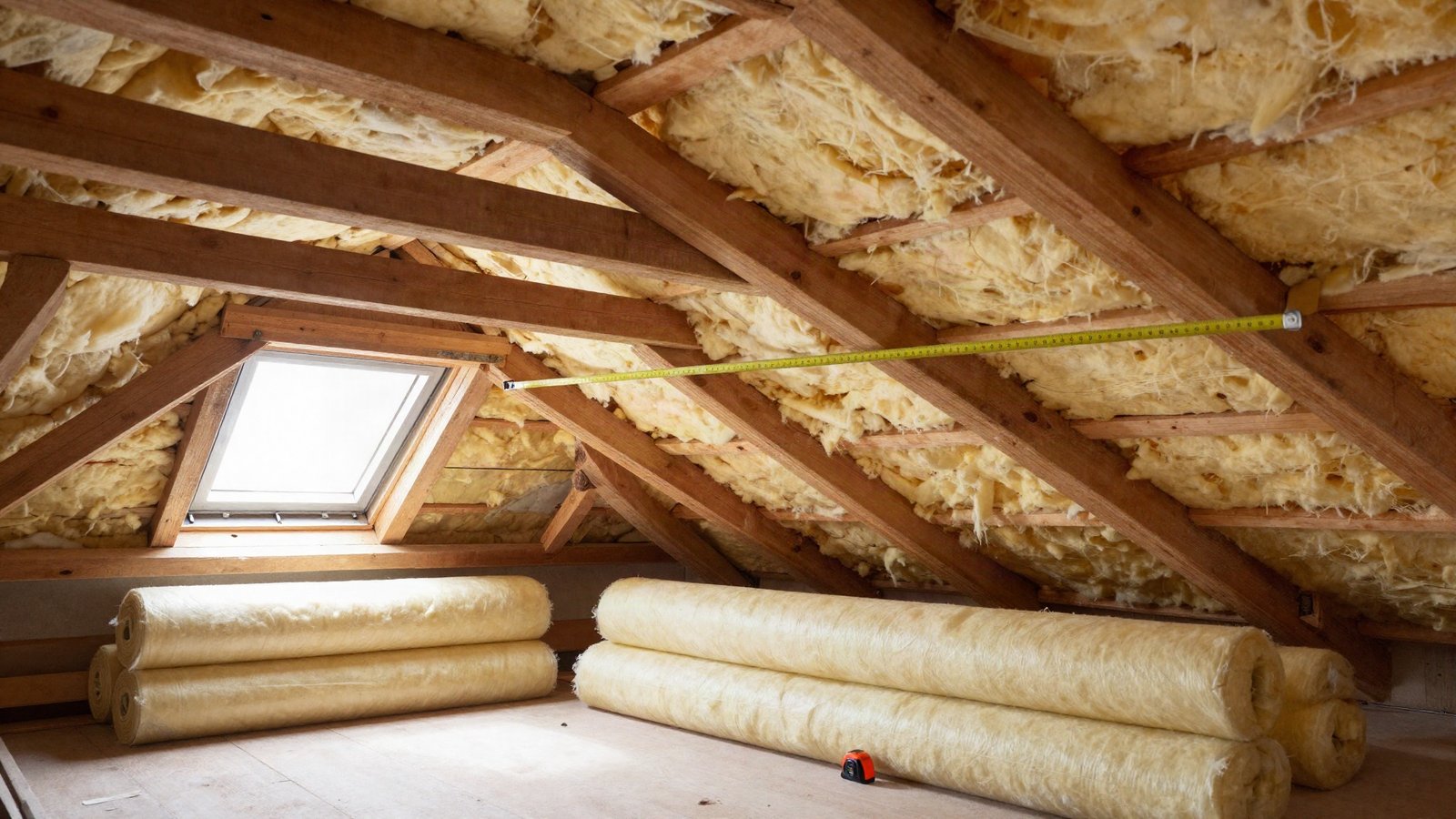
You need a tape measure, a torch and ideally a £15 infrared thermometer. Note that British guidance uses U-values (W/m²K, lower is better), not the R-values quoted in American articles: Part L expects a loft ceiling near 0.16 W/m²K, which means roughly 270mm of mineral wool.
- •Loft depth: measure in four separate places, not one. If you can see the top edges of the ceiling joists, you have 100mm or less — 1970s standard, and it costs you every winter.
- •Wall surface temperature: with the room at 20°C and outside at 3°C, an insulated cavity reads 17-18°C on the inner face, an empty cavity 14-15°C, solid Victorian brick 12-13°C. Below 14°C, surface humidity passes 80% and mould colonises.
- •Age and construction: post-1995, the cavity was almost certainly filled at build. 1920-1985, it is probably empty unless retrofitted. Pre-1920 usually means solid 9-inch brick with no cavity at all.
- •Retrofit evidence: look along the outside walls for 22mm mortar plugs in a rough one-metre grid, slightly off-colour against the original pointing. That is the signature of blown cavity fill.
Symptom to Cause: What the House Is Telling You
Symptoms map onto causes fairly reliably. Here is the translation we use on survey visits.
- •Upstairs colder than downstairs in winter and roasting in July — thin or missing loft insulation. Heat rises out through the ceiling in winter; solar gain pours back down in summer.
- •Frost clears from your roof by 8am while the neighbours' is still white — heat escaping through the loft is melting it.
- •Cold draught at ankle height near the ground-floor skirting — an uninsulated suspended timber floor with under-floor airbricks doing exactly what they were designed to do.
- •Black mould in one corner of a bedroom, usually north-facing and behind furniture — cold bridging, with that wall surface several degrees below the rest of the room. Our guide to damp and mould in UK homes explains why treating the mould alone never sticks.
- •One room never reaching the thermostat setting while the rest do — this may be balancing or radiator sizing rather than fabric. Work through why one room is colder than the rest first.
- •Loft pipes freezing in a cold snap — insulation laid over the pipes rather than under them, cutting them off from the warm house.
The Causes, Ranked by How Often We Actually Find Them
In a typical British three-bedroom semi, the order is remarkably consistent.
- •1. Loft insulation present but thin or compressed — 100-150mm where 270mm is wanted. By far the most common finding.
- •2. Insulation stopping short at the eaves, or trampled flat and boarded over for storage. Boarding straight onto 100mm joists halves the wool's performance.
- •3. Air leakage rather than conduction — unsealed hatch, recessed downlighters, gaps around soil pipes. A 300mm loft with a bare hatch is a bucket with a hole in it.
- •4. Empty cavity walls in a 1930s-1980s house nobody ever retrofitted.
- •5. Uninsulated suspended timber ground floor — near-universal in anything pre-1960.
- •6. Slumped or failed cavity fill from a 1980s-90s installation, showing as damp patches tracking down an exposed elevation.
- •7. Solid walls, where only internal or external insulation will do and the sums change entirely.
What It Costs — Materials Versus Labour, Honestly
The materials-to-labour split tells you whether DIY is worth your Saturday and whether a quote is sane. Loft top-up is materials-heavy and labour-light, which is why it is the best DIY job in the house. Wall work is the opposite: you are buying labour, plant and a guarantee.
- •Loft top-up to 270mm, 50m² loft: materials £280-£420 (£6-£8 per m² for mineral wool), professional labour £250-£450 on top. DIY is a full day and saves over half — see how to insulate a loft properly.
- •Loft hatch insulation and seal kit: £25-£40, thirty minutes, best return per pound on the list.
- •Whole-house draught-proofing: £50-£120 in materials DIY, £200-£400 done for you. Draught-proofing is the cheapest energy upgrade there is, and nothing comes close on payback.
- •Cavity wall insulation, three-bed semi: £700-£1,500. Bonded beads or blown wool are only about 30% of that — the rest is the rig, the borescope survey and the 25-year CIGA guarantee.
- •Suspended floor insulation: £8-£12 per m² in materials if you lift the boards yourself, £20-£35 per m² installed. Labour dominates because the access is miserable.
- •Solid wall insulation: internal £70-£110 per m², external £100-£150 per m². A full external job on a semi runs £8,000-£15,000, with £1,000-£2,500 of that scaffolding alone — more in our insulation cost guide.
Fixes in Order of Risk — Start at the Cheap End
Do not start with the £10,000 job. Seal the loft hatch, draught-proof, top up the loft, look at the floor, and only then consider walls. Each step shifts the symptoms enough that your original diagnosis may no longer apply.
When you top up a loft, three rules matter more than the product: leave a 25-50mm ventilation gap at the eaves so the roof void still breathes, fit fire-rated hoods over recessed downlighters rather than burying them, and lay electrical cables on top of the wool, never under it — buried cables have to be derated.
Reading a Quote: Reasonable Versus Suspect
A quote worth taking seriously is itemised by square metre, names the product and its thickness or lambda value, records a borescope inspection of the cavity, says what happens to ventilation afterwards, and comes from a TrustMark-registered installer working to PAS 2035 where a grant is involved.
Treat it as suspect if it follows a cold call, quotes one lump sum with no measurements, promises a grant covers everything if you sign today, skips the loft inspection, or asks for a deposit over 25%. ECO4 and the Great British Insulation Scheme are real — check eligibility on GOV.UK yourself rather than believing whoever knocked.
Where DIY Has to Stop
Cavity and solid wall insulation are not DIY jobs — not because the work is hard, but because getting it wrong drives moisture into the fabric and the damage takes two winters to show.
Stop and call someone if the loft insulation is wet, if the loft holds bats (protected — works must pause), if you find loose grey-brown vermiculite in a pre-2000 property, or if the ceiling below is artex. Wet insulation means a roof leak, and no amount of extra wool fixes that.
One more: if the loft rafters have been sprayed with foam, add nothing and assume nothing. Several lenders now decline mortgages on properties with sprayed rafters, and a specialist survey is the correct next step — our comparison of spray foam against mineral wool explains why the two are not interchangeable.
Found this useful?
There's plenty more — hundreds of guides and honestly-tested product reviews for every corner of your home.
Browse All Guides