Cleaning Guides · 6 min read · 4 July 2026
How to Clean a Sofa at Home (Fabric Codes Decoded First)
Under every sofa cushion is a tag with a one-letter code that decides everything. Decode it before any product touches the fabric — then follow the method for your letter.
By the Nims Casa editorial team — written from professional cleaning experience and checked against our editorial standards.
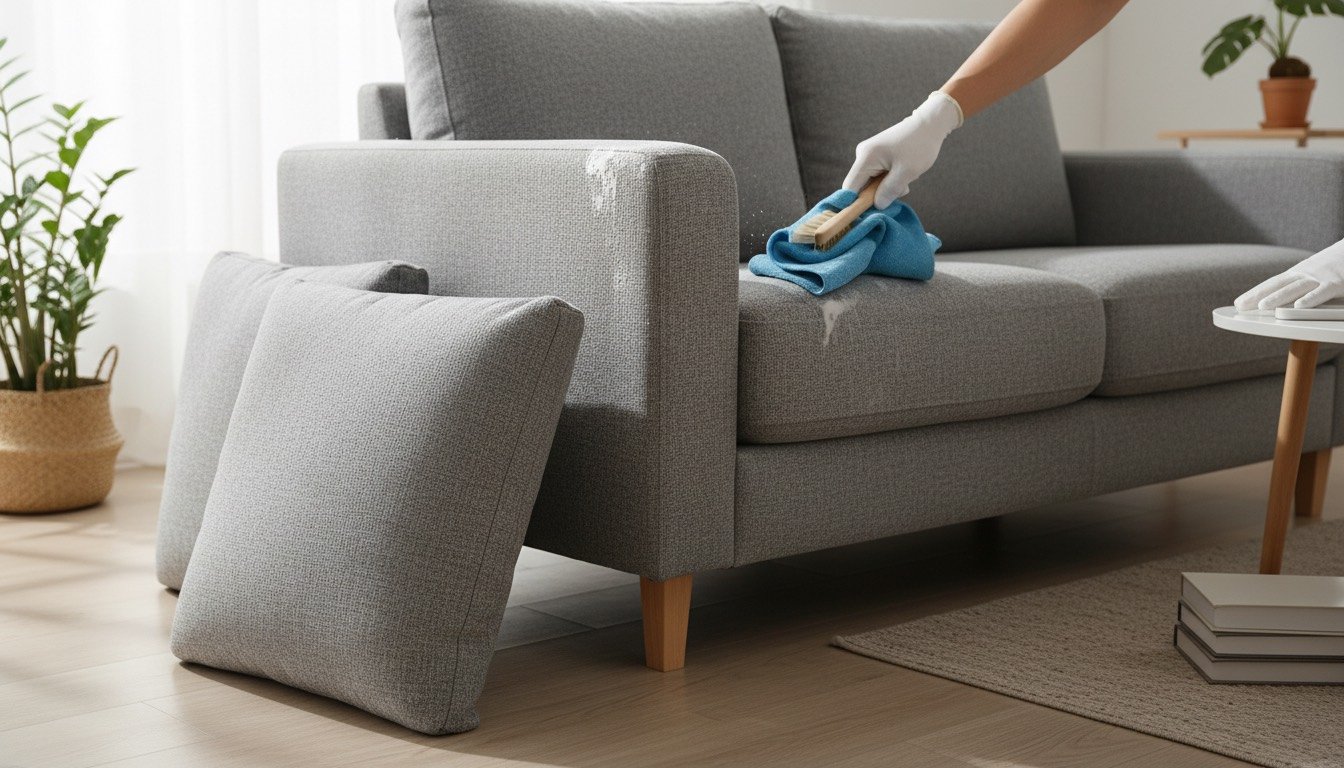
The most expensive soft thing in your house has a secret instruction manual: a small tag stitched under the seat cushions or on the frame carries a cleaning code. That single letter — W, S, WS or X — decides everything that happens next, and it's the difference between a refreshed sofa and one left with water rings, a shrunken panel or bled colour. Find the tag before a single product touches the fabric.
This guide covers exactly what to do once you've found your letter: the tools worth buying, a step-by-step method for the most common W-code sofas, what to do instead on solvent-only or delicate fabrics, the mistakes that turn a five-minute clean into a costly reupholstering job, and when a professional clean is the sensible option.
Decode the cleaning code on your sofa
Look under the loose seat cushions, on the frame, or on a swing tag that shipped with the sofa. Manufacturers print this letter because water and solvents behave very differently on foam-backed fabrics, and using the wrong one is usually irreversible.
- •W – water-based cleaning is safe. The friendliest letter, covering most family sofas including cotton, linen and synthetic-blend covers.
- •S – solvent only. Water leaves rings, shrinkage or a stiff patch; treat any mark as dry-cleaning chemistry, not washing-up liquid and a cloth.
- •WS or SW – either method works if you're careful, though solvent is usually the safer default on stubborn marks.
- •X – vacuum only, no liquids of any kind. Rare, but it appears on some silk and velvet weaves, worth knowing before you learn it the hard way.
- •No tag? Test any method on a hidden patch first and leave it 24 hours, checking for rings, colour lift or a texture change before treating anything visible.
Tools and materials you'll need
Most W-code sofa cleans need surprisingly little kit, and none of it needs to be sofa-specific.
- •A vacuum with an upholstery brush and crevice tool — most models from around £80 come with both attachments.
- •Clear, dye-free washing-up liquid, roughly £1–£2 a bottle — the only detergent most W-code fabrics need.
- •Two microfibre cloths and a soft-bristled brush, £5–£10 for a set, for working foam in without scrubbing.
- •A dedicated upholstery spot cleaner, £6–£15, for fresh spills between full cleans.
- •A fan or open window for drying — airflow beats heat, which tends to set marks rather than lift them.
- •White vinegar diluted with water, optional, for lifting the last of a detergent residue on W-code fabrics only.
Step-by-step: cleaning a W-code sofa
This method suits the vast majority of family sofas carrying a W or WS tag. Work through it panel by panel rather than stain by stain — treating whole cushion faces is what prevents the tide marks patchy spot-cleaning leaves behind.
- •1. Strip and vacuum thoroughly, including crevices and underneath — dry soil mixed with water makes mud, so this step isn't optional.
- •2. Whisk a teaspoon of clear washing-up liquid into warm water until it's mostly foam. You want bubbles on the cloth, not wet liquid underneath.
- •3. Work one panel at a time, loading a soft brush or cloth with foam only and working it in a single direction, edge to edge.
- •4. Wipe with a clean cloth dampened in plain water to lift the foam, then a dry cloth to remove excess moisture.
- •5. Give armrests and the headrest a second, gentler pass — these carry the heaviest body-oil load.
- •6. Dry cushions standing on edge with a fan running rather than laid flat — this can halve drying time and helps stop musty smells developing inside the foam.
- •7. Fluff and reshape once fully dry, before use.
S-code and delicate fabrics: what water can't fix
Some fabrics simply aren't a home water job. S-coded fabrics, viscose blends (which spot permanently on contact with water), crushed or sculpted velvet, and anything under a still-valid stain warranty all fall into this category.
For a fresh spill, blot — never rub — with a dry cloth immediately, then use a solvent-based spot cleaner formulated for S-code use, testing it on a hidden patch first exactly as you would with any stain-removal product. General greying across a panel, rather than one isolated mark, means the fabric needs a proper clean, not spot treatment — and that's where professional cleaning earns its cost.
Common sofa cleaning mistakes that cause lasting damage
A surprising amount of sofa damage happens during a well-meant clean, not from the original stain.
- •Soaking the fabric instead of foam-cleaning it — excess water travels into the padding and often causes a musty smell that outlasts the original mark.
- •Scrubbing in circles, which frays fibres and creates a lighter, fuzzy patch more visible than the mark it was meant to remove.
- •Using a carpet stain remover formulated for wool or nylon pile on upholstery — the chemistry differs, and residue can attract dirt faster afterwards.
- •Ignoring the code on a hand-me-down or vintage sofa, where the original tag is often missing and the fabric is more fragile than it looks.
- •Using a hairdryer or iron on a damp patch to speed drying — heat can set a stain permanently and shrink some synthetic covers.
- •Cleaning only the visible stain rather than the whole panel, which is exactly how tide marks happen.
When to call a professional upholstery cleaner
Some jobs are worth paying for. S-code fabrics, viscose blends, overall greying rather than isolated marks, pet odour worked into the foam, and anything still under a stain warranty (which most home cleaning attempts void) are all better left to a specialist.
Professional upholstery cleaning typically costs £60–£120 for a three-seat sofa in the UK, depending on fabric and pre-treatment needed — broadly in line with what professional carpet cleaning costs per room, and a fraction of a reupholstering quote, which regularly runs into four figures.
A specialist uses hot-water extraction or solvent systems matched to your fabric code, with controlled drying that rinses out the residue home methods tend to leave behind — often the real reason a stain reappears within weeks.
Keeping a freshly cleaned sofa looking good
A weekly vacuum with the upholstery attachment stops grit working into the weave, where it acts like sandpaper every time someone sits down. Rotate and flip reversible cushions so wear and fading spread evenly.
Treat spills the moment they happen — blot first, then work a little foam onto just the affected patch rather than letting it dry into a set stain. With pets, deal with accidents immediately; odour that reaches the foam behaves like pet urine smell in carpet and gets harder to shift the longer it sits.
A throw over high-wear seats and arm zones buys time between full cleans — easier to wash a £15 throw than re-clean an entire sofa.
Frequently asked questions
How often should I clean my sofa? A full clean two to three times a year suits most households, with a weekly vacuum in between; pets, children or smokers usually push that to every three months.
Can I use bicarbonate of soda on my sofa? A light dusting left 20–30 minutes then vacuumed off is safe on most W-code fabrics for mild odours, but it won't remove a set-in stain and shouldn't be used on S-code or velvet without testing first.
Why does my sofa smell musty after cleaning? Almost always because the foam padding stayed damp too long. Standing cushions on edge with a fan running, rather than laying them flat, is the single biggest fix.
Is steam cleaning safe for sofas? Only on W-code fabrics, and only as a light pass rather than a soaking one — heavy steam behaves like excess water, the same caution behind weighing steam against shampooing for carpet.
Will cleaning remove old, set-in stains? Sometimes — a mark that's been there for months has often already changed the fibre rather than sitting on top of it. One careful, whole-panel clean is worth trying, but repeated aggressive spot-scrubbing usually does more harm than good; that's when professional extraction is worth calling in.
Found this useful?
There's plenty more — hundreds of guides and honestly-tested product reviews for every corner of your home.
Browse All Guides