Organisation & Storage · 6 min read · 11 July 2026
Garage Organisation Ideas That Work in Real UK Garages (and Real Budgets)
A standard UK single garage gives you 12 square metres and about 190mm either side of a family hatchback. Here is what fits, what survives a damp winter, and what a tenant can do without drilling.
By the Nims Casa editorial team — written from professional cleaning experience and checked against our editorial standards.
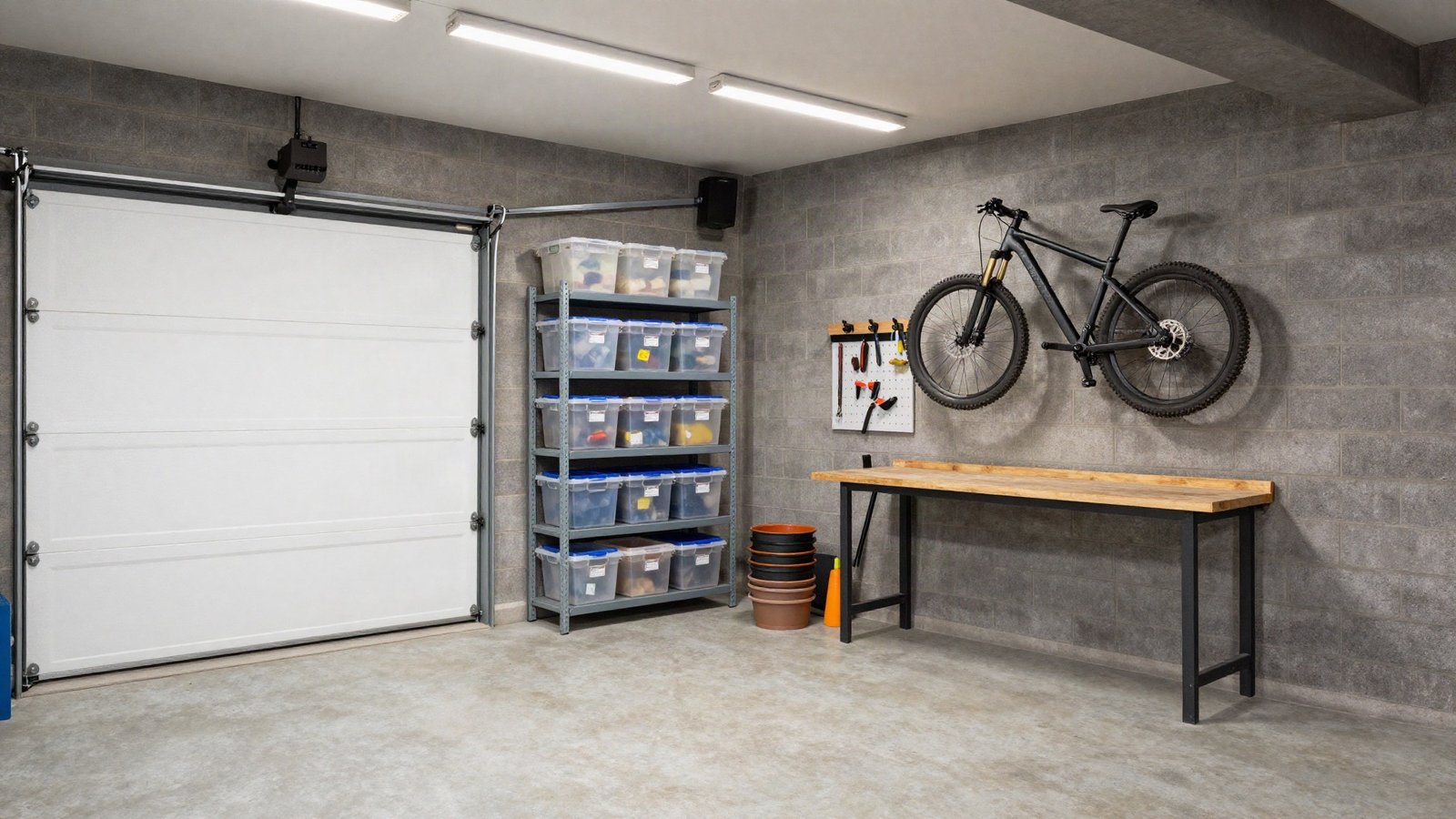
A single garage in most British housing stock measures roughly 2.4m by 4.9m internally — about 12 square metres, and around 190mm of clearance either side of a Ford Focus with the mirrors folded. That measurement decides more than any product you buy: a standard UK garage cannot carry 400mm-deep shelving on both walls and still hold a car.
Most garage advice online assumes American garages: timber-framed walls you can screw into anywhere, double bays, a dry climate. British garages are single-skin brick, blockwork or precast panel, unheated, and often damper inside than out from October to March.
Three things decide your whole layout
Settle these before you buy a shelf. Drill a 6mm test hole somewhere inconspicuous: red dust and easy progress means soft old brick, grey dust with the hammer working hard means dense block. A 50mm precast panel — the sectional garages sold in their thousands from the 1950s to the 1980s — takes no fixings at all; they spall, and a replacement runs £80–£150 fitted.
- •Wall build-up: brick and dense block take 7.5 x 70mm hex-head frame fixings at 400mm centres; aerated block needs proper nylon anchors and halved loads; precast panel takes nothing, so build a freestanding timber frame against it.
- •Door type: a canopy up-and-over sweeps a 500–600mm arc back inside, making the first metre of both side walls unusable above 1.6m. Retractable and sectional doors run ceiling tracks 2–2.4m in, killing overhead racking at the front. Roller doors need 300–400mm of headroom for the barrel.
- •Damp: slabs poured before roughly 1970 often have no damp-proof membrane, so moisture rises through the concrete year round. Store nothing directly on the floor.
Wall ideas that suit masonry, ranked by value
Emptying the floor is the biggest single win. Work in height bands: 0–600mm for heavy things you rarely lift, 600–1,600mm for weekly items, 1,600–2,000mm for seasonal, above that for overhead racks.
A French cleat wall is still the best value in a workshop-style garage. One 2440 x 1220mm sheet of 18mm ply costs £45–£60 and rips into roughly 30 metres of cleat — enough for a full 2.4m wall, and everything repositions in seconds, which matters because your first layout will be wrong. Slatwall, the tidier commercial version, runs £25–£45 per 1200 x 300mm panel: £150–£220 a wall plus hooks.
- •Boltless steel racking, 1800 x 900 x 400mm, five tiers at 150–175kg a shelf: £45–£85. No drilling, twenty minutes to build — see our garage shelving picks.
- •Metal pegboard rather than hardboard for hand tools, £30–£50 per 600mm panel. Hardboard swells and sags in an unheated garage; powder-coated steel does not.
- •Vertical bike hooks, £8–£15 each. Two bikes hung nose-down 400mm apart reclaim a square metre of floor. Fix into brick, never mortar joints.
- •A 300mm shelf with a 40mm lip above the door opening, where a canopy door leaves it free — the most wasted space in a British garage.
- •Garden tool grips, £12–£20 a rail, so rakes and spades stop leaning against the car.
Overhead storage, and one serious warning
Ceiling racks at 1200 x 1200mm rated 200–300kg cost £70–£130 and transform a garage with a boarded ceiling or exposed timber trusses. Spread the load over two trusses minimum, use coach screws into the truss chord, and never hang from purlins alone.
The warning is not optional. Garages built or re-roofed before 1999 very often have corrugated cement sheets containing chrysotile asbestos. Do not drill, cut, jet-wash or sweep them. Treat grey corrugated sheeting of unknown age as asbestos-containing and have it surveyed before any fixing goes near it.
Damp is the real enemy, not clutter
An unheated single-skin UK garage sits between 75% and 90% relative humidity from October to March, and untreated steel flash-rusts above roughly 60%. That is why cardboard collapses, flat-pack swells at the base, and chisels you put away sharp come out pitted.
Clear polypropylene boxes with clip lids, £8–£15 for 35–64 litres, are the workhorse. Buy one size so they stack, label the short end rather than the lid, keep everything 100mm off the slab and slip VCI paper into tool drawers. A desiccant dehumidifier suits cold spaces because compressor models lose most of their output below 10°C — our dehumidifier comparison covers the ones that cope. If the garage is attached and used daily, insulating it fixes humidity permanently rather than fighting it with electricity.
Budget tiers: what £150, £500 and £1,500 buys
Materials-only prices for a standard single garage. The pattern holds at every budget: lighting first, containers second, cabinetry last.
- •Under £150, one weekend: two boltless racks (£120), eight matching 50-litre boxes, two bike hooks and a tool rail, plus a 4ft LED batten at £20–£30. Most garages get 80% of the benefit here.
- •£400–£600, the sweet spot: add a cleat or slatwall run on one wall, a 1200mm overhead rack, a metal pegboard above a second-hand bench, and two more LED battens wired by an electrician (£90–£150).
- •£1,200–£1,800, a proper workshop: insulation and OSB lining, a two-pack floor coating at £45–£65 per 5 litres covering about 25m² a coat, steel cabinets and a bike lift. Coatings seal dust and shrug off oil, but will not beat rising damp.
The renter-safe version: everything reversible
Most assured shorthold tenancies prohibit fixings without written consent, and the garage falls under the same clause as the house. Happily, nothing worth doing here needs a drill: go freestanding and the whole system lifts out on moving day.
If you do want to fix something, ask in writing and be specific: 6mm holes, plugged, filled with mortar-coloured filler on exit. Landlords usually agree, because that repair really is invisible. What they refuse is slatwall across a party wall or a painted floor, both of which read as alterations. Photograph the garage the day you move in; disputes over pre-existing oil stains are common. The same reversible logic runs through our rental-friendly decor guide.
- •Boltless steel racking and freestanding heavy-duty shelving: zero fixings, and the frame braces against the wall.
- •A gravity bike stand, £25–£40, holding two bikes instead of wall hooks.
- •A pegboard or cleat panel screwed to a floor-standing timber A-frame, so nothing touches the masonry.
- •Interlocking rubber or PVC floor tiles instead of floor paint: £25–£45 per square metre, and they lift out in an hour.
- •A plug-in desiccant dehumidifier on a timer instead of insulation — the only damp fix that leaves with you.
Where the money goes, and what to do this weekend
Across the layouts that work, spending lands around 40% on racking and wall systems, 25% on containers, 20% on lighting and power, 15% on floor and damp. People overspend on cabinets and underspend on light: two LED battens make a garage feel twice the size for less than a tool chest.
Start with one hour and no shopping. Pull everything onto the drive, take the genuine rubbish to the tip, and be ruthless about half-tins of paint — most are unusable after two winters unheated. Only then measure the walls, chalk the door swing on the floor, and buy. If the purge is the bit you dread, use our room-by-room decluttering method, then browse the rest of the organisation and storage guides.
Found this useful?
There's plenty more — hundreds of guides and honestly-tested product reviews for every corner of your home.
Browse All Guides