Roofing & Exterior · 6 min read · 13 April 2026
Old House Renovation Checklist: The Order to Work in a UK Period Home (Printable)
A pre-1940s house fails differently to a modern one, and the order you work in matters more than the budget. Here is the sequence, the timings and the 2026 costs we use on period stock.
By the Nims Casa editorial team — written from professional cleaning experience and checked against our editorial standards.
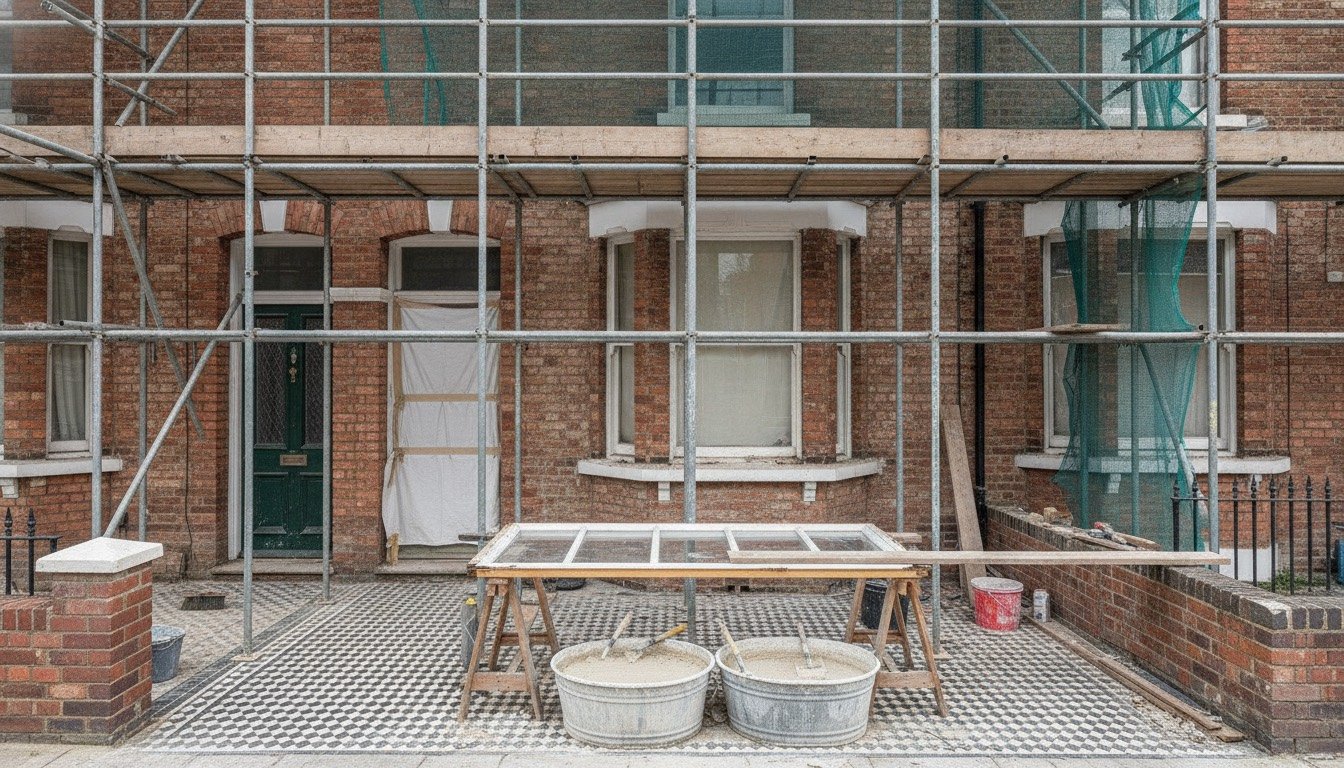
A Victorian terrace does not fail the way a 1990s estate house fails. Solid nine-inch brick walls have no cavity and often no damp-proof course worth the name. Lime plaster on riven lath flexes with the building. Box sash windows were designed to be taken apart and repaired, not sealed shut. Get the order of works wrong here and you will spend £8,000 undoing your own first six months.
This is the sequence we use on pre-1940s UK stock: survey properly, make it dry and safe, run the services, then let the fabric catch up. Print it and tick as you go. For the money side, our breakdown of what it costs to renovate an old house runs the numbers room by room.
Before you exchange: the survey checklist
Every pound spent here saves five later. Budget £1,500-£2,500 on investigation for a three-bed period house, and do not skip the drains — Victorian clay is the most under-inspected system in British housing.
- •RICS Level 3 Building Survey, £900-£1,500, half a day on site. Insist the report names the wall construction, mortar type and roof covering.
- •Independent damp and timber report, £250-£400. A free survey from a firm that sells injected damp courses is a sales visit, not a diagnosis.
- •EICR electrical report, £180-£350. Rubber or lead-sheathed cable, a rewireable fuse box or round-pin sockets means a full rewire, not a consumer unit swap.
- •CCTV drain survey, £150-£350. Salt-glazed clay laid in the 1890s cracks and drops at the joints; the camera decides between a £400 liner and £6,000 of digging.
- •Asbestos sampling, £50-£90 each. Suspect textured coatings applied before 2000, airing cupboard panels, soffits and garage roof sheets.
- •Conservation check, free. Listing or an Article 4 direction can remove your right to change windows, doors and front boundary walls, so ring the council first.
The first 90 days: dry, safe, ventilated
Nothing decorative happens yet. The job of the first three months is to stop water entering the fabric and stop the wiring hurting anybody. Batch every high-level task into one scaffold hire — £900-£1,800 per elevation on a terrace, and the same again if you call them back in November.
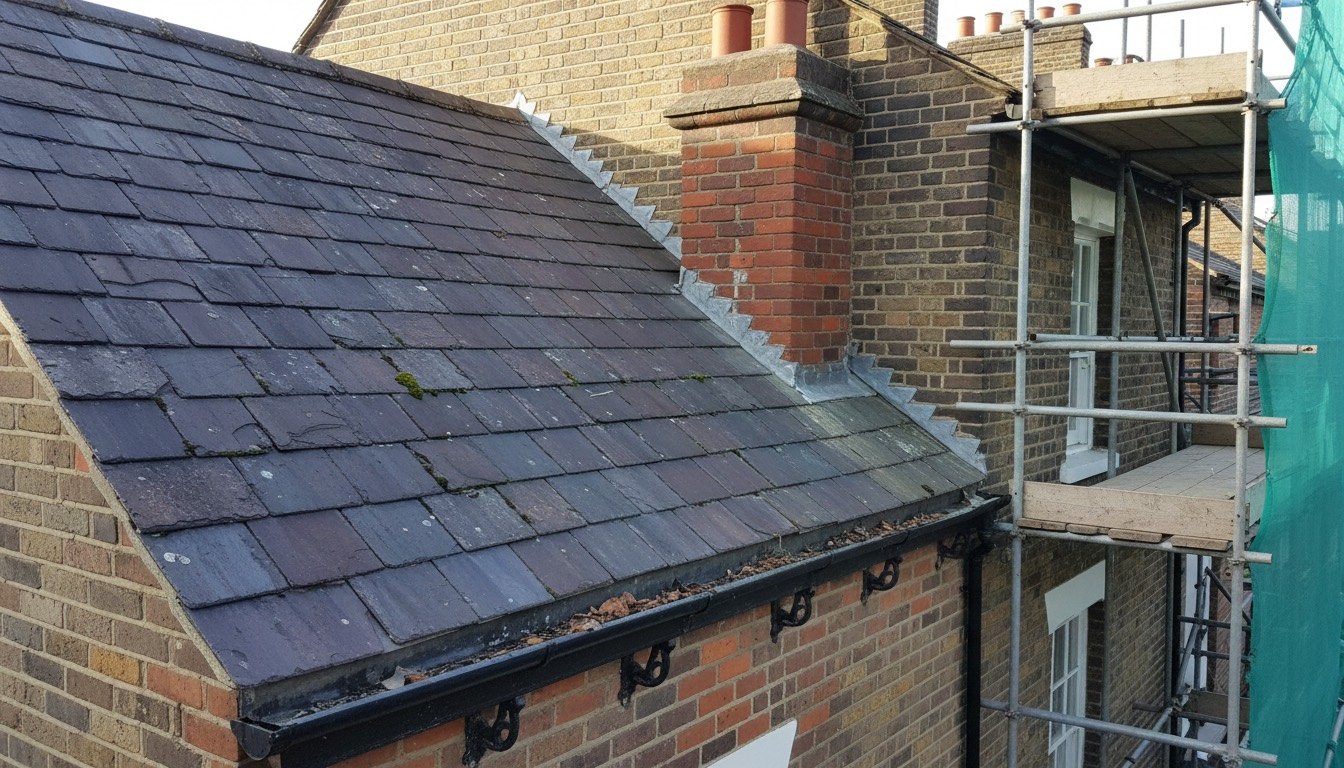
- •Make the roof watertight. Slipped slates, tired lead flashings and split cast-iron hopper heads cost £150-£600 now and £4,000 in joist and ceiling repairs after one wet winter.
- •Clear gutters, downpipes and gullies, half a day, £0-£180. On a solid wall a leaking downpipe soaks the brickwork through and reads internally as rising damp for a decade.
- •Dig back raised ground levels to at least 150mm below internal floor level. A path laid over the slate DPC in 1985 is the commonest bridged wall we see.
- •Open the sub-floor. Airbricks blocked by patios, borders or render rot suspended timber floors quietly. Clearing them is free; new terracotta airbricks are £40-£70 fitted.
- •Repoint the weather elevation in NHL 3.5 lime, £45-£75 per m². Cement traps moisture in soft handmade brick and spalls the faces, so read lime mortar versus Portland cement before anyone lifts a grinder.
- •Assume lead paint on anything decorated before 1970 and never dry-sand it: wet methods, chemical stripper or infrared only. Our lead paint safety guide sets out the precautions.
- •Keep an empty house at 15°C with a top sash cracked daily. At 12°C and shut up, a period property grows mould in three weeks.
Months three to twelve: services, then fabric, then finishes
This is where the order decides the budget. Everything involving chased walls or lifted floors happens before the plasterer arrives, not after.
- •Rewire, £4,500-£7,000 for a three-bed, seven to ten working days. Notifiable under Part P, so use a registered electrician. Chase for cables before replastering, never after.
- •Replumb and reposition the boiler, £2,500-£5,000. Cast-iron soil stacks and lead supply pipe are worth replacing while the floors are up.
- •Overhaul sash windows, £350-£650 each, one to two days per window. New cords, parting beads, draught seals and putty usually beat replacement, as restore versus replace on historic windows explains.
- •Repair rather than strip lime plaster, £55-£90 per m². Tap the walls: areas that have lost their keys behind the lath can often be screwed back for £15 a wall, and repairing old plaster walls covers both methods.
- •Loft insulation to 270mm, £450-£900 fitted, one day. Leave solid-wall insulation until the fabric has had a full heating season to dry.
- •Sand and finish original boards near the end, £25-£45 per m², then decorate in breathable clay or mineral emulsion. Vinyl silk on a lime-plastered solid wall is a moisture trap.
Supplies worth keeping in the house
- •NHL 3.5 hydraulic lime and sharp sand, £18-£25 a bag, for pointing and plaster patches.
- •Sash repair kit: linseed oil putty, 6mm waxed cotton cord, parting bead and a hacking knife, under £45 the lot.
- •A 20-litre wet-and-dry vacuum with an H-class filter for lead and plaster dust, £120-£200.
- •A pinless damp meter and a torch, £30-£60, to track moisture across a season instead of guessing.
- •Cotton dust sheets, never plastic — plastic sweats onto bare boards.
The rota that keeps it all working afterwards
Period houses reward small, regular attention far more than occasional big spends. Ten minutes a season prevents most of the four-figure jobs.
- •Autumn, 2 hours, £0: clear gutters, hoppers and gullies after leaf fall, check flashings and ridge, test the boiler.
- •Winter, 30 minutes monthly, £0: check ceilings for new staining after gales and feel behind furniture on solid walls for condensation.
- •Spring, 3 hours, £0-£80: sweep the chimney if used, inspect the weather elevation's pointing, unblock airbricks, oil the sash pulleys.
- •Summer, 1 day, £50-£150: touch up external joinery paint before it fails, refresh putty, cut vegetation 300mm back from the walls.
- •Every 5 years, £180-£350 for an EICR renewal; every 10 years, £250-£400 to re-survey Victorian clay drains.
Short on time or money? Do these five first
- •Roof and rainwater goods. Water getting in makes every other problem worse and dearer.
- •Anything electrically unsafe: no RCD protection, no earth on lighting circuits, scorched sockets.
- •Ground levels and airbricks. Two days with a spade can head off a £6,000 damp and timber bill.
- •Heating that works, so the house dries out while you save for the rest.
- •Sash draught-proofing, £120-£220 per window — the fastest payback available in a solid-walled house.
Questions we get asked most
Does an old house need a chemical damp-proof course? Rarely. Injected DPCs are sold far more often than they are needed. Bridged ground levels, failed rainwater goods, cement render and blocked sub-floor ventilation explain the overwhelming majority of ground-floor damp we are called to.
Can I insulate solid walls? Yes, but only after a full heating season with the fabric dry, and only with a breathable build-up such as wood fibre. Impermeable insulation on a wet solid wall pushes the dew point into the masonry and rots embedded joist ends.
How long does the whole thing take? Plan on 12 to 18 months for a three-bed period house done properly, with the disruptive services work compressed into two blocks. Read up on the common problems in 100-year-old houses before you sign anything.
Found this useful?
There's plenty more — hundreds of guides and honestly-tested product reviews for every corner of your home.
Browse All Guides